
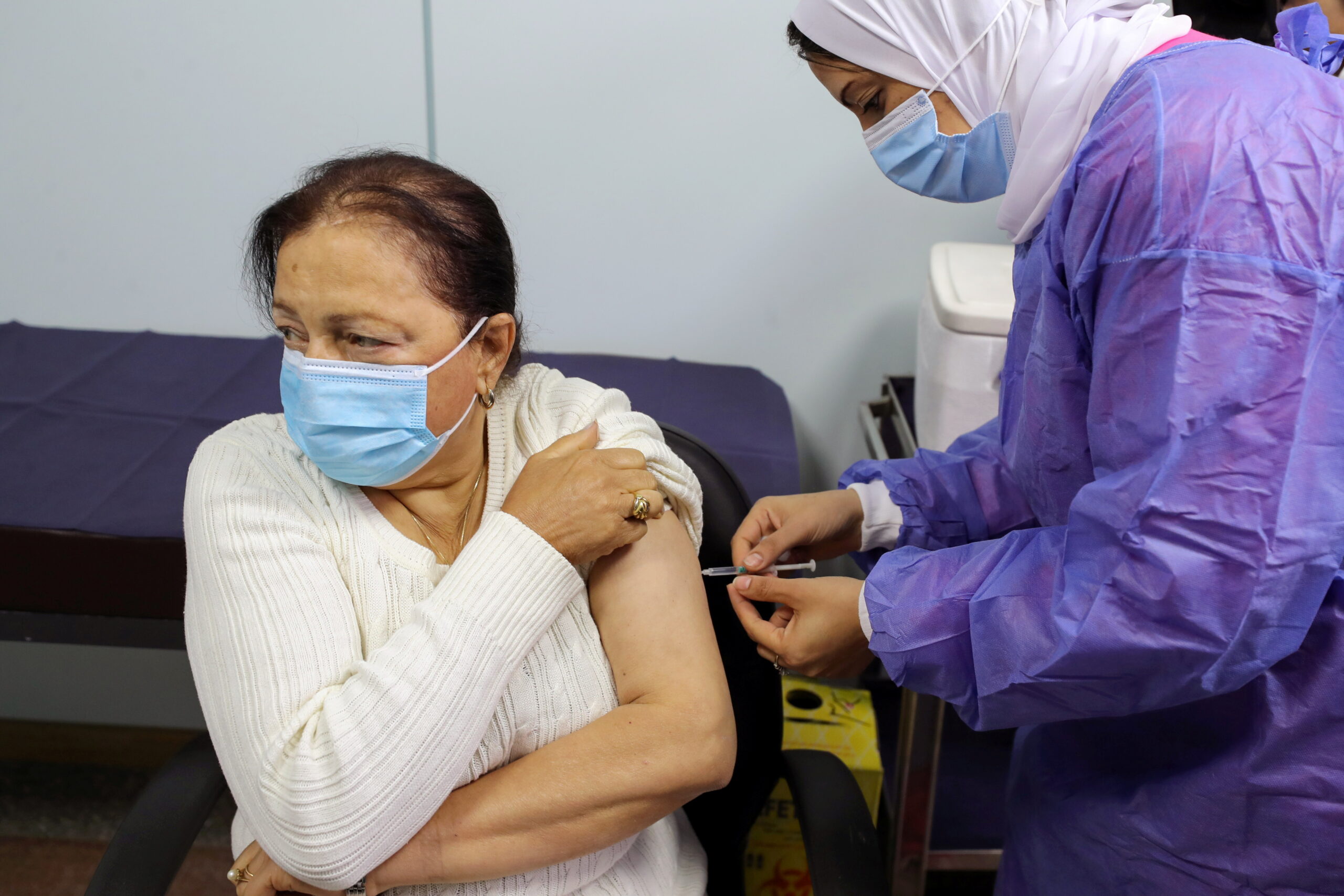
Overcrowded vaccination centers potential COVID-19 hot spots: ‘Are we to get vaccinated against coronavirus or catch it?’
Vaccine centers across Egypt have witnessed long wait times, insufficient supply and bureaucratic procedures that have made it difficult for many to secure shots to boost their immunity against COVID-19, citizens told Mada Masr.
A Mada Masr correspondent witnessed crowding at a Cairo hospital, and Doctors Syndicate council member Ibrahim al-Zayat said that the alarming overcrowding situation is worst in the more densely populated areas of Upper Egypt and Cairo.
Vaccine rollout began to wider populations, including the elderly, in early March, and over 600,000 people of Egypt’s population of 100 million have registered to get COVID-19 vaccines. As of Sunday, 148,987 people, including medical staff, have been vaccinated.
Health Ministry sources have previously told Mada Masr that ministry’s officials identified 200,000 medical workers and 23 million citizens with chronic diseases as the first segment of people to receive the vaccine. However, many people considered less vulnerable have gotten the vaccine faster than the designated at risk groups and the ministry is preparing plans to vaccinate tourism sector workers ahead of a hoped-for robust summer travel season.
The focus on the eligibility criteria, however, was part of the problem at the Matareya Universal Health Insurance Clinic in Cairo, where about 200 people eligible for the vaccine due to their age or due to having chronic diseases waited four to six hours on Thursday to receive COVID-19 vaccines, a Mada Masr correspondent observed.
Tensions at the center came as those set to receive the vaccine complained to the center’s employees about the long waiting and last-minute demands for proof of diagnosis.
Some of those waiting outside the hospital told Mada Masr that they were sent home after being asked to bring medical records proving diagnosis with chronic diseases and to set another date for receiving the vaccine.
“Are we supposed to get vaccinated against coronavirus or to catch it?” one person waiting in line asked, after they submitted their IDs and waited outside the clinic for their name to be called.
As tensions rose, Dr Rania Saeed, the director of elder care at the clinic, apologized to the crowd and said that the clinic has been working from 8 am to 8 pm every day to administer vaccines. Saeed then tasked another employee with taking down the names of 265 people waiting to submit their medical histories in order to receive the vaccine, a process that took two and a half hours.
One of the citizens interviewed by Mada Masr, Ibrahim Abdel Hameed, 62, arrived at the Matareya clinic to find it overcrowded. When Abdel Hameed asked what to do after handing over his ID, the clinic employee told him to leave and come back at night or the next day or to wait with the crowd. When he asked what steps he needed to take before receiving the vaccine, the employee asked everyone to go outside and wait their turn.
For Zayat, allowing a large number of people, especially the elderly, to wait in the small medical centers creates a suitable environment for further spreading COVID-19 instead of preventing it.
After waiting for six hours, Abdel Hameed, who was number 73 on the list, was denied a shot. The doctor tore up Hameed’s vaccine application and told him that his health insurance ID is not proof that he has chronic high blood pressure, as the vaccination system requires a medical report from a doctor. Saeed intervened, and told the doctor to accept the private doctor’s prescription he brought with him as evidence.
Two women who followed Abdel Hameed, however, were denied shots because they had not brought reports proving that one woman has diabetes and the other has an autoimmune disease.
For Cabinet coronavirus committee member Hamdy Ibrahim, the crowding at clinics is evidence that there are shortcomings in the organization of the vaccination process in a number of centers, especially those designated for the elderly. However, he said that raising people's awareness, following precautionary measures and avoiding crowding inside vaccination centers may be the solution to vaccinate the largest number of citizens in the least possible time, until the matter is better organized by Health Ministry officials.
The Health Ministry placed the blame for the crowding on citizens in a statement on Friday, saying that people had failed to show up to receive their shots on the dates specified for them.
However, the ministry also took steps on Sunday to alter its vaccination plan, announcing that it designated an additional 200 new clinics to administer the shot, doubled the number of medical teams working at vaccination centers nationwide, increased the clinic operating hours and capped the number of citizens who can be vaccinated at one clinic at 100 per day.
The ramp-up in administration capacities also comes after Egypt received last week 854,400 doses of AstraZeneca’s COVID-19 vaccine as part of the global COVAX agreement and statements that more Sinopharm vaccines could be on their way in the coming weeks.
Braving crowds has only been half the battle, however, for at risk groups. Many have also struggled to secure appointments at all.
In late March, many young people who are not classified as vulnerable to the coronavirus had begun to get the vaccine as early as one day after they had registered online, while those who had registered well in advance, including the elderly and people with chronic conditions, had yet to be scheduled for their first dose.
Attributing the issue to the fact that earlier applicants only had 40 vaccination centers to choose from while those who signed up later could choose from 138 centers, the Health Ministry told Mada Masr at the time that it planned to amend the registration system to enable those who registered earlier to change their choice of vaccination center.
Health Ministry Spokesperson Khaled Megahed said on Friday in TV statements that the ministry can increase administration clinics to 5,000 if need be, providing assurances that 12.5 million citizens can be vaccinated within five weeks.
The provision of free vaccines has been a matter of concern for the government in recent months. Without the requisite funds to ensure widespread vaccination, the government has turned to public messaging that presents vaccination as optional, what Alaa Ghannam, the director of the Right to Health program at the Egyptian Initiative for Personal Rights, previously told Mada Masr was “an attempt to manufacture a loophole that would allow the vaccine not to be offered free of charge for everyone.”
An independent medical source previously told Mada Masr that the Health Ministry has a parallel track to government-procured vaccines that would provide shots at a modest price through partnership agreements with the private sector.
“It is understandable that the government does not want to be subject to criticisms for not shouldering the entire burden of vaccination, which is what all other countries have done,” the source said. “And generally speaking, vaccinations fall within the purview of the government.”

تقارير ذات صلة

Devaluation drama and hot money’s return: What happened with the pound’s historic plummet?
'As long as there is more demand than supply, the price of the pound will continue to decrease.'
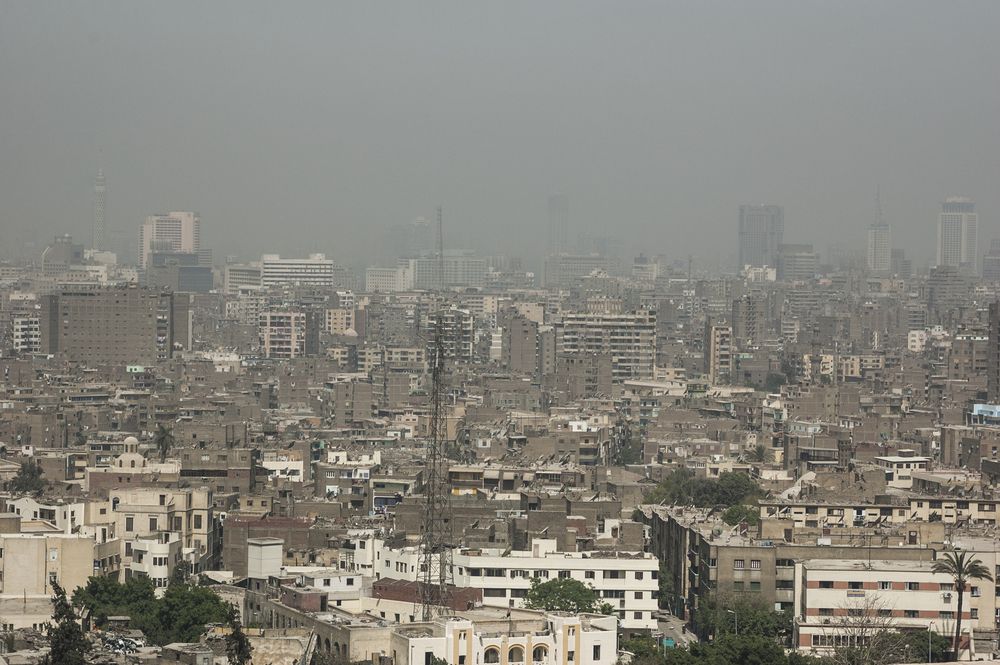
Q&A: Egypt’s emissions, the environment, and the relationship between air pollution and COVID-19
The loudest voices in this area are not those of environmental scientists, but of investors
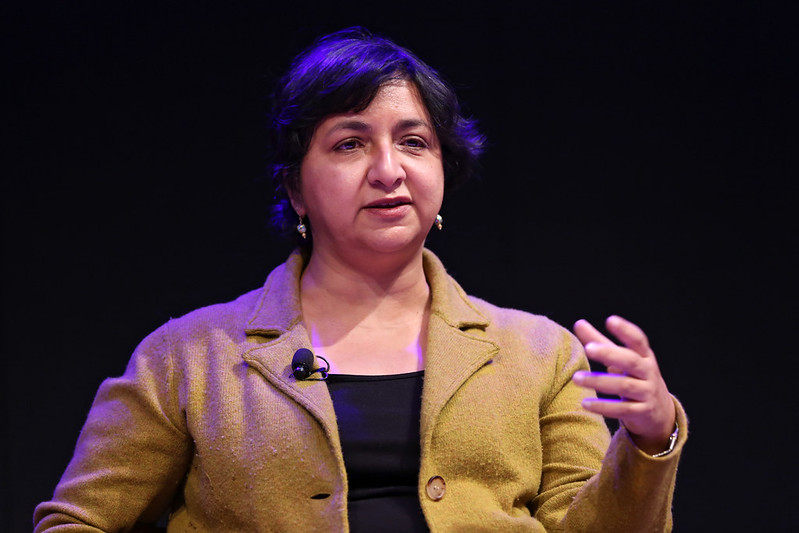
Q&A with anthropology professor Hania Sholkamy | On the need to rethink social spending as crisis response after COVID-19
The pandemic exposed flaws in the way social protection is thought about in Egypt
Your support is the only way to ensure independent, progressive journalism survives.
You have a right to access accurate information, be stimulated by innovative and nuanced reporting, and be moved by compelling storytelling. Subscribe now to become part of the growing community of members who help us maintain our editorial independence.
Join us