
No prescriptions, no appointments: Cancer patients at Hermel Hospital hit by treatment crisis after private sector take over
The waiting area of Dar al-Salam Hermel Cancer Hospital was crowded earlier this month with patients and their families who had come for the treatment they are accustomed to receiving at the facility, only to end up waiting for hours outside.
Five cancer patients present in the waiting area told Mada Masr that the hospital’s new management had refused to admit them for treatment, leaving them to wait for hours in the sun.
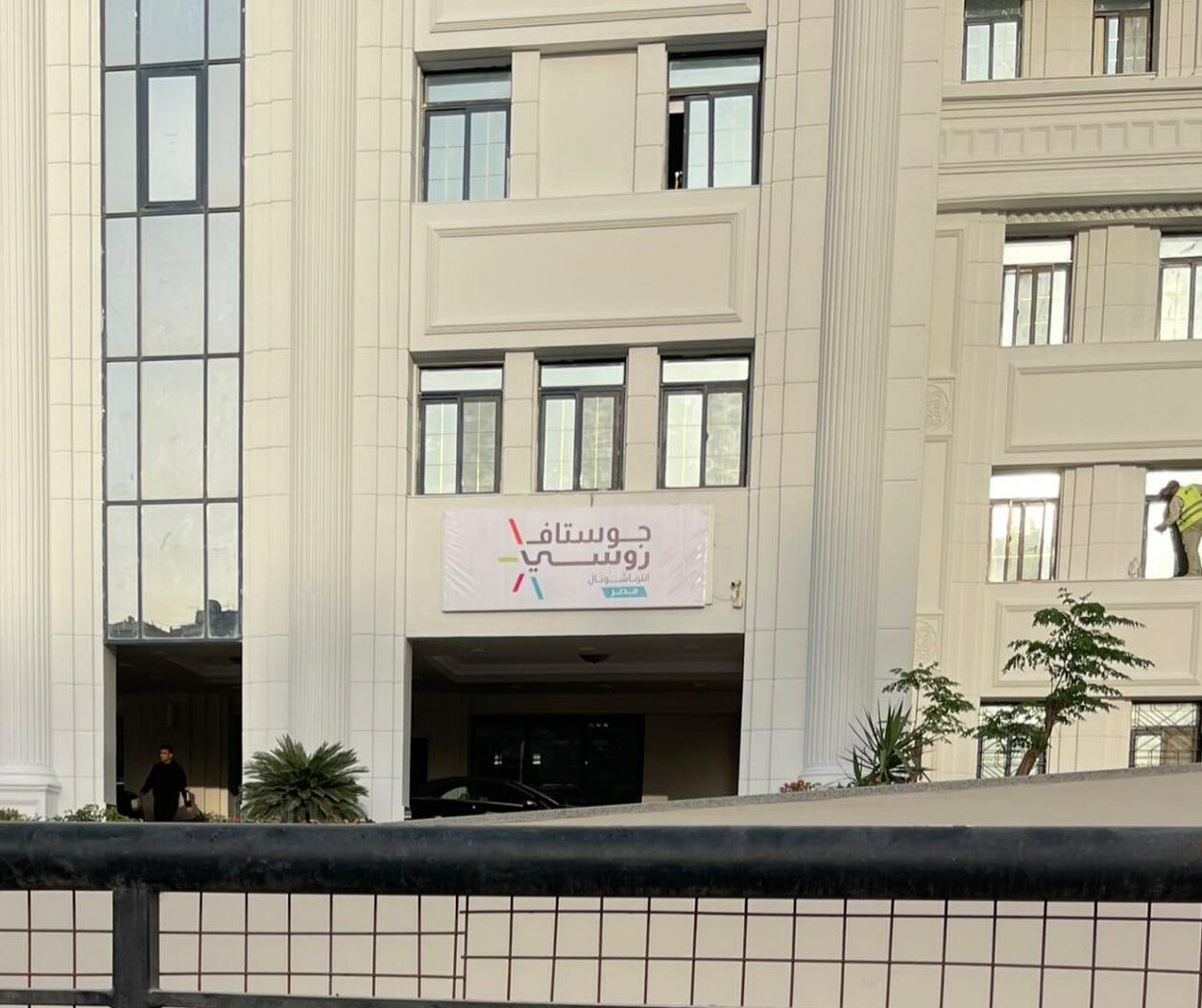
The five patients were not alone in experiencing a sudden curtailment of their access to care at the hospital, after the formerly public facility came under new management from the Gustave Roussy Institute, a French cancer research organization contracted by Egypt’s Health Ministry to upgrade and operate the oncology hospital, now renamed Gustave Roussy International Egypt.
“The situation is bad under the new management, and we're struggling to get treatment,” one of the hospital’s patients said. “We've been standing here since 8 am and now it’s 1 pm. I eventually found out that my name wasn’t on the appointment list and I missed my chemotherapy session. Most of us travel here from far away.”
The Gustave Roussy Institute was contracted to operate the Cairo hospital in February under a deal made possible by a new law that allows public hospitals to be leased to private operators, granting them development, management and operation rights. The contract stipulates that 70 percent of the hospital’s beds must remain allocated for services provided for free under national provisions for public healthcare.
But free healthcare at the hospital has rapidly deteriorated, according to patients, hospital staff and a medical rights advocate who spoke to Mada Masr. They pointed to persistent problems with the state-funded treatment system and the absence of any regulatory oversight by the Egyptian government over the hospital’s new private management — a concern the Doctors Syndicate raised when the public-private partnership law for hospitals was under discussion.
According to a hospital employee and the father of a child with cancer, the new administration has decided to stop offering oncological care to children, with the exception of treating those undergoing bone marrow transplants. “We were told by the management to go to the 57357 Children’s Cancer Hospital if we want to continue our children’s treatment,” the employee said.
He also noted a severe shortage of medication, as the new administration has either stopped purchasing drugs altogether or only buys minimal quantities. Many patients had previously been entitled to receive their medications for free from the pharmacies.
But now, “management tells patients to go buy their medications from the [state-owned] Esaaf pharmacies,” the employee said.
As a result, many of the hospital’s patients have been left without their prescription medications, as the new contract does not include a clause requiring the hospital to provide them, Egyptian Center for the Right to Medicine Executive Director Mahmoud Fouad told Mada Masr.
There is also an impact on labor conditions for the hospital staff. The new administration decided in February to lay off a large number of physicians, retaining only a small group under the condition that they work 12-hour shifts, six days a week, a doctor who has worked at the Dar al-Salam hospital for ten years told Mada Masr.
“We’ve become cheap labor […] the new management wants to enslave us,” the doctor said, adding that the Health Ministry has reassigned the dismissed staff to other public hospitals. “But we’ll be working outside our specialties, and so far, nothing is clear,” they said.
The patient whose chemotherapy session was cancelled noted that the staff changes also have an effect on patients, given that most of the old doctors and nurses they were familiar with have left.
Fouad said that cancer patients blocked the road outside the hospital on April 13 to protest the administration’s refusal to admit them, prompting police intervention from the Old Cairo station. “The hospital was only allowing 50 patients in [per day],” he said, which the employee also confirmed, “and the rest were left outside on the street. Many patients left without receiving treatment.”
Dar al-Salam Hermel Hospital was inaugurated as a public facility in mid-August 2014 by former Prime Minister Ibrahim Mehleb and former Health Minister Adel Adawy, following a 16-year closure for renovations. It was intended to serve two million citizens from Dar al-Salam to Helwan.
The project cost a total of LE230 million, covering construction, equipment and a parking garage. The facility includes 165 beds — 102 inpatient beds, eight dialysis beds, 31 intensive care beds and 24 beds for chemotherapy. It also houses 14 outpatient clinics, including three oncology clinics, along with an advanced emergency department with triage, observation and cardiopulmonary resuscitation units, as well as a hematologic oncology unit with a fully equipped bone marrow transplant center.
The new public-private partnership law grants the private sector the right to manage, operate, develop and maintain public health facilities for a period of no less than three years and for up to no more than 15 years. At the end of the contract, ownership of the facilities and all medical equipment reverts to the state without charge and in good condition.
At the time, the Doctors Syndicate rejected the law and urged the president not to sign it, arguing that it “threatens the health and safety of Egyptian citizens, undermines the stability of the healthcare system, and offers no guarantees for the continued provision of services to the public, particularly low-income patients."
The syndicate also warned that the law lacked guarantees to ensure investors' adherence to quotas — stipulated for each facility under each public-private contract — for treating patients under public health insurance and state-funded treatment programs, and contained no criteria for selecting which hospitals could be leased.
In the statement released by the syndicate on May 2, Doctors Syndicate head Osama Abdel Hayy stressed that the law should be limited to incentivizing investors to build new hospitals to support Egypt's healthcare infrastructure rather than leasing existing public facilities that serve the Egyptian public — particularly low-income citizens.
The law also faced strong criticism for lacking any mechanisms to require private operators to deliver better-quality healthcare services without raising costs, since, naturally, investors seek profit.
The new management at Dar al-Salam Hermel have operating rights to the hospital for the coming 15 years. The agreement stipulates that the Health Ministry will receive three percent of the hospital’s revenues during the first three years, with a minimum payment of LE15 million per year, after which the ministry’s share will gradually increase starting in the fourth year.

The contract also obliges the new management to ensure that no less than 70 percent of hospital beds remain allocated for free treatment, whether for patients covered under state-funded treatment, health insurance, or the universal health insurance system.
Fouad believes that ongoing problems with state funding for medical treatment, particularly after budget cuts to the program, could erode the 70 percent requirement. He noted that several members of parliament have submitted multiple briefing requests since January to address crises that are already building up in the system.

Regarding staffing, the contract stipulates that the hospital’s new management is required to retain only 25 percent of existing staff, allowing it to dismiss up to 75 percent of employees, who would then be transferred to other positions within the Health Ministry.
The Doctors Syndicate had warned in its statement that the law "threatens the rights of 75 percent of workers at healthcare facilities the government plans to lease, as it allows investors to lay them off."
“Unfortunately, the law permits the operator to retain only a specific percentage of the existing staff in the case of investment projects. Although the law preserves their job grades, we can't force an investor to retain employees. Still, any workplace relocation is undoubtedly harsh on workers,” House Health Committee member MP Irene Saad told Mada Masr.
“When the law was presented to us, we were among its staunchest opponents. We introduced many amendments to safeguard citizens’ constitutional right to healthcare,” Saad said.
She explained that the health minister’s vision involves establishing a major oncology center managed by international experts to elevate service quality and train medical staff. While she acknowledged that implementing the law would be difficult at first, she stressed that any deviation from its proper application would harm citizens' constitutional rights — something, she said, that parliament would not allow to happen.
تقارير ذات صلة

Piled-up debts, missing medicines: Sisi cuts back powers of Unified Procurement Authority
UPA’s debt crisis has led to severe drug shortages and higher out-of-pocket costs for patients
New legislation paves route for private sector to take over public hospitals
The House of Representatives passed government-proposed legislation on Monday to allow the private sector to establish and manage public healthcare facilities. This legislation reflects a vision President Abdel Fattah al-Sisi…
Why is the medical supplies shortage crisis in hospitals getting worse?
Critics say the UPA is 'profit-driven' and does little to regulate medical supply prices
Your support is the only way to ensure independent, progressive journalism survives.
You have a right to access accurate information, be stimulated by innovative and nuanced reporting, and be moved by compelling storytelling. Subscribe now to become part of the growing community of members who help us maintain our editorial independence.
Join us