
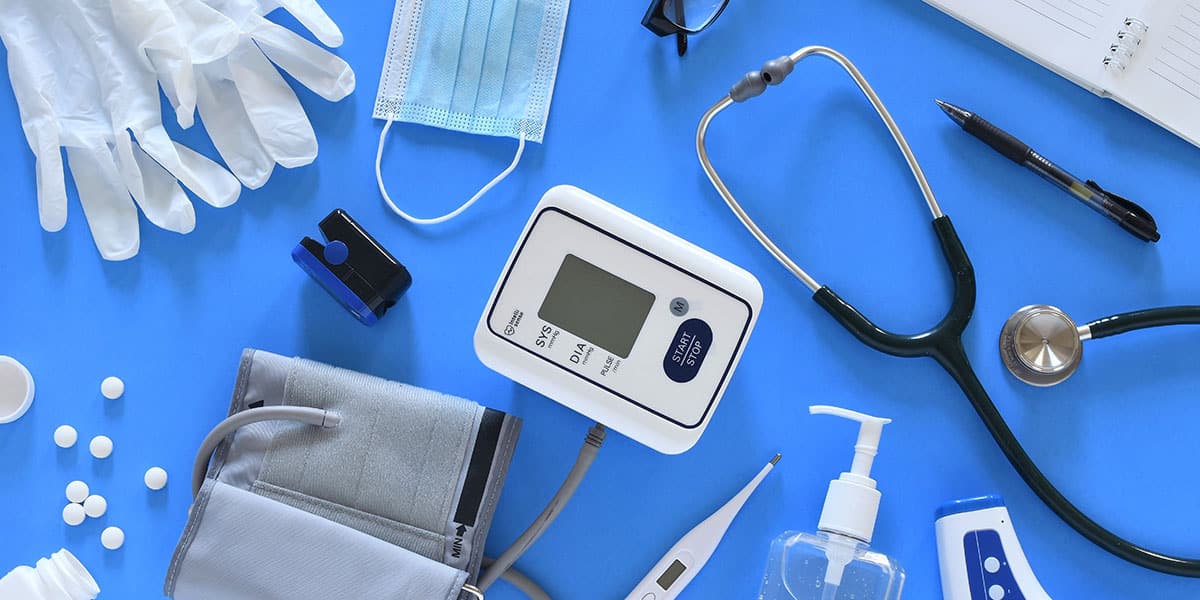
Why is the medical supplies shortage crisis in hospitals getting worse?
A shortage of medical supplies in recent months has caused disruptions in the delivery of medical services, particularly in government and university hospitals.
“I have a patient who needs a valve implant within the next half-hour, but it’s not at the hospital,” a neurology consultant at a government hospital in Fayoum tells Mada Masr. “It is priced at LE32,000 on the black market, while the Unified Procurement Authority sells it for LE6,500. What’s happening with pricing is madness,” he says.
The scarcity of medical supplies has forced many patients to turn to the black market, purchasing medical supplies at inflated prices before undergoing surgical procedures.
“We are now forced to source all medical supplies from the black market, and the patient has no choice but to buy them,” the doctor says, underscoring how harmful this is to the provision of healthcare.
In addition to the medical supply shortage, there is also a crisis in the availability of anesthesia materials. “As a neurology consultant, anesthesia is essential to my work. I was informed that a series of operations at a government hospital had to be canceled the next day due to the unavailability of anesthesia supplies,” he adds.
According to the doctor, these crises began to emerge following news circulated among employees in different healthcare sectors of disputes between medical supply companies and the Unified Procurement Authority (UPA), stemming from companies failing to meet supply deals at agreed-upon prices with the authority.
The medical supply crisis worsened in recent months due to delays in the UPA’s debt payments to medical supply companies, which led many to exit the market, coupled with a rapid deterioration in the parallel market exchange rate and a shortage in supply dollars.
Mada Masr spoke with medical supply companies, doctors and official sources to shed light on the dimensions of the crisis in the medical supplies sector and the nature of the authority that has made billions in profits in recent years, despite being established to control recurring crises in the sector.
Authorities seized upon the idea of creating the UPA after they received reports of medical supply companies making huge profits by providing supplies to government hospitals. Additionally, the health insurance sector had been facing a widespread crisis of supply shortages due to budget constraints.
The Armed Forces Medical Services Authority (AFMS) intervened and organized a tender in Berlin in 2017 to purchase medical equipment and supplies. The invitation to the tender was directly made to international companies, excluding Egyptian suppliers. The goal was to centralize procurement through a unified international tender rather than having individual hospitals, entities and the Health Ministry make separate purchases.
The tender and negotiations with global companies were held, and the AFMS began providing medical supplies.
However, confusion ensued. The AFMS, unfamiliar with the procurement process, was unaware that it had to register the supplies in Egypt with technical committees and that this process takes time, according to a medical supply company owner, speaking to Mada Masr on condition of anonymity.
According to the source, the AFMS was not prepared to store the supplied items, as they require specific conditions for preservation. The items were stored in a hangar belonging to the Armed Forces Logistics Authority, which the companies objected to. Subsequently, the authority set up warehouses in the Abbasseya area for storage.
Following the Berlin tender, the AFMS held another tender at the Rotana Hotel in Sharm el-Sheikh in October 2017, this time inviting Egyptian traders after realizing their importance in the supply and collection process from global companies.
The owner of a medical supply company who attended the tender says that it also faced challenges due to a lack of expertise. Participating Egyptian companies struggled to articulate the nuances of the profession and the specific requirements for supplying hospitals. “[The authority’s] primary focus was on completing the mission, to say that they secured medical supplies, without understanding hospitals' needs,” the source says.
For example, a government hospital requested 50 balloons for use in various surgical procedures, but the AFMS provided only one size instead of the variety needed. “We tried to explain to them that when a hospital requests 50 balloons, not 50 military boots, the 50 should not be of the same size. It can’t be. We perform operations that require different sizes, and this needs to be considered in the supply process,” the source explains.
After the conclusion of the tenders in Sharm el-Sheikh and Berlin, it became evident that the situation required a separate law and authority due to the immense scale of business with companies. Hence, the Unified Procurement Authority Law was enacted, according to the owner of a major medical gloves supplier and another supply company owner.
President Abdel Fattah al-Sisi ratified Law 151/2019, establishing the Egyptian authority for unified procurement, medical supplies and health technology management as a legal entity under the prime minister's jurisdiction.
The authority is tasked with conducting procurement operations for pharmaceuticals and medical supplies, for all government entities and authorities, in exchange for a fee not exceeding 7 percent of the net purchase value. Article 10 of the law prohibits hospitals from engaging in any purchasing transactions for medicines or medical supplies. It says “no administrative body shall purchase pharmaceuticals or medical supplies, except through the authority, except in cases of necessity and with the approval of its board of directors and the Cabinet. Any transaction conducted in violation of the authority's mandate for unified procurement shall be deemed invalid.”
In addition to procurement functions, the authority is responsible for formulating plans, programs and regulations for international procurement, preparing annual procurement budgets, as well as coordinating with medical companies to enhance the state's strategic stockpile of medical supplies, to address any exceptional circumstances. Managing the storage, transportation and distribution of medical supplies, along with all healthcare-related needs and hospital maintenance, are also within the authority’s mandate.
The UPA’s establishment diminished the Health Ministry’s authority, as the new authority took over all aspects related to the procurement of supplies and medication. According to a medical supply company owner, the UPA monopolized the market in a “terrifying” manner.
“Anyone who supplies must do so through them, and they have control over the budgets of all hospitals except military ones, and all medical supplies are sourced through them,” the source says.
One of the motives behind establishing the UPA was to eliminate the widespread corruption in tender processes, according to Mohamed Ismail, head of the Medical Supplies Division at the Federation of Egyptian Chambers of Commerce, who believes that having a centralized purchasing authority mitigates corruption risks.
However, MP Ahmed Farghaly tells Mada Masr that there are suspicions of corruption in the UPA’s tender and procurement processes and in settling its debts with companies, because it operates “as if it is above the law and accountability.” For instance, Farghaly says, some companies pay commissions to certain UPA employees to expedite the recovery of overdue payments.
Furthermore, the UPA’s operating methods have led to significant bottlenecks for companies in the sector, as well as severe medical supply shortages in hospitals. The UPA operates through tenders issued to companies, wherein a specific compensation for product supply is agreed upon between the parties. However, it can take up to six months for the authority to settle its payments with the companies.
The owner of a medical supply company tells Mada Masr that due to the slow payment collection cycle, only large companies with sufficient financial backing were able to continue operating. Consequently, a significant number of small company owners exited the market, leading to a shortage of medical supplies since the remaining larger companies were unable to cover the full spectrum of supply previously provided by various small companies.
Another medical supply company director notes that the delay in payments forced companies to work with the UPA. “If you supply medical supplies worth LE50 million, for example, and request part of the payment, the UPA delays installments for several months.”
This can create a vicious cycle, the source explains: “[The authority] withholds part of the payment until new merchandise is supplied. This means that if you refuse to supply, you won't receive your money and won't be able to work with any government hospital, because they all fall under the UPA’s umbrella.”
Furthermore, the establishment of the authority led to companies cutting ties with many traders and laying off a large number of collection staff. “Before the UPA emerged, we used to deal with 200 hospitals. Now, we are dealing with a single entity. The company now collaborates with one collection employee and one agent dealing with the UPA, and the number of companies has significantly decreased,” says an owner of a medical supply company.
The authority's monopoly did not stop at medical supplies for government and university hospitals. When companies attempted to offset losses incurred from working with the authority by increasing prices for supplies to the private sector, the UPA responded by entering the market and supplying private sector materials at lower prices, according to one of the medical supply company owners.
The procedures for requesting new supplies in hospitals also changed. Before the authority, hospitals would start ordering new supplies when their inventory levels reached 30 percent, according to a doctor at a university hospital in Tanta. However, post UPA, “We were told that the stock must be depleted, and we no longer have the luxury of choosing product quality,” the doctor says. “Since the UPA’s introduction, we only select what is available at the authority, and supplies are significantly delayed.”
Additionally, as the pound’s value fell further, the price for supplies in the national currency increased, meaning companies had to pay out even more to the authority to secure their shipments and import their supplies, resulting in losses, according to another official within a medical supply company.
Ismail, the head of the Medical Supplies Division, points to the complex conditions imposed by the central bank to limit overall imports also affecting the pharmaceutical and medical supplies sector. “The decision was supposed to target luxury goods, not medicines and medical supplies. The central bank now refuses to grant any line of credit, causing delays in goods,” he says.
Recently, the situation has worsened due to the Houthis targeting of commercial ships in the Red Sea, leading to a significant increase in the cost of securing the Bab al-Mandab strait, consequently escalating shipping expenses. “Previously, a container cost US$1,800, but now it has reached $9,000, and the Cape of Good Hope route is even farther away. As a result, costs have risen,” Ismail explains.
Farghaly points out that Parliament’s Health Committee held a meeting on January 15 with various authorities, including the old Health Insurance Authority, university hospitals, the Universal Health Insurance Authority, and a UPA representative to discuss the impact of the dollar crisis.
During the meeting, the UPA representative stated that their monthly imports had decreased from $345 million to only $90 million, as relayed by Farghaly, who says that imports now only focus on life-saving medications.
All of this has led to a significant shortage of medical supplies for many companies due to their inability to import new merchandise. Many companies have been forced to sell the available medical supplies directly to patients and “the prices are inflated at their convenience instead of supplying to the authority,” according to one of the company owners.
An anesthesiologist assistant in a government hospital in Alexandria tells Mada Masr that there is a shortage of the drugs Isoflurane and Sevoflurane, which are used for general anesthesia. When performing an operation requiring general anesthesia, a group of patients pool resources to purchase the anesthetic drugs at their own expense, “and if you want to get a surgery, you bring your own medications.” In urgent cases, if the patient is financially struggling, surgeons resort to donation funds to purchase them.
Many hospitals are currently only accepting emergency cases, while non-urgent cases have been postponed due to the unavailability of anesthesia. Some hospitals have been forced to reduce the number of non-emergency patient admissions. “Instead of taking ten patients, they now only take two because there are no medications,” according to the anesthesiologist assistant.
The crisis has also affected the availability of medical gloves. A doctor in Tanta notes that most of the supplies used in operations done by doctors for free are lacking in university hospitals. “We doctors no longer have gloves to wear,” the doctor says.
The doctors that Mada Masr spoke to for this story complained about the shortage of medical gloves in hospitals.
The owner of a medical gloves company explains that Nitrile blue gloves are priced at LE80 by the UPA, but their scarcity has driven the black market price up to LE350. “Companies no longer supply them, and instead keep them to sell to private hospitals or on the black market, due to them suffering significant losses because of the authority's delayed payments,” he says, adding that “the price increases in the authority only in the case of an official flotation.”
As medical supplies remain scarce, the crisis persists and the UPA continues to generate profits. Despite being established to combat corruption, observers of the health market find it incomprehensible that it has been made a profit-driven economic authority. Laws related to the authority's budgets indicate that it has made profits exceeding LE1 billion each fiscal year. During fiscal year 2020/21, amid the COVID-19 pandemic, the authority amassed profits approaching LE2 billion.
“We were surprised after the establishment of the authority that it is an economic authority seeking profit, purchasing medical supplies, and making a 7 percent profit on their original price as well as generating profit from the Health Ministry and government hospitals,” says Mahmoud Fouad, the executive director of the Egyptian Center for the Right to Medicine. “What is the purpose of creating an authority that draws from the Healthy Ministry’s budget and profits as well?"
تقارير ذات صلة

Piled-up debts, missing medicines: Sisi cuts back powers of Unified Procurement Authority
UPA’s debt crisis has led to severe drug shortages and higher out-of-pocket costs for patients
Rice export ban for everyone but Argany
In early February, the Egyptian Customs Authority renewed its ban on rice exports, which has been in place for over eight years per the given rationale that it will help…

Conversations from the Lebanese uprising | Joelle Boutros: The civil war only really ended today, with this movement
"I think this is the first movement in the country’s modern history that encompasses all of Lebanon"
Your support is the only way to ensure independent, progressive journalism survives.
You have a right to access accurate information, be stimulated by innovative and nuanced reporting, and be moved by compelling storytelling. Subscribe now to become part of the growing community of members who help us maintain our editorial independence.
Join us