
MPs give nod to exempt Tahya Masr Fund, partners from ‘all future taxes’
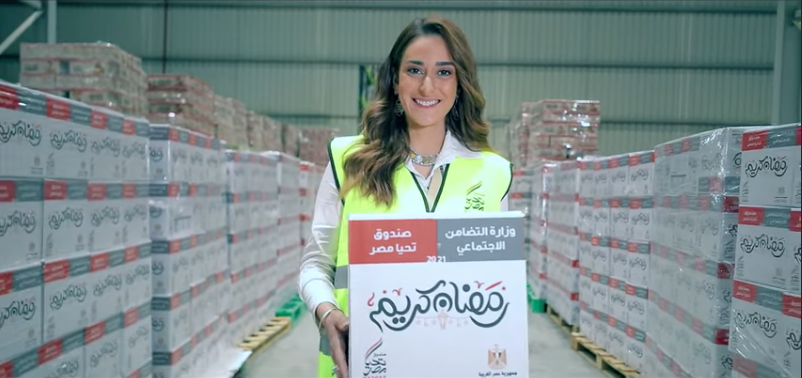
New amendments are set to exempt the Tahya Masr Fund, a black-box account for donations which falls directly under the president’s supervision, as well as any private or public bodies the fund is contracting with from taxes and fees.
Lawmakers’ preliminary approval on Tuesday for amendments to the fund, which has come to play a large role during the pandemic in the procurement of vaccines and medical supplies, would clear the way for it and parties it contracts with to save on value-added tax, customs fees on imports, and “any type of fees or taxes now or in the future.”
Taxation experts and the lawyer of a recent donor to the fund told Mada Masr that the amendments will address tax hurdles the fund has come to face as its activity has expanded.
MP Mohamed Badrawy, who sits in the House Planning and Budgeting Committee, told Mada Masr that though the fund was already exempt from some taxes and fees, "its activities are expanding.” The fund “owns various lands and projects. It also imports medical equipment and supplies from abroad, and receives foreign donations, which necessitated further exemptions," said Badrawy.
Established in 2014 to “stimulate growth” and “improve living conditions for the disadvantaged,” the Tahya Masr Fund has increasingly engaged in business and investment activity and has the right to establish its own companies or buy shares in existing companies in both the public and the private sector.
During the course of the pandemic, the fund has also come to play a key role in procurement, as the state has solicited donations from businessmen, political bodies, citizens and national as well as international companies to finance the purchase of vaccines and medical supplies.
The new amendments are to exempt the fund and “all contracts to which the fund is a party” from taxes and fees, whether imposed by law or executive decree, including income and stamp taxes, value-added tax, resource development fees, taxes on investment returns, real estate registration fees, documentation and certification fees, as well as taxes on gifts, domestic and foreign donations.
Customs duties, taxes imposed on free zones and fees on any imported equipment, devices, supplies and other products acquired directly for the fund or its business will also be added to the list of exemptions.
The only tax that the amendments oblige the fund to pay are on returns on treasury bills and bonds or any government debt instruments, or on capital gains tax if the fund reinvests interest it has gained from buying government debt.
A report from the House Planning and Budget Committee that was presented to MPs before Tuesday’s vote said that “obstacles” had prevented the fund from enjoying the exemptions previously stipulated in the law, referring to the fund being liable to pay real estate registration fees and documentation, that donations and grants received from abroad were taxed, while the fund was also subject to VAT, the privately owned Al-Shorouk newspaper reported.
Badrawy, a member of the majority-holding Nation’s Future Party, told Mada Masr that over the past few months, officials working for Tahya Masr have come up against new customs fees as the fund began to import medical equipment and supplies related to kidney failure and protective equipment againstCOVID-19 for various hospitals and institutions: though the fund was already subject to exemptions from such fees, parties purchasing products for fund activities were not entitled to the same relief, something that Badrawy described as detracting from the fund’s efforts.
As well as entering into contracts and partnerships, the fund established Tahya Masr Holding Company for Investment in 2018, which now owns six companies including: We Can, a pharmaceutical company manufacturing products for cancer patients; Egypt for Educational Administration, which is tasked with establishing and managing Nile International Schools; EG Gate for online shopping, in addition to the Egyptian Market Express company for SMEs.
Abdel Rasoul Abdel Hady, a member of the board of directors of the Egyptian Tax Authority told Mada Masr that the exemptions to which the Tahya Masr Fund and its companies are entitled contradict the principle of taxation laws, which stipulate that all parties are to be subject to taxes — with the exception of the Armed Forces and its subsidiary companies.
Abdel Hady also pointed out the irregularity of the fund’s being exempted from value-added tax, regardless of the nature of the goods and services it is dealing with. He said that the fund’s exemptions and privileges grant it the upper hand in the market, in both profit-oriented and charitable activities. Although some NGOs which share similar developmental and charitable goals with the Tahya Masr Fund are exempt from income taxes, said Abdel Hady, they are not exempted from VAT, nor from any potential future taxes.
By contrast, former head of the tax authority Ashraf al-Araby told Mada Masr that the exemptions are "understandable," given that "donations are the main source of income for the Tahya Masr Fund.” Araby told Mada Masr that donors “naturally” do not want their donations to be wasted on taxes and fees, but rather on activities such as building hospitals or schools. The fund’s law also gives donors the advantage of deducting contributions to Tahya Masr from their tax dues, with no upper limit.
Echoing that donors are keen to avoid fees on their donations, the lawyer of a businessman who donated LE10 million to the fund a few weeks ago told Mada Masr on condition of anonymity that the issue is less that the fund enjoys such privileges, but rather the lack of accountability and oversight, suggesting that lots of businessmen donate to the fund as a conduit to evade tax disputes or to build relationships with the authorities.
When President Abdel Fattah al-Sisi established the fund in 2014, it was subject to the supervision of the Central Auditing Authority. However, in July 2015, new amendments altered the authority’s role, allowing it only to set indicators for the fund’s performance based on statements prepared by the fund.
While the fund’s remit is national development, the lawyer pointed out that the fund’s activities, resources and donations are not subject to public dialogue. Other bodies that receive donations, like civil society organizations, are required to disclose their assets and the size of donations they receive, said the lawyer.
Within the last year, in light of the pandemic, the government has reportedly received around LE160 million in donations for vaccines via the Tahya Masr Fund following a campaign that called for donations from different businessmen and citizens. The move came after widespread demands calling on the government to provide vaccines for free.

تقارير ذات صلة
Devaluation drama and hot money’s return: What happened with the pound’s historic plummet?
'As long as there is more demand than supply, the price of the pound will continue to decrease.'
Q&A: Egypt’s emissions, the environment, and the relationship between air pollution and COVID-19
The loudest voices in this area are not those of environmental scientists, but of investors
Q&A with anthropology professor Hania Sholkamy | On the need to rethink social spending as crisis response after COVID-19
The pandemic exposed flaws in the way social protection is thought about in Egypt
Your support is the only way to ensure independent, progressive journalism survives.
You have a right to access accurate information, be stimulated by innovative and nuanced reporting, and be moved by compelling storytelling. Subscribe now to become part of the growing community of members who help us maintain our editorial independence.
Join us