
Ras al-Hikma: No effect on citizens’ wallets yet
Egypt has secured US$10 billion from the United Arab Emirates as the first installment in the US$35 billion Ras al-Hikma deal. This inflow of funds came less than a week after Prime Minister Mostafa Madbuly signed the deal amid extensive government propaganda to highlight its potential to positively impact the Egyptian economy in the short and long term, by offering relief from the relentless price hikes and finding a sustainable solution to Egypt’s chronic foreign currency shortage.
Manufacturers, importers and economic experts speaking to Mada Masr anticipate a favorable response in pricing once the government’s comments materialize on the ground. This includes arranging dollars for importers, clearing backlogged goods at ports to lower prices in the coming months and establishing long-term sustainability.
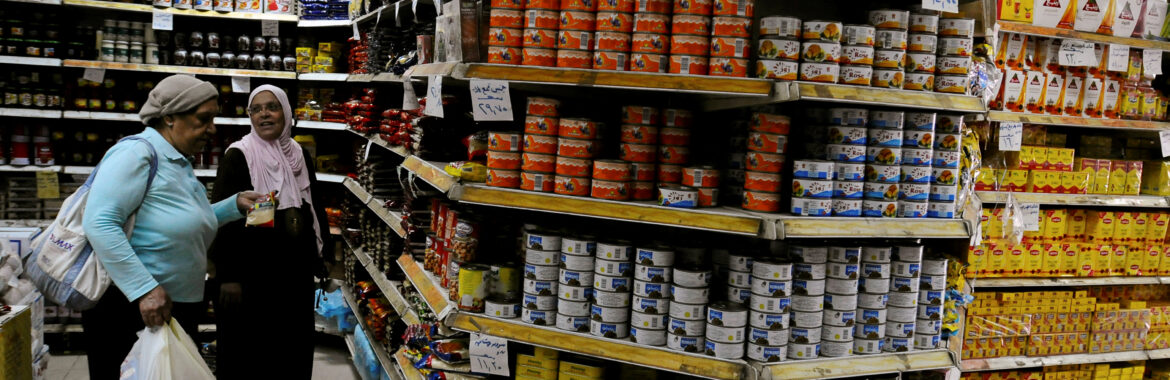
Since the deal was signed, the black market exchange rate has sharply declined to just below LE50 to the dollar. Consequently, gold prices plummeted. However, this drop has yet to influence the prices of everyday consumer goods, particularly food items.
A woman inquiring about the arrival of sugar at a grocery store in Dokki sarcastically remarked, “they made it seem like dollars are raining down on us. How about cheap sugar rain?”
One manufacturer, speaking to Mada Masr on condition of anonymity, says, “the ball is in the central bank's court,” emphasizing that the anticipated “breakthrough” hinges on banks securing the necessary hard currency for imports and clearing the backlog of goods at ports.
Despite the prime minister's directive on February 25 to release some of the $1.3 billion worth of strategic goods accumulated at ports, the decision was slow to be implemented.
Madbuly returned and issued a similar directive a week later for the immediate release of goods from customs.
On Wednesday, Madbuly announced that about $3 billion in backlogged goods were released — progress even though a significant backlog remains.
Nonetheless, the total $5–$14 billion in “non-essential” imports piled up at ports still have a way to go to be worked through, and that depends on the continued availability of hard currency for their release, according to sources in the poultry, livestock, tobacco, feed, spice, coffee and other essential commodities sectors.
Ashraf Hilal, head of the Household Appliances Division at the Cairo Chamber of Commerce, tells Mada Masr that there still remains difficulty in securing customs clearances.
“We still have to reach out to someone with export earnings to benefit from their ability to import. We acquire dollars from the black market and the person takes a commission, so we can import,” Hilal says. “No one that has imported a refrigerator for LE1,000 will sell it for LE900 simply because funds have entered the central bank. These funds must first be effectively deposited in banks, making it easier for all to approach banks for hard currency or different import documents at the bank rate to signal a change.”
Nevertheless, the prices of some raw materials, such as grains and feed ingredients, have changed. Soybean, an important feed ingredient, dropped from LE38,000 to LE23,000–LE30,000 per ton. Yellow corn prices also fell by about LE4,000 per ton, leading to an over 23 percent reduction in poultry feed prices. Similarly, wheat and flour prices slightly decreased, according to factory and trader price updates obtained by Mada Masr on March 4.
Hilal al-Mohandes, a feed agent in Minya who spoke to Mada Masr, attributes this decline to major traders rushing to purchase and stockpile large quantities of feed ingredients as the dollar surged above LE70, driven by the “grab it today before the price soars tomorrow” mindset.
However, in February, news of the Ras al-Hikma deal began circulating as banks started refusing importers’ dollar deposits unless the money was generated through export operations, along with a spike in arbitrary security crackdowns on currency traders, which led to complete market paralysis. “There is no buying or selling of any goods or even dollars,” Mohandes says.
With the confirmation of dollar inflows during the deal signing conference and promises of customs clearances, the parallel market saw the dollar drop below LE50. However, obtaining dollars from this market became challenging. Meanwhile, key players in the essential food commodities market closely monitored the situation, having stockpiled goods at an exchange rate of LE70 to the dollar.
The landscape saw a drastic shift as major traders hastened to sell their stockpiles of feed ingredients and other strategic goods to mitigate their losses. The surplus inventory transformed into a flooded market, leading to declining prices day by day.
Faced with an influx of supply, buyers of all sizes held back from making purchases, anticipating further price drops. Purchases, whether from poultry and livestock farmers or feed traders, were limited to essential quantities needed for the day, resulting in a significant drop in demand and subsequent stagnation.
As a result, the price reduction stopped at the top of the production pyramid and failed to trickle down to the rest of the production and distribution chain to reach the end consumer, with various parties involved in price management — such as importers, wholesalers, individual merchants, etc. — awaiting verification of the sustainability of this decline. The key to achieving this lies in the central bank and the Finance Ministry streamlining access to dollars and customs clearances, and ensuring the production cycle completes a full turn.
For instance, in the poultry sector, factory selling prices for all types of poultry feed saw decreases of around 23 percent over the past week. However, the price per kilogram of chicken for the end consumer increased from approximately LE102 pre-Ras al-Hikma to LE105 yesterday. The lowest recorded price was LE98 per kilogram of chicken, while egg prices remained unchanged at LE170 per tray (30 eggs).
“The chickens available for sale today have consumed the most expensive feed,” says Mahmoud al-Far, an agricultural engineer and small-scale poultry farmer in Daqahlia. Far says that for poultry and egg prices to decrease, “we must wait for another production cycle where feed prices will remain low” — likely during the latter half of Ramadan.
Echoing this sentiment is Mahmoud Victor, a poultry farm owner in Qena, who predicts that high prices will persist in the short term due to seasonal Ramadan demand and a decrease in the current poultry supply, as more producers ceased operations during the recent production cycle due to significant escalations in production costs.
Despite being the biggest buyer in the market, the government has not been able to offer discounted prices at its Ahlan Ramadan outlets, which are rolled out each year to preempt the annual spike in spending on household goods that comes with the holy month.
However, discounts on various food items were offered at some supermarkets and hypermarkets, which typically offer them annually as Ramadan approaches. This year, they coincided with the Ras al-Hikma deal. A survey conducted by Mada Masr at some of these chains in the weeks leading up to Ramadan found that discounts ranged from 5 to 30 percent.
Speaking on condition of anonymity, the marketing director at one of these chains tells Mada Masr that large supermarkets, which constitute around 7-10 percent of the retail market, wield competitive advantages not available to smaller stores. These advantages enable them to offer these discounts annually to capitalize on the public's pre-Ramadan food buying spree, boost sales, accelerate capital turnover and ultimately generate higher profits.
The first advantage is their ability to procure goods at competitive rates due to their financial capacity to purchase and sell larger quantities of products. The second advantage is direct sourcing from producers, bypassing about three intermediary cost layers between factories and consumers, such as agents, wholesalers and semi-wholesalers.
“This is a seasonal practice, every year we do that,” he says. “All the activities in the market are pre-agreed upon sales strategies.”
___________
In the long run, Ras al-Hikma alone — despite the deal's substantial size — will not suffice to bring about a real change in the country’s economic trajectory, “unless Egypt completely changes its economic course,” according to a researcher at an investment bank who spoke to Mada Masr on condition of anonymity.
The researcher says that the government will face challenges in determining its spending priorities from the deal's returns, which include long and medium-term debts of around $33 billion, short-term debts, arrears owed to foreign oil and gas companies and a significant deficit in the banking sector's assets. This is in addition to the value of goods stockpiled at ports awaiting clearance.
“To gauge the deal’s potential to solve Egypt's crisis, we must first accurately describe the problem,” macroeconomic analyst Mona Bedeir tells Mada Masr. She believes the deal will alleviate the crisis in the short term, especially if it triggers a flow of similar deals or an IMF agreement. However, “the real problem in the economy is more significant, and the scars from the past period in terms of a crisis of confidence in the local currency and the Egyptian economy will take a long time to heal,” she says.
The researcher from the investment bank echoes this sentiment, emphasizing that the “course correction” mentioned by Madbuly during the Ras al-Hikma announcement must be compelling to Egyptian citizens and investors alike.
“Even if the funds allocated to new development in New Alamein, roads and the administrative capital yield returns, as Madbuly mentioned in the announcement, these returns did not materialize until a decade later. During this period, [the government] significantly constrained [itself] economically. We were supposed to stretch our legs and grow little by little, ,” says the source.
“Over the coming months, several aspects will become clearer, starting with the expenditure of the incoming funds. First, they need to address the existing bottlenecks in imports to kickstart the economy. They also have a significant amount of debt, part of which needs restructuring to ease pressure on dollar resources,” the source adds. “Only then can they look at the remaining allocations and resources.”
تقارير ذات صلة
Between rising inflation and shrinking foreign currency: What is the state doing?
The Egyptian pound resumed its slide on Thursday, reaching LE52.42 for the dollar, after a brief rise in value to LE51.92 the previous day. The currency’s slide had begun in…
Land-for-dollars Beit al-Watan scheme marred by profiteering, leaving diaspora applicants empty-handed
Analysts warn the dollar-based land sales are pushing prices higher and limiting housing options
How will the Israel-Iran war affect the Egyptian economy?
The Egyptian economy continues to tremble with uncertainty in the face of the widening regional war escalated when Israel attacked Iran on Friday night. By the end of Sunday’s trading…
Your support is the only way to ensure independent, progressive journalism survives.
You have a right to access accurate information, be stimulated by innovative and nuanced reporting, and be moved by compelling storytelling. Subscribe now to become part of the growing community of members who help us maintain our editorial independence.
Join us