
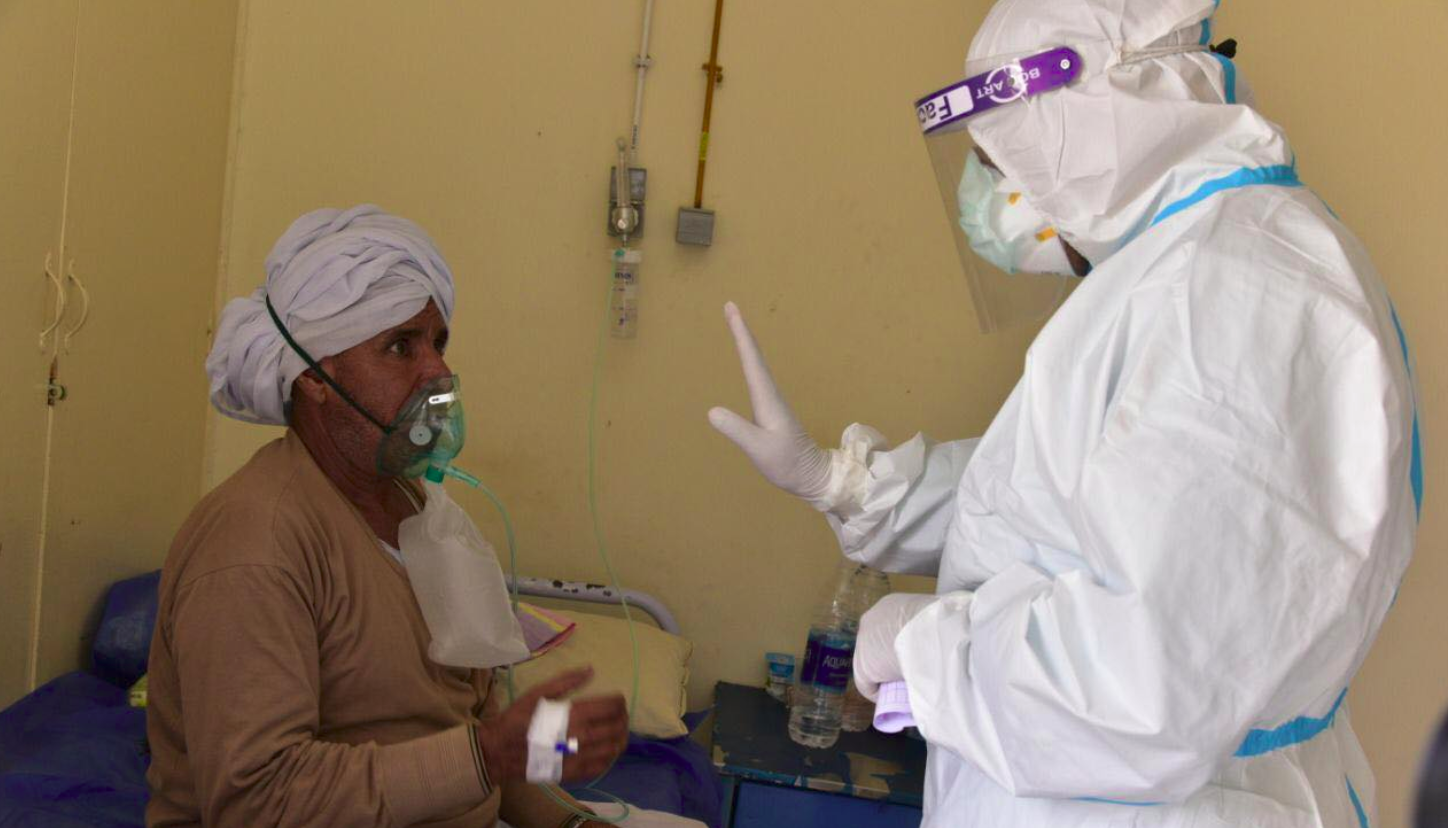
In Sohag, COVID-19 goes rampant
Tarawih prayer was sounding through the town center of Dar al-Salam, which sits about 65 kilometers south of Sohag, one day in late April when word began to spread that a “committee” was on its way to ensure that the administrative region was abiding by all COVID-19 precautionary measures as it navigated a surge in cases. As news of the committee’s arrival spread, people closed their shops and markets and rushed to pharmacies to buy masks.
By the time the hour and half of Ramadan prayers had finished, the rumor had fallen apart. No committee was coming, and everyone returned to normal. I sat down at a small cafe and ordered a cup of tea in a disposable cup, as a precautionary measure.
Moments later, a different voice came on over the loudspeaker. There had been a death, it announced: “The funeral will be held at the cemetery,” the voice said, indicating that the service would be limited to just the burial. I suspected that the deceased had died of COVID-19, as numbers in the governorate were rapidly going up.
Next to me, a man named Omar sat down. His beard was unkempt, a sign that he had lost a relative, and he had a wool shawl wrapped around his body despite the heat of the evening. I did not ask him explicitly whether he had lost someone to the virus, but I initiated a conversation about that “disease that only God knows about.” After an exchange of curses about the “damned virus,” Omar told me that his brother had passed away on his way to Sohag General Hospital a week earlier due to the virus.
In the first week of April, Health Minister Hala Zayed announced that Sohag was among the seven governorates with the highest rates of coronavirus cases across the country. In her next press conference on April 24, she said that the governorate is witnessing a slight increase in infections. The Health Ministry had put out a statement on April 21 in which it claimed that there had been 7,000 cases total throughout the pandemic in the government of more than 5 million inhabitants.
While Health Ministry officials tried to downplay concerns over an escalating situation, hospital officials and medical professionals Mada Masr spoke to from Sohag and neighboring Qena in mid April presented a more harrowing picture. Sohag Doctors Syndicate member Haitham Mohi Eddin told Mada Masr that the Upper Egypt governorates of Sohag and Qena were witnessing “an unprecedented increase in coronavirus cases and deaths,” with existing facilities reaching full capacity pushing doctors to recommend home quarantine for many patients experiencing severe symptoms. Doctors, parliamentarians, and medical officials called for urgent measures to be taken to combat the surge in coronavirus.
The surge in cases began between February and March and reached a new level by the end of April. According to official estimates, Sohag was one of the least affected governorates from the start of the pandemic until last November, having only accounted for 2.2 percent of the total registered cases in the country to that point.
What is happening in Sohag? Mada Masr spoke with medical sources and pharmacists across the governorate who have provided glimpses into the recent surge in infections. While there are rumors of a new strain of the virus, the picture is still murky due to a lack of testing. What sources who spoke to Mada Masr are certain of, however, is that the virus is spreading quickly through the Upper Egypt governorate, specifically its largely rural community, and Sohag’s decrepit medical facilities are only exacerbating the problem.
An official in one of the public hospitals in Sohag who spoke to Mada Masr on condition of anonymity said that he receives between 20 and 30 suspected COVID-19 cases everyday, 10 to 18 of whom indeed turn out to have the virus. Most of them isolate at home and 2 to 3 of them end up dying. In his assessment, his hospital is doing a lot better than others across the governorate.
Over the last two weeks, the infection rate in a prominent private hospital in the governorate rose to between 5 and 15 out of 40 suspected cases, according to Saad, an official in the hospital.
Ayman Khayamy, a director at a Dar al-Salam medical center, estimates that 50 percent of the suspected cases that come to his center end up having the coronavirus. Due to the sheer number of cases he has seen, Khayamy believes that there is not one household in the city of Dar al-Salam that has not had to deal with the virus.
A pharmacist in a popular pharmacy in the Sohag town of Khayyam tells Mada Masr that the extent of the crisis can be easily seen in the increase in demand for medicine.
“In the past, we used to dispense around 20 medical prescriptions for medicines in the COVID-19 protocol daily. But since the recent crisis, that number rose to 60 on average,” he says. “Eight out of 10 patients who come into the pharmacy for medication are have the virus,” he says, adding that many have come to rely on him to avoid the costs of medical tests.
The reliance on pharmacists to provide treatment for COVID-19 is an extension of an environment without enough resources to administer PCR testing, according to a medical source in nearby Qena, a governorate that is also experiencing a surge in infections, albeit not as extreme as Sohag. “ PCR testing has become almost a rarity. Not all cases even do further tests and scans. We have now reached a point where we diagnose and treat people based on their symptoms,” he says.
Some have asked whether the worsening situation in Sohag is related to the emergence of new strains of the virus. Mohamed Shaykhoun, the former director of the Sohag Educational Hospital, tells Mada Masr that speculation that Sohag may be facing a mutated form of COVID-19 virus is rooted in the fact that symptoms once less frequently registered in Egypt, including conjunctivitis, are now being seen among patients in the governorate. The World Health Organization does include conjunctivitis among the less commonly observed symptoms of COVID-19, but there is no clear evidence about its link to new variants.
The medical source in Qena also notes that there has been a shift in the types of symptoms being expressed by patients, adding that cases are now taking four forms.
“The first is light symptoms that progressively get worse and the recovery is slow. The second is light symptoms that quickly, even in a span of one day, take a dangerous turn, especially with the respiratory system. We saw people in their thirties who die in the span of a few hours after getting diagnosed following light symptoms,” the source says. “The third is light symptoms that are treated without resorting to oxygen or ventilators, but this can be deceitful. Some people suddenly get deadly blood clots after they are released from the hospital or receive negative PCR results. The fourth form, which is the most common form among farmers who work in the fields, is light symptoms that get treated at home. I think that this one is like the first form, but people working in the fields are not as exposed to high viral loads.”
Does this mean that Egypt is certainly facing new strains of the virus? The medical source in Qena is not so sure.
“It is unclear because we do not have testing and no one cares about testing,” the source says. “We might have different strains, but it could also come down to one’s individual capacity to resist the virus, which is related to that individual's genetic makeup. We have seen entire families whose situation deteriorated quickly and other families who were able to resist the virus and recovered swiftly,” the source adds.
However, what is certain, the source adds, is the accelerating speed at which the virus is spreading. “This is something we hadn’t seen before,” he adds.
When the crisis broke out, many Sohag residents believed that the steep impact was linked to deteriorating healthcare provisions in the governorate. Indeed, Sohag is at the bottom of the list when it comes to the availability of healthcare services. According to CAPMAS data from 2019, Sohag has .8bed per 1,000 people, compared to Cairo and Alexandria, two governorates with higher beds per capita at 2.9 and 2.2 beds per 1,000 people respectively.
Zayed has called for increasing the number of hospital beds, ICU beds, ventilators and medical oxygen tanks in Sohag to respond to the surge in infections, after which there was an intensified effort to scale up the preparedness of hospitals across Sohag to respond to the coronavirus rampage rampage that took over the city, including the provision of isolation beds and medical supervision for some cases at home. In 17 isolation hospitals, beds designated for COVID-19 patients increased from 441 to 883, ICU beds from 86 to 166 and ventilators from 40 to 60.
According to Tarek Mansour, a member of the Doctors Syndicate in Sohag, the medical sector in the governorate had to solicit the help of medical teams in other governorates. At the beginning of May, 30 doctors arrived in Sohag to provide support to the healthcare sector, and four COVID-19 vaccination centers opened. But questions remain regarding whether those efforts are enough to contain the crisis.
Mansour believes that there is still a 50 percent shortage in ICU units despite the recent upgrade. As for the beds, they still fall 10 percent short of the capacity they should be at to match the number of cases in isolation hospitals, in his estimation.
Omar, who lost his brother, laments the fact that even though the Health Ministry upgraded the capacity of several hospitals, he didn’t reap the benefits of those decisions. “What good did it bring me? They focus on the central locations, and they don’t care about marginalized areas like ours,” he says.
According to several doctors in Sohag who spoke to Mada Masr, tight-knit social relations, crowds and the complete absence of precautionary measures make rural areas, where 78.7 percent of the governorate’s population live, more prone to outbreaks.
Mahmoud Fahmy Mansour, the head of the Doctors Syndicate in Sohag, urged Governor Tarek al-Fiqy to enforce a curfew to put the situation under control. But Mansour told Mada Masr that his request was rejected under the pretext that a curfew would be socially and economically harmful to the governorate.
تقارير ذات صلة

Devaluation drama and hot money’s return: What happened with the pound’s historic plummet?
'As long as there is more demand than supply, the price of the pound will continue to decrease.'
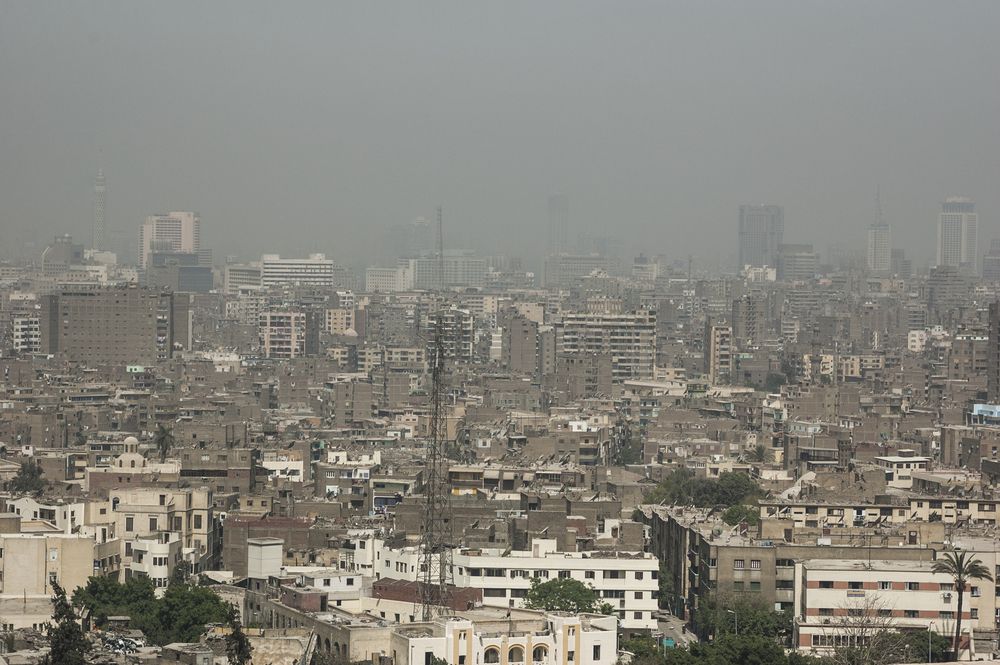
Q&A: Egypt’s emissions, the environment, and the relationship between air pollution and COVID-19
The loudest voices in this area are not those of environmental scientists, but of investors
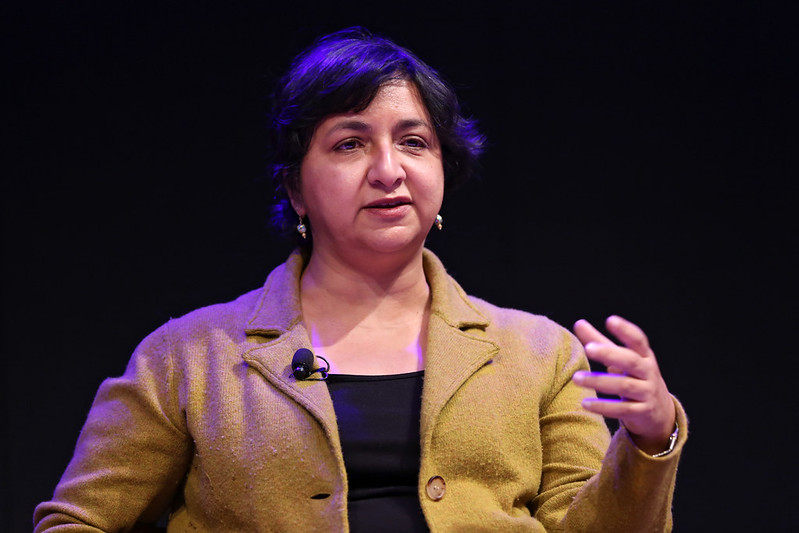
Q&A with anthropology professor Hania Sholkamy | On the need to rethink social spending as crisis response after COVID-19
The pandemic exposed flaws in the way social protection is thought about in Egypt
Your support is the only way to ensure independent, progressive journalism survives.
You have a right to access accurate information, be stimulated by innovative and nuanced reporting, and be moved by compelling storytelling. Subscribe now to become part of the growing community of members who help us maintain our editorial independence.
Join us