
How real estate companies in the new capital are targeting the middle class
Sameh Wasfy*, a 30-something engineer at Orascom Construction, is considering spending 60 percent of his monthly salary on installments to buy an apartment in the new administrative capital.
Based on his consultations with a large brokerage firm that connects real estate companies with customers, Wasfy chose a small 80 square meter apartment selling for LE1.2 million. While the rate of LE15,000 per square meter is expensive in Egypt’s real estate market, the key factors enticing Wasfy are the installment plan and its terms of payment: a down payment of no more than 10 percent of the total price with a monthly installment plan of up to 10 years.
Wasfy believes the apartment is a good investment opportunity. Upon receiving the property after paying four years of installments, he plans to rent it out for LE10,000 to 12,000 a month. The apartment is located near one of the foreign universities being built in the new capital, which he hopes will attract rich students from the Gulf looking for conveniently located housing.
According to Farida*, a marketing employee at the real estate company Wasfy is considering buying the apartment from, the 10-year installment plan being offered reflects a new trend the administrative capital market has started in the real estate market.
The primary strategy used by real estate developers in Egypt to offer units that are still under construction is known as selling “on plan.” The real estate projects move forward by using the on-plan sales to provide cash flow for construction.
Market conditions in the new administrative capital have forced real estate companies to modify their strategies in order to target wider segments of the middle class by offering unprecedented payment terms. While the new market reality opens up opportunities to the middle class, it comes with its own risks.
According to Farida, before the new administrative capital, the maximum period for an installment plan was typically seven years. The only exceptions to this rule were mega real estate developers, such as the Talaat Mostafa Group, which have enough liquidity to complete projects without depending on the cash flow from installment payments.
Yet most companies working in the new administrative capital are smaller firms that have acquired relatively small plots of land. Only 71 out of 238 companies working in the new capital have acquired more than five feddans of land, according to the new administrative capital’s spokesperson, Khaled al-Husseiny.
“The default now is to facilitate payments by offering 10-plus year installment plans and sometimes even no down payment,” Farida says. “Furthermore, the minimum percentage of the total unit price that a buyer must pay before taking the apartment was reduced to 60 percent after typically having been between 70 and 75 percent. It is now also common for companies to accept extremely low registration payments of as little as LE10,000 in some cases, something that was impossible to imagine in the past.”
According to Invest-Gate, a platform that provides data and analysis of the real estate market in Egypt, estimates dating back to January 2019 show that the vast majority of companies working in the new administrative capital are offering units with just a 10 percent down payment of the total purchase price. Many companies do not even require a down payment for some units, as shown in the following graph, which breaks down the percentage of down payments required by real estate companies in the administrative capital.

Other patterns of financial and marketing structures have also emerged in the new capital in order to lure would-be investors.
“If someone has savings of no more than LE100,000, they can invest it by buying shares in a commercial unit that will then be leased,” says Farida. “Shares of commercial properties [are sold], but the properties remain under the management of the real estate companies leasing them. The buyers get a percentage of the rent relative to the percentage of shares they own in the property.”
There have also been innovations in the way interest is marketed to customers by, for example, presenting it “in reverse,” as Farida puts it. Units are marketed with their total purchasing price as if there is no interest. Customers able to pay the total amount upfront, instead of in installments, get a 30 to 35 percent “discount” on the total price. With installments, the longer the installment period, the lower the so-called discount. This marketing method means that interest is already baked into the total price of a unit, allowing brokerage firms and real estate companies to forgo discussions on interest rates when properties are marketed for sale.
According to Farida, real estate developers desperately need to attract buyers at any cost in order to create liquidity to finance construction, creating a “heightened race” between firms operating in the new administrative capital to provide favorable payment terms.
Administrative Capital for Urban Development, the state-owned developer and owner of the new capital, has laid out stringent conditions for real estate developers: if a project is not completed within a certain time period, the land will be confiscated.
These new exceptional conditions imposed by the state are intimately tied with the new administrative capital, according to Farida, who previously worked on projects elsewhere in Egypt with Orascom Development Holding. “Companies found themselves in a difficult, competitive environment due to the large volume of real estate offerings in a short window of time, which explains the race to offer easier payment plans,” she says.
In October, the chairman of Administrative Capital for Urban Development, Ahmed Zaki Abdeen, announced that the company had withdrawn lands from four real estate developers in the new capital due to “their failure to deliver projects according to the timeline set by Administrative Capital for Urban Development.”
In January, the chairman of Misr Italia Properties, Hany al-Aasal, issued a press statement announcing that “real estate companies faced many challenges during the first phase of the administrative capital, which led to the failure of several entities.”
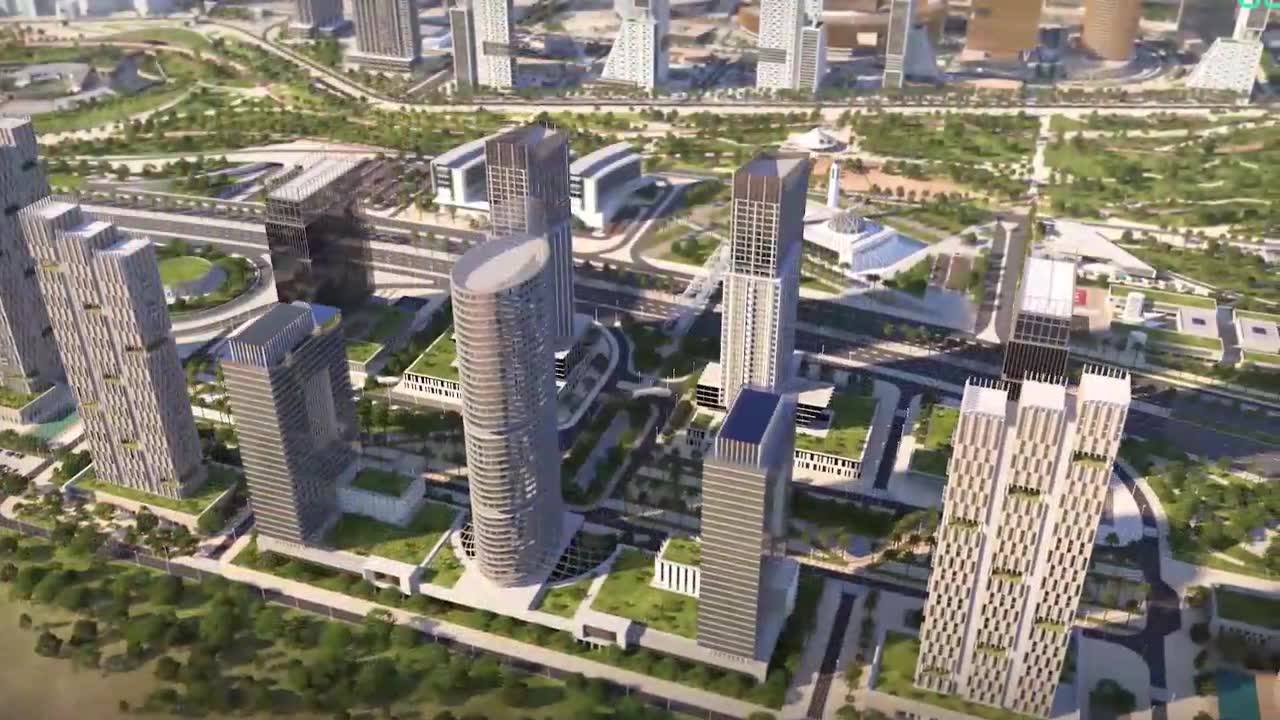
Another factor is the amount of land available for development in the new administrative capital, which is on a much larger scale than all the new cities launched since the 1970s when the government’s urban development strategy first came into effect.

The new administrative capital is 40 percent larger than Sadat City — which was meant to become the new capital when it was first conceived — and double the size of New Cairo.
The increased scale of the new administrative capital has forced real estate developers to modify their strategy to target different classes of customers. “The real estate supply is huge, which means there is a necessity to attract middle-class buyers because there aren’t enough upper-class customers to buy all those units in such short amount of time,” says Aboul Hassan Nassar, the head of the Consultation Center for Real Estate Experts and a real estate appraiser in the economic court and the Financial Regulatory Authority, adding that the race to offer favorable payment terms was inevitable.
The new payment plans have proved successful in attracting middle-class customers who want to take advantage of the new market terms in order to buy into the “capital of the wealthy,” where the average price per square meter stands at LE11,800 — the most expensive of any city in the country. By comparison, average prices stand at LE10,450 per square meter in New Cairo, LE10,500 in Sheikh Zayed, and LE7,650 in 6th of October City, according to Aqar Map. Middle-class consumers are now attempting to buy residential and non-residential units that are relatively expensive but no longer unaffordable.
“In contrast to the popular conception that the new administrative capital is mainly attracting people of a higher socioeconomic class ... the reality is that most of those people are still hesitant to buy property in the new administrative capital,” Farida says. “The reason is that this demographic is not solely interested in buying luxury property. It wants to buy luxury property from a renowned real estate company with a track record, something that does not currently exist in the new capital with the exception of two companies. A large number of companies were established solely to invest in the new administrative capital when the government announced that large swaths of land were available, but this did not attract wealthier investors.”
However, the push for a large segment of the middle class to obtain more expensive property with the easy payment plans offered by companies comes with its own risks.
“[The terms of the payment plans] have driven many people to dismiss the probability of failing to meet the payments. Surely, the longer the installment period, the higher the risk,” Nassar says. “In light of all the great temptations offered by companies desperate to lure buyers at any cost, middle-class consumers are forgetting that in the event they fail to meet a payment, their units will be withdrawn and money will be returned without the interest they could have accrued if they invested in a savings account for all those years.”
“What’s even more dangerous is what the real estate market will go through if companies are forced to recall large numbers of units, causing an accumulation of supply that might result in a bubble,” Nassar says.
Although Wasfy’s investment plan may appear solid, it does not account for possible financial risks he might face in the future. Any failure to pay the installments over the 10 years will cause his plan to crumble.
*Pseudonyms
تقارير ذات صلة
Living outside the city walls: The process of transferring civil servants to the new capital
Since early March, Hatem,* a senior Planning Ministry official, has been anxiously waiting for a text message confirming an appointment to sign a contract for an apartment in Badr City,…
Move to demolish Nasr City neighborhoods based on profit, not public interest, experts say
These types of urban changes also affect how neighborhood communities develop and interact
Surprise in the making: The little we know of what will become of Zohriya
Talk of the state's plans to "redevelop" the garden has circulated since 2021
Your support is the only way to ensure independent, progressive journalism survives.
You have a right to access accurate information, be stimulated by innovative and nuanced reporting, and be moved by compelling storytelling. Subscribe now to become part of the growing community of members who help us maintain our editorial independence.
Join us