
How is the Egyptian government dealing with the global wheat crisis?
Following the ban on exports of wheat and all types of flour, the government has taken steps this week to control the price of bread in local markets, after prices rose as an immediate effect of Russia’s invasion of Ukraine.
Fears that the war would disrupt two of the world’s largest wheat exporters — Russia and Ukraine — pushed the global cost of importing wheat sky high, sending a shock through the market in Egypt, which is the world’s largest wheat importer.
As the price per loaf of unsubsidized bread dialed up to as much as 50 percent in Egyptian markets, the Egyptian government is moving toward setting up a pricing mechanism that would set the price for unsubsidized bread for the next three months.
While the mechanism is still unclear, industry sources who spoke to Mada Masr said a “bumpy” road awaits any attempts to exert more control over the bread production process. One major obstacle is providing the necessary wheat, with the troubled global market an unreliable source.
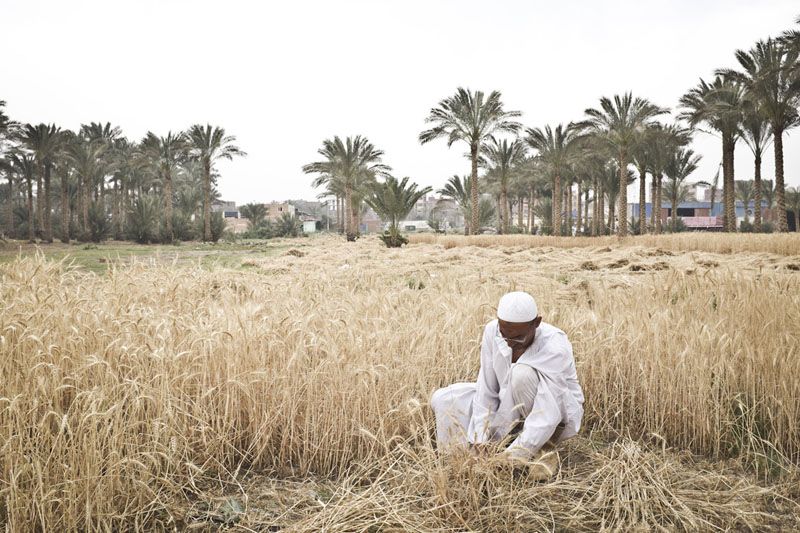
The government has sought out a solution in leaning hard on local wheat production to fill in its wheat stocks for this year. Farmers now must sell around 60 percent of their wheat crop to the government for the current season.
While some sources who spoke to Mada Masr lauded the decision, others believe it is not a viable option to cover Egypt’s needs of subsidized and unsubsidized bread. Farmers who spoke to Mada Masr also object to selling their wheat to the government at a price much lower than the global prices, especially with little incentive offered to smallholders.
Here’s a breakdown of the government’s most recent decisions regarding bread production and the obstacles that face them.
The new pricing mechanism
The Supply and Internal Trade Ministry was tasked on Wednesday with setting a pricing mechanism for unsubsidized bread for three months.
The move came one day after the president issued directives to control bread pricing, though the instructions were limited to ordering the Supply Ministry to “provide the necessary flour to bakeries to control the price” and monitor the implementation of the decision once studies were completed on the production costs and pricing of unsubsidized bread.
What will the mechanism involve? This remains unannounced. While the supply minister discussed hedging during an early stage of post-invasion panic prompted by high prices in the domestic market, costs have come down again somewhat since the export ban that started on March 11, which prevented foreign sales of wheat, flour and flour products.
Anything as interventionist as hedging could entail substantial costs to the ministry and would be a marked departure from a policy direction toward drawing back the costly bread subsidy program. But all that policy calculus could be off-kilter now that the economic conditions in the wake of the war between Russia and Ukraine are so different.
There’s some evidence that the ministry is considering something more hands-on, as Walid Diab, a member of the grains division at the Federation of Egyptian Industries, told Mada Masr that the ministry met with members of the bakeries division on Tuesday, and offered to supply them wheat at LE7,000 per ton in exchange for flour at LE8,500 per ton that the ministry would then supply to bakeries that make the unsubsidized loaves.
How would that affect the ministry? It would almost double the amount of wheat that the ministry has to secure for the domestic market: it currently procures 5 million tons for bakeries to produce subsidized bread, whereas it would need to procure as much as additional 4 million tons if it is also to serve the bakeries producing unsubsidized bread.
Though there is no formal agreement as of yet, it would be a “bumpy” route for the ministry to take, said Diab.
Controlling local wheat crops
Another primary question is how the ministry will provide all that wheat. So far, the answer seems to be that it will turn to the local wheat crop for the current season. A ministry decision came out on Monday, of which Mada Masr obtained a copy, obligating farmers to deliver the wheat crop for the current season at a minimum of 12 ardebs per feddan — about 60 percent of a feddan’s productivity.
Farmers will also be banned from selling the remainder of their crop without a permit from the ministry. Private sector buyers who made purchases from local farmers before the decision was issued will also have to hand over the wheat if it amounts to more than 40 percent of the farmers' crop, or face legal penalties.
Farmers who do not comply with the decision will be deprived of the subsidized fertilizers they are scheduled to receive in the summer season, as well as any other professional support they usually receive from the Agricultural Bank of Egypt. Those who sell to the private sector will face penalties including prison sentences of one to five years and fines ranging from LE300 to LE1,000 — multiplied by repeated violations — and the confiscation of the crop and the vehicles used to transport it.
Multiple industry sources who spoke to Mada Masr believe the move is the most effective step the state could have taken to ensure the supply of the local wheat crop this year. With the new decision, “the government got a hold of the wheat cycle from its starting point” and will be able to monitor how much wheat goes to the private sector, Amr al-Heeny, a former head of the mills chamber at the Federation of Egyptian Industries, told Mada Masr.
With the global wheat price currently as high as LE8,300 per ton, the government has been offering a guaranteed price for local wheat of LE5,400, effectively raised to LE5,800 after the Cabinet approved on Wednesday an incentive of LE65 per ardeb to encourage farmers to sell to the government. Those who own lands exceeding 25 feddans will be offered fertilizers completely free of charge if they deliver over 90 percent of their harvest to the government.
Obstacles in the way
Yet there still are many doubts that the government will be able to collect the 6 million tons it announced, with sources noting that the local crop is usually around 7 million tons, far lower than the 10 million figure quoted by the government.
According to Diab, “The government relies on information from agricultural association monitoring, which is not completely accurate. There are also many farmers who claim that they cultivate larger holdings than what they actually do in order to receive subsidies and fertilizers.”
Many farmlands do not even produce the 12 ardebs requested by the government. Farmers Syndicate chair Hussein Abu Saddam told Mada Masr that lack of soil fertility, wheat diseases and the mix-up of planting dates are among issues that lower the productivity of many wheat farmlands to six ardebs or less.
These conditions, along with the price offered by the government being much lower than the global price, will push many farmers away from growing wheat next season, Abu Saddam warned.
Seven farmers who spoke to Mada Masr said they will refuse to sell their wheat to the government due to the lower price, preferring to keep it for personal use or sell it to relatives, despite the expected penalties. One farmer dismissed the punitive withdrawal of fertilizer subsidies as an ineffective penalty, noting that many farmers purchase much more fertilizer than what the government offers due to low land fertility.
There is also the issue of local wheat going to the private sector. To ensure access to local wheat, the government usually offers high prices that sometimes exceed the global market price. The private sector, on the other hand, tends to buy imported wheat because the government’s above-market offer makes imports cheaper than local wheat.
With the global market turned upside down by the war in Ukraine, the situation is different. According to Diab, “merchants were going to collect most of the wheat crop from the farmers and store it, taking advantage of the fact that the government has not raised the supply price, even though the global price of wheat has gone up.”
While the law already prohibits the private sector from using or buying local wheat, a considerable amount usually falls in the hands of the private sector anyway, in addition to the quantities farmers store for themselves. According to grain importer Hussein Soliman, local and imported wheat cannot be technically differentiated once they are out of their bags, hindering Supply Ministry monitors from locating the violations.

تقارير ذات صلة
Brandishing the military trial stick: The govt’s price control bluff
Another wave of inflation is crashing in. On March 10, and for the third time in the course of a year, the government raised fuel prices again, justifying the decision…
Egypt to seek LE1.5 trillion in borrowing as debt servicing consumes 50% of 2022/23 expenditures
An MP blamed the government for not developing an austerity plan.
Bread politics
An eight-part series that takes an in-depth look at bread subsidies in Egypt
Your support is the only way to ensure independent, progressive journalism survives.
You have a right to access accurate information, be stimulated by innovative and nuanced reporting, and be moved by compelling storytelling. Subscribe now to become part of the growing community of members who help us maintain our editorial independence.
Join us