
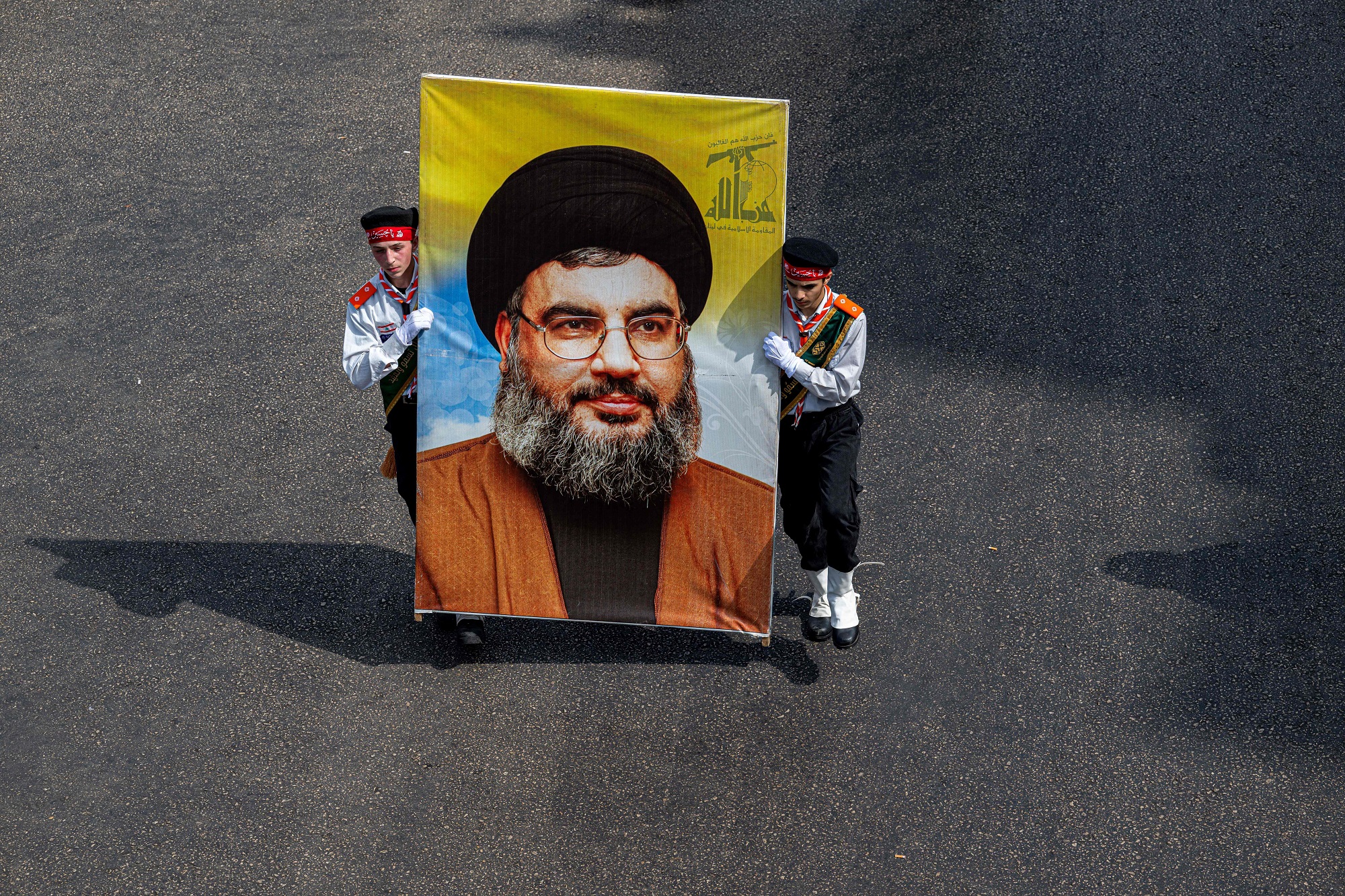
Hassan Nasrallah: the Sayyed, the disappointment, the Shaheed
Hezbollah announced on Saturday that its Secretary-General Hassan Nasrallah was killed in a series of airstrikes targeting him in Beirut the day before. His death marks the end of more than three decades of leadership at the helm of the resistance group. Throughout his time in power, Nasrallah played a range of roles in the political landscape of the entire region, not just in Lebanon or on the frontlines against Israel.
Perhaps no figure in contemporary Arab political history has risen to such a legendary status as a historic leader of the resistance against Israel, twice defeating the Zionist state, as Nasrallah did. Yet, over time, his image shifted to that of a pawn loyal to the Syrian regime, assisting it in suppressing the Syrian revolution that broke out in 2011.
In the past year alone, since Israel launched its ongoing war on Gaza, millions found themselves waiting for Nasrallah’s signal for Hezbollah to join the war and support the Palestinian resistance.
As the scope of the ongoing war expands each day and the region is being redrawn by Israel’s unchecked madness, Nasrallah’s assassination opens a new chapter. Despite the controversy surrounding him and his legacy, his killing resurrects Nasrallah as the Sayyed once again, but also this time as the Martyr.
***
Hassan Nasrallah was born in 1960 in the impoverished Karantina neighborhood of eastern Beirut, a place where many Palestinians sought refuge following the Nakba. He was the eldest of nine siblings in a modest family.
By the time he turned 15, Lebanon descended into civil war, which lasted from 1975 to 1990. The country fractured into camps, with right-wing Christian parties pitted against leftist and Islamist groups, along with the Palestinian presence primarily represented organizationally and militarily by the Palestine Liberation Organization (PLO). Behind the scenes, regional and international interests contributed to perpetuate the conflict.
Amid the sectarian violence and bloodshed, Nasrallah’s father sought safety for his family by returning to his hometown in the south: Bazouriye village, near the city of Sour, which is predominantly Shia as with much of the southern area of Lebanon close to Israel.
This move altered the course of the 15-year-old’s life, setting him on a path to becoming the leader of Lebanon’s largest armed group in later years.
Nasrallah increasingly explored his Shia identity and decided to join the Lebanese Resistance Detachments, known as the Amal Movement. Founded by Musa al-Sadr in southern Lebanon as both a political and military movement, Amal primarily represented the country’s impoverished Shia population and was hence called the “Movement of the Deprived.” Sadr laid the groundwork for the ideology of resistance and bearing arms in southern Lebanon. The movement’s popularity surged after Israel invaded Lebanon in March 1978. However, just a few months later, Sadr and two of his companions suddenly disappeared during a trip to Libya, leaving him an “vanished Imam.”
In the mid-1970s, Nasrallah moved to Iraq, settling in Najaf, where he met Abbas al-Musawi, a Shia cleric and disciple of Sadr. He would become Nasrallah’s mentor. They returned to Lebanon two years later after then-President Saddam Hussein expelled all Lebanese Shia students from Iraq’s Shia religious educational institutions in an effort to stem the spread of Shia influence amid the ongoing war with neighboring Iran.
Nasrallah's journey into armed struggle began upon his return to Lebanon, as he became deeply involved in the Lebanese Civil War in the late 1970s.
The region’s dynamics shifted with the 1979 Iranian Revolution. Three years later, Israel invaded Lebanon in response to the growing presence of Palestinian fighters affiliated with the PLO in southern Lebanon. Amid the Iran-Iraq War in 1985, Iran’s Revolutionary Guards Corps decided to form Hezbollah to resist Israeli aggression. Nasrallah, along with others, split from Amal, the leading Shia faction in Lebanon, to join the newly established, Iran-affiliated Hezbollah. The group was initially led by Hassan al-Tufayli until he was ousted in 1991 and succeeded by Musawi. Musawi was assassinated less than a year into his tenure, and Nasrallah became Hezbollah’s Secretary-General in 1992.
***
Nasrallah’s leadership saw significant changes, including a shift in allegiance toward Iran, unlike his predecessors who leaned toward the Syrian regime under Hafez al-Assad. Hezbollah then expanded its role as a political actor alongside its military operations.
During his tenure, Hezbollah employed guerrilla warfare against the Israeli occupation in southern Lebanon, shelling Israeli settlements using Katyusha rockets. In 1997, Nasrallah’s son, Hadi, was killed in combat, and Israel confiscated his body.
Ultimately, in 2000, Israel was forced to partially withdraw from southern Lebanon, a victory which cemented Nasrallah’s legendary status. For millions across the region, he became a hero who defeated Israel and forced it to end its occupation of Lebanon. "The liberation of Lebanon was a major military success for an armed group fighting a superior army," says Heiko Wimmen, Iraq-Lebanon-Syria project director at the International Crisis Group.
In a speech following the Israeli withdrawal, Nasrallah stressed that the liberation of the south belonged to everyone, not just to the Shia, saying, "I tell all Lebanese, you must view this as a victory for all Lebanese, not the victory of a party, movement, or organization. This is not the triumph of one sect and the defeat of another."
Nasrallah became a symbol for an entire generation. Majd Kayyal, a Palestinian writer from Haifa, recalls the place Nasrallah came to hold in his imagination. “I was born in the nineties. Throughout my life and the development of my political character, this man was at the center.”
“For instance, he was the first to avenge a personal loss for me. On October 7, 2000, we were mourning my cousin, who had been martyred five days earlier during the Intifada. Hezbollah then kidnapped three Israeli soldiers. I remember, after a week of my mother and aunts crying, Nasrallah’s appearance brought the first moment of joy.”
Lebanese journalist Carole Kerbage remembers, “My vision of resistance is tied to the voice of Hassan Nasrallah. In 2000, I was in school. I watched the detainees being released from Khayyam [an Israeli detention and interrogation center where thousands had been imprisoned since the 1982 invasion]. That moment was pivotal in shaping my awareness of the cause. It was at this moment that my interest in the Palestinian cause began.”
Karam Nachar, the editor-in-chief of the Syrian website Al-Jumhuriya, likewise recalls the shaping of his awareness of the Palestinian cause with the liberation of southern Lebanon in 2000. "One of the foundational moments in my political consciousness was the 1996 Qana massacre, and my awareness of Israel came not only through Palestine but also through its presence in southern Lebanon and the massacres they committed against civilians. Then there was this giant figure, Hassan Nasrallah, who was highly charismatic and eloquent. Whenever he appeared on TV, you couldn’t help but watch."
Nachar believes Nasrallah holds a certain “exceptional” status in the Arab world. "It’s not just his eloquence and presence — he is a principled man who lives by his principles. He lost his son, lived an austere life far removed from the opulence, corruption and plunder that characterized the lives of Arab politicians. All this offered a different model. Here was an Arabic-speaking political body, led by a man who was sincere and noble, focused on southern Lebanon and fighting a demon named Israel."
***
But this legend began to falter. In 2005, the alignment between the Syrian regime and Hezbollah became more pronounced, shifting into the domestic political arena and reconfiguring the image of the group that was primarily known to the public for its war against Israel. Syria’s presence in Lebanon and its control over key state institutions for over 30 years during and after the civil war had long created tensions in Lebanon, especially among the Sunni community. At the time, the Sunni sect was led by parliament member Rafik al-Hariri, who was assassinated in 2005 when a bomb-loaded truck detonated near his convoy in Beirut. Five Hezbollah members were subsequently accused of orchestrating the assassination and were tried in absentia by a special court established by the UN and the Lebanese government, though Hezbollah supporters dismissed the court as biased.
In an attempt to strike a preemptive blow against the supporters of Syria’s withdrawal from Lebanon, Hezbollah called on its supporters to rally on March 8, 2005, for a “Loyalty Day ” in support of Syria. This further fueled public anger against the Syrian presence, which had already been inflamed by Hariri’s assassination. Just days later, on March 14, thousands of Lebanese protesters took to the streets, demanding the resignation of the Syrian-backed Lebanese government and the expulsion of Syrian military forces, chanting “Syria, get out.”
The protests led to the resignation of the Lebanese government and the withdrawal of Syrian troops from Lebanon. However, the country entered a new era of division, marked by a wave of political assassinations.
“The pivotal assassination for me was that of Samir Kassir, the historian, writer, and activist [who opposed the Syrian regime in Lebanon],” says Nachar. “The assassinations weren’t only the work of Syrian intelligence, but Hezbollah appeared to be involved as well.” In Nachar’s view, Hezbollah gradually shifted from a resistance movement to a party entrenched in internal conflicts, aligning with the Syrian regime and Iran against opposing factions in Lebanon.
“I always had criticisms of the Syrian regime and its presence in Lebanon, but I imagined the relationship between Syria and Hezbollah was merely one of proximity, mutual interests, and coexistence — not a massive, deep alliance,” Nachar says. However, “in 2005, things were exposed. After the March 14 protest, it wasn’t definitive that there would be such a split — that Hezbollah would place itself against others and alongside the Syrian regime. But it became evident. I remember as if it were yesterday when Nasrallah said, ‘Thank you, Syria of Assad.’ For Hassan Nasrallah, Syria wasn’t seen for its internal dynamics. To him, Syria was Bashar al-Assad. I felt a kind of naive disappointment and astonishment. Why did Hezbollah and Amal decide to align with the Syrian regime? Why did they feel the need to be the opposer who ties a significant portion of Lebanese society, especially the Shia civil community, to loyalty to the Syrian regime and Iran in such a deep alliance? I felt something break. It was, to an extent, the end of innocence.”
***
This division somewhat receded following the outbreak of the 2006 war between Hezbollah and Israel, which united the public around Nasrallah after the group kidnapped two Israeli soldiers in a military operation known as Truthful Promise. It later emerged that both soldiers were killed during the operation. Israel responded with an extensive aerial and ground assault on Lebanon that lasted 34 days, devastating large parts of the Lebanese cities’ infrastructure, particularly in Beirut.
In retaliation, Hezbollah launched around 4,000 rockets at Israel and strongly resisted the Israeli ground invasion, gaining significant popularity among Arab nations.
The war came to an end following UN Security Council Resolution 1701, which called for the withdrawal of all Israeli forces from southern Lebanon and mandated Hezbollah's retreat to positions beyond the Litani River. While Hezbollah agreed to cease fighting, it refused to withdraw as long as Israel occupied the Lebanese Shebaa Farms. The group’s efforts culminated in 2008 with a prisoner exchange deal with Israel, in which Israel released Lebanese and Palestinian prisoners in exchange for the remains of the two Israeli soldiers.
“We were sitting in a shelter during the July war,” recalls Kerbage, “My father owned a tailoring shop. We lived in Chiyah on the outskirts of Dahiyeh, so it was dangerous. We spent the entire war in the shelter. When we watched or listened to Nasrallah's speech at the time, in which he said, ‘Look at it burning,’ referring to the Israeli warship, we began to cry.”
Nasrallah’s influence even extended to some Palestinian citizens of Israel, who were also subject to Hezbollah’s rockets. “You see what’s happening in Dahiyeh and the south, and you reach a point where you feel love for people you don’t know, because they are oppressed and repressed,” says Kayyal, who still lives in Haifa. During the 2006 war, Haifa was included in Nasrallah’s equation: if Dahiyeh was shelled, Haifa and beyond would be shelled. He recalls Nasrallah’s message to the Arab residents of Haifa, urging them to be cautious and evacuate the city to spare bloodshed. “You don’t care and want to be bombed yourself as a result of this love. Madness.”
The 2006 war was the first conflict experienced by a generation of Palestinian citizens of Israel. “We, as Palestinian citizens of Israel, began to see the Arab world as a natural extension of ourselves,” Kayyal says. “That was during the rise of the internet and satellite television. We became part of the Arab world in a real, not symbolic, sense.”
Nasrallah once again became the leader of the resistance against Israel, overcoming the tarnishing of his image from the 2005 crisis, but only temporarily.
***
Admiration for Hezbollah quickly turned into disdain among hundreds of thousands of Lebanese when the group revived scenes reminiscent of the civil war. On May 7, 2008, dozens of Hezbollah fighters and supporters and others from the Amal Movement and the Syrian Social Nationalist Party attacked civilian properties in Beirut and Mount Lebanon.
Hezbollah fighters took to the streets following two decisions by the Lebanese government. The first ordered the confiscation of telecommunications capacities affiliated with Hezbollah’s Signals Corps, and the second dismissed the head of security at Beirut International Airport, Brigadier General Wafic Shqeir, after information surfaced about Hezbollah installing surveillance cameras on the airport runway.
In response, Hezbollah militants shut down Beirut airport and blocked the roads leading to it. They burned all the offices of the Future Movement, founded by Hariri in 1995, in Beirut.
By the morning of May 7, the Lebanese military had withdrawn from the capital and taken positions around it, while "processions of fighters from Hezbollah, the Amal Movement, the Syrian Social Nationalist Party, and the Baath Party flooded the streets of Beirut unchecked," according to an opponent of Hezbollah at the time.
The events, which Nasrallah described as "a new victory for the resistance," resulted in the deaths of 71 Lebanese.
The May 7 events marked the first time Hezbollah turned its weapons against Lebanese civilians and their properties, causing a deep rift that time has not healed. "It was a turning point for Nasrallah in 2008, when he explicitly declared that he could use violence against anyone who used Lebanese state institutions against him, which is precisely what happened," says Wimmen. The events ended with the government retracting its two decisions, followed by the signing of the Doha Agreement, which included a provision addressing the issue of non-state weapons.
Things took a turn for the worse after the outbreak of the Arab Spring revolutions, especially when they reached Syria. "When the revolution started in 2011, there was a sense of anticipation — we were waiting to see Nasrallah's stance," says Nachar. But Hezbollah's position left many disappointed.
The image of Nasrallah as a resistance leader dissipated. "People were practically converting to Shia Islam out of admiration for Nasrallah. It was forbidden for taxis to display any pictures in their rear windows except those of the Assad family, but people started putting up pictures of Nasrallah — a kind of infatuation with him," says Nachar. However, all of this quickly faded when Hezbollah sided with the Syrian regime. The Syrian people, who had opened their doors to Lebanese refugees during the 2006 war, felt betrayed. "We developed massive resentment toward a group we had greatly respected and expected to romantically side with the people,” Nachar says.
In a 2013 speech, Nasrallah openly declared that "the Axis of Resistance, represented by Iran and Hezbollah, would do whatever is necessary to preserve the Syrian regime and prevent it from falling into the hands of Israel or the takfiri groups." He added that "if the situation becomes more dangerous, states, opposition movements, and other forces would have to actively intervene in the ongoing conflict on the ground."
Less than a month after this speech, Hezbollah officially entered the Syrian war through the battle of Qusayr, in the Syrian city of Homs near the Lebanese border. The area was besieged by the Syrian military and Hezbollah. The battle resulted in the deaths of 1,257 Syrians and the injury of 1,192 others. Hezbollah acknowledged the deaths of 13 of its fighters.
"The battle of Qusayr was a pivotal event in breaking the Free Syrian Army during its early phase," Nachar says. "Hezbollah's alignment against the Syrian revolution was not just disappointing or militarily significant in changing the balance of power. For us, the Qusayr and Madaya [sieges] were suffocating: How Hezbollah besieged the Damascus countryside until people were starving and eating grass, how they were distributing sweets in Lebanon to celebrate the fall of Madaya. Hezbollah fighters would post pictures of food on Facebook. That’s the work of deep hatred."
"Hezbollah reached Aleppo and took control of several areas,” Nachar continues, “They spread into Deir Ezzor and Raqqa and established several sites for the Iranian Revolutionary Guard. The rhetoric that tried to frame this as a democratic national revolution, rather than a Sunni uprising against an Alawite regime, was dealt a fatal blow because of Hezbollah. There was a distortion in the timeline of events. ‘[The revolution] transformed into Nusra and Daesh, and Hezbollah had to intervene to defend itself’ — that’s Hezbollah’s rhetoric. For me, that’s a lie. The revolution started as a spontaneous, popular uprising involving many people and was armed in a Robin Hood-like fashion. The assassination of the first batch of Sunni and army defectors happened during the period when Hezbollah intervened."
Hezbollah’s role expanded during the conflict alongside the Syrian regime to include battles in Eastern and Western Ghouta of Damascus, Aleppo, and the outskirts of Idlib governorate, amid reports of Hezbollah fighters’ involvement in violations against civilians and causing the displacement of tens of thousands of Syrians.
Hezbollah's stance caused a sense of "disappointment" and "personal hurt," as described by Kayyal, creating "a real crisis in our relationship with the resistance. This isn’t Bashar al-Assad, Zine al-Abidine Ben Ali, or Hosni Mubarak."
Since Hezbollah's involvement in the Syrian war, Nasrallah and his party have become one of the pillars of the Axis of Resistance that Iran has developed over the past two decades, according to Wimmen. Following the assassination of Qassem Soleimani, a commander in the Iranian Revolutionary Guard, in January 2020, it appeared that Nasrallah had become the strategic leader of this axis.
"For Hezbollah, Syria was its strategic depth. One of the group’s senior leaders told the International Crisis Group that if Syria were to fall due to US arrangements, Lebanon would find itself caught between Israel and a regime close to it. That was also Iran's perspective: if we lose Damascus, we can't protect Iran,” Wimmen says.
With Hezbollah's support, the Syrian regime regained power and crushed the revolution. Though the intensity of the battles subsided, Hezbollah remains present in Syria.
***
On October 8, 2023, a day after Hamas launched Operation al-Aqsa Flood, Hezbollah began diverting Israel’s attention on the northern front by targeting northern settlements and shelling Israeli military sites. The group announced its operations under the banner of "supporting the brave resistance in Gaza," indicating that it was not fully involved in the war but engaging from afar.
The war in Gaza posed a dilemma for Hezbollah, according to Wimmen. Hezbollah had to "stand by and watch Hamas, a key ally of the Axis of Resistance inside Palestine, being destroyed. At the same time, sacrificing Lebanon for the sake of Palestine was not a stance that would gain popular approval, and Nasrallah was concerned about his popularity in Lebanon. Moreover, the war wasn’t their choice, and they had no knowledge of it. Their thinking was that they hadn't built this arsenal to burn it in this war. Iran shared the same mindset. That's why the axis is fraying. Their concept of war is to wear down the enemy over time by perseverance, not in one epic battle."
During the months of war, Israeli dealt blow after blow to both Hamas and Hezbollah, whether in Lebanon or Iran. This included the assassination of Saleh al-Arouri, deputy chair of Hamas' political bureau, in January in Beirut, followed by Ismail Haniyeh, head of Hamas' political bureau, assassinated in Tehran, and the killing of Hezbollah military leader Fouad Shukr. The situation escalated further with the explosions of Hezbollah’s pagers and hand-held communication devices, which was the beginning of a fresh wave of assassinations targeting the group’s senior leadership.
Each time, everyone expected a strong retaliation from the group and its main backer, Iran, but it never happened.
Yet, for Kayyal, Hezbollah did not abandon Hamas. "If two Israeli divisions are kept occupied along the Lebanese border, that in itself is an achievement. The decision was legitimate, rational, and avoided being dragged in," he says. "For me, it restored my faith that there’s something rational at play."
This continued until Israel’s assassination campaign against Hezbollah's leaders, which culminated in Nasrallah's assassination on Friday. "The surprise is humiliating," says Kayyal. "But the frightful security breach is something Israel has been working on for at least 18 years, if not more." For him, despite Hezbollah’s rational stance regarding the war in Gaza, "what happened was inevitable" because "Israel doesn't seek a justification."
***
Nasrallah's assassination wrote the final chapter of his legend, which changed many times over 32 years and left a tremendous impact. But this does not mean the end of Hezbollah, which, under his leadership, has arguably become the largest armed organization in the region. According to Wimmen, Hezbollah is a well-established organization, and "there is undoubtedly a next layer of leadership."
However, this assassination comes at a critical moment in the war Israel is waging against Gaza for almost a year, and now against Lebanon. This makes the transition of leadership to a new tier, especially after the series of assassinations, a significant challenge.
Wimmen says that "there was a great deal of confidence after the 2006 success, but little attention to Israel’s massive technological and military advancements. The incoming leaders may be more realistic about what is achievable and will likely bring with them substantial combat experience from [the war in] Syria, which could be utilized in the event of a ground invasion. Stiil, it's hard to believe that Hezbollah hasn't been weakened, particularly with the communications breaches. In times of war, you need secure communications, and they've lost that."
Hezbollah has lost a great deal in this critical moment in the conflict. "Hezbollah is our only option in the battle against Israel. This is separate from internal opposition. I stand with the supporting front (jibhet al-isnad). It did raise the cost of the war for Israel by displacing the residents of northern settlements. Nasrallah fought the war with precision and without recklessness. We will remember him for his openness, groundedness, and moderation,” Kerbage says.
“Regardless of differences and criticism, [Nasrallah] was the only Arab leader and the last Arab leader we still listened to and had credibility,"Kerbage says. His assassination, therefore, represents a "naksa" and "a resounding collapse of dreams." Now, Kerbage says, "there's a deafening silence, a period of brokenness. We must not deny reality — there’s a feeling of exposure, of being stripped bare." “Now,” Kerbage says, "we have no one."

تقارير ذات صلة
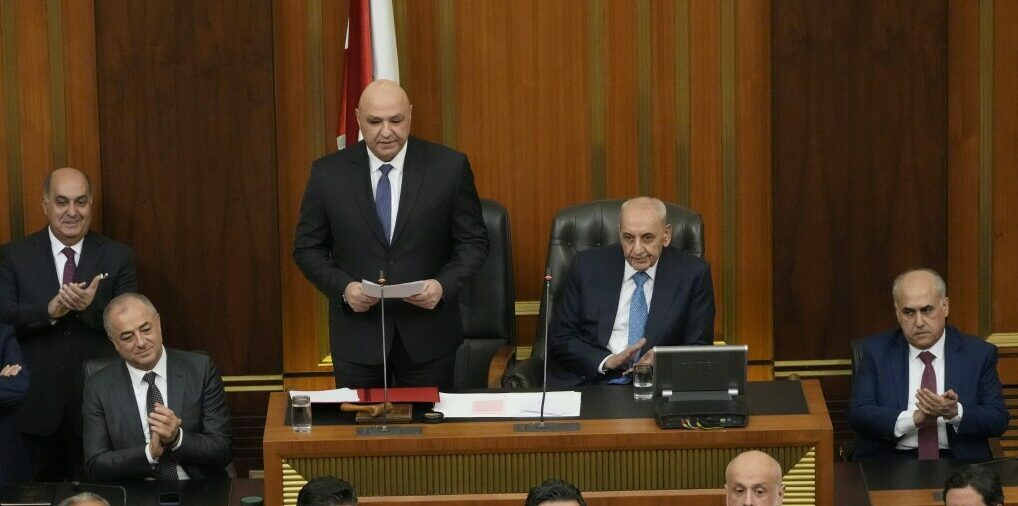
Hezbollah vote secures General Joseph Aoun’s election as new Lebanese president, underscoring party’s concessions to new regional reality
When the Lebanese military began to send the first of its soldiers to the south of the country on November 28, hours after a ceasefire was suddenly announced, it marked…
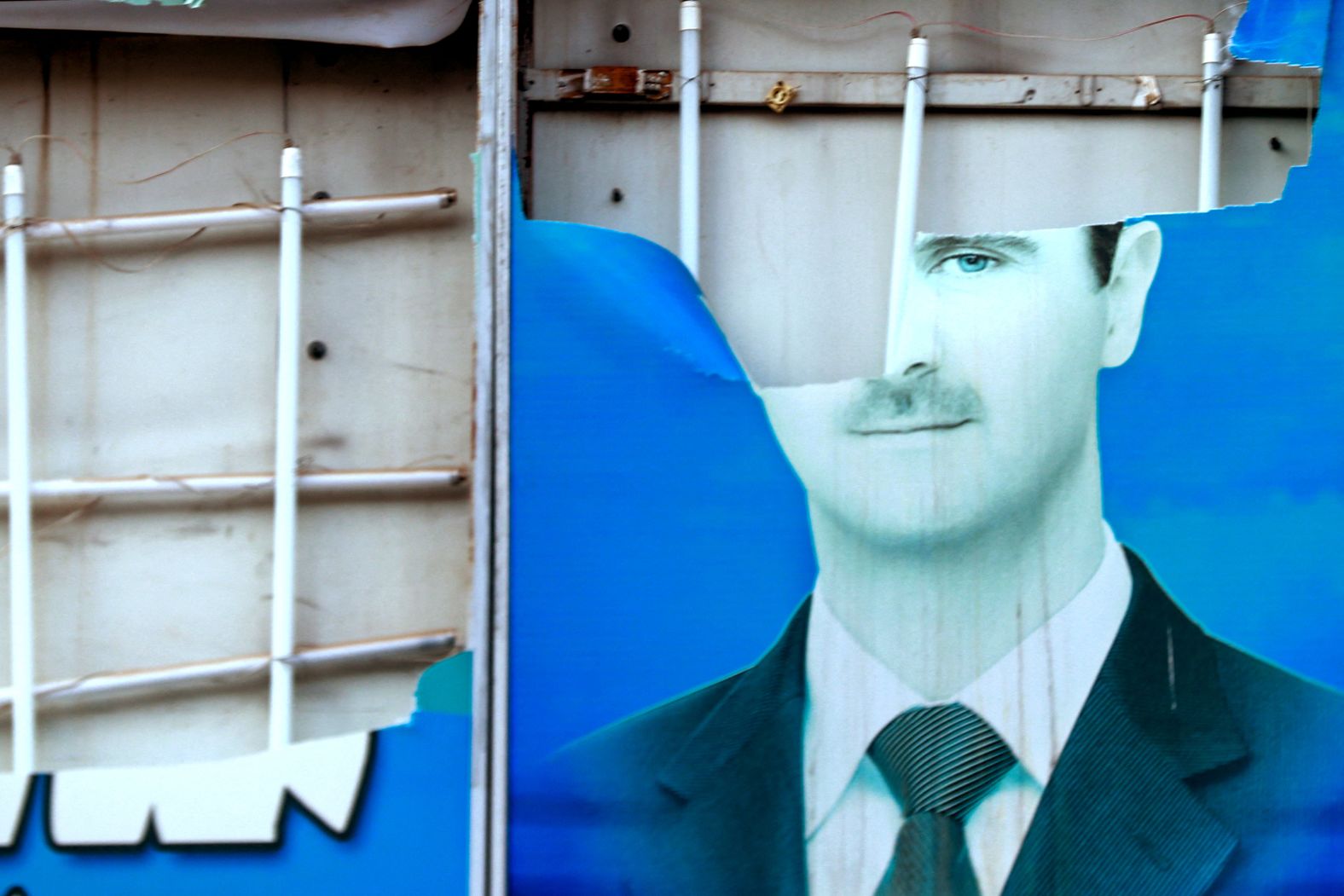
Assad no more: The 10 days that changed everything
What had been long unthinkable is now a reality. And it came to pass in just 10 days. That reality is that, after more than five decades, the Assad family’s…
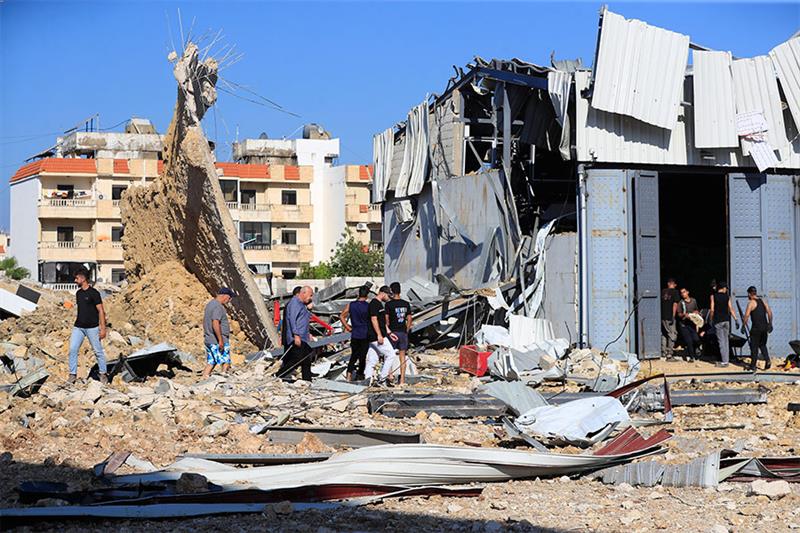
How proposed 21-day ceasefire would still face significant hurdles to end Lebanon war
More than 650 people have been killed, 7000 injured in under a week.
Your support is the only way to ensure independent, progressive journalism survives.
You have a right to access accurate information, be stimulated by innovative and nuanced reporting, and be moved by compelling storytelling. Subscribe now to become part of the growing community of members who help us maintain our editorial independence.
Join us