
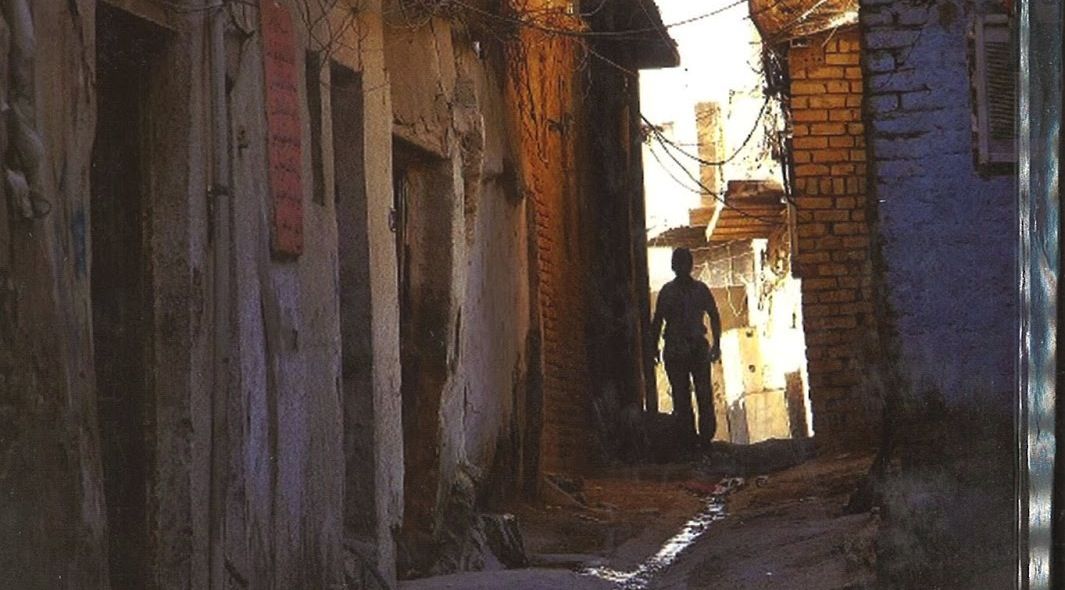
Frankenstein in Baghdad: You won’t like him but can’t hate him
After losing his friend and partner in one of the almost daily explosions that hit Baghdad, the greedy antiques dealer Hadi al-Attak begins to collect body parts from bombsites around the city.
At home in the crowded central district of Al-Bataween, an area layered with colorful histories, he sews together a full body with the intention of submitting it to the coroner in place of unidentified parts that cannot be properly buried.
For his novel Frankenstein in Baghdad (2013), this year’s winner of the International Prize for Arabic Fiction, Ahmed Saadawy revived Mary Shelley's monster and named him Al-Shasmah (The Nameless). Through Al-Shasmah he delves into the raw society of a city that is slowly dying under the grip of the Americans.
“He started drinking unstoppably even during daytime,” Saadawy writes of Attak. “He always had bottles of arak and whisky in his pocket and he always smelled of alcohol. He became even filthier, with an ungroomed beard and dirty clothing.”
And then on a stormy night, the soul of Haseeb Mohamed Gaafar flies aimlessly in the skies above Baghdad after his body is shattered apart in an explosion in front of the Novotel Hotel where he works as a guard. Unable to find his body to peacefully pass on to the “other side,” Gaafar’s soul finds sanctuary in the assembled hideousness of Attak’s project and from death comes life: Al-Shasmah wakes up to seek vengeance for his murdered body parts.
As he roams the allies of the dark city, people come to find in him a hero, a true Iraqi citizen or even a prophet. Although he’s a killer, Al-Shasmah is a mutilated monster with a cause; a reason for people to believe that their loved ones’ deaths will be avenged, that long-awaited war victims return, and that miracles do happen. He becomes famous throughout the entire city, a public enemy for some and a disfigured Robin Hood for others.
Attak himself is also a loved and hated character who lives through his own lies. He seems to see Al-Shasmah as a son-like companion, and he wonders the streets narrating his odd story in return for glasses of tea or a humble dinner.
Elishoua, Attak’s neighbor and a good Christian woman who lost a son in the war with Iran in the 1980s and lives through his memory, also sees her son in Al-Shasmah.
But Omm Selim, Elishoua’s neighbor and a kind yet superstitious old woman at whose house the ladies of Al-Bataween gather for afternoon coffee and gossip sessions, thinks he is a curse or the product of witchcraft by her Christian neighbor.
Farag al-Dalal, a realtor who gets rich off the illegal acquisition of empty houses abandoned by frightened owners who fled the war zone, doesn't care much about the monster. The aftermath of terror is always to his benefit.
Like all other Frankensteins, Al-Shasmah is supposed to perish, slowly disintegrating a bit further each time a body part is avenged. But he falls in love with his life of power and begins to kill the innocent for fresh body parts. Saadawi makes his Frankenstein a mirror of his environment: a good and evil society trying to survive war.
And in this way this Frankenstein is different from most of his cinematic and literary predecessors: He is not simply reacting to his existence. The character has developed from a source of horror that expires with the death of his creator, as Shelley drew him in the 19th century, to an independent doer. He lives because he is a reflection of life.
Saadawi, 41, a poet who lives in Baghdad and was once a BBC reporter there, published his first novel, “Al-Balad al-Gameel” (The Beautiful Country) in 2004. It was followed by 2008's “Indeed He Dreams or Plays or Dies.” “Frankenstein in Baghdad” is his third.
Indeed he draws his characters with a poet’s skills. You can almost see Elishoua’s wrinkles and tired eyes, her dimly lit, collapsing house with its old photographs and icon of Saint George.
“At night she waits, with only the light of her kerosene lantern,” he writes. “She cannot see the creases of the old picture in the ancient frame. She only sees the eyes of her saint turning towards her.”
In a New York Times op-ed last year, Saadawi wrote, "Many Americans thought that they had liberated Baghdad from fear ... instead they had opened the gates before a hell of previously unknown terrors."
But in the book the Americans are only mentioned when violence erupts or when their tankers are retreating to give way for sectarian clashes. Their existence is not explicitly described, just strongly felt.
Yet the book is not just dark and morbid. Through the characters a pleasurable eeriness is created, an adventure.
You’re attracted by the ambition of Mahmoud al-Sawady, a young journalist and Al-Bataween resident who seeks to unravel the mystery of Al-Shasmah. During the novel he develops from an inexperienced suburban boy into a handsome, elegant managing editor who’s learnt a lot about life — and women.
And by Baher al-Saady, editor-in-chief of the middling Al-Haqeeqa magazine, a resourceful businessman who has a winning combination of wealth, connections, intelligence, likability and sexiness.
“His physical appearance says little about his age,” we’re told. “He is elegant, active, lively, cheerful and has the ability to belittle any big problem with his cool and confident smile.”
The book does not condemn or glorify specific ideologies or people per se. And Al-Shamsah is creature that you definitely won’t like, but won't hate either.
For the first few pages, the language of the 353-page novel may be a little baffling for a non-Iraqi reader, but you soon get used to it: The use of the colloquial Iraqi dialect is limited to very short dialogs.
Having won Abu Dhabi’s seventh IPAF, as well as US$50,000, the author gets his book translated into English. And it has received positive attention already in US and international publications.
Everything and everyone in the novel is so rigorously drawn – except for this Iraqi Frankenstein who always stands in the dark with his disfigurement and his stench of rotten meat, a horrid embodiment of all those victims of injustice, ignorance and fanaticism. The supernatural literary character, the strong symbol that carries the novel, is deliberately the least visible to the reader.

Amany Ali Shawky
Amany is a Lifestyle and Society Reporter with Mada. With 10 years in journalism and publishing, she has written for everything from news to culture, environment and fashion, street politics…
تقارير ذات صلة
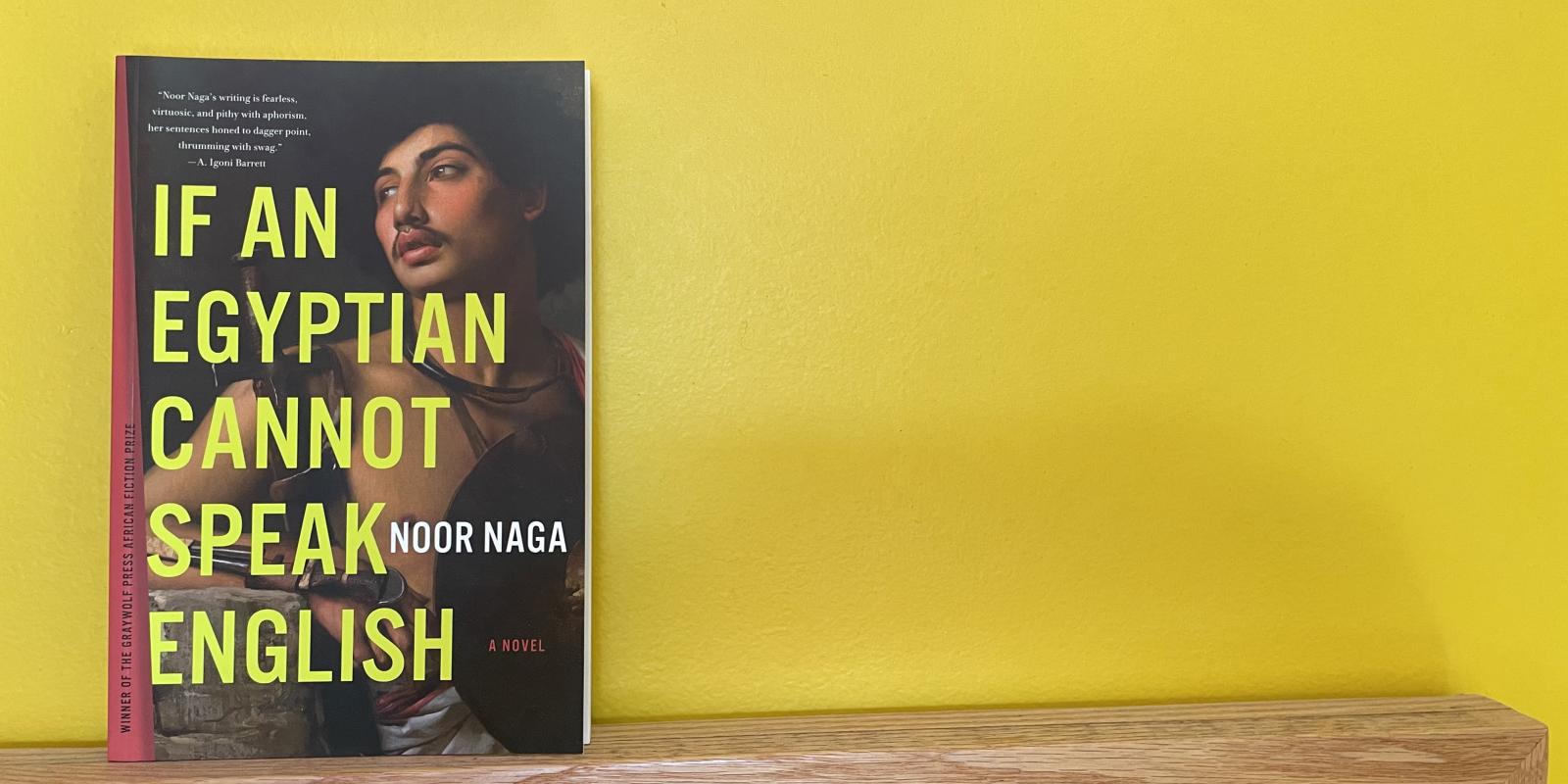
Noor Naga, metafiction and the limits of self-knowledge
Sometimes a story needs three acts
‘Nothing moved but the mirage’: Movement and its absence in Adania Shibli’s Minor Detail
The novel is a contender for the 2020 National Book Awards
What I didn’t tell the officer: a review of Randa Shaath’s The Sand Mountain
"The Sand Mountain? Hmmm … Is this a political novel, Mr. Shady?”
Your support is the only way to ensure independent, progressive journalism survives.
You have a right to access accurate information, be stimulated by innovative and nuanced reporting, and be moved by compelling storytelling. Subscribe now to become part of the growing community of members who help us maintain our editorial independence.
Join us