
‘Nothing moved but the mirage’: Movement and its absence in Adania Shibli’s Minor Detail
Palestinian writer Adania Shibli’s latest novel, Minor Detail hinges on oppositions. At just over 100 pages, the book is brief as a bullet — yet the movement within is slow, languorous, and often circular; one might get the sense that they’ve been reading this book for lifetimes, not mere hours. It is split into two equal sections, separated by more than half a decade. The first part, set in August 1949 — a year after the Nakba, the mass Palestinian exodus during the 1948 war— follows a platoon of soldiers as they work to safeguard Israel’s border with Egypt, a task that includes ridding the area of remaining Arabs. Just as we think the desert’s harsh heat has thwarted their efforts, the soldiers stumble upon a group of camels, a dog, and a girl — whom they rape, kill, and bury in the sand. Decades later, a woman in Ramallah — racked with anxiety and hopelessness — stumbles upon an article recounting the incident. A minor detail strikes her; the girl was killed 25 years to the day before she was born. The book’s second section follows the unnamed protagonist on a perilous—and ultimately futile — pilgrimage to gather more details about the Negev victim.
A contender for the 2020 National Book Awards, Minor Detail is Shibli’s third book and was translated by Elisabeth Jaquette. Her earlier works, Touch (2001) and We Are All Equally Far From Love (2004), were also translated into English, by Paula Haydar and Paul Starkey in 2010 and 2012, respectively. In her review of Minor Detail, Kaelen Wilson-Goldie describes it as “so vividly composed that it almost reads like cinema.” The formal innovation and hybridity of her published work comes as no surprise. Shibli occasionally forays into other art forms, including playwriting, criticism and curation, and such practices undoubtedly — and pleasurably — leave traces on her writing.
Engulfed in the silence of near-fruitless desert patrols, the first section closely follows the officer at the head of the Israeli platoon. While on his mission to “comb the southwest part of the Negev and cleanse it of any remaining Arabs,” the man appears to us from an unnervingly close angle. We accompany him on patrols, but mostly, we watch as he washes himself in the confines of his hut and battles pains and paranoia brought about by the bite of an insect he was too slow to brush off his thighs. Cleansing his body by dipping a towel in a tin bowl and rubbing ointment over his infected bite become tedious rituals that carry us through his days and nights.
The text sways between the sweeping desert, its “vast stretches of barren land,” and the officer’s minute physical actions. “He filled the tin bowl with water, took the towel from the nail where it was hanging, dipped it in the bowl before wringing it out, then wiped down his face, chest, back and armpits,” Shibli writes. Time trickles unhurriedly as we surveil the officer engaging in repetitive, solitary actions — but while this type of embodied writing could work to forge an intimacy with the reader, in this case, it carves an unmistakable distance. The officer, who is unnamed and presented to us in third person, is at once unbearably visible and completely hidden; we don’t necessarily know what he is thinking or feeling, beyond the obvious physical suffering.
Besides careful descriptions of the officer’s movements, we also encounter choreographed scenes of near madness. Obsessed with the possibility of insects, the soldier starts conducting patrols of his own room. In one such instance, “he jumped around different parts of the room, crushing several small insects that were crawling on the floor.” Particularly in this first half of the book, it almost seems as though Shibli is writing for the stage. As the officer shakes, stomps, jumps, and collapses, we are placed in the audience — watching a nameless body in a frenzied dance.
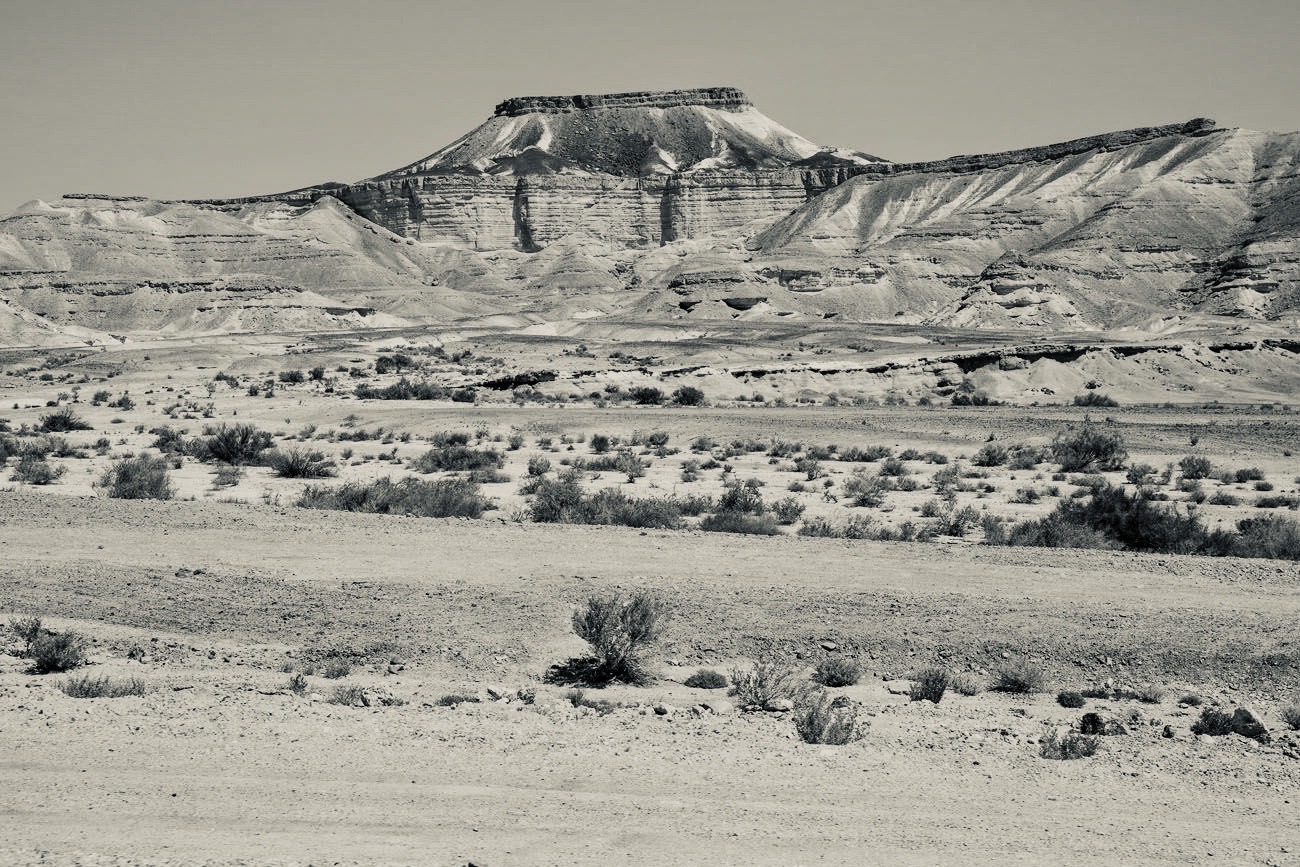
Not nearly as frantic, the Negev desert is presented as a key character in this first section (the only one with a name). It is depicted as a body in its own right, inflicting its power on the soldiers looking to “cleanse” it. On their luckless patrols, the desert fights back. The platoon’s search was for living bodies, “yet all the area revealed were sandstorms and dust clouds, which seemed intent on chasing and harrying them.” Compared with the wasting body of the officer, the representation of the desert as a forceful actor reads like an act of resistance. The land refuses to yield, the text seems to be saying.
The callous violence the soldiers enact upon the girl they find hiding in the sand would imply indomitable power, but the actions and delusions of the unnamed man at the head of their platoon leave us no choice but to question just how deep this power runs. At the end of this first section of Minor Detail, the soldier is alone inside his hut, encircled by the massive desert, accompanied only by the dog that had been found with the now-murdered Palestinian girl. “Suddenly, he clamped his hands around its jaws; the dog’s stifled barking made his palm vibrate … until finally he opened his hand and the dog scrambled across the floor, letting out a loud, desperate howl as it fled.” There is something incredibly desperate about this final scene; despite his position, the soldier’s cruelty towards the dog betrays the panic and anguish of someone losing control.

The second section begins where the first leaves off — this time a Palestinian woman, more than 50 years later, is alone in her room, a dog’s barking across the hills filling her with anxiety. The tempo of the novel’s second section is strikingly changed. While the writing continues to be thoroughly embodied, Shibli humanizes the woman protagonist by giving voice to her unrelenting thoughts. The woman unleashes an incessant monologue throughout, propelled by her fear, her doubt and hesitation, and ultimately, her curiosity. If she exhausts us, she does it awfully poignantly. “The borders imposed between things here are many …There are some people who navigate borders masterfully, who never trespass, but these people are few and I’m not one of them. As soon as I see a border, I either race towards it and leap over it, or cross it stealthily, with a step,” she says. The confession sets us up for the journey she’s about to embark on; she goes to great lengths to try to gather details about the girl killed and buried in the Negev, including borrowing a colleague’s ID and renting a car to enter occupied territories she would otherwise be barred from, visiting Israeli museums and archives, and finally, strolling right into a military zone.
With the slightest of gestures, Shibli manages to destabilize the intricately stitched narrative she’s created, particularly by hinting at the consciousness of the text. For instance, the second section’s narrator, otherwise utterly immersed in her thoughts and perilous journey, briefly turns to address the reader. “By the way, I hope I didn’t cause any awkwardness when I mentioned the incident with the soldier, or the checkpoint, or when I reveal that we are living under occupation here,” she says. The work of this moment is at least two-fold; it renders the reader complicit in what is about to unfold by affirming their role as witness, while engaging them in a kind of rapport — an intimacy completely missing from the first section.
Shibli also affirms her presence earlier in the text, while describing the sounds that punctuate the desert’s silence. She writes: “… the wind slapping at tent roofs, the distant howling of a dog, maybe the groan of camels.” The word “maybe” here (which she repeats later, in almost the same construction) very stealthily unmasks the narrator; I am constructing this horror-scape as best I can, it seems to tell us. But really, I wasn’t there.
So neatly cleaved, Minor Detail could easily have been two books; the stories are, after all, separated by over 50 years, and there seems to be no relationship between both protagonists. This juxtaposition, however, allows us to perhaps view the two sections as an image and a negative, interchangeably. The woman makes up for what the soldier lacks in humanity; the vastness of the Negev brings out the incessant borders of present-day Palestine/Israel.
In its division and tension, and the structural symmetry of death, Minor Detail almost goes nowhere. Unresolved, the pain it memorializes is suspended in space. None of it feels movable. The novel’s first sentence, which is also one of its shortest, painfully foreshadows the double story: “Nothing moved but the mirage.”
تقارير ذات صلة
Noor Naga, metafiction and the limits of self-knowledge
Sometimes a story needs three acts
What I didn’t tell the officer: a review of Randa Shaath’s The Sand Mountain
"The Sand Mountain? Hmmm … Is this a political novel, Mr. Shady?”

Detox: Issue 02
Our weekly guide to help you unwind during the weekend.
Your support is the only way to ensure independent, progressive journalism survives.
You have a right to access accurate information, be stimulated by innovative and nuanced reporting, and be moved by compelling storytelling. Subscribe now to become part of the growing community of members who help us maintain our editorial independence.
Join us