
FestBeat: Arab films screening at the Berlinale is no surprise
Now that the Berlinale is over and I've had a bit of rest, I’m starting to think about some of the things that surprised or bothered me during the festival this year.
I was happily surprised that Tunisian film Inhebbek Hedi (Mohamed Ben Attia, 2016) took home two prizes: Silver Bear for best actor and best first feature award. I was impressed by Majd Mastoura’s performance as Hedi, a timid 20-something trying to find his own path in life, in defiance of a very overbearing mother. The acting was subdued but very emotive in its softness. The prize is well deserved, but surprised me — Mastoura is one of the youngest actors to receive it.
This year confirmed that the Berlinale is the major film festival most in touch with a “human-conscious” cinema. Looking at the films across all the sections of the fest, there was a clear championing of stories and ways of looking that bridges gaps between us (whoever “we” might be) and the “other.” Rachid Bouchareb’s Road to Istanbul is about a mother whose child left home to join jihadists. Mexican documentary Tempestad (Tatiana Huezo, 2016), about human trafficking, was another big hit.
Even beyond the Berlinale, there’s a general trend, especially in mainstream narrative cinema, to approach the cinematic medium as capable of expanding our moral horizons. What does this mean, you might ask, about the future of cinema? I don’t know.
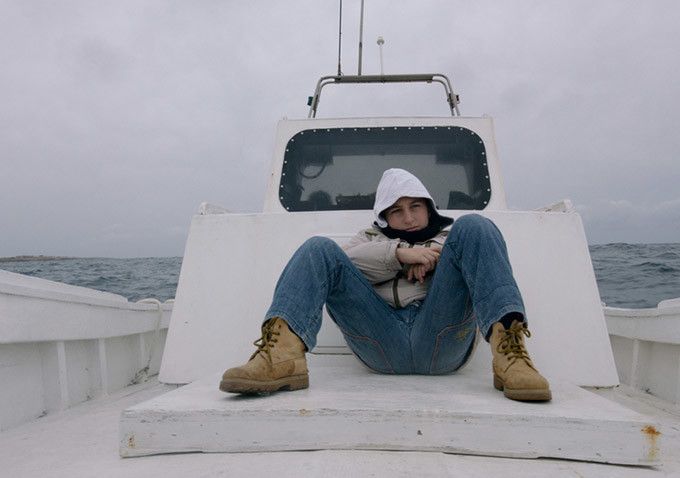
But another case in point is Fire at Sea (Gianfranco Rosi, 2016) — the film that took home the Golden Bear. It is a character-driven documentary taking as its subject the refugee crisis. The fact that a documentary about being a refugee won the Golden Bear in 2016 is not a coincidence. There’s commentary there about our shared reality as people experiencing this moment in human history.
In a press release, the Berlinale organizers stated that “as a public festival and one of the city’s biggest annual events, the Berlinale feels a responsibility to do its part for Berlin’s culture of welcome.” They urged guests to donate to refugee relief projects and try to support the inclusion of people regardless of socioeconomic standing, nationality or legal status in the global cultural phenomenon the festival has become.
In a festival as politically sensitive as the Berlinale, the marked presence of Arab cinema is surely to be expected. There was at least one film from every continent, and I’d venture to say that most countries are represented this year — even Saudi Arabia (with Barakah Meets Barakah). There was also a crucial presence of South Korean and Latin American works. An international film fest has a lot to gain from being as wide-ranging in its selections as the Berlinale is. Hence my surprise over the media hype around the presence of Arab cinema.
Whether we like it or not, the Berlinale is one of the leading film festivals in the world. Its programmers inevitably had to assume the position of chaperones for the global film industry, whether through their European Film Market (the Berlinale’s professional trade fair) or other activities. I watched a trailer before the beginning of one screening about Senegalese cinema, and was told this was a pet project of the programmers. We can discuss how arbitrary claims about “support” can be, but I’d say this is the reality we’re facing and on which we are reliant, to a certain extent. Especially in the Arabic-speaking region, where we have few film festivals or institutions that can compete head-to-head with the Berlinale — although who knows what the future will hold.
Tomorrow I’ll be writing about the Network of Arab Arthouse Screens, which I believe offers us reason to hope.
تقارير ذات صلة

FestBeat: On the Network of Arab Arthouse Screens
More and more attention is being given to the presence of Arab cinema in the international film market.
FestBeat: Tamer El Said’s haunted film premieres at the Berlinale
This film helps us, especially as people from the Arabic-speaking world, to see the world differently.
Unworkshoppable cinema: A visit to the 11th Cairo Video Festival
Recently, I finally got to see Payal Kapadia’s All We Imagine as Light (2024), winner of the Cannes Grand Prix. I was lucky to experience it in a theater and…
Your support is the only way to ensure independent, progressive journalism survives.
You have a right to access accurate information, be stimulated by innovative and nuanced reporting, and be moved by compelling storytelling. Subscribe now to become part of the growing community of members who help us maintain our editorial independence.
Join us