
Egypt’s convoluted plans to obtain COVID-19 vaccines
As a researcher with the Right to Health Program at the Egyptian Initiative for Personal Rights, Ahmed Azab is used to following up on various clinical trials being conducted on patients in Egypt, a country where multinational firms conduct more pharmaceutical clinical trials than almost anywhere else in Africa. But when it came to the coronavirus vaccine, Azab, a pharmacist, decided he should stop being just an onlooker and join the trial himself. By doing so, he hoped to objectively assess the effectiveness of the Chinese Sinopharm vaccines approved for trials by the Health Ministry and get a better understanding of the government’s overall handling of the pandemic.
Egyptian authorities have provided little information both about clinical trials conducted in Egypt and the government’s broader plan to procure coronavirus vaccines on the global market. Sources say Egypt will likely end up with a hierarchical vaccine scenario with more expensive and effective vaccines from the US available to senior government officials and businessmen, cheaper US vaccines for medical personnel and vulnerable people, and low-cost Chinese and Russian vaccines for the general population.
On September 12, Health Minister Hala Zayed announced plans to recruit 6,000 Egyptians to participate in the clinical trials for two vaccines made by Chinese state-owned pharmaceutical giant Sinopharm. Just over two months later, on November 23, the official ministry spokesman said the trial had been terminated at Sinopharm’s request after only 3,000 people had volunteered. The UAE said on December 9 that the Sinopharm vaccine, which was developed with the firm’s Beijing Institute of Biological Products, showed 86 percent effectiveness in a trial of 31,000 people conducted within its borders —though they did not release detailed data from the trial — and became the first country to approve a Sinopharm coronavirus vaccine. Then, just one day later, Egypt received its first vaccine shipment — 50,000 doses of the UAE-approved Sinopharm vaccine as a gift from the United Arab Emirates, which Zayed said would be administered for free to frontline medical staff, the elderly and those with chronic conditions.
Yet doctors who spoke to Mada Masr earlier this week expressed concern that the results of the trials have not been made public and also pointed to the limited number of doses that Egypt has received so far.
Azab commended the government's move to run vaccination trials, as it improves Egypt's chance of getting cheap vaccines, but raised concerns over the dearth of information provided, not only about the trials but also about the government’s plan for procuring vaccines on the global market.
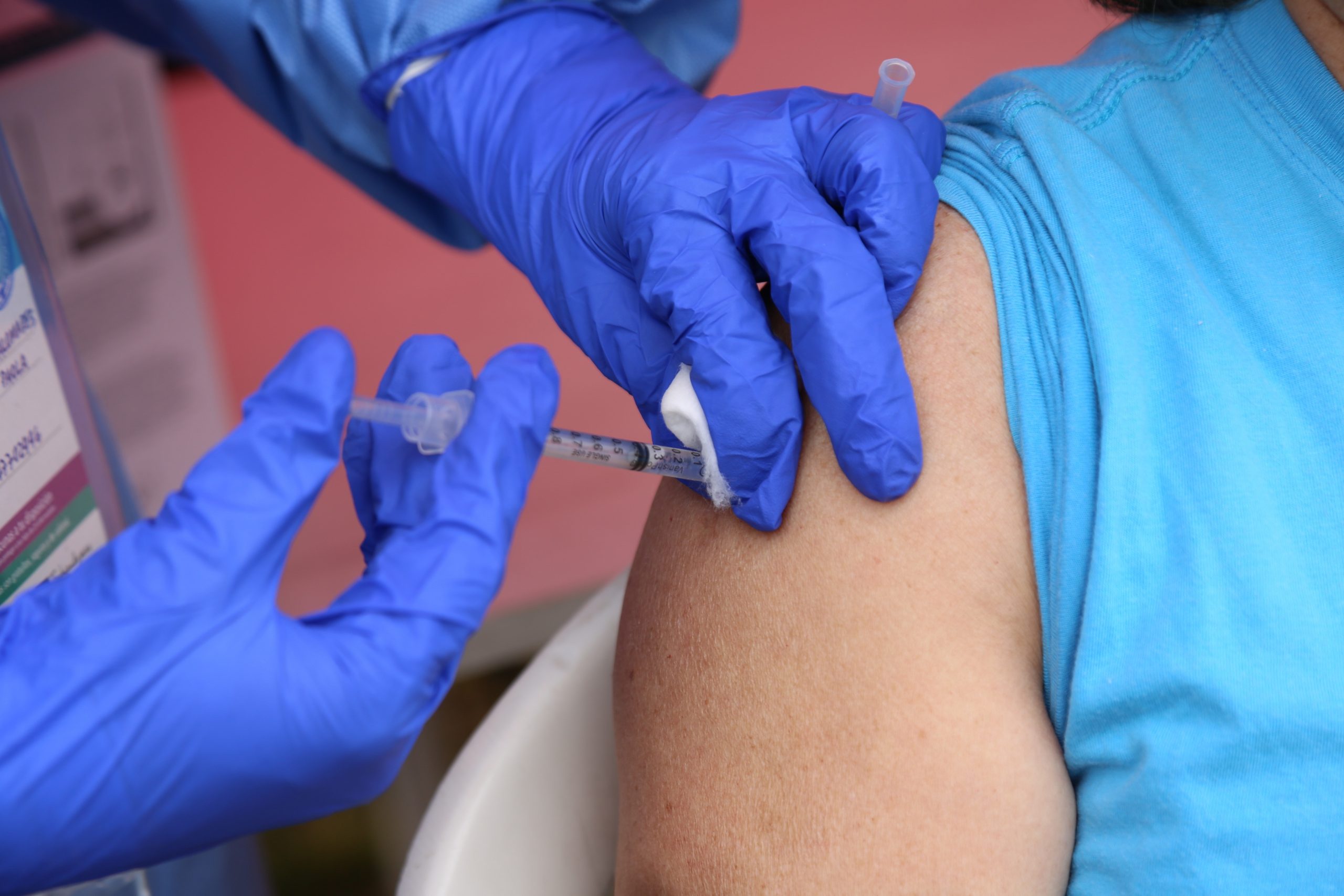
On September 16, four days after the Health Ministry’s open call for volunteers, Azab went to the Dokki headquarters of the state-owned Egyptian Holding Company for Biological Products and Vaccines (Vacsera), which falls under the auspices of the Health Ministry. The pre-inoculation procedures took no more than half an hour: a doctor screened Azab for coronavirus symptoms and administered PCR and antibody tests before administering the trial vaccine dose. After 21 days free of symptoms or complications, Azab received the second dose of the vaccine on October 7.
Beginning on October 21 through to September 2021, Azab and the rest of the volunteers started regularly donating blood to be analyzed by Vacsera for COVID-19 antibodies produced by their immune systems to assess the effectiveness of the vaccine.
Yet there is a “big information gap,” Azab says, explaining that the ministry has maintained complete secrecy concerning the details of the two vaccines under trial. Azab says that on the clinical trial website and in the consent form signed by volunteers before receiving the first dose, the ministry did not include any information about the vaccines or the placebo used in the trial. The ministry only stated that the vaccines were produced by Sinopharm, vetted by the China Food and Drug Administration, and approved by the Egyptian Health Ministry's ethics committee.
This marks a significant lack of disclosure, Azab says, particularly since information about clinical trials for the Sinopharm vaccines conducted in several countries, including Egypt, is available on ClinicalTrials.gov, a website run by a division of the US National Institutes for Health dedicated to clinical studies. Findings on the earlier trials for the Sinopharm-Beijing Institute vaccine were not published until after Egypt had started its clinical trials. The preliminary findings of one trial for Sinopharm’s other vaccine, developed with the Wuhan Institute of Biological Products, had already been published.
Concerns also remain regarding Sinopharm’s ability to produce safe vaccines following a scandal in 2018 in which one of its subsidiaries sold more than 400,000 faulty vaccine doses for diphtheria and other diseases in two Chinese provinces.
The Health Ministry similarly provided no information about the company supervising trials in Egypt other than its name, Azab adds. Zayed only stated that the trial is being conducted in cooperation with the Chinese government and G42, an Emirati firm. Established in 2018, G42 specializes in artificial intelligence and works to develop solutions in multiple fields, including health care, according to its website. According to the Associated Press, the firm was the sole owner of ToTok, a messaging app that came under fire last year when the New York Times reported that it was used to spy on users’ phones for the Emirati government. Google and Apple subsequently dropped the app from their platforms. G42’s health-related activities also recently came under scrutiny in the US due to suspicions that it was using COVID-19 test samples for commercial purposes
According to Azab, the ministry did not say where the samples taken from volunteers would be analyzed during the trial. The consent form he received prior to vaccination states only that the samples would be analyzed by an unnamed central lab outside Egypt. When he asked the doctor who conducted the pre-inoculation procedures and administered his dose, she informed him only that “the Emiratis” were responsible for that step.
Meanwhile, the national committee formed by the health minister to supervise the trial has not convened since its formation on September 12, according to a committee member who spoke to Mada Masr on condition of anonymity. The source says he saw the paperwork on the clinical trial prepared by Sinopharm and was astonished that it did not include detailed results on the first and second phase trials, which precede trials on human subjects. He was also surprised that the Health Ministry did not form a specialized clinical research committee before trials began to examine the safety of the two Sinopharm vaccines and determine whether they were made using a live or killed version of the virus. He added that the Health Ministry made a unilateral decision to test the Sinopharm vaccines in Egypt without consulting any research bodies.
Two days before Zayed announced preparations for the clinical trials of the Sinopharm vaccines, the House of Representatives approved, by a two-thirds majority, the first law regulating clinical trials in the country. Civil society groups applauded the law, which aimed to protect the rights of patients and research subjects in line with international standards. EIPR described it as “a living, effective example of the role civil society and rights groups can play when they are given the opportunity to cooperate and partner with executive and legislative bodies.” EIPR noted that lawmakers responded to 85 percent of the observations the group made on the first draft of the law.
Two years ago, President Abdel Fattah al-Sisi refused to ratify the initial version of the legislation approved by parliament following objections from research bodies, researchers and university professions on several of its provisions. Although Sisi sent the law back to the House of Representatives asking for revisions on seven articles — which they accepted and passed — he has yet to ratify the new law. Clinical trials for COVID-19 vaccines are thus being conducted absent from any legal regulations.
The lack of information about the Sinopharm trials is emblematic of the government’s broader strategy to procure effective COVID-19 vaccines.
Scientists around the world have raced to find an effective and safe coronavirus vaccine, a process that typically takes several years. But given the urgency of the pandemic, scientists have speeded up clinical trials, testing as many volunteers as possible. According to the World Health Organization, 48 vaccines were in third-stage clinical trials as of mid-November, 11 of which had entered the final phase and are awaiting official approval.
Egypt’s plans to obtain coronavirus vaccines have been convoluted and contradictory.
Although Russia was one of the first countries to declare it would supply Egypt with a vaccine, the minister of health fast-tracked the Sinopharm vaccine and refused to participate in clinical trials for the Sputnik V vaccine, which was approved for use by Russia in August. Explaining the decision, two sources with knowledge of both vaccines told Mada Masr on condition of anonymity that the Egyptian government is giving preferential treatment to any Egyptian-Chinese economic transaction since China is currently involved in several large-scale national projects.
The Russian Sovereign Wealth Fund announced on September 30 that 25 million doses of Sputnik V would be supplied to Egypt through Pharco Pharmaceuticals. Presidential Health Advisor Mohamed Awad Tag Eddin then said on October 26 that Egypt was ready to conduct clinical trials for the Russian vaccine, but on November 12 the chair of Pharco said that the health minister had not responded to his firm’s request for trials of the vaccine. At the time, a source in the Health Ministry told the state-owned press that the Russian vaccine trials would involve just 500 participants, which the ministry believed was insufficient to gauge the effectiveness and safety of the drug.
Although the Egyptian government has not made it clear whether the Russian vaccine will even be available for Egyptians, Pharco announced a plan on December 13 to manufacture the vaccine in Egypt in the coming months over two stages. Initially, the vaccine will be imported from Russia and packaged in Egypt, but in the second stage, after the transfer of the relevant technology, the vaccine will be manufactured in the firm’s plants in Egypt, to be sold in Egypt and across Africa.
The first mention of any coronavirus vaccine by Egyptian officials came in June, a month after clinical trials for the vaccine developed by AstraZeneca and Oxford University began. Egyptian Drug Authority spokesperson Ali al-Ghamrawi said that Egypt was in contact with the firm and had reserved an unspecified quantity of the vaccine, which it would obtain when distribution began in Africa and the Middle East, a claim that was echoed by Tag Eddin more than once.
The health minister, however, said on July 18 that 30 million doses had been reserved, adding that when the vaccine was available, Vacsera was also prepared to produce it with patent permission and that she would meet with Vacsera officials to confirm the readiness of its production lines.
But Tag Eddin then said on July 26 that Vacsera would produce “the Chinese vaccine,” after which the minister withdrew her statement about producing the Oxford vaccine in Egypt. In an interview on the talk show “6 O’clock,” on August 26, Zayed said that the state was monitoring vaccines already in clinical trials and planned three steps to make them available. First, a Vacsera plant was being outfitted to produce vaccines for a Chinese firm — recently identified as the private Sinovac — as soon as they were approved. Second, the state had reserved a share of the Oxford vaccine. And third, Egypt would conduct clinical trials for the two vaccines under development by Sinopharm as soon as they were made available.
Against these conflicting statements, an informed medical source told Mada Masr that as of December 14, the Health Ministry had contracted for the purchase of just 300,000 doses of the Oxford vaccine — enough to vaccinate 150,000 people — with delivery expected in mid-2021. According to the source, the Oxford vaccine is likely to be used in Egypt and other developing countries given its ease of storage and its moderate price tag of $10 per dose.
Meanwhile, on November 10, Zayed said that her ministry “has reserved enough Pfizer vaccine to cover 20 percent of Egypt’s needs.” Mohammed Ezz al-Arab, the medical consultant for the Right to Medicine Center, said such talk was inaccurate and unlikely. Absent concrete financial agreements between Egypt and vaccine producers, vaccine doses would probably not reach Egypt before the end of next year, he said.
Ezz al-Arab said that the US and some European countries were one step ahead of the rest of the world, having already inked deals with several firms, including Pfizer, as early as July, for the immediate supply of vaccines upon approval.
Pfizer and BioNTech announced on July 22 that they would receive $1.95 billion from the US government to produce and deliver 100 million doses of their vaccine immediately upon approval, with an option for the US government to purchase an additional 500 million doses. Three days before the US Food and Drug Administration issued an emergency approval for the vaccine, the two firms informed the US government that they were unable to deliver the additional doses because other countries had purchased large quantities of their existing stock.
A member of the Egyptian Drug Authority, who spoke to Mada Masr on condition of anonymity, agreed with Ezz al-Arab, saying that the idea of reserving the vaccine by oral agreement was inconceivable. He said that the US and much of Europe are already sweeping up the stock of the Pfizer vaccine, which is 95 percent effective, and the Moderna vaccine, which is 94.5 percent effective, amid fears of what the head of the World Health Organization has called “vaccine nationalism” in the rest of the world, where citizens of poor countries would be denied fair access to vaccines.
The drug authority source said that Egypt is relying on the COVAX Global Vaccines Facility, an initiative that aims to provide two billion vaccine doses to 92 poor and medium-income countries with the support of several more wealthy states and vaccine manufacturers, most prominently the Oxford vaccine and the American Moderna vaccine, pending approval. The vaccines will be offered to states on a sliding price scale depending on each country’s capacities by the end of 2021. Egypt has already joined the initiative, which is being spearheaded by Gavi, the Vaccine Alliance, in conjunction with the World Health Organization.
In a report to the prime minister in late July, Major General Baha Eddin Zeidan, the head of the Egyptian Authority for Unified Procurement and Medical Supplies, said that Egypt had secured a share of vaccines from Gavi in a meeting on July 21 that was attended by representatives of the procurement authority, the drug authority and Gavi officials.
Given this information, three medical sources close to the government’s medical group said that the most workable scenario in Egypt is for the Pfizer-BioNTech vaccine to be made available for senior officials and businessmen, given its high price and the high cost of transport and storage. The Moderna vaccine, which is cheaper and easier to move and store, will likely be available in the second quarter of 2021 to medical personnel, the elderly, and people in vulnerable categories. Meanwhile, the Chinese and Russian vaccines will be used to vaccinate the general population given their low cost and ease of availability, the sources said.

تقارير ذات صلة
Devaluation drama and hot money’s return: What happened with the pound’s historic plummet?
'As long as there is more demand than supply, the price of the pound will continue to decrease.'
Q&A: Egypt’s emissions, the environment, and the relationship between air pollution and COVID-19
The loudest voices in this area are not those of environmental scientists, but of investors
Q&A with anthropology professor Hania Sholkamy | On the need to rethink social spending as crisis response after COVID-19
The pandemic exposed flaws in the way social protection is thought about in Egypt
Your support is the only way to ensure independent, progressive journalism survives.
You have a right to access accurate information, be stimulated by innovative and nuanced reporting, and be moved by compelling storytelling. Subscribe now to become part of the growing community of members who help us maintain our editorial independence.
Join us