
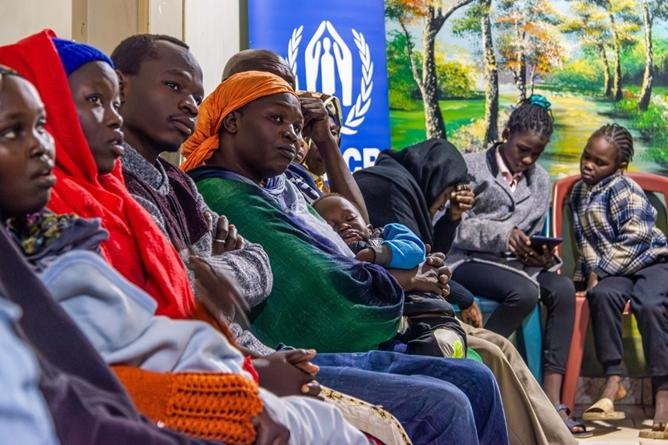
Egypt’s 1st bill on asylum-seekers to balance rights against ‘stability of Egyptian society’
Egypt’s government is taking its first steps toward enshrining the asylum-seeking process in domestic law.
The House of Representatives' Defense and National Security Committee approved the Cabinet's bill for a new asylum law in late October.
Migration experts who spoke to Mada Masr say the law is the first step toward “institutionalizing” Egypt’s international obligations in the asylum file after decades of the United Nations’ refugee agency bearing the responsibility alone.
This institutionalization comes as Egyptian policy figures increasingly speak of a large number of “guests” coming into the country, which lies between Sudan, wracked by war between the military and the Rapid Support Forces, and the Gaza Strip, where over 45,000 Palestinians have been killed under an Israeli aggression for over a year.
At the same time, Egypt is increasingly playing a greater role in keeping migrants and refugees away from Europe in exchange for financial and political support, with recent government decisions seeking to regularize the status of migrants who entered irregularly or whose residency period has expired.
In this context, the draft law, of which Mada Masr obtained a copy, is set to offer refugees a number of basic rights for the first time — most notably the right to apply for Egyptian citizenship.
But it also restricts many of these gains, as well as eligibility for refugee status in the first place, by linking them to loosely defined considerations of “national security” and “public order,” flagged by a legal expert as leaving the law open to wide-ranging interpretations that could endanger applicants.
The draft law stipulates that a set of duties currently carried out by the United Nations High Commissioner for Refugees (UNHCR) will be handed over to a new government committee.
The new government committee, called the Permanent Committee for Refugee Affairs, will be responsible for refugee affairs, including primarily adjudicating asylum applications and coordinating with state administrative bodies to provide support, care, and services to refugees. The committee will include representatives of the foreign affairs, justice, interior, and finance ministries. The prime minister will appoint its chair and members and have the right to appoint other representatives of relevant ministries and bodies to the committee. The committee itself may also invite experts or specialists on asylum to its meetings when deemed necessary.
Issuing the law is finally a step toward upholding Egypt’s obligations under the 1951 Refugee Convention in state institutions. Cairo signed the convention in 1981, according to Ayman Zohry, a professor at the American University in Cairo and expert in population and migration studies.
It’s the international norm for a government body to be directly in charge of granting refugee status, Zohry tells Mada Masr, describing the current situation whereby the UNHCR grants refugee status as “an exceptional situation based on the Egyptian government’s relinquishment of this responsibility for decades.”
He suggests that the situation has persisted because “the entire issue of asylum remained unimportant to the state for a long time.”
Egypt signed an agreement with the UNHCR to allow it to open an office in Egypt in 1954, but the matter wasn’t a priority for the Egyptian government “at a time when the asylum process was limited to national liberation leaders who were close to the presidency,” Zohry notes.
The bill’s rapid emergence and passage through the first phase of the legislative process in the House of Representatives comes as migration has become an increasingly frequent political talking point over recent years.
Government figures repeatedly state that Egypt hosts nine million foreign “guests,” “despite economic challenges.” Of these guests, the majority of whom are permanent residents, only around 800,000 people from 62 countries are currently registered at UNHCR as refugees and asylum seekers in Egypt, most of whom are Sudanese nationals who were displaced over the course of the past 18 months by the war in their country.
“Reality has confirmed the urgent need for a law regulating the legalization of refugees' status and the survey of their numbers,” Parliamentary, Legal and Political Communications Affairs Minister Mahmoud Fawzy said, commenting on the draft law after attending the defense committee’s session in October.
The apparently swift progress of the bill also comes as the European Union seeks to combat irregular migration at source or transit countries, a goal that forms part of the multi-billion euro deal signed in June between the EU and Egypt.
An EU diplomat told Mada Masr at the time that the deal would be a framework to push Egypt toward completing the refugee law that the government had begun working on in 2022, according to a UNHCR source who spoke to Mada Masr on condition of anonymity, and which the government finished preparing in 2023.
One of the developments in the bill is that it will allow refugees to obtain citizenship. Lawyer Ahmed Moawad, who specializes in asylum cases, told Mada Masr that the granting of citizenship will help transform Egypt into a settlement destination, as opposed to a country foreign nationals transit through en route to resettlement in Europe.
Zohry, too, pointed to “the right of refugees to obtain Egyptian citizenship” as a major gain for foreign nationals set to be granted by the bill.
Other rights enshrined in the draft legislation include the right to education, the right to work, and the right to obtain travel documents, according to Moawad.
The right to education is in the 1951 Convention, and Egypt had objected to it before, Moawad points out, concluding that its inclusion in the bill means Egypt has withdrawn its objection.
The right to work is also an important gain, the lawyer says, as refugees are currently unable to work under a permanent contract in the formal economy, “and if it is proven that they do, this entails penalties on the employer.”
The right to obtain travel documents in Article 12 of the bill, if approved by the refugee affairs committee, likewise represents an upgrade for most refugees, says Moawad, explaining that refugees have been generally deprived of travel documents because only the state can issue them, while the UNHCR is unable to do so.
People with disabilities, the elderly, unaccompanied children, pregnant women, and victims of trafficking, torture or sexual violence will have priority in considering their asylum applications, according to the bill.
Moawad was also in favor of articles stating that the committee will make its decision on asylum applications within six months for refugees who entered the country through regular channels, and within a year if they did not.
How the decisions will be made, however, remains a question. The bill puts refugees and asylum seekers under many restrictions and potential security measures within the framework of “national security and public order,” two terms that appear repeatedly in the text of the bill.
Article 12 on the right to obtain travel documents also allows the refugee affairs committee “for reasons related to national security or public order to decide that the refugee will not obtain a travel document.” Moawad said this provision can be easily used to roll back the right in practice, noting that “national security and public order” are used in the law without being defined — an issue common in many Egyptian laws.
The undefined terms are repeated throughout the text of the bill, Moawad notes with caution. The committee is granted leeway, for example, in Article 7, “to request whatever measures and procedures it deems necessary to be applied to the asylum seeker for considerations of protecting national security and public order” until the asylum application is decided, while Article 8 prohibits the asylum seeker from obtaining refugee status if they “commit any acts that would harm national security or public order.”
Moawad is also wary of provisions in Article 25 for deportation on the basis of voluntary agreement to return. The lawyer gestures to the coercion of voluntary return declarations under threat, including torture, as has happened with several Eritrean refugees in recent years.
In times of war, terrorism, or serious or exceptional circumstances — left undefined — the committee is also allowed by Article 10 to “request whatever measures and procedures it deems necessary toward the refugee for considerations of protecting national security and public order, in the manner regulated by the executive regulations.”
Article 29 “prohibits a refugee from engaging in any activity that would harm national security or public order or conflict with the goals and principles of the UN, the African Union, the League of Arab States, or any organization to which Egypt is a party, or committing any hostile act against his country of origin or any other country.”
The lawyer believes that the article, which stipulates prison sentences of no less than three years and fines of LE100,000 to LE500,000 for those found to be in violation, is designed to criminalize any activism by the refugees, from demonstrations to even celebratory events, in addition to restricting the right to expression.
Another article in the bill, Moawad notes, prohibits refugees from joining trade unions. Given they would have the right to work under the new law, “this would deprive them of the union umbrella necessary for workers,” the lawyer says.
The articles “paint a picture of a refugee life in which no practical activity is allowed except joining civil society organizations under the flawed NGO law,” according to Moawad.
Article 16, meanwhile, stipulates that the refugee has the right to transfer whatever property they own to Egypt for the purpose of residence, unless this would harm national security or public order.
Moawad also expresses concern about the bill’s handling of irregular migrants, criticizing Article 31, which stipulates that anyone who has entered Egypt illegally and meets the objective conditions for an asylum seeker must voluntarily submit their application to the committee within a maximum period of 45 days from the date of entry. Violating this article is punishable by a minimum prison sentence of six months and a fine of no less than LE10,000, or either penalty.
The article imposes an implicit penalty on asylum seekers who entered irregularly, which is prohibited by the 1951 Convention, says the lawyer. “The norm is to open the door for applying even after the asylum seeker has been arrested” for illegal entry, he notes.
Asked about whether the proposed refugee affairs committee being purely governmental could practically lead to restrictions on the granting of refugee status, Zohry says that the bill does not allow for such restrictions by the new committee because it uses the same definition of ‘refugee’ stated in the 1951 Convention.
For Moawad, while he agrees that the asylum process being handled by a government body is the global norm, he strongly criticizes the formation of the refugee affairs committee for not including representation of any human rights organization or activists. Though the bill allows for the invitation of “experts” to meetings, he notes that they wouldn’t necessarily play any role in the decision-making.
The bill, too, did not go through any sort of public dialogue, says Moawad, noting that the government did not bother to inform rights activists in the field of migration and refugee rights about the bill to listen to their opinions before it went to Parliament.
As for the role the UNHCR will play in future, the UNHCR source said that the relationship between the UNHCR and the proposed government committee is governed by a somewhat “vague” text in the bill, which says the committee will be responsible for “cooperating with UNHCR and other international organizations and bodies concerned with refugee affairs, after coordination with the Foreign Ministry.”
The first step in passing the new bill also showed signs of haste. MP and House Defense Committee member Aida al-Sawaraka, who says she supports the law as being in the interest of both refugees and the host country, noted that Defense Committee MPs were only introduced to the bill during their meeting in October, and that committee members from opposition parties complained about not being given enough time to study the bill. Still, the committee approved the bill on the same day.
Sawaraka tells Mada Masr that defense committee members requested during the bill discussion for decisions on applications to be made in a shorter period.
She says the attending government representatives, however, explained that the process includes a thorough background check on the applicant, so the decision periods were extended so as not to overwhelm the refugee affairs committee amid the increasing numbers of asylum seekers.
The UNHCR source, meanwhile, believes that the government currently lacks significant capabilities in terms of the number of employees qualified to deal with refugees and their different circumstances, expecting that the government's takeover of the the asylum process could take years, or that the government would resort to focus on the most straightforward asylum cases that are easy to adjudicate.
The number of asylum seekers has indeed increased during this year. Part of the reason is that many foreign nationals in Egypt, among them Sudanese people displaced by the war, have applied for asylum at UNHCR in order to avoid falling foul of a government decision requiring migrants who entered illegally or whose residency permits have expired to regularize their status for a fee of no less than $1,000.
The usual process of applying for asylum at UNHCR; receiving an interview date; attending the interview; receiving UNHCR approval; and, finally, acquiring a residency permit from the Interior Ministry’s Passports and Immigration Department, has slowed significantly. Applicants currently wait many months between these steps amid a lack of capacity to register increasing numbers at pace.
In the waiting period between applying for asylum for the first time and the asylum interview, many Sudanese asylum seekers have been deported by the police because they did not carry any documents that prove they had applied other than a paper slip for booking an interview appointment, which the police may not recognize because “it looks like a paper that anyone can make,” as Sudanese asylum seekers previously explained to Mada Masr.
As such, the process of legalizing the situation for foreign nationals has introduced more precarity for some.
Whether the new law will provide more balance for them remains to be seen. The balance the bill aims to strike was summarized by Fawzy, the legal and political communications affairs minister, as one of “guaranteeing to refugees their rights as recognized by international standards while preserving the stability and national security of Egyptian society.”
Editor's note: Following the publication of the Arabic version of this text, the UNHCR in Cairo reached out to Mada Masr to note that the opinions attributed to the UNHCR source above do not reflect the official position of the UNHCR in Egypt.
تقارير ذات صلة

Migrants haunted by the damp
The floor was cold concrete. The floor was cold tile. The air was heavy. A mix of stale sweat, cigarette smoke and dampness. Stale sweat, dampness clinging to the walls.…
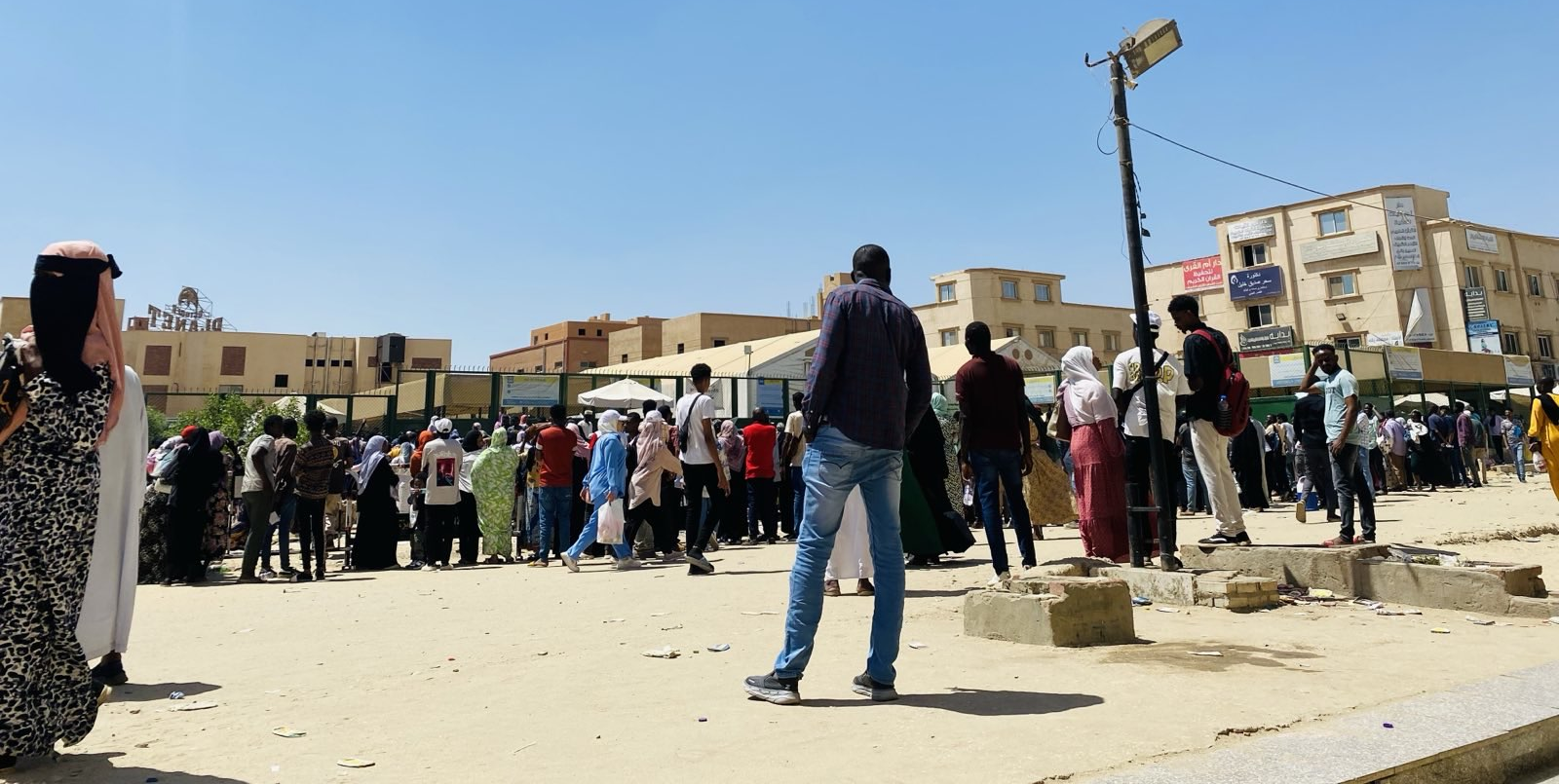
‘Egypt’s guests’ in danger: Refugees face increasing arrests, deportations
Thousands of refugees in Egypt have been subjected to arrest, detention and forced deportations

Racial bias fuels outrage against Sudanese doctor accused of female circumcision, legal advocates say
MPs warn against “foreigners’ beliefs," although female circumcision remains prevalent in Egypt.
Your support is the only way to ensure independent, progressive journalism survives.
You have a right to access accurate information, be stimulated by innovative and nuanced reporting, and be moved by compelling storytelling. Subscribe now to become part of the growing community of members who help us maintain our editorial independence.
Join us