
Migrants haunted by the damp
The floor was cold concrete. The floor was cold tile.
The air was heavy. A mix of stale sweat, cigarette smoke and dampness. Stale sweat, dampness clinging to the walls. The smell was strong, the air heavy.
The cell filled with the sounds of coughing, of worried whispers and, sometimes, a brief scuffle over a spot near the door where a trickle of air seeped in.
At night, the sounds overlapped — persistent coughs, anxious whispers, sometimes stifled crying. At night, coughing and whimpering echoed, and exhaustion blended with worry.
Boiled rice, or some lentils, and a piece of bread. Small portions of rice or pasta and a piece of bread.
Time began to dissipate.
I lost all sense of time. I couldn’t tell whether two days had elapsed or four.
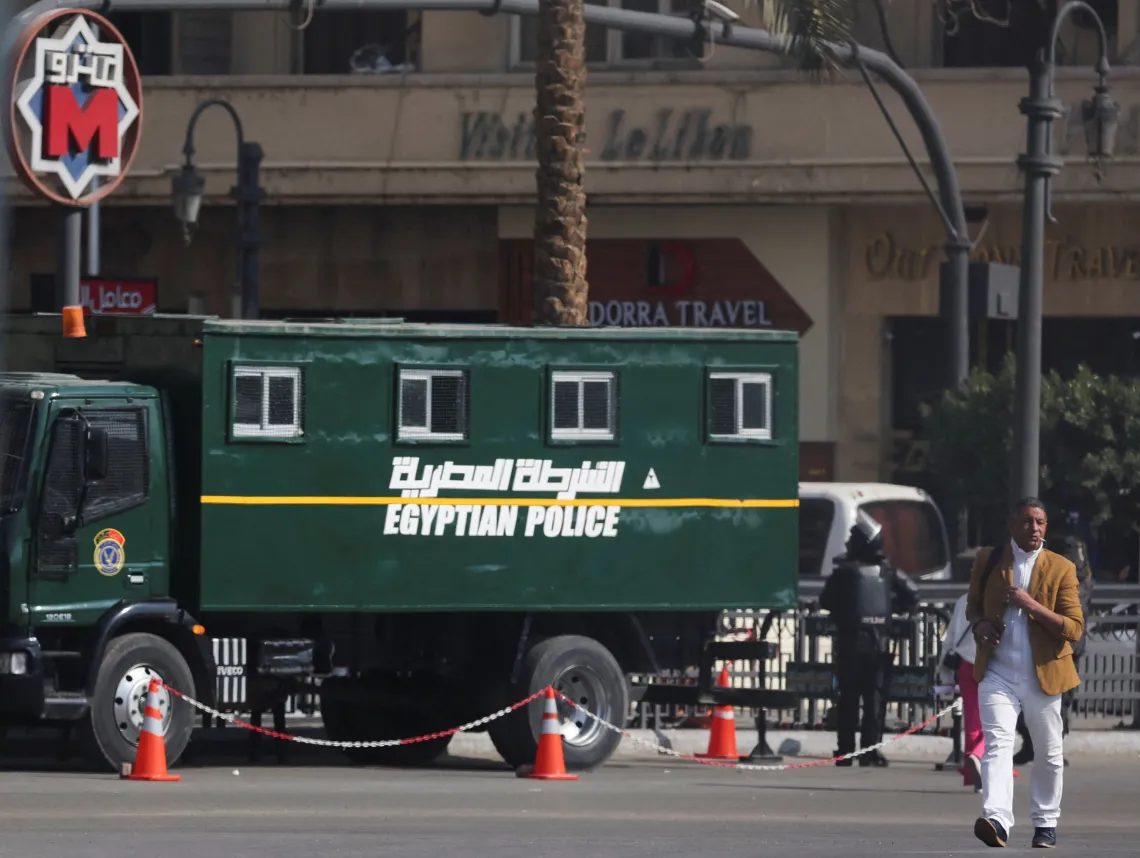
These are fragments drawn from testimonies, most of them from or concerning Sudanese people who were arrested and detained in a security campaign launched in Egypt in mid-2024 and grew sharply in scale late last year. Refugees and migrants are arrested regardless of their legal status, whether or not they carry valid documents, residency renewal receipts or asylum cards.
The fates of those in the testimonies varied: some were released, others deported and some died.
While official statements speak of procedures and safeguards, the testimonies reveal a different reality — harsh experiences in the host country’s prisons, atop earlier experiences of fleeing cities destroyed by war, for people who have known little stability since the moment they were displaced.
***
On February 5, Mohamed — a Sudanese student in his early twenties studying media at a public university in Cairo — was arrested as he left his student dormitory on his way to the library. His friends had warned him not to go out without his residency papers, given the arrest campaigns. But Mohamed reassured himself that he had in his bag the official receipt proving he had paid the fees to renew his residency permit. He was just waiting for the new permit, which was supposed to arrive in a few weeks.
The asylum process in Egypt requires individuals to register with the United Nations refugee agency (UNHCR), receiving a yellow asylum-seeker card at first, followed — once their claim is accepted — by a blue refugee card. In addition to these cards, they must also obtain a residency permit from the Passports, Emigration and Nationality Administration, renewed each year. But, according to asylum seekers’ testimonies, renewals take many months.
“A patrol stopped me on the street. The police officer asked for my residency permit, so I showed him the receipt. I told him the card was being processed, and that this was the official document until it was issued.” He tried to speak calmly, but the reply was curt: “Come with us to the station so we can verify.” Mohamed wasn’t given a chance to call anyone and no attention was paid to the fact that he was a registered student at a well known university.
At the station, Mohamed was first placed in an overcrowded cell before being moved to a smaller one. “There were more than 20 of us in a space that couldn’t even hold 15.” The floor was concrete, the walls cracked, and a yellow lightbulb stayed on all night. The smell was the first thing that hit him — a mix of stale sweat, cigarette smoke and dampness.
The toilet inside the cell was behind a low divider, and water only ran for limited periods. “We had to line up to use it and sometimes wait a long time.”
Food was given once or twice a day. The portions were meager. Those who could afford it paid to have food sent in by their families. Others without means had to rely on those rations.
Mohamed describes a suffocating feeling at night, when everyone tried to find a space to lie down. “We slept in shifts. Some of us sat with our backs against the wall while others stretched out, then we swapped.”
The cell filled with coughing, worried whispers and, sometimes, a brief scuffle over a spot near the door where a trickle of air seeped in.
He kept telling the guards he had an official receipt, but the answer was always the same: “Wait until we see.”
The days began to blur together. “I lost all sense of time. I couldn’t tell whether two days had elapsed or four.” What wore him down most was the sense of helplessness, that his legal document was in his pocket, and yet it changed nothing.
Outside, his friends were searching for him. They called multiple police stations until they found where he was being held. During a brief visit, they told him he could be released “if a sum of money was paid.” It wasn’t official. It went through intermediaries and individuals inside the station. “They pooled money among themselves and paid part of it,” Mohamed said. After several more days of waiting, his name was called. “I was told, ‘get ready.’”
No official reason for his release was given, and no acknowledgement was made that his detention had been a mistake. He walked out carrying the same receipt that had gone unrecognized inside.
Mohamed says the hardest part wasn’t just the suffocating confinement, but the feeling that his legal status wasn’t enough, that his freedom depended more on his friends’ ability to gather money than on the receipt that was supposed to protect him.
There was one thing he learned from the cell: “You can go from being a student trying to renew your residency legally to a detainee waiting for the unknown in a matter of minutes. And between those two moments, there is nothing but a decision you have no control over.”
***
Sayeda, a Sudanese woman who worked at a hair salon in Cairo and carried a yellow UNHCR card, was arrested from her workplace in early January during one of the raids on businesses known to employ migrants from Sudan, Ethiopia and other countries.
“They put us in a large cell with many women, some of them with their children. The floor was cold tile and there weren’t enough blankets. We slept pressed against each other, side by side. There was no empty space. The toilet was inside the cell, without a proper door, and the water would sometimes be cut off. The smell was strong and the air heavy. At night, the children cried for hours, and no one was able to calm them.”
She stayed in the cell for days, not knowing exactly how many. Food came in plastic plates — small portions of rice or pasta and a piece of bread. “We shared everything. Sometimes I went hungry so my children wouldn’t.”
Some of the women complained of fever or stomach pain. No proper medical care was provided.
Waiting was the heaviest burden. “Every morning we asked if anyone would be released, and we were told to prepare for deportation.”
When Sayeda’s sister learned of her detention, she began searching in different police stations until she found her. There, she was told a deportation order had been issued. She told the officers she held the same yellow card and could not stay in Egypt without her sister and that she would rather be deported with her. She left to gather her belongings, settle rent and other expenses and returned to her sister.
After about two weeks, they were put onto a windowless bus and taken away without knowing where they were headed. “They sat us in rows, each of us holding a small bag with whatever we had managed to collect. The journey was long and silent. Some children slept on their mothers’ shoulders, others cried from the heat and thirst. There were few stops and little water.”
They eventually arrived in Aswan where they were placed in a temporary detention facility near the border, more crowded than the prison.
“We knew we were one step away from crossing, but we didn’t know what awaited us there.” Officials called out names, asking each family to prepare. There was no room to object or explain. “We were told we would be handed over to the authorities on the other side.”
The moment of crossing was filled with emotions. “We walked in a line, each woman carrying her child or her bag. I looked back one last time.”
***
Zeinab, a young Sudanese woman living in Cairo with her family since 2023, recounts how police raided the home of their South Sudanese domestic worker — who held a UNHCR refugee card — late one night at the end of December 2025. The police gave the family no time to gather their belongings, or even to verify their papers. “They took them in their homewear and told them to bring in any family members who were outside.” Within hours, the entire family was in detention.
After a few days, Zeinab managed to speak to her during a brief visit, and continued to follow their situation until they were deported.
Zeinab says her domestic worker feared returning to Juba, where she had no stable home or guaranteed work. “She told me, ‘I don’t know what I’ll do there or how I’ll start over.’” The unknown was what scared her the most — a volatile security situation and the absence of any clear support network.
***
On the day of his arrest, at the end of December 2025, Awad — a Sudanese man who had been living in Cairo since early 2024 — had expected an ordinary evening. He was on his way back from work, thinking about his slightly overdue rent and a phone call he meant to make.
A police car stopped him. The officers asked for his papers. He took out his yellow UNHCR card and handed it to the officer with a mix of confidence and confusion.
The officer looked at the card for a long moment, then with a single word, his ordinary day was brought to an end: “Come.”
He was put into the car with others who had been arrested — Sudanese and Ethiopian nationals among them — each holding their documents in their hands as though the papers might speak on their behalf.
At the station, time began to dissipate. He was placed in a detention room before being moved to a narrow cell that was already full. The number of people was far more than the space could hold, to the point that he stood for a while at the door before finding somewhere to put his foot.
The floor was cold concrete, the air heavy with the smell of stale sweat and dampness clinging to the walls. There was not enough room to lie down, so they slept in shifts — half sitting, half trying to doze. Blankets were few. Some slept without any.
Food arrived in small plastic containers — boiled rice or some lentils and a piece of bread. A plastic water jug was passed around, each person measuring out their sips.
The toilet inside the cell was separated by a low divider, neither offering privacy nor blocking the smell.
At night, the sounds overlapped — persistent coughs, anxious whispers, sometimes stifled crying.
Awad says what exhausted him most was the feeling that his body had become part of a compressed human mass, without any space of his own.
After two days, he and others were moved to a courtyard due to overcrowding. There, they lay on the ground in the open. The sun during the day was scorching, the nights bitterly cold. They huddled near the wall in search of a little warmth, using their shoes for pillows.
Awad didn’t know how long he would stay, when he might be brought before a prosecutor or whether his card would be enough to secure his release. Waiting was the longest punishment: a door opening and closing, names called out and others left uncalled.
Then came a paper, placed in front of him. “Voluntary return.”
In March 2025, the Sudanese government, having regained Khartoum, launched a “voluntary return” campaign, promoting safe return and available services. In reality, many who returned found only the wreckage of their homes, electricity and water regularly cut, disease spreading. Egyptian authorities coordinated with Khartoum, officially launching joint initiatives to send thousands back while cracking down on Sudanese communities in major cities.
Awad was told signing would end his detention, and refusing meant waiting indefinitely.
A metal desk, a broken fan, an officer flipping through papers with indifference. “Voluntary return.” Awad read the title again and again, as though the meaning might change.
He took the pen and looked at his name at the top of the page. The decision felt larger than he could process. There were only two options, both heavy. After a brief hesitation, he signed, the handwriting strange to him, as if someone else had done it.
That night, he returned to the courtyard carrying a conflicted feeling — a temporary lightness mixed with open-ended anxiety. He looked at the faces of those who had not yet signed, at the elderly man coughing and clutching his chest, the young man staring at the iron door. He thought of the few blankets they shared, the plastic water jug passed among them, the courtyard’s ground stinging his back, the sound of keys striking metal each time the door opened.
Awad said that what stayed with him most was not the confinement or the hunger, but that his signature had not been a free choice so much as a forced exit through a narrow door. Whenever he recalls the moment he bent over the paper, the image of the overcrowded cell returns as well, and the cold nights, and the waiting that devoured the hours.
He later returned to Sudan. But the details of the detention center remained lodged in his memory, as though they had become part of the name he signed that day.
“After weeks, I began to understand that survival is never guaranteed, even for me. Years ago in Khartoum, I managed to leave our home in northern Bahri alive, and I left the detention cell in Halfaya one day before it was stormed. And then in Cairo, I was there, in another cell, listening to the same screaming, the same crying, the same fear. I carried a card that said I was a refugee, and inside me I carried a shattered city. Every day that passed was a wait for a decision that could send me back to square one. And every night I felt suffocated — not only by the stench, but by fear, by the thought that life can be taken from us in a moment.”
***
In January, a police patrol stopped Ahmed just one street away from his home. He tried to convince the officer that his residency permit was valid and at home but to no avail.
After his arrest, he was moved between three police stations in different areas he did not recognize. It was not only a transfer between places, but a passage through escalating levels of exhaustion and distress. In each, he found dozens of detainees — most of them Sudanese, along with others of Syrian, Yemeni, Ethiopian and South Sudanese nationalities.
The cell in the first station was so cramped that bodies pressed against one another. Around 25 people in a space that could barely hold half that number.
The floor was cold concrete, and dampness coated the walls where names and dates had been etched by those who had passed through before him.
The toilet stood exposed in a corner, separated only by a low divider, and water was scarce. People took turns standing near the iron door, hoping for a passing breeze.
At night, coughing and whimpering echoed, and exhaustion blended with worry.
In the second station, the space was slightly larger, but even more crowded — thirty or more people. Some lay on the floor, while others slept sitting up, their backs against the wall. Blankets were few, each shared by two or three. Brief moments in a courtyard under a harsh sun were their only respite.
The stations differed in space and settings, but shared the same feeling: an accumulating distress, a heavy passage of time and bodies trying to endure.
Exhaustion built up and consumed all. The smell was heavier, the silence deeper. There were no longer scuffles over light or water, only a slow surrender.
In the second station, he got to better know a young man they called Shebly [cub] for his boyish features, though he was said to be around 18. He was frail, mostly silent, sitting by the wall staring into the void.
For two days, Shebly had been complaining of sharp chest pain and difficulty breathing. He coughed in dry, intermittent bursts that turned into long fits, forcing him to bend over until his forehead touched his knees. One night, his condition worsened. His skin felt hot to the touch, his lips trembling. The men made space for him near the door, where a little air seeped in. One of them placed a blanket under his head, another gave him the last of his water.
His breathing was audible. Short inhales followed by longer exhales, as though the air was no longer enough. Between coughing fits, he whispered that he could no longer stand on his feet. They pounded on the iron door again and again and called for the guard, asking for medical help. The minutes dragged heavily.
Shebly lay on his side, his eyes half open. Ahmed came close, called his name, but received no clear response. His breathing slowed, then faltered. They splashed water on his face, tried to revive him, but his responsiveness was fading.
At dawn, the door opened. A guard entered with two people. They checked Shebly briefly and then carried him out of the cell. No one told them anything. They remained suspended between hope and fear: had he just lost consciousness, or had it ended there? The uncertainty was harsher than any answer.
Shebly’s image is seared into Ahmed’s memory — not as news he read after his release, but as a face that lay beside him, a breath that faded slowly inside a cell that went on unchanged.
In detention, Ahmed met a number of refugees who had been in Egypt for years before the war. Among them was Salah, a man in his late thirties, who advised him to sign any paper indicating he would be deported. Salah told him, “Once back in Sudan, have your family send your residency card, then return through smuggling routes. And in Egypt, present your valid card.”
“I didn’t understand why Salah gave me that advice until I grasped what suffering in detention really means,” Ahmed says.
Ahmed’s family intervened and he was released after two weeks in detention. The authorities conceded that his residency permit was valid.
***
Noaman Kajo, a Sudanese national, was arrested after a minor altercation on the street. After a few days, on February 17, he died in detention. His family was only notified days later, and went to receive his body without an explanation from the authorities of how he died in state custody.
“Kajo was a registered refugee,” a close friend says. “He was a quiet young man, his demeanor known to all who were close to him. His detention came after a small altercation in the neighborhood. It was not a major crime or a serious case. He was taken to the station, and we thought it wouldn’t last more than a few hours or days. But he did not come out alive.
We later learned he had been placed in a cell with convicted criminals. We don’t understand why someone detained over an altercation would be held in such a place. Inside, he was insulted by some inmates, and when he objected, they beat him. The beating was severe. There was no prompt intervention to protect him, and he was not transferred in time for treatment, according to what we heard from witnesses who were with him.
We were told he collapsed after the assault and remained for hours without real medical assistance. We are not talking about a fight between prisoners, but about the responsibility of the detaining authority to protect those under its custody. Noaman did not die in the street — he died inside an official facility that is supposed to be safe. We lost him this way. We want a clear investigation to say how this happened, who is responsible for placing him in that cell and why he was not protected from the assault.”
His sister speaks in a pained yet steady voice. “We received a brief call informing us of his death. They didn’t explain the details, only asked us to come to complete the procedures. We were not allowed to see him immediately. We waited for long hours between offices and paperwork. When we finally received the body, we noticed clear bruises on his face and body. It was not normal.
We asked for a medical report explaining the cause of death, and were told the procedures would take time. No sufficient explanation was given about what happened inside the cell.”
She concludes bitterly, “My brother entered a detainee and left a dead body. He was not tried, not convicted, not given a chance to defend himself. We only want to know: how does a person die inside an official detention center because of an insult? Who is held accountable? And who will ensure this does not happen again to others?”
***
This report was produced as part of the activities of the Independent Media on the Arab World network, including Assafir Arabi, Orient XXI, Mada Masr, 7iber, Mashalla News, Maghreb Emergent, Nawaat and BabelMed
تقارير ذات صلة
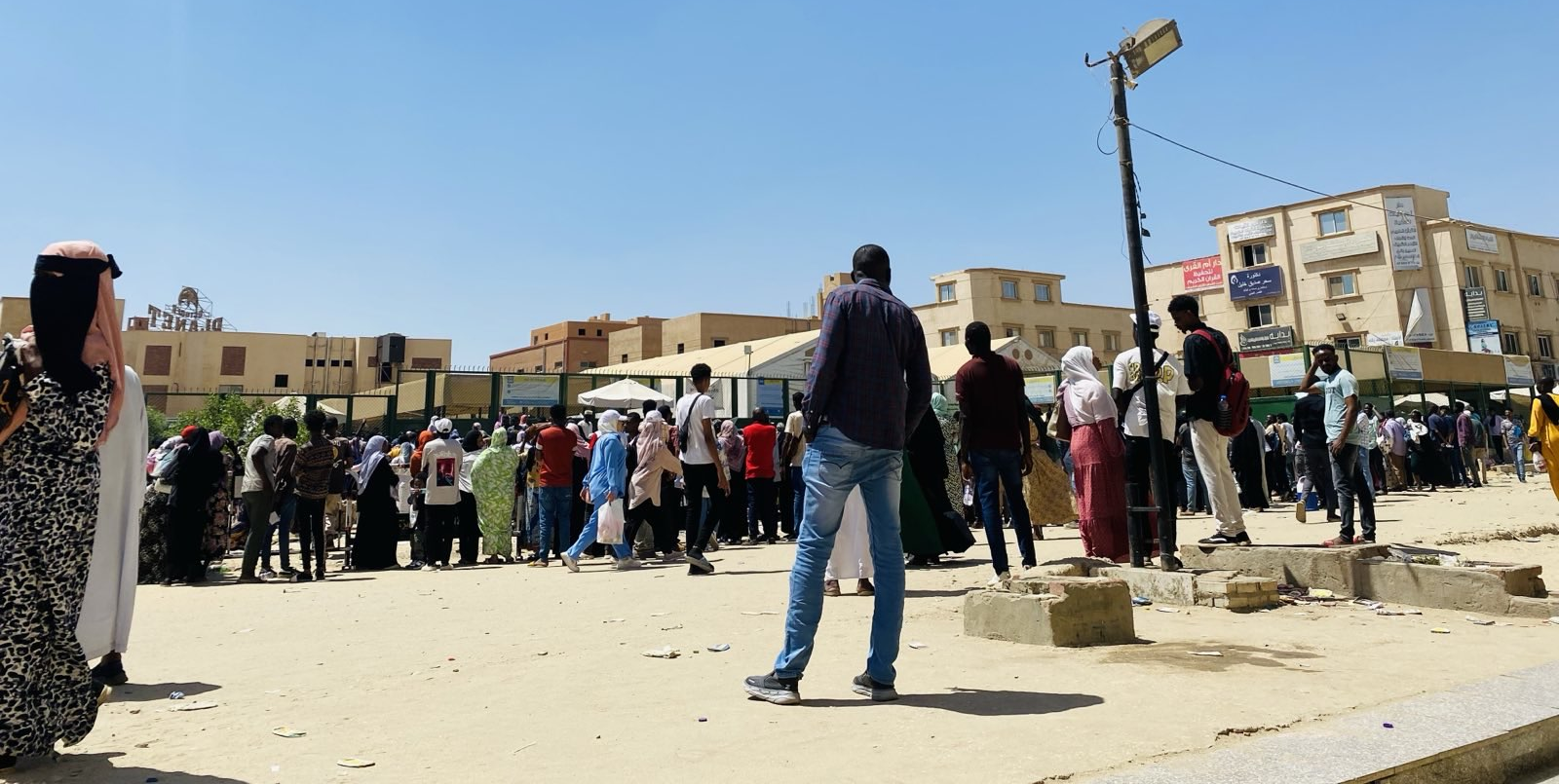
‘Egypt’s guests’ in danger: Refugees face increasing arrests, deportations
Thousands of refugees in Egypt have been subjected to arrest, detention and forced deportations
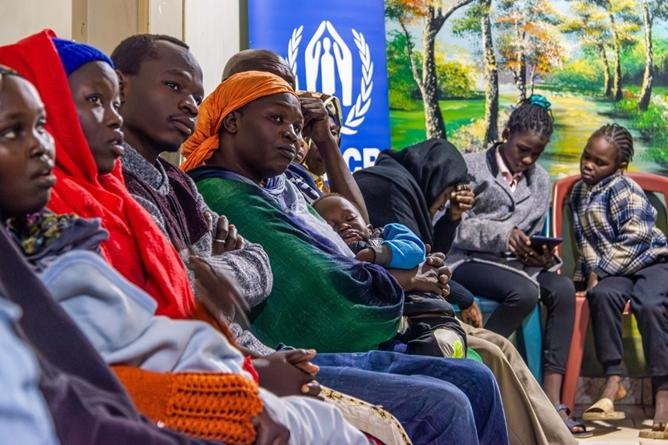
Egypt’s 1st bill on asylum-seekers to balance rights against ‘stability of Egyptian society’
amid regional instability and pressure from the European Union to control migration routes.
Racial bias fuels outrage against Sudanese doctor accused of female circumcision, legal advocates say
MPs warn against “foreigners’ beliefs," although female circumcision remains prevalent in Egypt.
Your support is the only way to ensure independent, progressive journalism survives.
You have a right to access accurate information, be stimulated by innovative and nuanced reporting, and be moved by compelling storytelling. Subscribe now to become part of the growing community of members who help us maintain our editorial independence.
Join us