

Partially privatizing Misr Insurance, Misr Life Insurance: Inviting investors into a sector primed for growth
The state’s two biggest insurance companies, Misr Insurance and Misr Life Insurance, are supposed to offer shares to investors over the coming year as part of 32 companies included in the privatization program announced last week by Prime Minister Mostafa Madbuly.
They represent two of six existing government insurance companies that stand as relics of the state’s dominance in the sector and are still the largest players in Egypt’s insurance market, with a corner on key areas of it, including aviation, petroleum and government contracts.
Insurance, once a fully nationalized industry, has been undergoing step-by-step privatization since the 1970s, and since the early 2000s, the state has made preparations for a final plunge: partially privatizing the remaining government insurance companies.
Now, the government has drawn out a new strategy to partially withdraw from the insurance market, particularly from the areas of trade insurance and compulsory insurance (like the insurance required of a car owner), while it has staked out plans to retain its established role in the social insurance sector.
Inviting the private sector into Egypt’s state insurance companies constitutes an invitation to join two leading players in a market with immense growth potential, according to a number of industry figures who spoke to Mada Masr. Although they also pointed to several hurdles still standing in the way of the sector’s anticipated growth.
And as much as investment from a strategic buyer could bring much-needed expertise into the sector, they said, there are a set of specificities to Egypt’s insurance market that should be taken into account to ensure inclusion going forward.
What value do Misr Insurance and Misr Life Insurance represent?
With a long history of operations and an established advantage in comparison to private companies, state insurance companies are attractive prospects to investors in a sector that is primed for enormous growth, according to industry figures who spoke to Mada Masr.
The state’s two flagship companies, Misr Insurance and Misr Life Insurance, represent around a third of the investment market’s value, said the director of an insurance company, who preferred to speak on condition of anonymity. Even though there are around 40 private sector companies operating in Egypt, “the paid-up capital of Misr Insurance is equivalent to the sum of the paid-up capital of other insurance companies in the market.”
While insurance markets in the Global North tend to operate with a greater degree of specialization, Egypt’s emerging insurance sector is broken down into the broad categories of life insurance and general insurance only.
Yet within those two categories, the state-owned companies, particularly Misr Insurance, are in command of a couple of important specialties. Misr Insurance is the only company with departments for the underwriting and settlement of compensation in the petroleum and energy insurance fields specifically. It holds an almost complete monopoly over insurance policies for aviation and petroleum projects, said Amro Saleh, a manager at the privately owned Mohandes Insurance Company, adding that this leaves the private sector to deal with other common policies, such as property and health. Misr Insurance also has exclusive experience in space and satellite insurance, holding the policy for the Egyptian satellite Nilesat.
Misr Life Insurance Company, meanwhile, is considered the largest life insurance company in Egypt and the region.
The companies’ dominance in the sector is the legacy of what was once a completely nationalized industry, a step taken under President Gamal Abdel Nasser to counteract the leverage that British and French companies had once exercised over Egypt’s economy due to the imperial nations’ monopoly over the country’s insurance contracts. Though the private sector has been gradually entering the market since the 1970s, the state-owned companies have kept grasp of their preeminent position.
Another attractive pull for investors is the insurance market's potential for growth, said the first private insurance company manager. Misr Insurance and Misr Life Insurance have achieved growth rates well over 10 percent over the past few years, they said.
And Egypt’s insurance sector is still relatively small. It currently represents less than one percent of the country’s GDP, according to economic researcher Wael Gamal, while the private insurance company manager noted that the market penetration of both life and general insurance in Egypt is under one percent, compared to the African market’s average, which is around three or four percent. As the emerging market economy expands, industry figures predict that the insurance market will expand too, to represent a much larger proportion of the non-banking financial industry.
Why is privatization happening now?
Privatizing the insurance sector has been on the government’s agenda for decades and industry figures say it could be a good route to developing the sector. But the move is also compelled by a moment of extreme economic need, they observed.
The state insurance sector was restructured in the 2000s under the government of ousted former President Hosni Mubarak — a restructuring that was likely intended to make privatization easier. “The revolution probably stopped the privatization process from happening up until recently,” said Gamal. Misr Insurance was also part of a privatization program the government launched in 2018 that was subject to repeated delays.
Before now, “there was technically nothing preventing privatization from taking place,” said the private insurance company’s managing director, adding that the delay “might be only a political decision.”
The government has not specified whether shares in Misr Insurance and Misr Life Insurance will be partially privatized via share offerings on the EGX or via the sale of shares to strategic investors, though the options would entail different outcomes.
Sale to strategic investors could be a way for the government to invite new expertise into the sector, noted the private insurance company’s managing director, which could facilitate the sector’s development. But, they added, “whether they opt for selling shares to the public via the EGX or selling shares to an investor would ultimately depend on the state’s strategy and its strategic assessment of whether it wants to retain a presence in the insurance sector.”
Aside from developing the sector, investment specialists speaking to Mada Masr over recent weeks have noted that selling shares to strategic investors would facilitate the entry of dollars, which the government is sorely in need of at the moment.
Gamal noted that this applies to the insurance sector as well. “Selling these companies is not going to increase investment or the sector’s growth,” Gamal added, noting that the private insurance sector already exists and hasn’t been able to create that change. The purpose of undertaking the sales now, Gamal said, “is to gain dollars, to be able to pay for the financial gap created by the debt.”
What challenges face the insurance sector going forward?
Regardless of privatization, investment industry figures who spoke to Mada Masr described a number of issues in the sector that will need to be addressed if it is to serve the national economy. Insurance companies should invest more of their funds in the capital markets and become more compatible with global insurance principles at the same time as catering better to Egypt’s population to ensure financial inclusivity, they said.
Some of these issues were due to be addressed by a new unified insurance act, currently awaiting completion.
“Insurance companies should be one of the biggest institutional investors in capital markets,” said the insurance company’s managing director, adding that this is the situation in more developed markets. But lots of insurance company capital in Egypt ultimately fails to play a role in the country’s capital market, reducing the sector’s dynamism.
The managing director noted that lots of insurance companies, especially companies in the private sector adhering to the conservative approaches of their multinational parent companies, tend to take the money paid up by their clients and reinvest it in investment vehicles with the lowest possible risk. As a result, 50 percent of insurance companies’ capital is invested in government bills and bonds, while a large proportion of the remainder is held in bank deposits, they said.
State-owned insurance companies do better in this regard, they added. The state-owned companies tend to invest a larger proportion of their portfolios in the capital markets and have more diverse portfolios in general, with Misr Insurance and Misr Life Insurance holding shares in a number of companies that are publicly traded on the Egyptian Stock Exchange, as well as holding properties in their portfolios, such as real estate in Cairo’s Downtown area, through which they can collect rent.
Part of the issue, the managing director said, is that national regulations do not currently require companies to invest an obligatory minimum proportion of their portfolio in capital markets; only a 30 percent maximum cap exists.
A minimum cap, as well as a greater variety of investment vehicles for insurance companies to choose from, would support the companies in building more varied and less conservative investment portfolios.
Over the past two years, Parliament has been working on a new, unified insurance act that — beside unifying regulations across the sector — aims to increase the sector’s capital from LE150 million to LE250 million.
The new act would aim, in part, to make Egypt’s insurance market more compatible with multinational or global insurance actors.
Last year, MP Mahmoud Samy told Mada Masr that the act would aim to help companies struggling with two things: a lack of awareness about the insurance sector and a lack of experience and competencies. Since Misr Insurance has held a near-monopoly on government insurance contracts, for example, the only expertise in the field comes from Misr Insurance, Samy noted. The law would seek to build out the types of specialization and specialized licensing in the sector so that companies could focus exclusively on providing industrial equipment insurance, for example, or on insuring motorized vehicles.
Samy also added that low wages in the sector have detracted from building out a new, well-trained and competent workforce.
At the same time, the insurance company’s managing director noted that the new act is also set to play an important role in facilitating market inclusivity. The act was set to introduce micro-policies offering composite insurance — a bundle combining life insurance with home contents insurance, for example — that would cater better to Egyptian nationals and allow the sector to grow domestically in a way that serves the population.
تقارير ذات صلة

Surprise in the making: The little we know of what will become of Zohriya
Talk of the state's plans to "redevelop" the garden has circulated since 2021
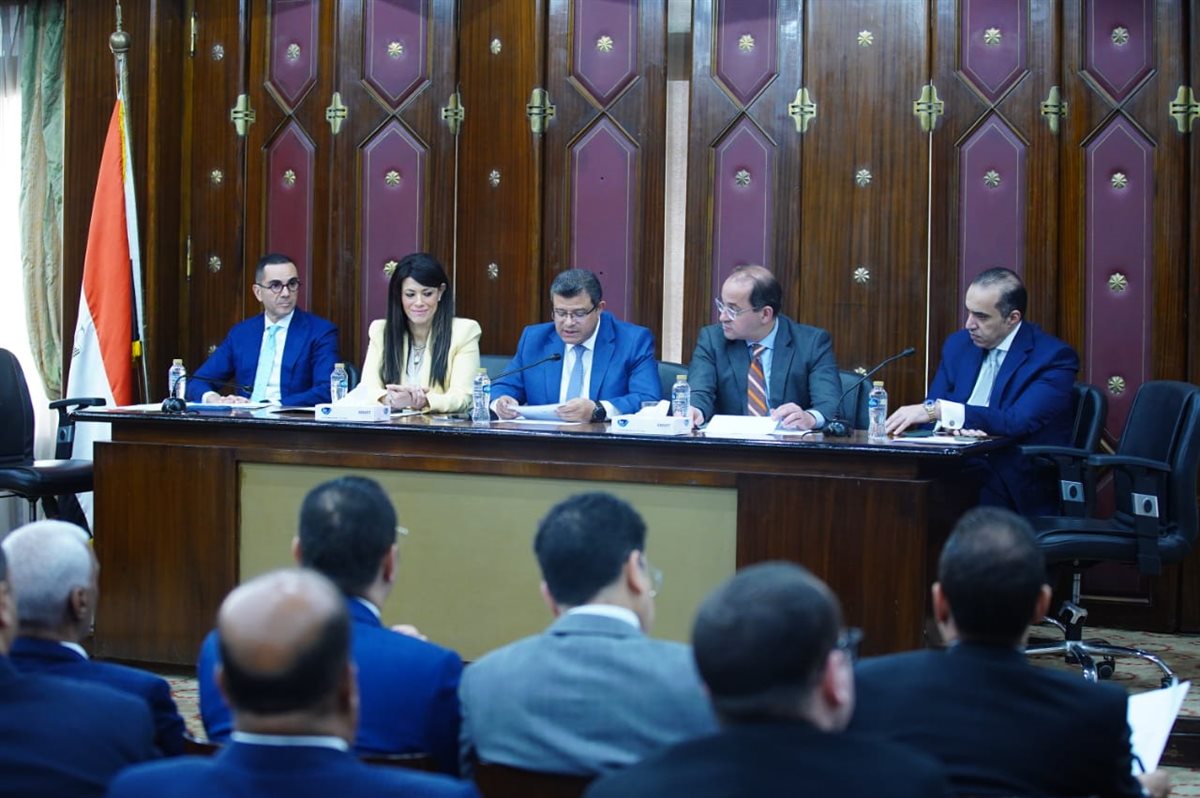
New law to regulate state ownership: Pushing through the IMF review with the same old recipe
Sources say the draft state ownership law aims to appease the IMF
No prescriptions, no appointments: Cancer patients at Hermel Hospital hit by treatment crisis after private sector take over
The waiting area of Dar al-Salam Hermel Cancer Hospital was crowded earlier this month with patients and their families who had come for the treatment they are accustomed to receiving…
Your support is the only way to ensure independent, progressive journalism survives.
You have a right to access accurate information, be stimulated by innovative and nuanced reporting, and be moved by compelling storytelling. Subscribe now to become part of the growing community of members who help us maintain our editorial independence.
Join us