
Detox | Issue 10: Burning manuscripts, empty landscapes and the fear of forgetting
WHAT’S UP?
Here we are, after an intense couple of weeks, which we tried to get through by taking a collective deep breath. We’re back with our usual recommendations to read and watch, and, as usual, we bring you Tafneeta, our first-weekend-of-the-month playlist, curated by Ahmed al-Sabbagh. We also chat with filmmaker Aida al-Kashef.
And speaking of the turbulent week before last, here’s an analysis by Mohamed Nagi, researcher at the Association for Freedom of Thought and Expression, about the events that took place.
READ
-Joan Didion (who was born on December 5, 1934) once wrote: “My only advantage as a reporter is that I am so physically small, so temperamentally unobtrusive, and so neurotically inarticulate that people tend to forget that my presence runs counter to their best interests. And it always does.” When she started writing about herself, in later years, did her presence run against her own best interests? This question, among many others, is posed by novelist, critic and self-proclaimed Didion acolyte David L. Ulin, who writes about the legendary essayist’s move from fiction and reportage to memoir in this engaging piece on Literary Hub.

-In The New Yorker, film critic Richard Brody lists what he deems as the 27 best films of the decade. The real value of the piece, however, is not in the list itself but in Brody’s introduction, which is a brief but insightful overview of the past 10 years in the cinema industry, and the effects that developments such as streaming platforms, social media and the #MeToo movement have had on the medium.
-Also in The New Yorker, staff writer Hua Hsu reflects on the experience of reading Jacques Derrida’s The Politics of Friendship, a compilation of some of the French philosopher’s lectures on the subject: “The intimacy of friendship, Derrida writes, lies in the sensation of recognizing oneself in the eyes of another. We continue to know our friend, even when they are no longer present to look back at us. From the moment we befriend someone, he argues, we are already preparing for the possibility that we might outlive them, or they us. Of the many desires we attach to friendship, then, ‘none is comparable to this unequalled hope, to this ecstasy towards a future which will go beyond death.’”
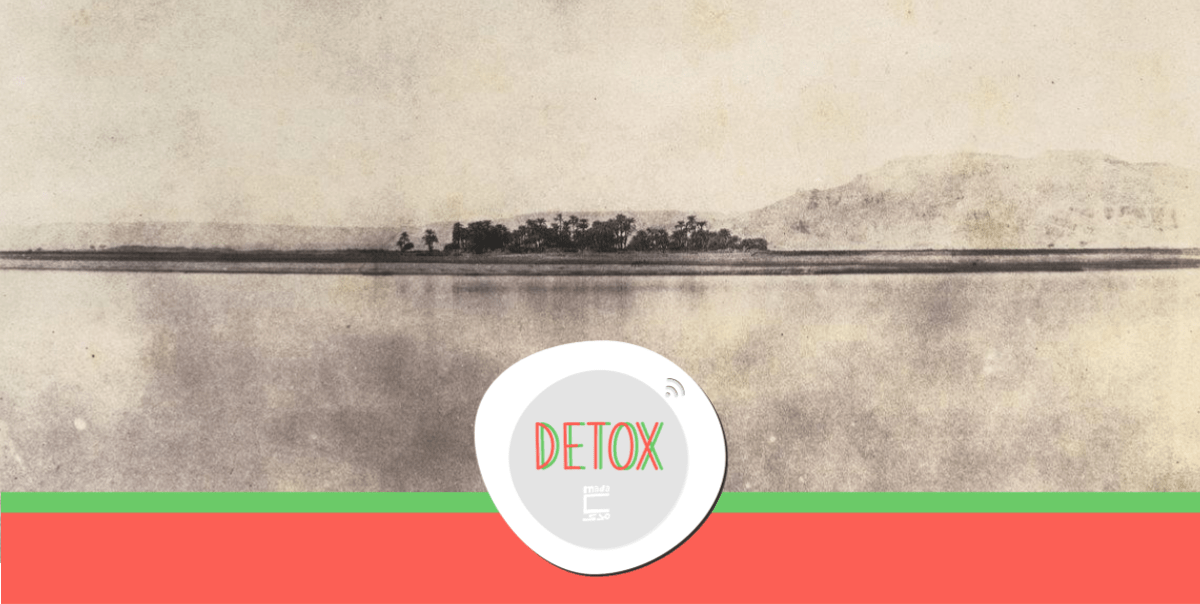
-In the 1850s, the young French-American egyptologist John Beasely Greene came to Egypt with the purpose of photographing European excavations in the country. In this piece, published on Atlas Obscura, Jessica Leigh Hester comments on the “strange emptiness” of the pictures Greene made of the sites that he visited; how they contained no traces of the people that inhabited the land: “Portraying these landscapes as vast and empty also affirmed a colonial agenda, suggesting that these were places just waiting for Europeans to stroll in and make their mark.”

-In The New Statesman, Dan Hancox attempts to find out “Why We Are All Losing Sleep.” Essentially a look into American art critic Jonathan Crary’s 2013 book 24/7: Late Capitalism and the Ends of Sleep and a current London exhibition inspired by it, the piece delves into the ways big companies are competing over our time in bed, and how, at times, getting a good night’s sleep is the ultimate kind of resistance to the global capitalist machine: “Ignoring the wider context of the monetisation of our time in favour of a narrow focus on smartphone addiction is a common mistake … This is a much longer, grander and more pernicious story of the insatiability of capitalism, rather than of (young, superficial) people spending too much time on Instagram.”
-Dedicated to the Sudanese revolution and its current manifestations, the latest issue of Lebanese magazine Bidayat, edited by writer and historian Fawaz Trabulsi, is a rich, sprawling compilation of beautiful writing by some of Sudan’s freshest and most critical minds. We invite you to take a dip into the issue here, and we leave you with a sample from celebrated novelist Hammour Ziada, reliving one of the revolution’s most iconic moments: “By coincidence, like the meeting of two rain drops, photographer Lana Haroun took a picture of a young female protester, Alaa Salah, on April 8, 2019. She was dressed in a traditional white Sudanese robe — in harmony with a revolutionary event that had been dubbed “White March” — and standing on the roof of a car which, amidst the clamoring crowds, seemed like an elevated platform from which a queen addressed her ardent listeners.”

WATCH
Ahmed Wael recommends A Citizen, an Informant and a Thief (2001):
The film opens with a song, and we hear the voice of shaabi star Shaaban Abdel Rahim, but here he sounds different: there is a distinctive melody that goes along with the lyrics, which is strange considering the majority of the late singer’s hit songs had the same melody (he passed away earlier this week). He is singing in a jail cell, lamenting the state of the prisoners, until the narrator interrupts the song to tell us that Sharif al-Margoushi (Abdel Rahim) was “the king of the prison’s arts and culture scene.”
Eighteen years have passed since the release of Dawoud Abdel Sayed’s entertaining film, where we watch Abdel Rahim in his first — and arguably only — exceptional acting performance, portraying the thief in the film’s title.
The highly engaging story depicts the life of three characters: the citizen (Khaled Abul Naga) who sought purpose and meaning in his life and so decided to become a writer; the informant who doesn’t deny that he once had the writer under surveillance (Salah Abdallah), and the thief, whom we’re introduced to in the opening scene.
The citizen’s car is stolen and we follow his attempts to retrieve it. He reports the incident, then submits to the informant’s advice on the best way to proceed. Eventually the citizen and the thief’s roads cross, and the plot is further complicated when the thief steals the manuscript of the novel that the citizen is working on. That last development is used as a catalyst for the main conflict between characters: the citizen accuses the thief of ignorance; the thief insists on his alternative view of art.
One of the film’s most striking moments is when an investigator says that the worlds of the citizen and the thief should never intertwine, while the role of the informant is to sneak into each of those worlds to make sure things are in order. However, the officer concludes, complete control is impossible. In the film, both worlds do intertwine, for reasons other than art (the citizen’s novel), and that is their love for Hayah (Hend Sabri).
In my first viewing, I empathized of course with the citizen writing his first novel, which I think goes with one’s ideas and dreams back then. Revisiting the film now, however, I realize that the thief is a pretty amusing character as well: he believes in a version of art where the artist should work for a more virtuous society; encourage people to be pious — at first, he wants to befriend the citizen, so he gives him a gift that is a statue of a nude woman, but wraps her in a jacket for modesty. He chastizes the citizen because his novel has no religious characters, and when the citizen shows no appreciation, that’s when the thief escalates things.
[wonderplugin_video iframe="https://www.youtube.com/watch?v=_xdihGSJ7mA" lightbox=0 lightboxsize=1 lightboxwidth=960 lightboxheight=540 autoopen=0 autoopendelay=0 autoclose=0 lightboxtitle="" lightboxgroup="" lightboxshownavigation=0 showimage="" lightboxoptions="" videowidth=600 videoheight=400 keepaspectratio=1 autoplay=0 loop=0 videocss="position:relative;display:block;background-color:#000;overflow:hidden;max-width:100%;margin:0 auto;" playbutton="https://thefuturebegins.today/wp-content/plugins/wonderplugin-video-embed/engine/playvideo-64-64-0.png"]
The sequence in which the manuscript is stolen takes place against one of Abdel Rahim’s best songs, “Abyad” (White), which he sings at a local wedding. This is the original milieu from which Abdel Rahim launched into fame as a free-wheeling shaabi singer; in the film, he returns to it, composing all of the songs himself. The lyrics and music in “Abyad” perfectly convey the air of threat surrounding the entire affair; the song is considered an act of revenge against the privileged intelligentsia (from the point of view of the thief), and encapsulates the film’s central query.
As I watched and rewatched the film over the years, and my own experiences as a writer piled up (I have learned, among many things, that what we write needs to connect, somehow, with reality and to reflect our daily maneuvering against the absurd circumstances under which we live), I came to realize that the conflict at its heart does make sense. I also find myself wondering whether it’s better if all manuscripts of all first novels are stolen, and if Sharif al-Margoushi was right when he sang: “Don’t think you can turn the world around, just because you’ve read a book or two.”
The citizen, the film tells us, needs to accept the presence of the informant and the thief; creative production can only take place within this triangle. This, ultimately, is Abdel Sayed’s statement about our dysfunctional society. Yet, what consumes me now is one question: Is there really no way out of this arrangement?
[wonderplugin_video iframe="https://www.youtube.com/watch?v=30xsPPLu7jY" lightbox=0 lightboxsize=1 lightboxwidth=960 lightboxheight=540 autoopen=0 autoopendelay=0 autoclose=0 lightboxtitle="" lightboxgroup="" lightboxshownavigation=0 showimage="" lightboxoptions="" videowidth=600 videoheight=400 keepaspectratio=1 autoplay=0 loop=0 videocss="position:relative;display:block;background-color:#000;overflow:hidden;max-width:100%;margin:0 auto;" playbutton="https://thefuturebegins.today/wp-content/plugins/wonderplugin-video-embed/engine/playvideo-64-64-0.png"]
-As of today, we can finally watch Noah Baumbach’s latest film, Marriage Story (2019), on Netflix. The film stars Scarlett Johansson and Adam Driver as an artistic couple (he is a theater director, she is an actress) dealing with a painful divorce, and is set between Los Angeles and New York. We have not seen it yet (it has not been released in cinemas here), but it has received glowing reviews from critics and audiences alike, and has been described by many (including The New Yorker’s Richard Brody) as the director’s strongest film so far. Definitely worth checking out this weekend if you’re hanging out at home.
[wonderplugin_video iframe="https://www.youtube.com/watch?v=BHi-a1n8t7M" lightbox=0 lightboxsize=1 lightboxwidth=960 lightboxheight=540 autoopen=0 autoopendelay=0 autoclose=0 lightboxtitle="" lightboxgroup="" lightboxshownavigation=0 showimage="" lightboxoptions="" videowidth=600 videoheight=400 keepaspectratio=1 autoplay=0 loop=0 videocss="position:relative;display:block;background-color:#000;overflow:hidden;max-width:100%;margin:0 auto;" playbutton="https://thefuturebegins.today/wp-content/plugins/wonderplugin-video-embed/engine/playvideo-64-64-0.png"]
LISTEN
Ahmed al-Sabbagh presents Tafneeta, an eclectic monthly playlist comprised of recently released tracks from here and there, for your consumption and enjoyment over the weekend. Listen in whichever order you prefer — that’s the whole point — and enjoy!
[wonderplugin_video iframe="https://open.spotify.com/embed/playlist/0F7iSpNuhMJQVvSMxAoKfX" lightbox=0 lightboxsize=1 lightboxwidth=960 lightboxheight=540 autoopen=0 autoopendelay=0 autoclose=0 lightboxtitle="" lightboxgroup="" lightboxshownavigation=0 showimage="" lightboxoptions="" videowidth=600 videoheight=400 keepaspectratio=1 autoplay=0 loop=0 videocss="position:relative;display:block;background-color:#000;overflow:hidden;max-width:100%;margin:0 auto;" playbutton="https://thefuturebegins.today/wp-content/plugins/wonderplugin-video-embed/engine/playvideo-64-64-0.png"]
CHIT-CHAT
Our guest this week is filmmaker Aida al-Kashef (Rhapsody in Autumn, 2009 and A Tin Tale, 2011), who asked us to introduce her as “an unemployed director.”
Let’s start our chit-chat by talking about art. Who is the audience?
Anyone looking for company, or who wants to disappear for a limited period of time.
When do you feel like you can’t express yourself — that words are eluding you?
When logic is killed; when that happens the only expression I’m capable of is to scream or to curse, if it’s socially accepted. I mean, if someone is being unreasonable, speaking beyond the logic that one knows. If they’re telling me that one plus one does not equal two, or recounting an observation and a conclusion that don’t go together. For example, when a customer service representative at TE Data tells me that their company isn’t related to the government, that they have nothing to do with the country’s communications infrastructure.
Do you feel that you’re part of a particular generation or mood?
Yes. To the last generation of Mohamed Mounir groupies, those who used to go to his concerts at the Opera House, for which tickets were only LE 20. To the people who love the film Aaelat Zizi (Zizi’s Family, 1963) and think it’s as important as Yossef Chahine’s Nasser Salahuddin (1963). And to the last class at the High Cinema Institute who worked with 35mm film. And of course to the new generation of defeat, the generation of the revolution — those are my people, no matter how much we disagree sometimes.
Let’s talk about love.
Oh, come on.
Fear?
I’m scared of more people dying while I’m alive. And at the same time I’m scared of dying early, before I’ve made at least five films. A couple of days ago I started to calculate how old my favorite foreign directors were when they made their first films, how old they are now and how many films they’ve made so far, or how many films they made before dying — then I did the same with my favorite Egyptian directors. Of course they’ve made fewer films, and many of them died young. If my calculations are accurate, I have 15 more years to make those films, 20 at most. But, most importantly, I’m scared of forgetting.
When we ask her to elaborate, she continues:
Not just the revolution, because this is what everyone thinks I’m talking about when I say that. I’m scared of forgetting how my father’s dreams died while he was still alive, and what happened with Osama Fawzi (his inability to produce his later works) and the day we buried him, and In the Last Days of the City, and how our male comrades failed us when we dealt with mass harassment in 2011 and the years that followed, and the death we witnessed, and the smell of the morgue, and the friends who’ve begun to lose their minds — including me.
Is it true that the world doesn’t change but we do?
Nothing changes. We should read more history, then we’d be able to relax, because we’d know there’s nothing we could do anyway. Even dinosaurs went extinct, man.
How do you see the future?
I just want to say that even though most of my answers seem miserable, I’m still praying that time will be fair to us and that everything we’ve done won’t be in vain. I’ve started taking sewing lessons; I thought maybe if I start working with my hands and producing anything — even if just a dress, not a film — I’d find some sense of accomplishment.

SALAM
If you’re looking for a fun way to spend your weekend, Abyusif will be performing live in Darb 1718 at 8pm tonight.
Meanwhile, you can start the new work week with a listening session with Grammy-winning musician Fathy Salama at CIC, a dance performance by the students of MAAT (Contemporary Dance School) at the Falaki Theater, or a talk by historian Emad Abu Ghazi about the Suez Canal at Misr Public Library, all happening on Sunday.
Additionally, Zawya will be hosting its Brazilian Film Week starting Monday. The opening film, The Invisible Life of Eurídice Gusmão, has been hailed among the year’s best productions. You can find the program schedule here.
[wonderplugin_video iframe="https://www.youtube.com/watch?v=8fBBGRT9ga0&t=9s" lightbox=0 lightboxsize=1 lightboxwidth=960 lightboxheight=540 autoopen=0 autoopendelay=0 autoclose=0 lightboxtitle="" lightboxgroup="" lightboxshownavigation=0 showimage="" lightboxoptions="" videowidth=600 videoheight=400 keepaspectratio=1 autoplay=0 loop=0 videocss="position:relative;display:block;background-color:#000;overflow:hidden;max-width:100%;margin:0 auto;" playbutton="https://thefuturebegins.today/wp-content/plugins/wonderplugin-video-embed/engine/playvideo-64-64-0.png"]

تقارير ذات صلة
Detox | An ode to the delivery worker
On curfew nights, only the roar of delivery motorcycles and the barking of dogs pierced the silence.

Detox | The final puff
I decided to quit, with the hope that I would continue to be kick-ass even without cigarettes.

Detox | A tuk tuk ride through the world of anthropology
We chat with anthropologist Mai Amer, the creator of a new show called Tuk Tuk.
Your support is the only way to ensure independent, progressive journalism survives.
You have a right to access accurate information, be stimulated by innovative and nuanced reporting, and be moved by compelling storytelling. Subscribe now to become part of the growing community of members who help us maintain our editorial independence.
Join us