
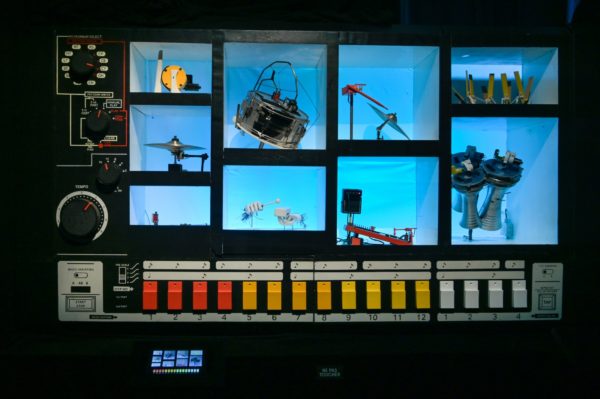
Conceptronica: On the elitism of contemporary electronic music
In October 2019, British journalist Simon Reynolds published an article in Pitchfork titled “The Rise of Conceptronica,” with a subhead that read: “Why so much electronic music this decade felt like it belonged in a museum instead of a club.” The article was met with a range of reactions: some regarded it as a celebration of the phenomenon that is “conceptronica” and the artists who practice it; others read it as a critique of the contemporary electronic music industry. What the article manages to do, however, is highlight many of the features that define this particular type of music, and the process of making it.
There is no doubt that Reynolds is one of the most prominent music critics working today. His writings span a wide range of topics related to musical subcultures and their social manifestations, including punk, post-punk, glam rock, hip hop, rave, and hauntological music. What distinguishes his writing style is his approach to the concept of popular modernism, which pursues a critical methodology that bridges the gap between what is academic and/or experimental, and what is mainstream. This is often reflected in Reynolds’ analysis, which makes theoretical concepts much easier to digest for the reader.
Reynolds coined the term conceptronica to refer to the work of a large number of electronic music producers, which — as it’s become clear over the past decade — heavily and consciously centers on social and political concepts. The term quickly became divisive because of its classificatory nature, at a time when artists and audiences alike are increasingly becoming averse to the use of such exclusive categorizations by the press. In my opinion, this is why so many expressed misgivings about Reynolds’ piece, despite the fact that it does address several valid issues.
To accommodate the process of categorization, Reynolds writes about conceptual electronic music as though it were a new trend, ignoring, for example, the concept-oriented releases of German record label Mille Plateaux in the 1990s and 2000s, which were massively influenced by Deleuze’s post-hegemony arguments. Achim Szepanski, the label’s founder, employed those arguments to infiltrate the mainstream, disrupting its constricted definitions of genre when it came to electronic music, and to impose new and unfamiliar aesthetics onto the scene. The releases of Mille Plateaux aimed to introduce a critical view on capitalism, unabashedly using capitalism’s own devices to combat it, namely by accompanying each release with a corresponding text — written by the artist or Szepanski himself — that espouses leftist views pertinent to various social, political or technological dilemmas. Yet Mille Plateaux relied on more than the power of words — theirs was a significant contribution to the development of new aesthetics in the field of IDM at the time. by applying digital glitch and microscopic sound materials to mainstream electronic music, such as house and techno, and thereby adhering to the concept of post-hegemony that they advocated.
[wonderplugin_video iframe="https://youtu.be/CiFbb6Waj_A" lightbox=0 lightboxsize=1 lightboxwidth=960 lightboxheight=540 autoopen=0 autoopendelay=0 autoclose=0 lightboxtitle="" lightboxgroup="" lightboxshownavigation=0 showimage="" lightboxoptions="" videowidth=600 videoheight=400 keepaspectratio=1 autoplay=0 loop=0 videocss="position:relative;display:block;background-color:#000;overflow:hidden;max-width:100%;margin:0 auto;" playbutton="https://www.madamasr.com/wp-content/plugins/wonderplugin-video-embed/engine/playvideo-64-64-0.png"]
Conceptual work is not new in the field of music; we can trace back its roots all the way back to classical music and the work of Wagner, as well as progressive and industrial rock bands a century later, and even in the employment of fiction in the work of Sun Ra, Drexciya and Cybotron.
Reynolds highlights a trait that has become ubiquitous in the work of electronic music producers over the past years, of attaching detailed conceptual descriptions to their albums or live performances — using ornate language and academic terminology similar to that found in museums and galleries and often consumed by intellectual elites — even though those artists still rely on streaming platforms such as Soundcloud and Bandcamp. The conceptual themes addressed vary to include pressing humanitarian, cosmic or social issues, and the artists also utilize multimedia, including visual art, to further elaborate their issues of choice, often through creating an imaginary utopian or dystopian world in or around the work. Reynolds gives examples of such conceptual projects by analyzing several works by Chino Amobi (PARADISO, Eroica), Lee Gamble (In A Paraventral Scale), Jam City (Dream A Garden) and Holly Herndon (Proto). Reynolds writes: “At some point during the 2010s it seemed like a steady stream of press releases started arriving in my inbox that read like the text at the entrance of a museum exhibit. I also noticed that the way I would engage with these releases resembled a visit to a museum or gallery: often listening just once, while reading reviews and interviews with the artist that could be as forbiddingly theoretical as a vintage essay from Artforum. These conceptual works rarely seemed like records to live alongside in a casual, repeat-play way. They were statements to encounter and assimilate, developments to keep abreast of. Their framing worked as a pitch to the browsing consumer, not so much to buy the release but to buy into it.”
Reynolds draws our attention to the way artists have been imbuing certain causes with an artistic dimension, imposing a narrative on their work that often falls into the trap of representation. Such works are also prone to overtheorization in an attempt to create a sense of legitimacy or depth. For instance, the last two albums by Lee Gamble are pretty much a series of ideas about capitalism, Brexit, digital censorship, commoditization, the temptations of neoliberalism, and so forth.
Meanwhile, Berlin-based duo Amnesia Scanner’s album Another Life (2018) was released with a description that read: “Founded in 2014, Amnesia Scanner's approach is informed by a unique perspective on technology and the way it mediates contemporary experience. System vulnerabilities, information overload and sensory excess inform their work, which has found a home in both clubs and galleries” — in addition to a text overflowing with theoretical and academic jargon on technology. Similar themes can also be found in their latest album, Tearless, released earlier this year.
In their 2012 album titled Classical Curves, Jam City take on the aesthetics of wealth, fashion, and glamorous brand names, commenting: “We don’t really have the luxury to just be repulsed and fascinated by the ‘visual culture’ of hyper-capitalism. Instead, it was time to really be clear about what side you stand on.” In the same vein, Holly Herndon’s album Proto poses a host of existential questions about human destiny in a world dominated by internet protocols, AI, and political turmoil. Similarly, one finds echoes of political critique in the work of Chino Amobi, as well as a tendency to tackle apocalyptic ideas in an academic manner.
[wonderplugin_video iframe="https://youtu.be/3IgdTVuLLus" lightbox=0 lightboxsize=1 lightboxwidth=960 lightboxheight=540 autoopen=0 autoopendelay=0 autoclose=0 lightboxtitle="" lightboxgroup="" lightboxshownavigation=0 showimage="" lightboxoptions="" videowidth=600 videoheight=400 keepaspectratio=1 autoplay=0 loop=0 videocss="position:relative;display:block;background-color:#000;overflow:hidden;max-width:100%;margin:0 auto;" playbutton="https://www.madamasr.com/wp-content/plugins/wonderplugin-video-embed/engine/playvideo-64-64-0.png"]
This overuse of burnished academic language can often be attributed to the academic background of those artists, which often prompts such big causes to the forefront, with the aim of “changing the world” or at least critiquing the status quo. In her paper titled “Posthumanist Performativity: Toward an Understanding of How Matter Comes to Matter,” feminist scholar Karen Barad questions the authority of representation and the balance of powers involved in such an act: “For example, does scientific knowledge accurately represent an independently existing reality? Does language accurately represent its referent? Does a given political representative, legal counsel, or piece of legislation accurately represent the interests of the people allegedly represented?”
This overly intellectual trend attracts a particular brand of music journalism that favors narrative over music, metaphor over aesthetic, and the literary over the technical, creating an all-powerful elite of such artists who in turn impose their approach on the scene. Here we find a feedback loop between journalism — which naturally pursues current issues and constantly attempts to build narratives around certain works and the artists behind them — and those new, rising artists who find in “serious” causes and in the academic style a haven for their art and a means stay “relevant” and to secure media coverage; their attitude to their work implying that any other approach would be shallow or unappealing. Music festivals, too, magnify the narrative aspect of musical production, feeding artists’ desire to “advance” to what is academic and assiduous, and here lies the classist side of this emerging elitism that keeps imposing itself on more spontaneous trends and on the implicit social movements organically created within the music scene.
Is there a way out of this? First, we have to confront logocentrism, the dominance of narratives and written concepts over the aesthetics manifested in the material and texture of sound, how sound is employed, and its impact on listeners. We also need to counter the hegemony of lyrics over music itself, and the fixation on public causes at the expense of the quality of the music itself (even though all the abovementioned artists create work that is powerful and ingenious). We need to ask some questions: Is there really a need to impose concepts on art, using such polished language to captivate audiences and direct them to the meaning behind the work? And to what extent does the final product manage to find a link between the concept and the aesthetic, and to persuade listeners of its creator’s grand cause? Do the attached write-ups form a threat to the capitalist system, for example, and do they influence the music industry in any meaningful way? In my opinion, the answer is no. These texts are mere statements by the artists that only serve to increase elitist intellectualism in the music scene using the power of language, or, more precisely, the jargon used by artists in graduation projects, master's theses, and grant applications, which further enhances the influence of these elitist institutions on a scene that had organically come to be, one that is meant to create an alternative path. In the same context, one can’t help but note the prevalence of a preachy, moralistic rhetoric — a preoccupation with the “message” each work attempts to send — in the texts written by many of these artists, who are driven to individual initiative in light of a neoliberal reality where collective action is absent, a point thoroughly illustrated in Reynolds’s article.
With increased awareness of the hazards of capitalism in the past decade; revolutions in the Arab region, the Occupy movement in the USA and demonstrations in Europe against right-wing populism; the rise of political activism on the internet and identity politics in the West and much talk of the impending environmental crisis, liberal/leftist millenials the world over have come to adopt a self-righteous, rejectionist attitude, refusing to negotiate or compromise on certain issues without offering any effective solutions. Author and academic Angela Nagle sheds light on this phenomenon in her 2017 book Kill All Normies, where she also observes the current tendency of individuals to feel responsible for issues that governments have ignored or failed to address. Yet she warns that such self-righteous behavior and the constant preaching that accompanies it open the way for a wide segment of the public to turn to the right-wing, stripping the left of the rebellious ideals that have long been associated with it, as such rhetoric has come to be predominated by liberal values. The moralistic tone that is often found in the works of the artists and producers that Reynolds mentions can be explained in light of the phenomenon analyzed by Nagle, and herein lies the question: Do the texts created by these artists seek to reform the world, or are they nothing more than fleeting statements that don’t add much to the aesthetics of work but merely exploit crises for the sake of superficial representation? In an ABC Radio interview with Steve Reich, the American composer — even though his own works are often highly conceptualized — radically rejects the influence of politically oriented artwork on changing reality, commenting on Picasso's “Guernica”: “Did he stop the aerial bombing of civilians for one nanosecond? Forget it!”
[wonderplugin_video iframe="https://youtu.be/m_S0qCeA-pc" lightbox=0 lightboxsize=1 lightboxwidth=960 lightboxheight=540 autoopen=0 autoopendelay=0 autoclose=0 lightboxtitle="" lightboxgroup="" lightboxshownavigation=0 showimage="" lightboxoptions="" videowidth=600 videoheight=400 keepaspectratio=1 autoplay=0 loop=0 videocss="position:relative;display:block;background-color:#000;overflow:hidden;max-width:100%;margin:0 auto;" playbutton="https://www.madamasr.com/wp-content/plugins/wonderplugin-video-embed/engine/playvideo-64-64-0.png"]
On the other hand, I see a certain genuineness in the conceptual texts written by producers addressing personal issues. Reynolds talks about queer producers whose work explores questions related to gender, such as SOPHIE, Arca, Lotic, and Elysia Crampton. He writes: “They use their voices, they feature in artwork and in videos, and live, there is often a theatrical staging of the artist as a physical being that contrasts with the relatively faceless and disembodied way that left-field electronic music has tended to present in the past.”
By analyzing the works of these artists we see that they are free of the preaching tone and self-righteous attitude found in the previously mentioned examples, with no maneuvers to add a contrived depth to the work by means of touching upon grand causes. The issues tackled in these works by queer artists mentioned by Reynolds come across as honest and meaningful because they are loaded with personal experience rather than attempts at representation. The personal plays a social and a political role here, as evident in the numerous collaborative projects undertaken by the artists who create this work, which subsequently resonates with audiences going through similar experiences, allowing them to be more open with their sexuality. That is in addition to the influence of queer movements in creating new scenes, as well as altering existing scenes that had grown to become sexist. Moreover, the texts that accompany the works of these artists are written in an accessible, non-pretentious language, and the concept is clearly reflected in the music that is free from any kind of rules or restrictions, creating a sound that has over time come to have its own special aesthetics, represented in the diversity of samples being used and non-static rhythms, clearly relying on tonality as well as its deconstruction, in addition to other characteristics emphasized by Reynolds.
On the other hand, one can trace several music movements in the recent past that played a major role in implicitly disrupting power structures, spontaneously and collectively posing a threat to the status quo at the time, by integrating social and political content with corresponding aesthetics. In addition to the Mille Plateaux, which was overlooked by Reynolds, one can’t ignore the British rave scene, which has been growing since the end of the 1980s and was fought by the British authorities for years. There is also the disco scene in the United States, succeeded by the house and techno scenes — also in the 1980s — all of which played a major role in upending elitism as well as class and gender gaps. In addition to these movements, of course, is punk and post-punk, with their spirit of rebellion and ethos that places the collective above the individual, seeking an impact on the ground rather than sufficing with written concepts and elitist preaching. In the present moment, in our region, one also can’t deny the influence of mahraganat on existing power structures, even though some aspects of the genre contradict the progressive values of other groups. The state, or socially powerful — and most often conservative — elites will always inevitably try to contain such movements, and when this is done, there is more room for attempts at de-hegemonizing power.
[wonderplugin_video iframe="https://youtu.be/uZ_15wOJ0cY" lightbox=0 lightboxsize=1 lightboxwidth=960 lightboxheight=540 autoopen=0 autoopendelay=0 autoclose=0 lightboxtitle="" lightboxgroup="" lightboxshownavigation=0 showimage="" lightboxoptions="" videowidth=600 videoheight=400 keepaspectratio=1 autoplay=0 loop=0 videocss="position:relative;display:block;background-color:#000;overflow:hidden;max-width:100%;margin:0 auto;" playbutton="https://www.madamasr.com/wp-content/plugins/wonderplugin-video-embed/engine/playvideo-64-64-0.png"]
Although conceptronica artists deal with urgent and far-reaching issues, one does not find in their work an intention to change the industry and bring about real political transformation; instead, there is a clear capitulation to the forces of capitalism they allegedly aim to counter, represented in the form of texts they include with their releases. On the other hand, and as previously mentioned, European music festivals have played a major role in cementing the scene’s elitism. Reynolds — echoed on the subject by Lee Gamble and Amnesia Scanner — observes how these festivals have come to demand fully integrated conceptual performances, in terms of narrative, visuals and music: “Festivals increasingly look not just for someone who can deliver a slamming DJ set or sonically stunning performance, but for world-exclusive premieres of a new show that impacts with the avant-garde equivalent of razzle-dazzle.” As Gamble says: “The idea of going on stage with a laptop and lighting done by some person you’ve never met before—that just doesn’t make any sense at this point … The expectation is a lot higher than that.”
These festivals’ high expectations did not materialize out of the blue. Their demand for epic audiovisual performances similar to those offered by the new media art festivals is the result of competing artists with large funding or privileges, a large proportion of whom have a multimedia background in academia. This is where the elitist influence of artists on festivals becomes very clear, as well as the vicious cycle of influence that imposes itself on other artists who cannot find a way to make themselves seen — or, rather, heard — unless they conform to the high standards imposed by festivals. In many cases, festival programmers make their selections accordingly, seeking more than the effect of the music, as though it were not enough to create audience engagement. However, there are artists — such as Autechre and Tim Hecker, for example — who have not given in to this cycle, enforcing their own ideals by sticking only to musical performances, without further adornment. Needless to say, not all producers can afford the cost of such integrated shows or to share their fees with visual artists or curators, which serves to highlight the role of the intellectual elite in raising the bar when it comes to festivals’ selection criteria.
In recent years, such electronic music festivals as well as new media art festivals have adopted conceptual themes, complete with slogans, discussion panels, lectures and performances adhering to them. Those themes are typically of a sociopolitical nature, tending towards pluralism/diversity, issues of public space and climate change (the most dominant cause until the advent of the COVID-19 pandemic), positive engagement with technology, digital censorship, the music industry in emerging scenes, etc. And although many of these festivals emphasize the notion of pluralism and strive to book producers who aren’t European nor residents of the First World, most of the issues they raise are deeply specific to First World artists and audiences. The problem resides in such festivals exporting these issues as prime global causes, which everyone must act in order to confront, thereby imposing their narrative and concerns on the rest of the world. It is the same Eurocentric logic that the First World simply cannot overcome. Even those select issues are almost always addressed from the margins, without directing any considerable critique to the structure of the system that has caused them.
Since those festivals have decided to politicize their activities, why don't they go all the way? For instance, governments are never criticized when it comes to climate action within such contexts; rather, artists and audiences are encouraged to act individually, and to carry the ethical responsibility of saving the planet. Conversations about public space often gloss over complications in Asian, Arab and Latin American countries, for example, and so the subject often seems like a liberal concern divorced from complicated, non-European realities. Meanwhile, for non-Europeans living in dictatorships with palpable police surveillance, talk of countering digital censorship appears to stem out of luxury; nothing but a false illusion. On the other hand, there are no discussions concerning the state of refugees, the arms trade, and the many difficulties facing non-European artists from underprivileged minorities, and many other complex political issues. For instance, when members of the queer collective ROOM 4 RESISTANCE decided to show solidarity with the DJs For Palestine initiative, opening a discussion around the Palestinian cause and protesting Israeli policies, a lot of venues, clubs, and other collectives boycotted them, which goes to show why only “safe” causes are appealing for programmers.
[wonderplugin_video iframe="https://youtu.be/r4sROgbaeOs" lightbox=0 lightboxsize=1 lightboxwidth=960 lightboxheight=540 autoopen=0 autoopendelay=0 autoclose=0 lightboxtitle="" lightboxgroup="" lightboxshownavigation=0 showimage="" lightboxoptions="" videowidth=600 videoheight=400 keepaspectratio=1 autoplay=0 loop=0 videocss="position:relative;display:block;background-color:#000;overflow:hidden;max-width:100%;margin:0 auto;" playbutton="https://www.madamasr.com/wp-content/plugins/wonderplugin-video-embed/engine/playvideo-64-64-0.png"]
All of these European issues that are being used to create a “serious” air around festivals do not pose a real challenge to authority, despite festivals’ calls for positive action and countering the system. The truth is most of these festivals are backed by their governments, and therefore only adopt causes that they deem safe, engaging with them from a distance rather than confronting them head-on, which in turn works in the service of those in power: the conversation on pluralism, the environment, censorship and public spaces is contained through these festivals, which are ultimately used to whitewash the state. From governments’ point of view, such events are useful as they create a space where such topics are discussed on a limited scale, acting as a sedative for angry audiences, replacing any real action. This is no different from how governments in our region exploit art from time to time to encourage “equality” and “dialogue” and so on for whitewashing purposes. At the end of the day, though, I am not calling for artists and the public to take a stand against these festivals; since there are no alternatives, it is impossible to blame those who partake. It might, however, be worthwhile to critique the values these festivals have come to represent, the issues they raise and how they approach them.
At present, the music industry has become fixated on conceptual work with the aim of saving the world and all of these grand aspirations, when the perfect pairing between the artistic and the political can often be accomplished in much easier ways, particularly in the shape of spontaneous projects that often pave the way for entire scenes to take shape — without consciously searching for what is “deep” and “serious,” and without the need for self-righteousness — as well as in the works of artists who directly support certain social or political causes, challenging power structures in the process. What some consider superficial is often, in fact, more rebellious and more effective than the excessively intellectual, elitist approach.
At the end of his article, Reynolds notes that conceptronica does not give him the same liberating sense that accompanied the rave or trap music of the 1990s. He does not disclose the reason, but in all cases it is indisputable that contemporary electronic music — with its various forms — is aesthetically rich and continuously evolving, to an extent that it cannot be constricted to one single term such as conceptronica. But Reynolds opens the door for a much-needed discussion around the question of concepts and language versus aesthetics as well as the elitism of artists and music journalism, which can be further read into in light of the state of the music industry in our region. Imbuing music with certain concepts often works in the service of journalists and listeners, since music is one of the most abstract arts, and therefore, for many people, affect theory and auditory experience are not enough; they feel the need to project narratives onto musical works in order to unlock their symbolism. What DIY culture, social media and many other online platforms do to liberate music from the trappings of intellectual elitism is often destroyed by academic influence on the industry, festivals and the press, reestablishing the notion of “high culture.” Non-academic artists should not be placed under the pressure to “rise to conceptualism” as a means to visibility, nor should we reinforce the role of neoliberalism in the industry with the illusion that we’re fighting it.
This piece was originally written in Arabic, and was published on Ma3azef in March 2020.
تقارير ذات صلة
Not to salute the parrot: Strolling through the sound of Egypt
Music is marking territory, but what sort of map is this?
Rupture and possibility: How the coronavirus crisis struck Cairo’s indie music scene
Where does music lie in the deafening quiet of a deadly pandemic?

Detox | What now?
Alright, so we’re in isolation. What are we supposed to do now?
Your support is the only way to ensure independent, progressive journalism survives.
You have a right to access accurate information, be stimulated by innovative and nuanced reporting, and be moved by compelling storytelling. Subscribe now to become part of the growing community of members who help us maintain our editorial independence.
Join us