
Classified report reveals State Security’s take on Jan 25 revolution
Mada Masr has obtained a copy of a confidential State Security Investigations report regarding the events that occurred between January 25, 2011 and February 11, 2011.
Titled “The scenario of the events the country witnessed and its development,” the report was written at the end of February, 2011 — following former President Hosni Mubarak’s ouster, but a few weeks before State Security was disbanded and reintroduced as National Security.
The report came into play several times during the trials of Mubarak-era officials as well as Muslim Brotherhood leaders.
Take, for example, former State Security chief Hassan Abdel Rahman’s testimony on October 1, 2014 at the Cairo Criminal Court in the “prison break” case. Former President Mohamed Morsi is on trial in the case for allegedly escaping from Wadi al-Natrun prison during the 2011 revolution. Abdel Rahman testified that State Security presented this confidential report to the general prosecution on February 26, 2011 as it was investigating cases of break and entry into State Security headquarters and police stations.
The report was also included in court documents during Mubarak’s trial on charges of conspiring to murder protesters in the 2011 revolution, charges which also implicated Abdel Rahman. All the defendants were ultimately acquitted.
In the “espionage case” against Morsi, however, defense lawyer Mohamed al-Damaty referenced the report as evidence that his clients were not guilty of charges of spying for foreign countries, or coordinating with Jihadi organizations inside and outside of Egypt to plan terrorist attacks in the country.
Damaty said that the report stated that prisoners’ families broke into the prisons back in 2011, rather than the prisoners themselves. The report also pointed to several criminal acts of random “vandalism” at the National Democratic Party headquarters, State Security headquarters and other government buildings, which the Muslim Brotherhood had nothing to do with, Damaty added.
The revolution, as documented by the state
The report described the events following January 25, 2011 as a “crisis,” identifying January 28 as the “eruption of the crisis” and the period from January 29 to February 11 as the “repercussions of the crisis.”
The 51-page report came with a statement on the financial and human losses caused by the protests. However, Mada Masr was unable to obtain that statement.
Below are some of the main points in the report, which eventually molded the state’s narrative of the January 25 revolution.
First: The report described the January 25 protests as “unprecedented, characterized by the continuous flow of large crowds of citizens and representatives of different political powers.” The same description was used on January 28, with the report stating that large crowds mobilized across the country following Friday prayers, adding that the protests not only included representatives of political powers but also large numbers of citizens who had no political allegiances.
The report expressed the State Security's astonishment at the large turnout and the organization of the people, who were unfazed when the state cut phone and internet services. The high and steady turnout across Egypt’s governorates, which exceeded expectations, caused security forces to panic, as their capabilities were not proportionate with the large numbers, especially in Cairo, Alexandria and Suez, the report said.
Security forces faced difficulty in dispersing and controlling the crowds, the report added.
Second: The report outlined several reasons for what it described as “a deadlock and the beginning of the security vacuum” on January 28, including “the culture of negativity toward the [state’s] security performance, which they [protesters] describe as unlawful oppression, which pushed protesters to adopt violence in dealing with security forces and their headquarters.”
The report attributed the collapse of the police that day to several factors, including the constant flow of events over the three days preceding January 28, losing contact with Interior Ministry officials as a result of the communications blackout, and police forces feeling abandoned by their superiors.
However, the report failed to determine why police forces retreated from their positions, and whether they were following orders to do so.
Third: The report focused on what it described as the interference of foreign elements in the revolution, starting with the arrest of five Tunisians on January 27 near the Parliament on charges of inciting people to protest. The report also detailed claims that members of Hamas and Hezbollah crossed into Egypt and attacked prisons, and finally allegations that foreign elements of different nationalities were in Tahrir Square giving out blankets and money in different currencies to incite people to stage a sit-in.
The report alleged that 29 different nationalities were present in Tahrir Square, including correspondents for foreign agencies, newspapers and television channels. It claimed that Hamas gave orders to the Muslim Brotherhood to insist that Mubarak step down.
The Muslim Brotherhood was accused of receiving funds from Pakistan and Turkey to dole out to its members in Tahrir Square. The report focused on phone calls from “opposition figures,” although these figures had no political weight at the time.
Fourth: The report explicitly states that snipers were positioned on Interior Ministry buildings on January 28, and claimed they shot the driver of the notorious diplomatic car that was taken from the US embassy and ran over several protesters on Qasr al-Aini Street in downtown Cairo. The snipers killed the driver and the police were later able to reclaim seven of 12 diplomatic cars that were stolen, the report said.
At the time, then-Interior Minister Mansour al-Essawy had denied the presence of any snipers. This claim was repeated by his predecessor, former Interior Minister Habib al-Adly, when he defended himself in court last August in the case of killing protesters.
تقارير ذات صلة
January 25 lived by teenagers
We are Wizza and Inaam Hanim, two Egyptians who belong to a young generation that witnessed Egypt’s 2011 revolution from behind TV screens. The uprising is a movement that sprouted…
Stories from the Egyptian revolution: Ola Shahba and Yasmine El Baramawy
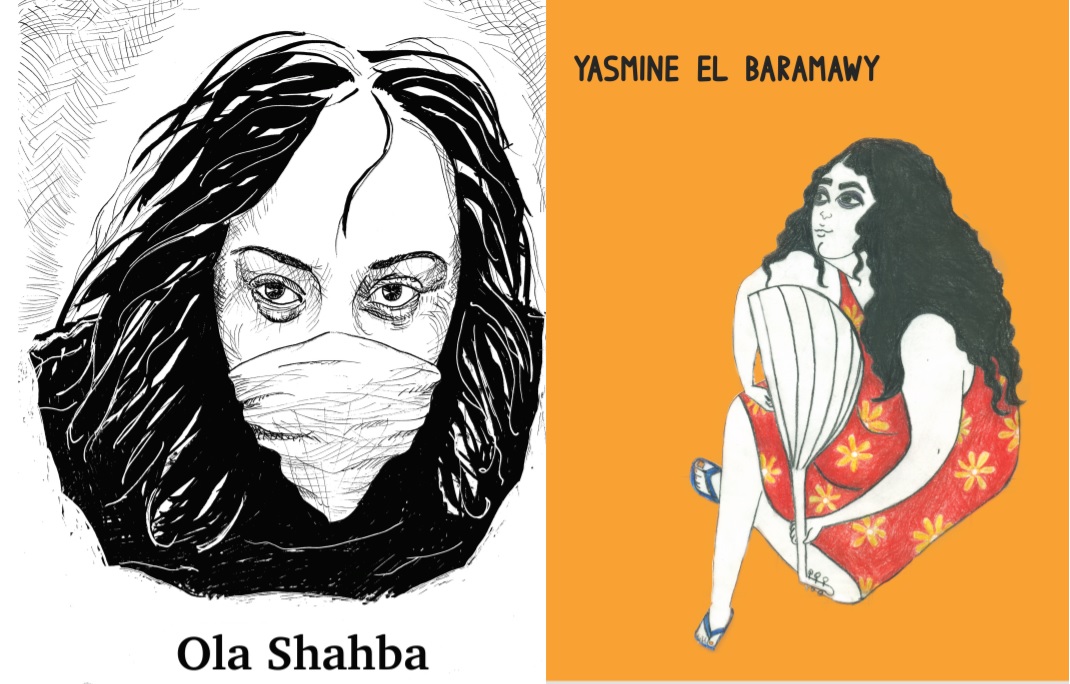
The comics express the anger and betrayal the women felt, especially toward revolutionary friends.
From NDP to PDN
The message needs to be “blatant and intense.”
Your support is the only way to ensure independent, progressive journalism survives.
You have a right to access accurate information, be stimulated by innovative and nuanced reporting, and be moved by compelling storytelling. Subscribe now to become part of the growing community of members who help us maintain our editorial independence.
Join us