
Between environmental needs and the profit-imperative: Conversation with Egypt’s chief climate diplomat as govt accelerates green transition
Egypt increased at the end of June its pledges to the global community to reduce the emission of environmentally damaging gasses on its soil.
The Nationally Determined Contribution document, an action plan to cut emissions and adapt to climate impacts, submitted to the United Nations Framework Convention on Climate Change, lays out Egypt’s new and more ambitious target to transition earlier than planned to renewable energy sources, resting on promises of increased financing from the Global North.
But the momentum behind the transition to green energy does little to support Egypt in facing a set of more urgent existential climate threats already present on its soil — adaptational requirements which remain underfunded despite the growing propulsion toward the energy transition from the Global North and corporate interests.
The Cabinet’s June update accelerates Egypt’s target to produce 42 percent of its national energy needs via renewable sources. Instead of aiming to reach the target in 12 years as originally planned, Egypt will now push to hit the target in seven years — by 2030.
The decision to accelerate comes following a proposal led by the United States and Germany ahead of last year’s UN Climate Change Conference (COP27). If Egypt, as the COP27 host country, would agree to lead by example and speed things up, the United States and Germany would smooth the way for financing to facilitate the government’s ongoing process of upgrading or replacing old power plants with renewable energy sources.
Egypt has already secured 500 million euros from the US, Germany and other European partners, according to the Cabinet’s statement, which are expected to help bring in another $10 billion in investments for the project from the private sector.
To find out more about the thinking that went into speeding up Egypt’s emissions target, Mada Masr sat down with Ambassador Mohamed Nasr, who led the Foreign Ministry’s climate diplomacy team at COP27.
Though the government welcomes investments in its green energy sector with open arms, Nasr said, the concerns around adaptation funding remain, alongside concerns regarding the nature of the financing tools for the transition.
With a predominant dependence on the private sector to front a majority of the financing, investors defer toward profitable green energy projects despite the fact that Egypt's greenhouse gas emissions are miniscule in the grand scheme of things.
In the meantime, pressing projects to protect eroding coastlines, compromised agricultural conditions and dwindling water resources from the unfolding effects of climate change are sidelined.
Nasr also pointed to the types of financing available to fund the renewables projects being pushed for by international partners. With Egypt engulfed in debt and facing increased external borrowing costs, it needs more equitable financing tools and fewer commercial loans from development partners in the West.
But, says Nasr, “as a government, you have to calibrate your development goals while also welcoming investors who would take part of the cost off your shoulders.”
Our interview with Nasr, lightly edited for clarity, is reproduced below.
Mada Masr: Why was the NDC on emissions updated now?
Mohamed Nasr: First, the NDCs are not commitments, but voluntary pledges. A set of criteria laid out by the government must be met before they can be implemented. These criteria include finding suitable funding sources — not commercial loans and the like, but financial instruments that are compatible with the government’s planned funding for these goals.
Before COP27, several ministries conducted research on transforming the energy sector, which is in dire need of a transition to renewable energy on a global scale, especially since Egypt has great experiences in that field, such as in Benban and other places. We achieved an agreement to purchase the energy produced by investors in Benban at prices as low as 2 cents per kilowatt or even lower, creating competition over the price of energy generated, which gives Egypt great potential in this sector.
The other aspect going into updating the goals is that the Electricity Ministry has already been going forward with plans to replace old, low-efficiency power stations with new ones that are supplied with renewable energy.
MM: How does Egypt expect to meet this new pledge to produce 42 percent of its domestic energy from renewable sources by 2030?
Nasr: The Electricity Ministry’s strategy had already set a target of transitioning 42 percent of Egypt’s energy to come from renewable sources by 2035. But, ahead of COP27 in Sharm el-Sheikh, several international development partners, including the US, Germany, and banks such as the European Bank for Reconstruction and Development (EBRD), suggested that since Egypt is taking on the political commitment of hosting the summit, it should take on a bigger commitment. They expressed interest in helping by financing JETPs — Just Energy Transition Programs — as was done with South Africa, Indonesia and Vietnam.
From our point of view, we would not just accept a ready-made program coming from outside as applied in other countries because the circumstances differ. The position of the government and the summit presidency team was that the outcomes should be in light of and tied to Egypt’s national strategy for sustainable development.
The Nexus of Water, Food and Energy (NWFE) Program put together by the International Cooperation Ministry was proposed in discussion with the development partners. The agreement regarding the renewable energy component of NWFE was [to update the pledge] if they were serious about helping us secure the financing needed to bring in the energy and upgrading the transport system to correspond to the transition to renewables as well.
The agreement was made, and the partners said they would make a political announcement of their commitment to the deal, which happened on the sidelines of COP27 during US President Joe Biden’s visit. President Abdel Fattah al-Sisi also mentioned it several times afterwards and confirmed that we are ready to move up the deadline for reaching our renewable energy reliance goals from 2035 to 2030. This was especially welcomed by the US and Germany, but they were also joined by Denmark, the United Kingdom and the EBRD. They worked with the electricity and international cooperation ministries to agree on the financing package, which includes debt swaps, direct financing, grants and attracting investors.
MM: What steps have already been taken to secure financing for the new updated plan?
Nasr: The ministries worked on their parts to implement the pledge: the International Cooperation Ministry worked on the financing package with partners, the Electricity Ministry worked with the German side on updating the grid, the Environment Ministry handled coordination and the Foreign Ministry negotiated with the US and Germany, the main partners in the deal. They acted under the umbrella of the National Council for Climate Change, headed by the prime minister, who eventually announced the energy section of Egypt’s NDCs.
The German side has already sent part of its commitments, the American side is covering the other part and the EBRD is working with the international cooperation and environment ministries to start taking the main steps toward upgrading the grid.
MM: Climate financing often seems to favor energy and mitigation goals. Does this correspond to Egypt’s priorities in the climate file? Do other components of the file receive sufficient attention or funding from partners?
Nasr: There is a problem regarding adaptation to climate change on a global scale, as adaptation projects only get 15 percent of the funding that goes to mitigation projects.
This is because emission reduction projects have an economic model that allows private finance to implement and profit from them.
If you look at Benban or any other energy project, you’ll find that the cost of producing 1 gigawatt of renewable energy is $1 billion. What countries can mobilize the financing necessary for such a project? In reality, none, but you can find investment funds and private sector companies that want to invest and are attracted to green and environmentally beneficial projects that can also become commercial and profitable.
This focus has its upsides and downsides, so as a government, you have to calibrate your development goals while also working to attract investors who could take part of the cost off your shoulders. Maybe you can even create a product that you can produce at a stable price, stabilizing your own economy while still managing to create a large profit for the investor.
But the problem with adaptation is that its projects, like protecting coastlines or water reserves for example, are not profitable and would not bring in private investment. What’s in the making right now is that adaptation will be looked at more comprehensively, such as looking at African countries that deal with droughts that could endanger the sustainability of communities and lead in the future to internal displacement and then illegal migration — problems that could be solved earlier with much smaller investments. But as you know, the international community puts profit and loss first before considering other angles.
MM: In this context, what is Egypt doing to attract financing to its adaptation goals in this context?
Nasr: Egypt is working on promoting its adaptation projects to financiers, such as the NWFE program, which has water and agriculture components alongside energy. When we have a clear project, we can seek funding for it through grants and bilateral cooperation. The Irrigation Ministry is already managing a major project to protect the North Coast with the help of a $33 million grant from the Green Climate Fund.
MM: What will Egypt’s priorities going into COP28 be this year?
Nasr: Egypt’s COP28 agenda aims to push forward the outcomes it achieved during last year’s summit, including the historic resolution on the losses and damages caused by climate change, reached in COP27 after over 30 years of demands, thanks to the efforts of the foreign minister and the summit presidency throughout last year. Egypt will be part of the committee working on the implementation of the coming COP’s resolution.
Another very important outcome we will also continue to support is the principle of a just transition based on equity, a concept that used to be sidelined in climate discussion but was elevated in the COP27 outcomes to a full working program on par with emission reduction. We will continue to push for a focus on the social and economic aspects of the green transition. Because when you target something like reducing coal or gas, we are not developed countries that can easily just replace power plants and compensate their workers.
A third aspect is that we pushed and will continue to push for more consideration for developing countries’ financing problems so as to not increase their debts. Financiers cannot come from one side to say, ‘be more ambitious,’ and come from the other side to say, ‘here’s a loan with a commercial interest rate,’ especially amid the increasing cost of borrowing since US and European banks raised interest rates significantly.
We stressed three points regarding international financing institutions last year in Sharm al-Sheikh: the funds offered must be increased, access to them must be facilitated, and they must come through financing tools that do not increase our debts — preferably grants.
تقارير ذات صلة
Climate goals flounder in headwind from militarization, competition, AI
COP30 kicked off in Belem, Brazil earlier this week. Delegates from 200 countries are attending. The Climate Action Tracker report released on November 13 shows that the planet is on…
Unsweetened days: How the sugar crisis was stirred by government policy missteps
Another sugar crisis spells out longer queues and shortages as government rushes to address problem.
What can we expect from this year’s COP28?
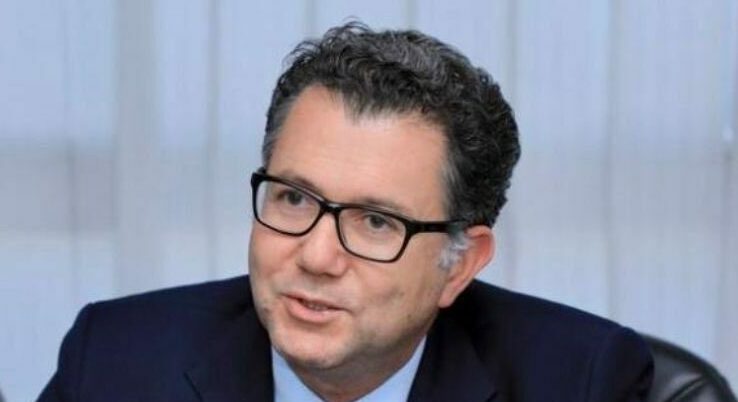
Interview on COP28 with lead Egyptian climate financing negotiator Mohamed Nasr.
Your support is the only way to ensure independent, progressive journalism survives.
You have a right to access accurate information, be stimulated by innovative and nuanced reporting, and be moved by compelling storytelling. Subscribe now to become part of the growing community of members who help us maintain our editorial independence.
Join us