

Band of the week: Just a Band
I grew up 30 miles outside of Washington, DC. During school breaks we would often drive south to brown-watered east coast beaches like Myrtle in South Carolina. Myrtle Beach was a blast, but every time I went, I’d have the following exchange:
“Hi, my name is so-and-so, what’s yours?” someone would ask.
“It’s Maha — Maha ElNabawi. Nice to meet you.”
“Maha ElNabawi? What the heck is that?”
“Well, it’s my name, which you asked me for.”
“Where the heck are you from with a funny name like that?
“I’m Egyptian,” I’d say.
Post 9-11, responses became accusatory when I’d say I was from Egypt.
“So you’re one of those Arabs.”
“Well actually I’m Egyptian-African,” I would reply to confuse them.
The only other time I acknowledged myself as being African was in a debate with an 11th grade teacher who refused to let me fill in the African-American bubble on my SAT practice exam. Sure, I was just in it for the scholarship perks, but at the time I couldn’t understand why it was a seen as a blasphemous request on my part.
Like most Egyptians, growing up we had lots of options to identify with: Arab, Muslim, Coptic, Mediterranean, Bedouin, Saidy, Pharaonic — but African didn’t seem to figure. Like many Egyptians who had the opportunity to travel, I flew to the global west, north and even east, but never south to the sub-Sahara.
But last summer I got a chance to go to Kenya for an authors’ meeting for a book Ali Abdel Mohsen and I are working on called “Ten Cities.” It’s a Goethe Institute-organized project: writers from five African and five European cities seek to examine their societies through club culture and dance music.
I was stunned by many things: the 50,000 shilling fine you get for smoking outdoors in Nairobi, but also the almost unbelievable natural landscape and the music.
One night, at an old garage space in downtown Nairobi, a few bands were playing as part of the “Ten Cities” project, which also involves collaboration between musicians. Last year, Egyptian electronic musicians Ismail Hosny, Hussein Sherbini, Mohamed Waly, Maurice Luca and Mahmoud Refat, as well as Berlin producers the Diamond Duo project, put on a workshop and concert at downtown Cairo’s Rawabet. In Nairobi, it was a sheer and utter privilege to watch some stellar acts: rapper Octopizzo, teenage singer Camp Mulla, and, highlight of the evening, an Afro-electronic group called Just a Band.
Just a Band blew my mind and body in all sorts of physical and metaphysical directions. I’d go as far as saying they gave one of my favorite performances of last year in general.
Just a Band are not just a band. They are a collective that combines visual art, music, digital media, activism and dancing. Their music draws on hip-hop, jazz, funk and electronica, mixed and mashed with Afro-pop influences like blues, salsa, zouk and most notably rumba and Mugithi. Overall, the blend could be seen as a relatively representative sample of the various African music traditions, including those of the Americas transported by slaves and later diaspora.
Formed by Blinky Bill Sellanga, Dan Muli and Mbithi Masya, the Kenyan band’s career launched with their debut studio album, “Scratch To Reveal” in 2008. It winds through dance tracks, R&B numbers and evocative ballads that flow out through a mix of English and Swahili lyrics. A pulsating beat kicks forward each song.
When I listen to “Ha-He!” it almost doesn’t matter that I can’t understand a word. The sonic flow of Blinky Bill’s husky rhymes sounds perfect against a jangly guitar, hip hop beat and jazz trimmings.
Various socio-political campaigns are built into the band’s music, some more specific than others. The song “Matatizo” is about the torture of political dissenters during the 1980s and 1990s in Nairobi’s notorious Nyayo House, for example.
The collective is also known for their DIY lifestyle. Just a Band are animators, graphic artists and new media activists. They write, record and engineer their music. They mix technology and performance to create video packages and virtual aesthetics like the Gorillaz and The Archbies, incorporating illustration, photography and other media.
The group’s sophomore album, “82”, was released in 2009, but it wasn’t until 2010 when the single “Ha-He” was re-released with an accompanying music video that it caught on in the music blogosphere. The spoof blaxploitation film, which featured a fictional super hero named “Makmende” went viral.
Referring to themselves “Africa’s Super Nerdy Electronic Music/Art Collective,” the band has recently added more members: Mbithi Masya, James Ireri, Joe Were and Richard Wandati. They have become one of Africa’s biggest alternative groups, while also garnering a notable global presence through many tours to France, New York, Texas, Berlin and more.
At their Nairobi performance, I caught several songs from their third studio album, “Sorry For the Delay” (2012), which featured the original band members with some additional help on saxophone and keys. Blinky Bill is an incredible front man — dressed like a cowboy-hipster but dancing with the smooth moves of hip hop, with the occasional outbreak of raging rock thrusts and stage jumps.
By the time we hit the song “Life of the Party,” the garage floor had turned into something of a trampoline, with guests jumping up and down with the band’s vibrating music and energy. I looked around the makeshift club, in the middle of hundreds of Nairobi youth at the peak of a serious dance session. With each blues guitar riff and rumba pulse, I realized that Just a Band’s brilliance lies in its combination of Afro-ritual music and post-modern innovation: old identities were consecutively destroyed, re-built and negotiated in that specific moment and space around the band’s set. We were all “just a band,” with the band.
I felt my hips shaking balady-style. The dancers around me, their similar twists and turns, and way the men and women were playing off each other in their shared somatic state told a story of their gestural past and culture. And while I might never be able to fill out the African American bubble, from where I was dancing Kenya sure looked a lot like Egypt.

Maha ElNabawi
After graduating from the American University in Washington, DC with a Bachelors degree in Business, Maha began her publishing career in NYC with indie pop culture magazines, the likes of…
تقارير ذات صلة
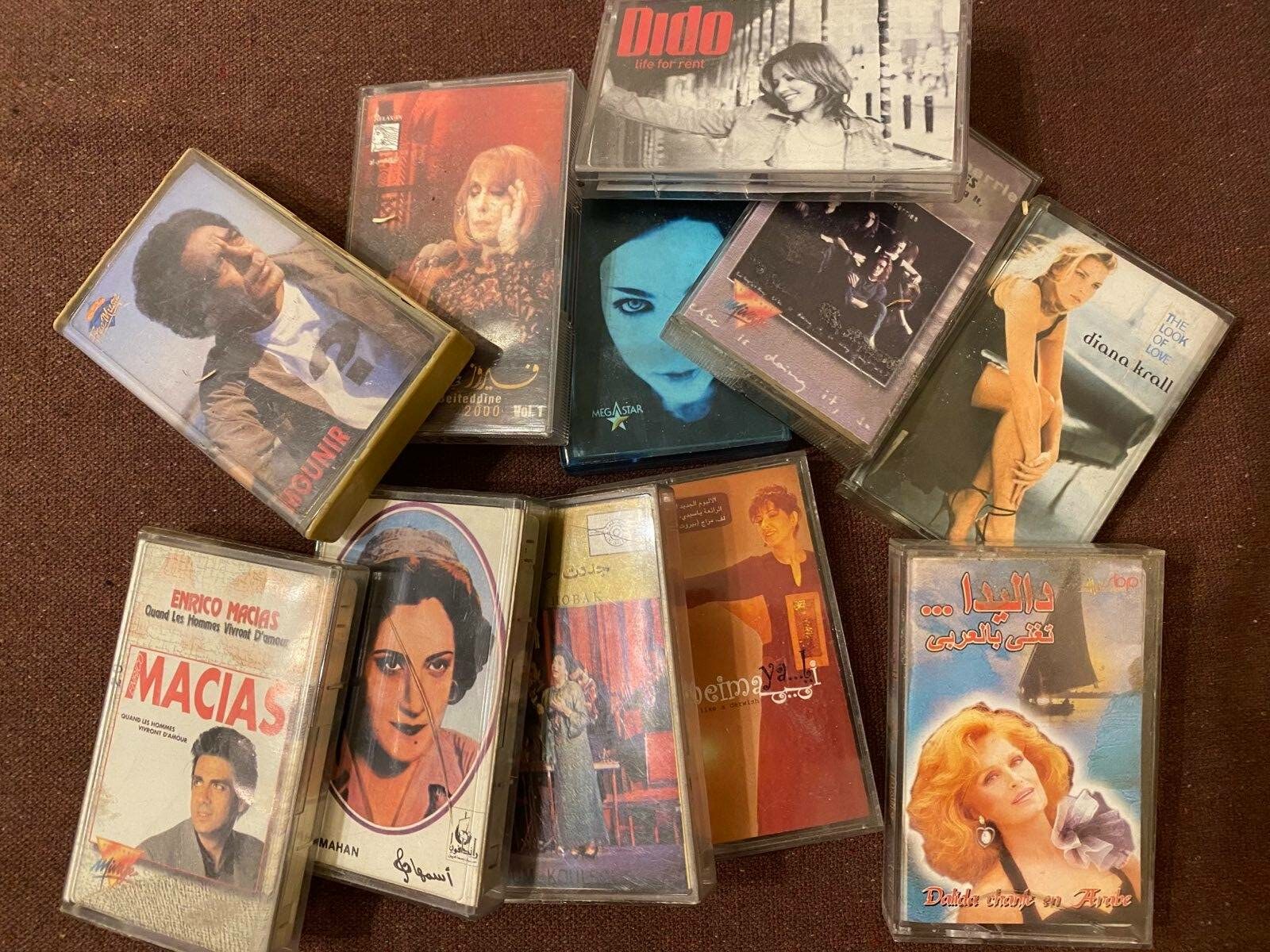
Creating a history mixtape: A conversation with Andrew Simon
Cassettes decentralized state-controlled Egyptian media long before the invention of the internet

Detox | The music in the background
I ended my journey among the ruins of the fallen Cassette Kingdom
Detox | ‘Everything’s gonna be alright’
Well, we all know what’s up, and it’s not pretty.
Your support is the only way to ensure independent, progressive journalism survives.
You have a right to access accurate information, be stimulated by innovative and nuanced reporting, and be moved by compelling storytelling. Subscribe now to become part of the growing community of members who help us maintain our editorial independence.
Join us