
It is the evening of September 10, and rain has been falling on the city of Derna in northeastern Libya all day.
But this isn’t normal rain. This is the rain from Storm Daniel, an unprecedented cyclone of tropical-like proportions.
And with nightfall the torrent will only strengthen, as the storm makes its way directly over the Jebel Akhdar.
As the rain falls on the Wadi Derna valley, water begins to accumulate behind the two dams which were built in the 1970s to protect the city from flooding. It begins overtopping Elbilad dam, the smaller of the two dams situated about 2.25 km from the city of Derna’s shoreline, at around midnight. By 1.30 am, the eastern portion of the dam gives way and sends a flood wave toward the city.
But a larger danger is brewing. About 13 kilometers further up the valley from Elbilad sits Bu Mansour, a 75-meter-tall dam with a reservoir that can hold 22.5 million cubic meters of water. But the storm is too large for Bu Mansour. At around the same time as water begins to top Elbilad, water from the basin begins spilling over Bu Mansour and seeping into the dam’s clay core through unrepaired cracks suffered in a 1986 flood.
By 2.40 am, Bu Mansour begins to breach. When it collapses, it sends a towering wave hurtling at a max velocity of 36 km per hour toward the city. The wave rips the smaller Elbilad from its foundations and pummels into houses, mosques, bridges and roads, ripping them from their rightful places.
The city of Derna and its people are washed into the sea.
The initial accounts of the loss of life are staggering. At least 3,958 were said to have died by the UN World Health Organization, which added that 9,000 people were missing. The number of lives lost has grown to at least 5,923, as Libyan authorities continue to try to identify those missing, even a year later.
Almost as soon as the flood levels began its egress from the city and the scale of the disaster was made clear, talk began of fundraising for disaster relief and “reconstruction.”
The UN, European Union and World Bank put the necessary funds to address the devastation at around US$1.6 billion in an assessment published in January.
And money has come in. But where it has gone exactly, no one seems to know, even sources close to the fund that has come to dominate reconstruction. In the weeks before the anniversary of the worst climate change disaster in the region, Hamad al-Shalawi, a member of Libyan parliamentary crisis committee tasked with overseeing the situation in Derna, underlined this fact, saying that no amount of money had been released from the budget earmarked for reconstruction by the World Bank, the EU, the House of Representatives and the Government of National Unity, estimated at US$15 billion.
Who is responsible for this? According to Shalawi, it is the “General Leadership”— the foreboding epithet that describes the family of Khalifa Haftar — whose promises of reconstruction have not been realized for unknown reasons, while the Libya Development and Reconstruction Fund created in the aftermath of the flood has undertaken large-scale projects through national and Egyptian companies which did not participate in the reconstruction conference.
At the top of this fund sits Belqasem Haftar. Sources Mada Masr spoke to understand Derna’s reconstruction and the political competition it has set off for the billions of dollars flowing into Libya say that it is Belqasem alone who knows where the money is.

The intense competition for control over Derna’s disaster management began unfolding just hours after the disaster hit, at 3am. The city was cut off from electricity and communications, leaving citizens unaware of the extent of the devastation until some reached the affected areas. It was only the survivors who managed to reach safe zones that were able to report the disaster, sharing images and videos of the extensive damage and bodies recovered and placed on dry grounds in the city after the floodwaters drained into the Mediterranean Sea.
As journalists flocked to the city to report on the event, the Haftar family and the vast patchwork of security forces it controls began cracking down on critical voices. Journalists were told to leave the city. About a week after the disaster a UN spokesperson told media that a UN team was “not authorized to proceed” to Derna.
A week after the disaster, while local and international teams continued their search and rescue efforts, an unexpected demonstration took place on the evening of September 18 outside the Sahabah mosque, a key landmark in central Derna. Protesters called for the dissolution of the House of Representatives and the unification of Libya. A local source from Derna told Mada Masr that the protest was coordinated with Saddam Khalifa Haftar, the field marshal’s influential son and his executive arm who is expected to succeed him. Following the disaster, Saddam was promoted to Major General and then to Lieutenant General in May, before being appointed as Chief of Staff of the General Command's ground forces.
The protest, which saw dozens of Derna residents taking part, marked the first signs of tension between Aguila Saleh and Khalifa Haftar, once allies who have been locked in a political fight in recent years over political influence. It became evident that Haftar was determined to maintain his grip on the reconstruction efforts.
Haftar’s insistence on controlling the reconstruction process upset Aguila Saleh and the House of Representatives. A week after the disaster, the eastern Parliament began discussing a proposal to establish an agency for rebuilding and rehabilitating the regions affected by the floods. Funded by the national budget, this agency was intended to address the extensive damage to infrastructure such as roads, bridges and both public and private properties, and it was authorized to establish branches in affected regions. It was also expected to set standards for the agency’s management, ensuring involvement of local experts from the affected areas and including specialists as needed. A committee led by Saleh that included the Central Bank of Libya governor and a representative from the General Command nominated by Haftar were to open an account at the central bank to handle funds from local or international aid, as stated by Parliament Spokesperson Abdallah Bleihaq on September 18. The goal was for parliament to establish a reconstruction agency led by a resident of the affected areas.
In the meantime, Western powers, led by the US, began collaborating with the Government of National Unity in Tripoli to coordinate relief operations and aid disaster survivors. Russia quickly entered the fray, with Deputy Defense Minister Yunus-Bek Yevkurov arriving in Benghazi on September 16 with rescue teams from Moscow. Yevkurov held meetings with Haftar and his sons to coordinate Russian efforts in Derna, where Turkish, Maltese, Greek, Italian and French teams had already arrived.
As search and rescue operations continued and bilateral consultations between Haftar and countries involved began, Osama Hammad, the prime minister appointed by the parliament and an ally of Haftar, announced a conference for Derna’s reconstruction.
While the conference was originally slated to happen in October, it was delayed twice, before eventually being held in November.
One of Hammad’s advisors told Mada Masr that the delays were due to disagreements between Haftar and Aguila Saleh on one side, and Western powers on the other, over who should oversee the reconstruction. Haftar remained adamant about controlling the process himself, the advisor said.
This was clear, when, on September 27, Hammad issued a decree to go into effect October 1 to establish a fund for the reconstruction of Derna and the flood-affected regions. A subsequent decree appointed Belqasem Khalifa Haftar as the fund's executive director, granting him extensive powers to manage the newbody, which was given full authority over reconstruction efforts, disregarding the House proposal to establish an agency for rebuilding and rehabilitating the regions affected by the floods. The House’s law concerning the reconstruction agency passed on October 3, but lost its relevance in light of Hammad's decision, which was backed by the General Command.
But Belqasem wasn’t content with Derna and the Jebel Akhdar region.
In an abrupt move on February 6, the House of Representatives issued a decree to create the Libya Development and Reconstruction Fund and appoint Belqasem Haftar as its head. The decree effectively allowed the fund to operate as a quasi-government with extensive powers, including those typically held by the Finance Ministry, such as being authorized to borrow from the Central Bank of Libya. It was also exempted from administrative contract regulations and oversight by the Libyan Audit Bureau, effectively shielding it from scrutiny, according to the text of the decision reviewed by Mada Masr.
A source in the inner circle of the Haftar family tells Mada Masr that Saleh’s decision to create the powerful fund and give control over it to Belqasem as a way of “ransoming himself,” in the face of pressures that Haftar’s sons Belqasem and Saddam were putting on him. Despite Belqasem and Saddam’s disagreements, they are both unhappy with the House speaker’s political performance and they have been planning to oust him from his position atop the Parliament. The source says that the brothers are uneasy about his political approach in light of his openness toward a number of political players in the western region, and particularly his rapprochement with leaders who are considered part of the Muslim Brotherhood.
A source in the House says Belqasem’s appointment to head the fund happened in an odd way, given that Belqasem was first appointed to the position and then the agencies were created under older dates. The brothers insist on dominating the political, economic and financial spheres even though they already, in actuality, run Hammad’s government, the source says. They had previously threatened, using their loyalists in the House, to call for a re-election of the House’s executive committee, effectively a threat to Saleh, the source adds.
But even as the Haftar brothers were united in their fight against Saleh, their relationship was not necessarily warm.
This was seen when Haftar issued a decree to create the National Development Agency, an investment body that oversees construction projects in Benghazi and central and southern Libya. The agency works on those projects alongside the Libya Development and Reconstruction Fund. According to the source close to the Haftar family, the National Development Agency, whose leadership was entrusted to media personality Mahmoud al-Firjani, was established at the behest of Saddam Haftar so as to be on par with his brothers: Khaled and Belqasem. Khaled is the chief of staff of the Security Units within the Haftar-family controlled Libyan National Army, and he also oversees the Military Investment Authority, whereas Belqasem heads the Libya Development and Reconstruction Fund.

And as with the brothers, so do the Libya Development and Reconstruction Fund and National Development Agency compete over contracts with foreign companies. Neither one of them discloses the details of their mega projects that have been announced in Derna, regions affected by the floods, or regions affected by military combat — be it Benghazi, Sebha, Sirte or the southern regions. Both the fund and agency have total autonomy and operate outside any mechanism for monitoring or oversight.
This has allowed Haftar’s sons to entrench their power by attracting new supporters — be they political elites from the House, local and social leaders, or economic elites and businessmen who have taken up business partnerships with the Haftar family to protect their interests and out of fear that Haftar’s sons might, otherwise, harm their interests.
The Haftar sons now have new allies from the tribes of Firjan, Zawiya, and other tribes who occupy less prominent roles in the Libya Development and Reconstruction Fund and the National Development Agency. For example, Engineer Saad al-Zawi was made the deputy director of the Libya Development and Reconstruction Fund, making him the second man in the agency in charge of overseeing the reconstruction of Derna. He is a member of the Azwiyya tribe whose members are in alliance with Hafar’s sons. The tribe populates the regions of Ajdabiya, and the oases of the south and east. Similarly, media personality Firjani, who used to run Al-Hadath TV as well as a media services company owned by the Haftar family, was given the directorship of the Sirte-Branch of the National Development Agency. At the beginning of the schemes to dominate the reconstruction projects, Abu Bakr Imsadif al-Zawi, the undersecretary of the Local Government Ministry, was given extra prerogatives, even in excess of those of Local Government Minister Sami al-Dawi, who comes from western Libya. Zawi was put in charge of assessing the damage caused by the flood and offering financial support to affected families. The minister’s role, on the other hand, was secondary and invisible. Furthermore, Public Works Minister Nasr Sharh al-Bal, from the Abiydaat tribe, the biggest tribe in Barqa, was stripped of any role despite belonging to the government appointed by the House of Representatives.
The formation of loyalists also extended into settling scores with opponents.
In the immediate aftermath of the flood, the Public Prosecution charged 14 individuals with negligence related to the maintenance of two dams in Wadi Derna, holding them responsible for the disaster. Among those arrested and detained were Derna’s mayor and several officials from the Water Resources Ministry and dams authority. Two others remain abroad and have evaded arrest, including Ali al-Hibri, the former governor of the Central Bank of Libya’s eastern branch, and the head of the parliamentary committee tasked with reconstructing Derna. Interpol has issued red notices for both fugitives.
The Public Prosecution’s investigations into the Derna flood disaster revealed negligence in the maintenance of the two Derna dams, the absence of a warning system, and failure to clean the upper drainage openings or conduct routine maintenance, all of which contributed to the catastrophe. Furthermore, Wadi Derna’s drainage system did not function as intended due to silt accumulation for a year before the disaster, with no maintenance carried out. Cracks and significant leaks had also been detected in the Bilad and Bu Mansour dams before the floods.
After more than seven months of trials, on July 27, the Derna Criminal Court sentenced 12 officials to prison for negligence. The sentences included nine years in prison and a restitution order for Omar Emhamed; Omar Khalifa; Water Resources Ministry employees Al-Bahloul Jumaa, Ahmed Iqjam, and Abdel Qader al-Amami; member of the Derna Reconstruction and Stability Committee Farahat al-Fitoury; and head of the projects office at the Derna municipality Wessam Imrajea.
The court also sentenced Abdel Moneim al-Ghaithy, head of Derna’s temporary governing council and a relative of House of Representatives Speaker Aguila Saleh to 15 years in prison, in addition to orders of restitution and the return of illicit gains.
Ahmed Abdallah bin Shetwan, an employee at the Central Bank of Libya, was sentenced to 19 years in prison. Hibri, the former governor of the central bank in Benghazi and former president of the Derna reconstruction fund instituted by the House of Representatives, received a 27-year prison sentence and was ordered to return illicit gains. Ali Abdel Hafeez Ebheeri, the general manager of the Derna Reconstruction Fund instituted by the Government of National Unity (GNU) in 2021, was sentenced to 26 years and six months in prison and ordered to make restitution and return illicit gains.
Hibri and Ebheeri were allowed to flee the country by Benghazi officials and thus evaded arrest, according to the source close to the Haftar family, describing it as a reward in exchange for Hibri’s support of the operations of the General Command despite his falling out with Haftar’s sons. The feud ultimately cost Hibri his position after he refused to allocate more money from the bank’s holdings to the parallel government and the committee for reconstruction and stability.
The trial before the Derna Criminal Court allowed the Haftar family to get rid of their competition smoothly and legally. Derna has been a contested region among the main tribes in the Jebel Akhdar and Batnan regions, especially between the Ubaidat and Hadoor tribes who are the inhabitants of the city and whose origins can be traced back to western Libya.
This conflict could be seen in the weeks before the flood hit Derna, as the government started preparing for the municipal council elections. Aguilah Saleh was in favor of keeping Derna under the control of the Ubaidat tribe, and he appointed one of his relatives interim municipal head. On the other hand, the Haftar family was plotting to support the Hadoor tribe, and it moved a significant number of Hadoor tribes people from western Libya back to Derna. Hafar’s family also supported an electoral list led by Talal al-Hanshir for the municipal elections. However, social unrest obstructed those elections.
With the heated contestation over Derna, which plunged into violence, both the Haftar family and Aqila rushed in to calm things. The government assigned by the House announced the postponed the elections on September 3 to avoid social conflict, it also made Abdel Moneim al-Ghaithy, one of the cousins of Aqila Saleh, the temporary municipal head.
But Ghaithy was sentenced to prison in the flood case, leaving the city without local authority and dominated by the Haftars.
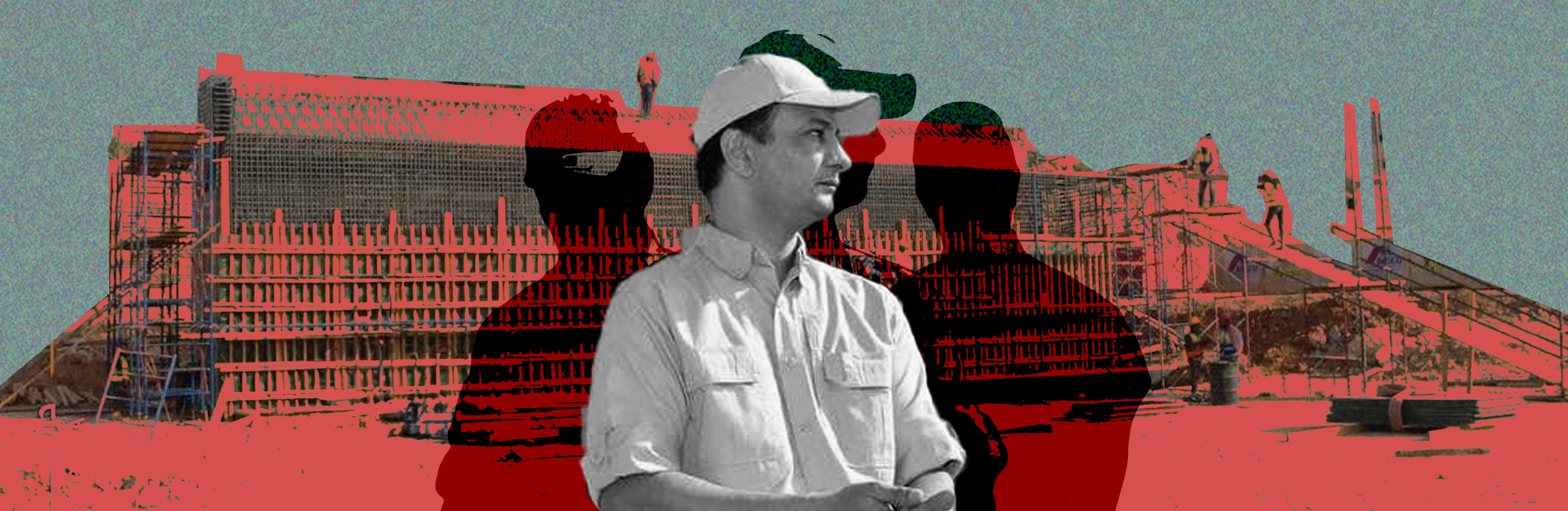
With no one around to challenge their power, the Haftar-led reconstruction began. The first turn was to Cairo, signing contracts with Egyptian companies that are close to the military establishment to ensure successful and rapid reconstruction. It wasn’t long before Belqasem started signing contracts with Ibrahim al-Argany’s Organi Group. The first contracts with Argany were signed on January 21 for the building of 11 bridges in Derna, Benghazi and Ajdabiya. Belqasem signed these contracts in his capacity as the director for the fund for the reconstruction of Derna and other regions damaged by the floods.

He then signed new contracts with Argnay on July 6, in Belqasem’s capacity as the director of the Libya Development and Reconstruction Fund and Argany’s as the head of Neom, for six new projects in Derna and the cities of the Jebel Akhdar region. The contract was signed in the presence of Neom’s chairperson, former Housing Minister Assem al-Gazzar.
During the signing ceremonies, which took place in Benghazi at the headquarters of the Libya Development and Reconstruction Fund, Gazzar said that he had been appointed by the Egyptian state and the political leadership to oversee Egyptian operations in Libya. He estimated the number of Egyptian companies operating in Libya at the time at over 1,000, according to his statement published by the Libya Development and Reconstruction Fund on Facebook on July 8.
The appointment of Belqasem Haftar at the helm of the Libya Development and Reconstruction Fund provided political cover and legitimacy to his movements, allowing him to join his brother Saddam as a main interlocutor with foreign powers that have stakes in Libya. Foreign embassies started contacting Belqasem Haftar, especially the US, UK, French, Italian and German embassies, which all tried to gain the field marshal’s son’s favor in order to procure reconstruction contracts for their companies.
Belqasem undertook his first official international visit on July 25 to Ankara, where he met Turkish Foreign Minister Hakan Fidan and discussed bilateral cooperation between the two countries, the Libya Development and Reconstruction Fund announced. The fund published one photo of the meeting with no other details.
On August 11, Belqasem accompanied Hammad to Alamein, where they met Egyptian Prime Minister Mostafa Madbuly to discuss increasing Egyptian companies’ participation in the reconstruction. The visit was objected to by the internationally recognized Government of National Unity, headed by Abdul Hamid Dbaiba, and came a month after Dbaiba had met with Madbuly at the new headquarters of the Egyptian government in the New Administrative Capital, east of Cairo, where both sides agreed to help Egypt end its electricity crisis.
The official decree establishing the Libyan Development and Reconstruction Fund designated several sources of funds, including a special budget that the fund would submit to the House of Representatives for approval, unconditional grants and aid, loans and contributions provided by local and international institutions, and any other sources of financing approved by applicable legislation, and what is allocated for it in the general budget, as well as borrowing through the Central Bank of Libya or commercial banks.
In contrast, the nature of funding for Saddam Haftar’s National Development Agency is unknown. But the Haftar family has been awash in counterfeit cash that it used to fund the General Command’s operations, reports indicated earlier this year, which prompted the Central Bank of Libya to remove the 50 dinar note from circulation. Sources close to the General Command told Mada Masr that this note was used to fund the General Command’s operations, especially as Haftar began dispensing large bonuses — that exceeded 20,000 dinars per officer last Eid al-Fitr— to officers and soldiers working with him on special occasions.
Despite the monthly financial information put out by the central bank, it has never broached the topic of the General Command’s revenues and expenses. However, for the first time in July, the monthly financial report by the central bank included a line item for the expenses of the reconstruction process, amounting to more than 900 million dinars (US$200 million), signaling that the bank was financing the Libya Development and Reconstruction Fund.
In the days leading up to the anniversary of the flood, Belqasem held an expanded meeting with Derna’s elites and representatives from the companies involved in reconstruction in the city where he announced the launch of a set of “vital” projects that will contribute to improving public services in Derna and improving its citizens’ quality of life, referring to a number of health institutions. The next day, Haftar, accompanied by Aguila Saleh, opened the Sahaba Mosque and the Mahmoud al-Harish clinics complex, one of the main health facilities in the city.
But when Mada Masr asked a member of the crisis committee in the city of Derna about the lives of residents a year after the flood, the source criticized the compensation provided to families affected by the floods in the city because it is small and does not meet their needs, pointing out that 15,000 housing units were damaged by the floods, in addition to other units that were completely submerged in the water in the city center. A compensation payout of 100,000 dinars per house was paid to about 4,000 families who lost their homes completely after they were swept away by the water. The sum, the source says, is not enough to buy a small apartment in the city.
تقارير ذات صلة

Saif al-Islam: The death of a myth
Saif al-Islam Qadhafi, from power’s pinnacle to Zintan’s mountains and the shadows of myth
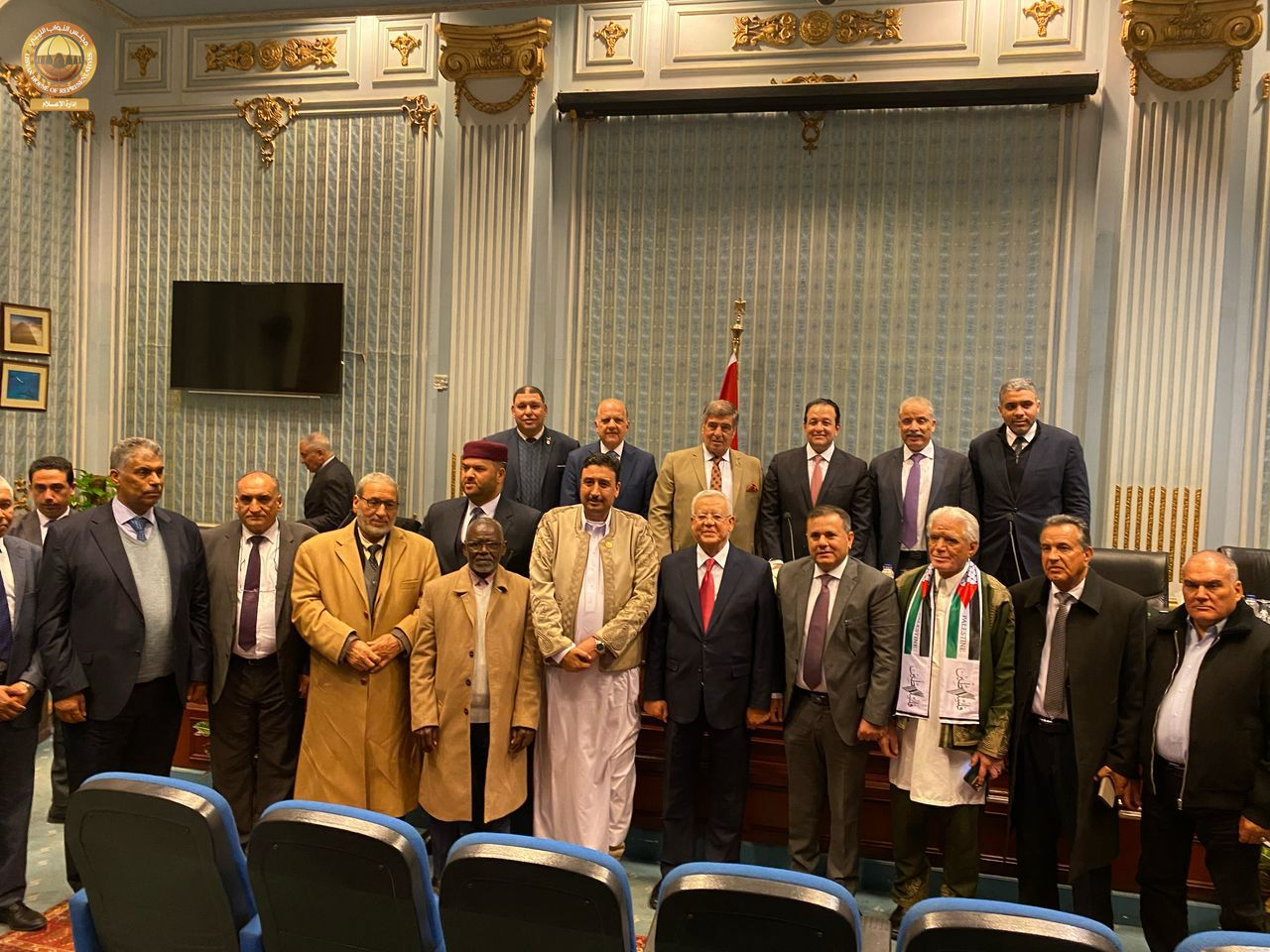
Analysts: Egypt aids obstructionist efforts of Libyan legislatures to stall UN-led political process
The political process to determine Libya’s future should be the “exclusive ownership” of Libyan official institutions, members of the country’s two legislative bodies declared Tuesday at the conclusion of two…
A ship apart: The making of a wreck
Accountability for the tragedy spans various actors across the Mediterranean
Your support is the only way to ensure independent, progressive journalism survives.
You have a right to access accurate information, be stimulated by innovative and nuanced reporting, and be moved by compelling storytelling. Subscribe now to become part of the growing community of members who help us maintain our editorial independence.
Join us