
Amid fears sanctions will impact Egyptian-Russian cooperation, Sisi, Putin vow to find ‘solution’
Mounting sanctions on Russia over its invasion of Ukraine might have a direct impact on several large-scale projects that Cairo and Moscow are pursuing, according to two government sources interviewed separately over the past week.
In response, the Egyptian government has set up a legal and economic committee to examine the possible impact that the diplomatic and economic fallout will have on the scope of Egyptian-Russian cooperation.
“We are still at the early process of examining the situation, and we are also talking to our Russian partners, but yes the elementary assessment shows that it will not be easy to do business as usual,” one of the sources says.
Egypt has substantial economic ties with Russia. The two largest points of cooperation include Russia state-owned Rosatom’s undertaking of the construction of a nuclear power station at Dabaa, a project worth at least US$26 billion, and a Russian industrial zone in the Suez Canal Economic Zone, the construction of which was set to begin in 2022 and continue over a 13-year period.
Both projects have encountered various stumbling blocks due to disagreements on the details. However, during the past year, closer agreements have been reached. Cairo and Moscow were both hoping that 2022 would see a big boost on both fronts, according to officials on both sides who spoke to Mada Masr prior to the war in Ukraine.
Today, while Egyptian and Russian sources say it is a wait-and-see moment, Cairo is trying to take proactive steps to ensure it doesn’t get left out in the cold as geopolitical relations undergo a reconstitution in light of the war in Ukraine.
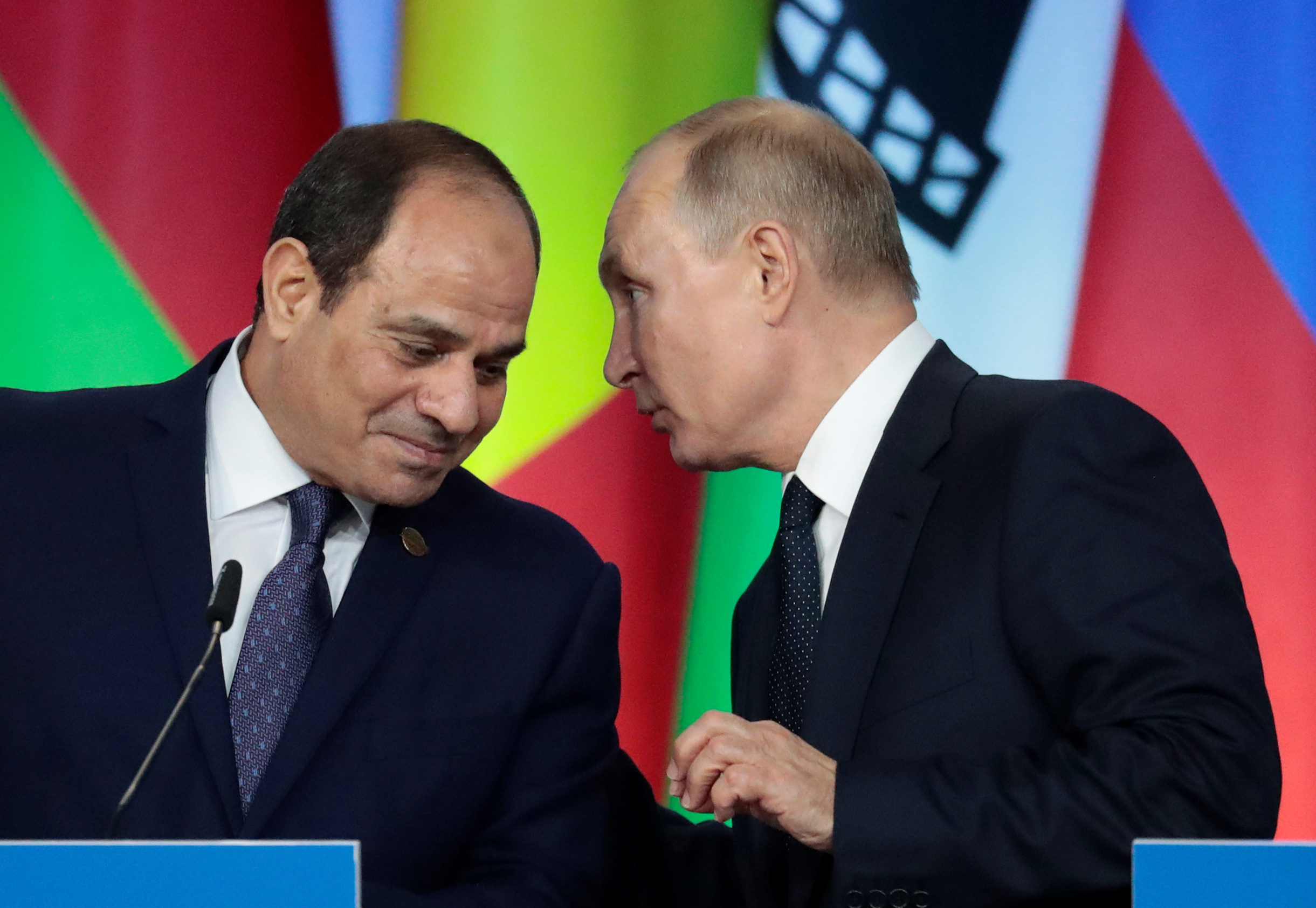
The most visible step toward this end came when President Abdel Fattah al-Sisi spoke with Russian President Vladamir Putin on Wednesday. According to the two government sources, the Egyptian president stressed Cairo’s commitment to resume cooperation as soon as possible.
In its statement to announce the call, the Egyptian president’s office said that the two heads of state underlined their commitment to the “historic relations” that have brought the two countries together.
According to Egyptian government officials, it was important for Sisi to “reach out” to Putin because Cairo felt a need to explain at the highest level its vote in the United Nations General Assembly last week in favor of a resolution that condemned Russia for its invasion of Ukraine. But, they said, the call was more about reassuring Russia that, despite the “very sensitive moment,” Egypt is not turning its back on Moscow.
According to both Egyptian officials and a Russian official, Moscow promised that it would find a way to have bilateral economic and diplomatic relations back to normal “as soon as possible”.
Egypt, the two officials said, is still determined to join the St Petersburg International Economic Forum as the guest of honor this summer – “provided that things go well.”
According to Mustapha Kamel al-Sayyid, a political science professor, Egypt’s position is centered on trying to balance its diverse foreign policy commitments. “Sisi’s call yesterday was an assertion of Egypt’s relationship with Russia as it tries to maintain its balance with all sides,” Sayyid told Mada Masr.
This balance has long been central to Egypt’s foreign policy. At times, however, it has earned Egypt a stern rebuke from the US, such as in 2021, when Secretary of State Anthony Blinken raised concerns over Egypt’s “potential procurement of Su-35 fighter aircraft from Russia.”
Egypt has been under pressure to carefully manage its relations with Russia during the past few months due to pressure from Washington, which has expressed unease about the nature of military cooperation between Cairo and Moscow. This pressure, Egyptian sources say, has forced a slow down of some deals that were in the making with Moscow.
Careful management of relations with Russia, Egyptian diplomatic sources say, is only one part of a wider diplomatic list of priorities for the coming weeks. Another item on the list, the diplomatic sources say, is to assess how the war in Ukraine might affect the balance of power in the region. Egypt, they add, is particularly mindful of the growing “diplomatic and political weight” Turkey seems to be garnering through its mediation between Russia and Ukraine.
Egypt, the same government sources add, is “concerned” that Ankara would “use the moment” to stretch out its influence across the Arab world, including in Syria, Iraq and, worst of all from Egypt’s point of view, in Libya.
According to an Arab League source who spoke after the opening of meetings between the Arab League foreign ministers on Wednesday in Cairo, Egypt requested the committee that is tasked with monitoring Turkish interference in Arab affairs to convene. In a statement on Wednesday, the committee condemned continued Turkish intervention in Arab affairs and called on Turkey to withdraw its foreign fighters from Libya.
The growing regional role of Turkey, Egyptian diplomatic sources say, comes at a moment where attempts of rapprochement between Cairo and Ankara have hit a dead-end over Turkey’s continued expansion of its zone of influence across the east of Libya that Egypt perceives as “a red line zone.”
Meanwhile, the Egyptian government is working actively with both the Russian and Ukrainian diplomatic missions to facilitate travel for thousands of tourists from both countries who have been stranded in Egypt since the suspension of flights, according to sources from both the Ukrainian and Russian missions.
Work is underway in full cooperation with the Egyptian government to ensure things are conducted promptly and that the tourists of both countries are not put into any direct proximity to avoid any unwanted tension, sources from both diplomatic missions in Cairo said.
Meanwhile, a source at the Egyptian Foreign Ministry said that Cairo has asked both sides to avoid making any press statements that could add to the sensitivity of the moment.
“There is a continuous channel of cooperation with both sides and we have been appealing to both to make sure to avoid any inflammatory statements. We want things to pass peacefully. We want to move forward,” the foreign ministry source said.
For his part, the source at the Ukrainian diplomatic mission in Cairo denied press reports that the mission was coming under pressure from Egyptian authorities to avoid criticizing Egypt on its initial lukewarm position against the war on Ukraine. “No, we talk every day, and they just told us that they don’t want to be taking sides because they are keen on relations with everyone and that they want to play a role in encouraging an end to the war,” the Ukrainian source said.
Egypt had proposed last month that an Arab ministerial committee be set up under the umbrella of the Arab League to try and mediate between Russia and Ukraine. On Wednesday, Arab foreign ministers approved the idea. The Arab League source said that Egypt, the United Arab Emirates, Saudi Arabia and Kuwait will be working together to conduct consultations on the matter.
The four countries joined 137 other nations on March 2 to vote in favor of a United Nations General Assembly resolution demanding Russia halt its invasion of Ukraine and withdraw all troops.
The move by the regional power brokers came just two days after they signed on to an Arab League statement that did not condemn Russia and instead called for diplomacy, an avoidance of escalation and consideration of the humanitarian situation.
The UN General Assembly vote was also an about-face for the UAE, which abstained from a UN Security Council resolution a week before demanding Russia cease its invasion of Ukraine. The UAE, a non-permanent member and the current president of the security council, joined China in abstaining while the resolution was vetoed by Russia. At the time, senior Emirati diplomatic adviser Anwar Gargash justified the decision by saying that the UAE “believes that taking sides would only lead to more violence.”
تقارير ذات صلة
Amid diplomatic tug-of-war, Cairo operations room works to calibrate Egypt’s position on Russia-Ukraine conflict
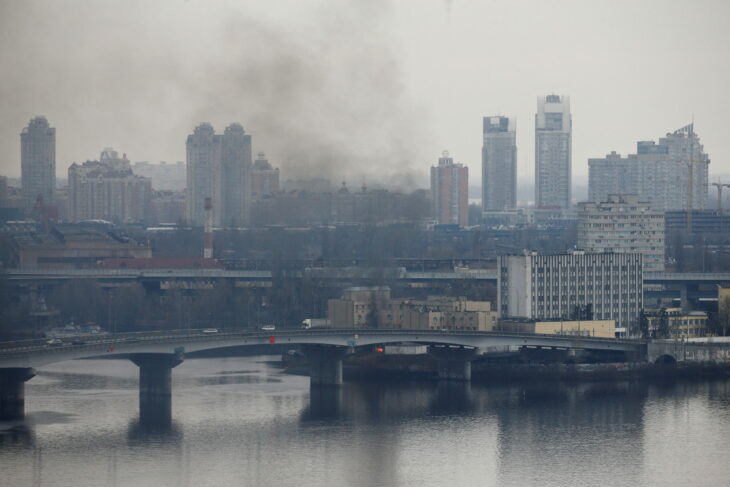
Egypt has set up an operations room to follow the developing situation in Ukraine, where fighting continued on Wednesday for the seventh day since Russia launched a multi-front offensive on…

President’s eldest son, Mahmoud al-Sisi, sidelined from powerful intelligence position to diplomatic mission in Russia
The move seeks to alleviate growing tensions within the intelligence apparatus about his role
Syria cooperation highlights progress in Egypt-Russia relations as hurdles remain
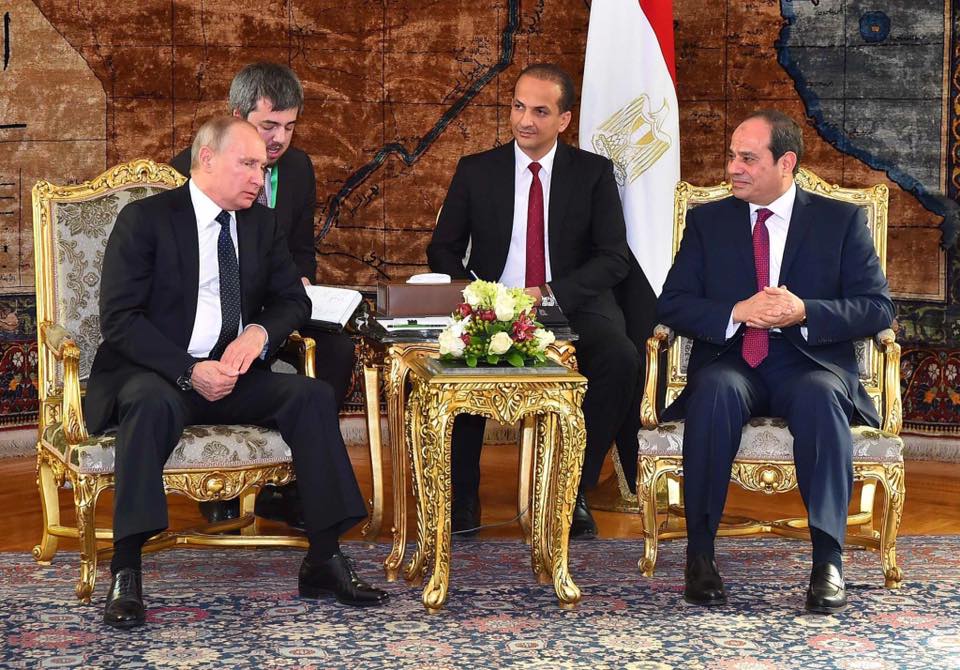
The past month has seen several breakthroughs on pending Cairo-Moscow diplomatic discussions
Your support is the only way to ensure independent, progressive journalism survives.
You have a right to access accurate information, be stimulated by innovative and nuanced reporting, and be moved by compelling storytelling. Subscribe now to become part of the growing community of members who help us maintain our editorial independence.
Join us