
A ‘birth certificate’ for every medicine: Egypt launches drug tracking system, yet gaps remain
In 2015, Mohamed began taking Cipralex regularly to treat depression. It remained part of his daily routine for years. But in mid-2023, his symptoms began to return. "My mental state deteriorated, and I couldn't find an explanation. Everything was the same as before, but there was no improvement," Mohamed says.
This continued until his doctor raised a possibility Mohamed hadn’t considered: "Where are you getting Cipralex from? It's very rare on the market; most of what's available now is counterfeit."
For five months, Mohamed had been taking tablets that didn’t contain the active ingredient. When he switched to another medication with the same active ingredient, Lustral, he felt a significant improvement within weeks. "The doctor told me to throw away all my medications and never buy from that pharmacy again," he says.
Mohamed’s case was not an exception but one facet of a broader crisis fueled by drug shortages and the absence of oversight in the pharmaceutical market. Without an effective tracking system, counterfeit and expired medications infiltrate the market, and patients continue to take them even as their health conditions deteriorate, leaving them confused and at risk.
As a result, the government began implementing the drug tracking program, launching its first phase on March 4. According to several professionals in the pharmaceutical sector who spoke to Mada Masr on condition of anonymity, the mechanism represents a crucial tool for preventing counterfeit drugs from reaching pharmacies.
At the same time, experts emphasize that the effectiveness of drug tracking depends on its nationwide application. They recommend providing financial and technical support to small pharmacies that might struggle to implement the tracking system due to limited resources.
Some of the sources also note that many counterfeit medicines are smuggled into the country from abroad, and then sold outside the official supply chain regulated by the new tracking system. These account for more than 60 percent of counterfeit medicines on the Egyptian market, they say, and additional mechanisms will be required to bring them under control.
***
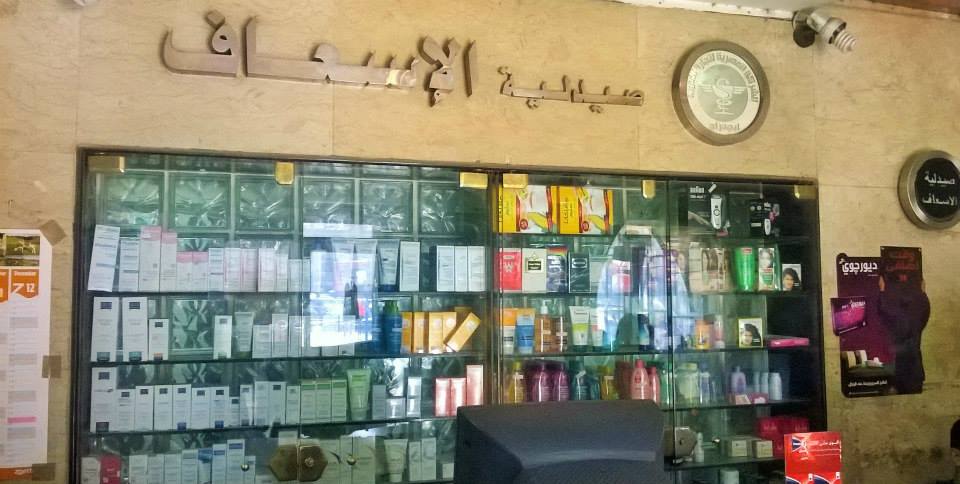
Ali al-Ghamrawy, head of the Egyptian Drug Authority, launched the first phase of the drug tracking system earlier this month with a visit to the Esaaf Pharmacy in Giza.
During the visit, Ghamrawy told journalists that the system relies on a technological infrastructure and a digital platform that tracks medications from the moment they leave the factory or enter the country until they reach the patient. He described the system as a major step toward strengthening oversight of the pharmaceutical market and ensuring that medicines in circulation are safe. He adds that the authority has established a comprehensive protection system to safeguard private data and prevent its disclosure to any external party.
Mahfouz Ramzy, head of the pharmaceutical manufacturing committee at the Pharmacists Syndicate, tells Mada Masr that tracking begins as soon as raw materials enter the factory or when imported medication reaches the point of sale.
The system gives each package a unique digital fingerprint, and uses a digital app to read the data matrix code. "If a production batch includes five runs, and each run produces 10,000 packages —50,000 packages in total — each package will have a distinct fingerprint," he explains.
Once the patient receives the medication, the package is removed from the system.
Ramzy anticipates that the system will help companies manage their drug inventory across the country. The Drug Authority will also be able to pinpoint areas of drug availability and shortage, building an accurate database of how drugs move through the market. "It will provide information on when a product is available in one location and in short supply in another," he says.
Mohamed Fadel, a Health Ministry inspector, explains that the system also allows pharmacies and patients to see the full history of each package of medicine from the moment it leaves the factory via the pharmacy’s connection to the system’s app.
"This makes it impossible for [counterfeit medicines] to slip into the system," he says, since the record of each in the system becomes "like a birth certificate for the medicine."
Ramzy says the system will put an end to the sale of medicines inside clinics. Some facilities, such as fertility centers that sell hormones directly to patients, will no longer be able to do so, as these medicines will be dispensed exclusively through pharmacies. "We will not accept any medicine package being sold outside the official channels," he says. "There will be no online pharmacies."
Ramzy says the Drug Authority has already begun testing drug tracking on certain imported medicines, as well as six types of controlled drugs — those with addictive effects that require a prescription — as part of a pilot operation to evaluate the system before its wider rollout.
The mechanism is arriving late to the Egyptian market. Drug tracking already exists in several Gulf countries, and was introduced in Turkey in 2012, says Fadel. The system was also proposed in Egypt that same year, and a Turkish company offered to support the Egyptian Health Ministry to implement it, but the project was postponed. It was proposed again in 2016 by the health minister, but wasn’t implemented then either.
An initial form of drug tracking was rolled out at Egypt’s factories years ago, says a source at the Egyptian Drug Authority, speaking on condition of anonymity. The source says enforcement is easier at factories, but that the biggest challenge was implementing it at the pharmacy level, which led to the delay.
Now, the government has finally announced the nationwide program.
According to Fadel, Egypt is a regional hub for counterfeit drugs. He notes that unofficial estimates by drug inspection agencies in 2020 suggested that about 30 percent of medicines in the Egyptian market were counterfeit, compared to the global average of 1 to 10 percent.
In one of the worst incidents involving counterfeit medicines, cited by both Mohamed Fouad, head of the Right to Medicine Association, and a pharmacy owner who requested anonymity, counterfeit antibiotic injections that reached pharmacies in 2022 caused 13 deaths, mostly among children. Both sources attribute the tragedy to the uncontrolled spread of counterfeit drugs in the market.
The pharmacy owner explains that unlicensed factories produce injections or capsules that are sold in pharmacies without pharmacists’ knowledge.
Factories and companies denied responsibility at the time of the incident, according to Fouad, who says the case underscores the importance of ensuring drugs are traceable to determine accountability.
The production of counterfeit medicines domestically has increased in recent years amid shortages, as imports have become more expensive and the cost of raw materials for licensed factories has increased, another member of the Pharmacists Syndicate tells Mada Masr. A large portion of expired medicines is also being recycled, as companies have stalled on recalling them from pharmacies at the Drug Authority’s initiative, which has been ongoing for more than a year and failed to meet its official deadline last August.
Counterfeit drug factories are concentrated in areas such as Nabaruh in Daqahlia and 6 October. They use outdated machinery that counterfeiters purchase from other factories that have upgraded their equipment, says the source. These factories supply numerous drug warehouses in the same areas, which then distribute the counterfeit drugs to other governorates.
"These days, the trade in counterfeit medicines has become widespread, and the greater the shortage, the more counterfeiting occurs," the Pharmacists Syndicate member says, noting that the Drug Authority has issued hundreds of notices over the years warning consumers about medicines that do not meet specifications and demanding their withdrawal from the market.
While the Egyptian pharmaceutical market urgently needs the new drug tracking system, its effective implementation depends on the participation of all pharmacies, including small outlets that are already struggling with rising drug prices and shrinking profit margins, and may lack the resources to join the initiative.
The pharmacy owner notes that the system has been launched in large chains such as El-Ezaby and Esaaf Pharmacies, which have resources and capacity that will make the system easier to implement. “What about the rest of the pharmacies?” they ask.
The pharmacies have been hit hard by rising drug prices, says the owner. Small pharmacies, especially those outside major cities, lack resources, while some even lack internet access, and need financial support to "get back on their feet," as he put it, given the equipment and technical training required for their staff to implement the tracking system.
The source also called for requiring pharmaceutical companies to withdraw expired medicines and compensate pharmacies for them, noting that this would help alleviate some of the financial burden. He adds that pharmaceutical companies are “still toying with us.”
Implementing the drug tracking system will naturally be easier for larger, better-equipped pharmacies. With the government’s push to roll out the comprehensive health insurance system across all governorates, small pharmacies risk being excluded from the profits of selling insurance-covered medicines. “That means you are destroying small pharmacies," says the pharmacy owner.
Ramzy acknowledges the challenges posed by the cost burden on pharmacies, as well as technical issues such as power outages. He calls for incentives to encourage pharmacists to join the system, including measures such as returning expired medications and ensuring that medicines in short supply are distributed fairly across all pharmacies, rather than being limited to the Egyptian Pharmaceutical Trading Company or Esaaf Pharmacies.
He also suggests that pharmaceutical companies or the Drug Authority provide pharmacies with POS terminals and touchscreens to facilitate the system’s activation.
There is still no official website for pharmacies to register in the system, says the pharmacy owner, doubting that the Drug Authority has a platform capable of handling such a large volume of data and anticipating that nationwide rollout will take time. "Unfortunately, our capabilities do not allow us to implement it quickly," they say.
Ramzy also calls for a grace period extension for companies to join the system past the deadline, set for August, to ensure that all manufacturers have the opportunity to participate.
Fouad, too, says that fully implementing the system will take considerable time, as it is still in the "experimental phase," citing Turkey as an example, where it took five years and significant effort to achieve full deployment.
Though the tracking project represents an important step in curbing the distribution of locally produced counterfeit drugs, smuggled medicines will remain outside the system, the pharmacy owner says. He believes the only solution is to expand drug licensing and registration with the Drug Authority, coupled with stricter controls on smuggling. He estimates that more than 60 percent of counterfeit drugs in Egypt are smuggled from abroad.
High local prices, especially for life-saving medications like cancer drugs, make them prime targets for counterfeiting, and their obscure supply routes make them difficult to trace. Most of these smuggled drugs never even reach pharmacies.
Ramzy emphasizes that while the new system will limit the entry of counterfeit drugs into the official channels, it cannot control medicines circulating outside of it. "Drugs that enter the system officially are difficult to counterfeit, but drugs coming from abroad unofficially are difficult to control," he says, since the so-called "suitcase traders" remain outside the scope of oversight.
Ramzy stresses that the authority's goal is to monitor medicines only within approved supply chains.
Fouad agrees, saying that other solutions are needed for illegally imported medicines, such as tighter control over smuggling routes and the regulation of online outlets, which are already governed by existing laws. He adds that the Supply Ministry's Investigation Department, the Medical Advertising Law, and the Consumer Protection Agency should work to protect patients from the sale and promotion of medicines on social media.
Despite the implementation challenges, however, the drug tracking system promises to protect patients from counterfeit medication, "which cannot possibly pass through the system," the pharmacy owner says.
تقارير ذات صلة

Splitting the pharmacy pie: How the El Ezaby-sovereign fund deal will usher in new monopolistic player
The move will see El Ezaby, Egypt's largest pharmacy chain, expand twofold within two years

The rise and fall of Egypt’s top pharmaceutical chain
The company's debt obligations could pose a threat to the entire pharmaceutical retail market
As COVID-19 panic builds, pharmacy shelves run out of vital drugs
People are sensing that there is a crisis, so they are also buying more.
Your support is the only way to ensure independent, progressive journalism survives.
You have a right to access accurate information, be stimulated by innovative and nuanced reporting, and be moved by compelling storytelling. Subscribe now to become part of the growing community of members who help us maintain our editorial independence.
Join us