
Widespread indignation follows Cairo University bombings

Local and international authorities were swift to condemn the bombings that took place outside Cairo University on Wednesday, which resulted in the death of one police officer and the injury of dozens of security forces and civilians.
Speaking on state-owned radio, the President of Cairo University Gaber Nassar claimed that “a few hundred students must not be allowed to disrupt the academic year for the rest of the university’s decent students who are actually seeking an education, whose parents have spent lots of money for this purpose.”
“Shutting down universities is an easy measure, but it is not a solution to the problems we are facing on campuses,” said Nassar. “If we were to shut down this [public] university, it would mean a failure of the state.”
In statements made to privately owned Al-Masry Al-Youm newspaper on March 27, Gaber Nassar called for a police presence within Cairo University campus in order to deal with the Brotherhood’s “criminal acts.”
Meanwhile, Prime Minister Ibrahim Mehleb condemned the bombings as a “cowardly terrorist” attack. According to the state-owned Middle East News Agency, Mehleb offered his condolences to the families of the “martyrs” and injured security forces. The prime minister also called for a joint meeting of Egypt’s senior police and army generals to discuss a means of responding to today’s attack.
In an official press release on Wednesday, the Muslim Brotherhood denounced the bombings as “a criminal act” and sought to distance itself from such violent attacks.
“All in Egypt should have a fear of God, whether they be civilians or members of the police and armed forces. The spilling of blood is immoral. Political disputes must not be used as a pretext for murder or bloodletting.”
The statement called for an immediate and impartial investigation into the bombings, and on the public to refrain from false or baseless accusations against the Brotherhood.
Condemnations were also issued by the Salafi Nour Party and the Watan Party, who like the Brotherhood, presented their denunciations using religious rhetoric.
In a press release titled, “Condemnation of Attacks Near Cairo University,” the United States Embassy said it “condemns in the strongest terms the terrorist attacks near Cairo University earlier today,” adding, “as we have said before, there is absolutely no justification for such cowardly attacks. The embassy extends its condolences to the families and friends of those who were killed and hopes for the swift and full recovery of those injured.”
Osama al-Abd, President of Al-Azhar University — which has witnessed numerous clashes between students and police forces along with several student fatalities in recent months — similarly condemned Wednesday’s bombings.
Abd told media outlets that certain students have involved themselves in the “Muslim Brotherhood’s terrorism” and “seek to obstruct the academic process.” Al-Azhar’s president added that “Islam is innocent of these criminal attacks,” and offered his prayers and condolences to the families of “the police victims and martyrs.”
The only people expressing support for the bombings, according to the mainstream media, were Brotherhood-sympathizers Ahmed al-Mughayer and Abdel Rahman Ezz. These two young Islamist activists are reported to have applauded the bombings on their Facebook pages.
Although the following comments could not be authenticated as originating from the two individuals, a number of news portals mentioned that Ezz greeted the deadly attacks, saying, “Bless their hands. The blood of students will not be spilt in vain.”
Mughayer is reported to have written: “The blood of criminals is not more precious than the blood of Brotherhood members. The Egyptian army are enemies and the Egyptian police are enemies. Bless the hands of the jihadis … No solution except through arms.”
Their use of the phrase “bless their hands” is borrowed from a popular Egyptian pro-army song titled, “Tislam al-Ayadi,” bearing the same meaning.
Ahmed Afifi, a columnist for Al-Masry Al-Youm, wrote a piece titled “Kill them and spare us,” in which he called for a heavy-handed response from security forces to wipe out the Brotherhood and affiliated terrorists groups. Afifi argued that terror attacks will not stop if police forces continue to be “lenient in dealing with terror” and continue to confront it “merely with teargas and water cannons.”
Masriyoon website ran a collective op-ed titled, “Oppression and injustice lead to bombings and religious intolerance.” The article argues that violence on university campuses is an unfortunate, yet natural response to state-ordered crackdowns, hundreds of deaths, and thousands of arrests.
Increasing state terrorism will only lead to an increase in Islamist terrorism, and will not end the cycle of violence but rather perpetuate it, urged several policemen and civilians.

أخبار ذات صلة
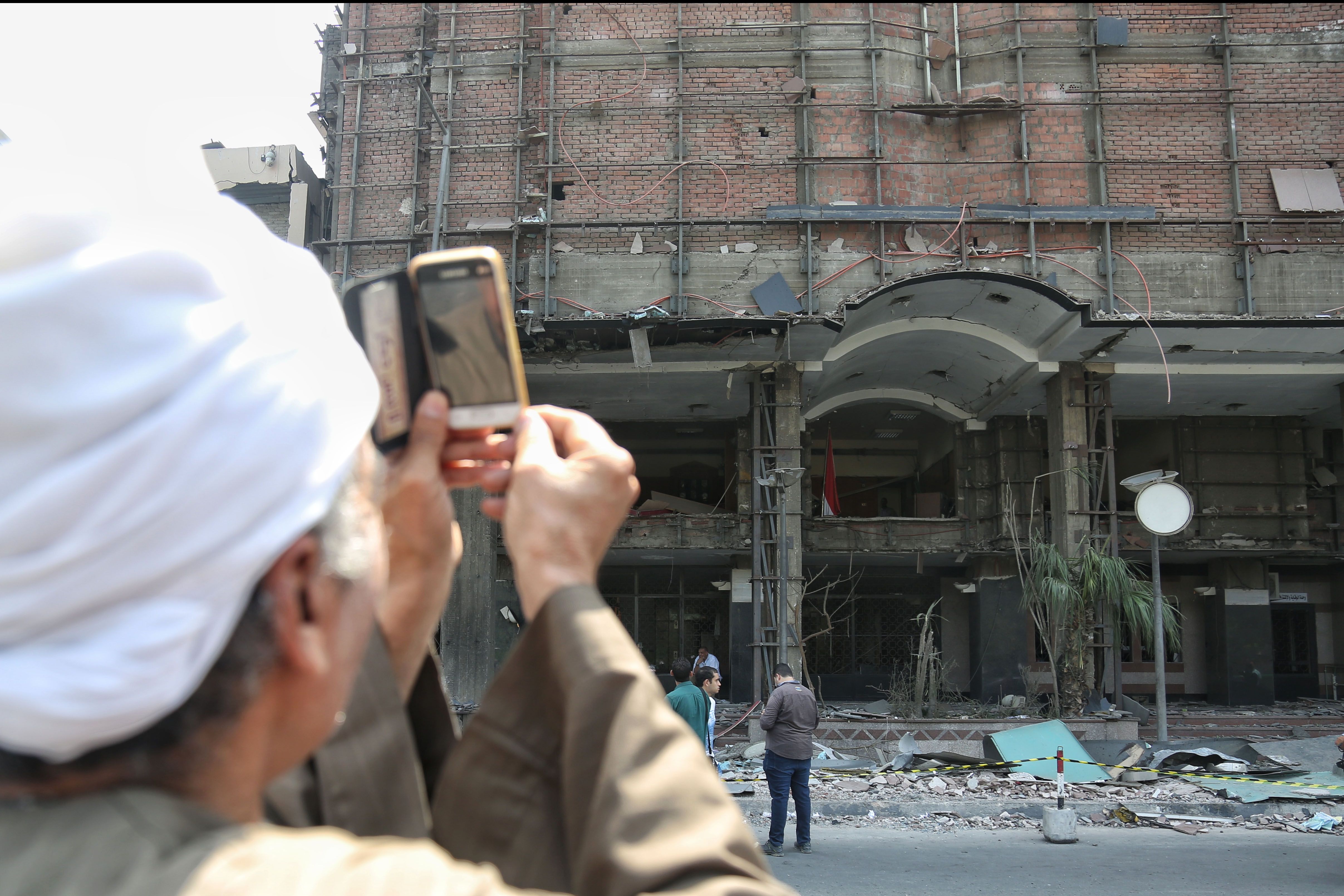
The National Cancer Institute was in crisis long before the car bomb attack
The institute's medical services and research capacity have been steadily deteriorating for years.
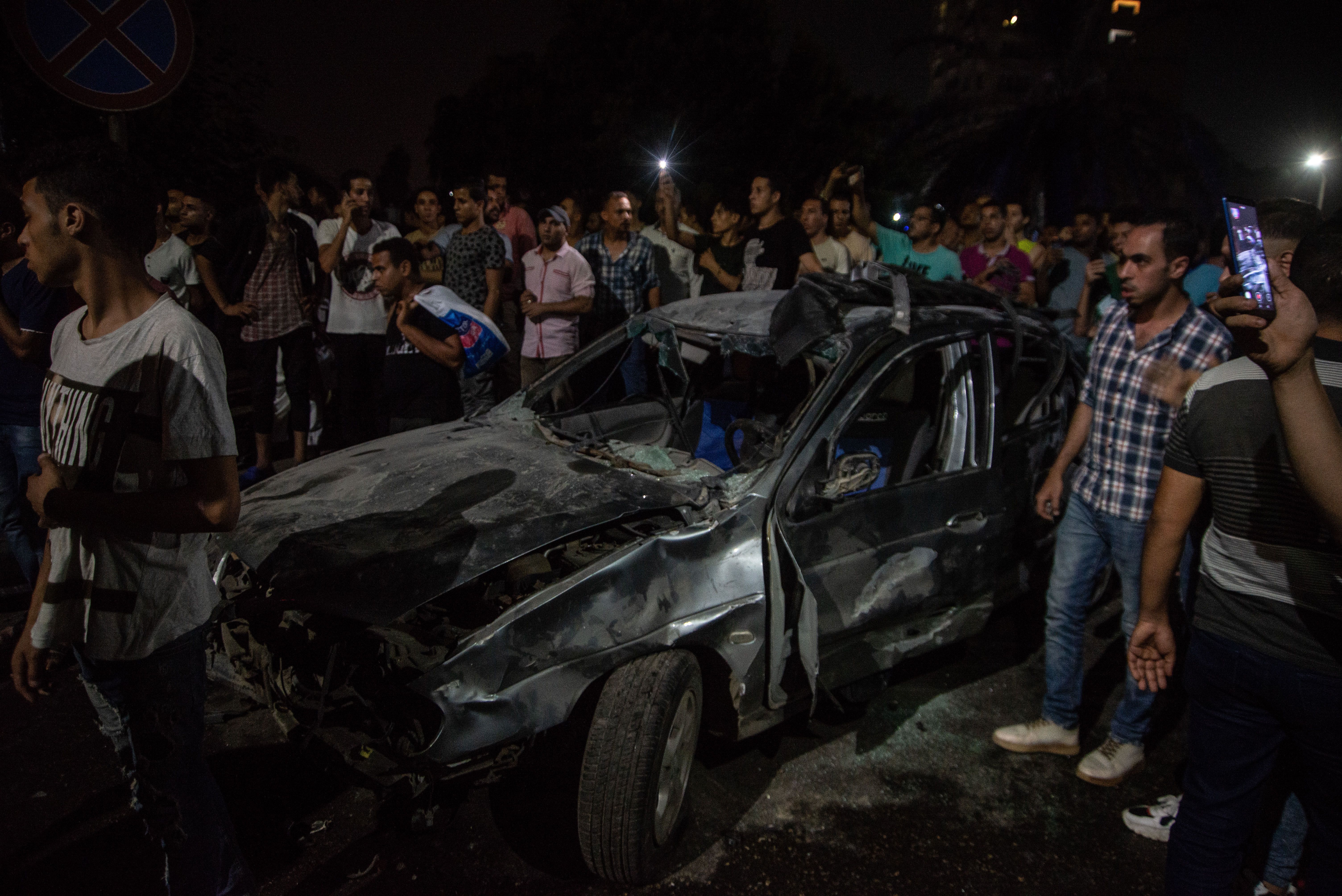
Was Hassm behind the car bomb attack outside the National Cancer Institute?
A look into militant group Hassm, accused in Sunday's attack, as well other possible culprits.
Car bomb outside Cairo hospital kills 20, security agencies instruct TV outlets on coverage
At least 20 people were killed and 47 wounded in a car bomb explosion in central Cairo.
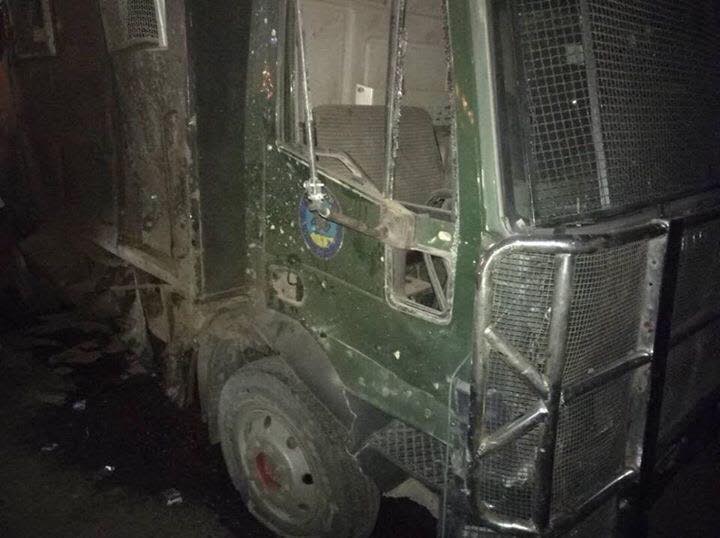
1 killed, 4 injured in Cairo explosion targeting CSF vehicle
1 police officer was killed and another officer and 3 CSF officers were injured in a roadside bombing in Maadi
Your support is the only way to ensure independent, progressive journalism survives.
You have a right to access accurate information, be stimulated by innovative and nuanced reporting, and be moved by compelling storytelling. Subscribe now to become part of the growing community of members who help us maintain our editorial independence.
Join us