
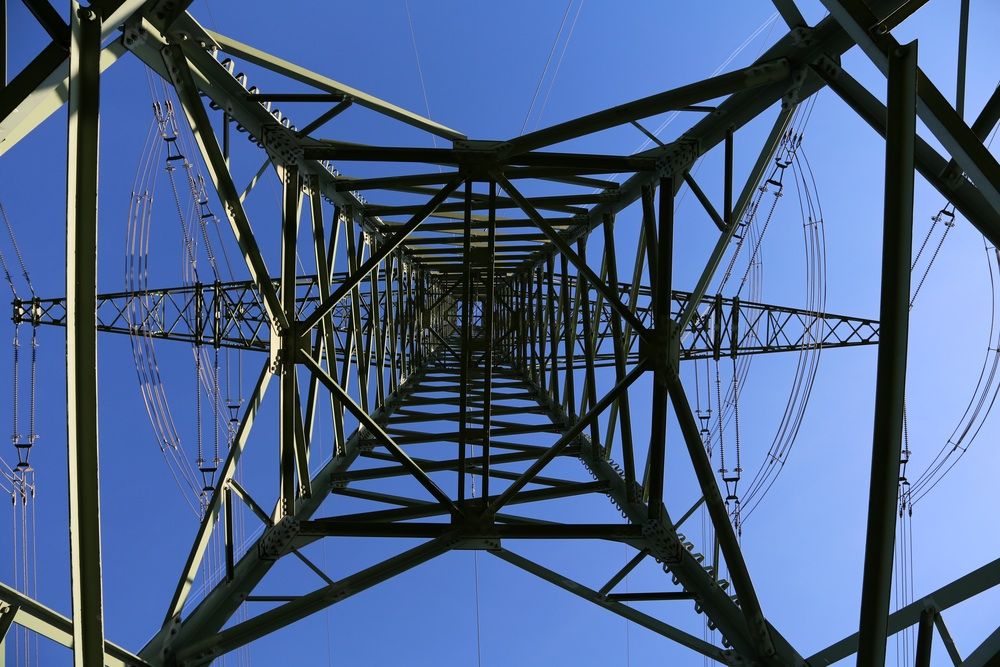
Two electricity towers supplying the Egyptian Media Production City (EMPC) were targeted early on Tuesday, taking out several satellite channels and raising many questions as to why they were attacked.
In a statement published by the state-owned Middle East News Agency, the Electricity Ministry said that four bombs were planted around the towers, completely destroying one and causing partial damage to the other. The Ministry explained that repairs will take ten days and cost LE800,000 for each tower.
The Revolutionary Punishment group assumed responsibility for the attack in a statement on its blog. Deeming the attack part of its “cutting tongues” operation, the movement said the bombing is a “last warning to anyone working as part of the system to destroy the country that they will be subject to punishment, whether they are groups or individuals. Our targets are clear and specific,” the statement said.
Some of the channels are back on air, and efforts are being made to broadcast the others through an alternative electricity line.
EMPC head Osama Heikel told the privately owned Al-Masry Al-Youm newspaper on Tuesday that the bombings were not random, making reference to the knowledge of the attackers as to the importance of the two towers. Journalist Tamer Abu Arab, who works for Al-Nahar channel, and an eyewitness told Mada Masr that the two towers were the only ones bombed while other towers feeding areas across the city were untouched.
“Whoever planted these bombs knows very well that these towers only feed the media city; the bombers definitely have eyes in the Electricity Ministry,” Arab explained.
Electricity power plants have been the target of various bombings across Egypt since the removal of former President Mohamed Morsi from power in 2013.
The Electricity Ministry has been accused of infiltration by Muslim Brotherhood members during Morsi’s presidency, and officials have reiterated governmental efforts to purge the ministry of such intervention.
Although security officials were not available to comment, an unknown security source told Al-Masry Al-Youm that the bomber is most probably working in the media city itself or in the electricity company that operates the two towers. “Whoever planted the bombs knows the location of the two towers very well, because they were located among 600 other towers feeding other areas,” the source explained.
Two of the four bombs planted around the towers exploded, and security officials managed to detonate the other two.
“The explosives were large and sealed in plastic boxes. According to explosives experts present at the scene, the bombs were new and very heavy … the bomber had time to plant them. This shows a strong security failure, there was zero protection around the power plant,” Arab asserted.
Arab’s remarks were reflected in the statement by the Revolutionary Punishment group, which claimed it is asserting “huge efforts to research and analyze information” about targets.
The group was established after the fourth anniversary of the January 25 revolution, and they have since claimed responsibility for various bombings and attacks, the most known of which is the targeting of KFC outlets.
Unlike the organized action of other militant groups that have targeted security forces across the country since Morsi’s ouster, the Revolutionary Punishment group has adopted the stance of “riots” in most operations, according to Sherif Mohy el-Din, researcher of counter terrorism and human rights at the Egyptian Initiative for Personal Rights (EIPR).
Mohy el-Din previously told Mada Masr that such movements are way more dangerous and less controlled than organized jihadist groups like Ajnad Misr and the Province of Sinai.
“The activities of these groups are unorganized and uncontrolled. Their attacks on civilians yield more casualties and are concentrated in Cairo, Fayoum, Giza and Alexandria. We cannot yet say for sure that the Muslim Brotherhood as an organization is formally moving towards violence, but the emergence of these groups at least say there is movement towards violence by its youth,” he asserted.
For Arab, the bombing carries more serious messages regarding the reach of such attacks. “We are being told that media is under control and the state cannot protect the media. We can be targeted anywhere, the checkpoints at the city’s gates are not enough,” he explained.
Several social media users received the news of the bombings with sarcasm. Photo-shopped pictures of pro-regime TV anchors, like Ahmed Moussa, Tawfiq Okasha and Lamis al-Hadidy, emerging from flames quickly went viral.
According to Arab, “There is a general state of anger against the media. For many people, its absence is much better than its existence. It is a message to media personnel to review their stances and their role in a chorus cheering for the state.”

أخبار ذات صلة
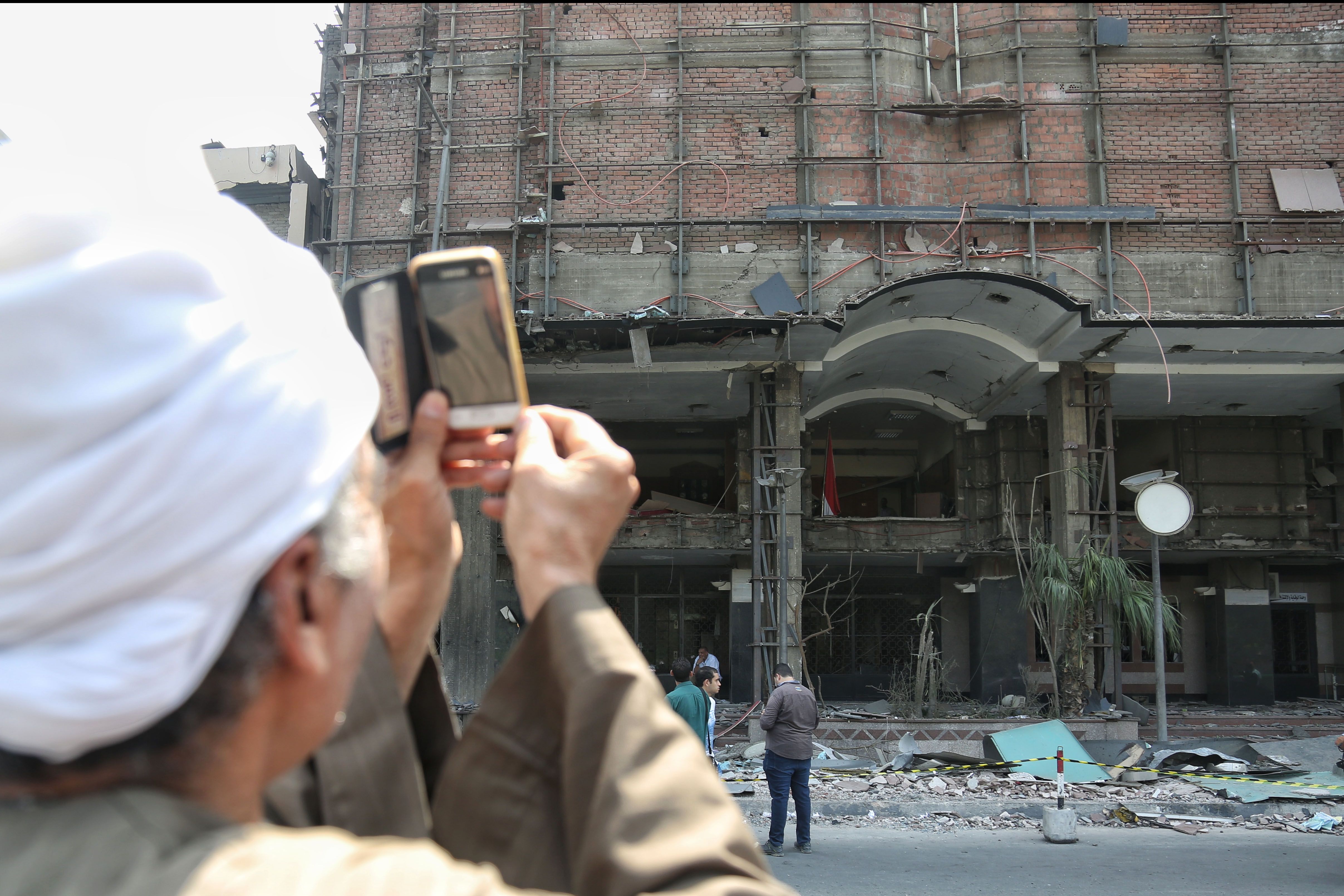
The National Cancer Institute was in crisis long before the car bomb attack
The institute's medical services and research capacity have been steadily deteriorating for years.
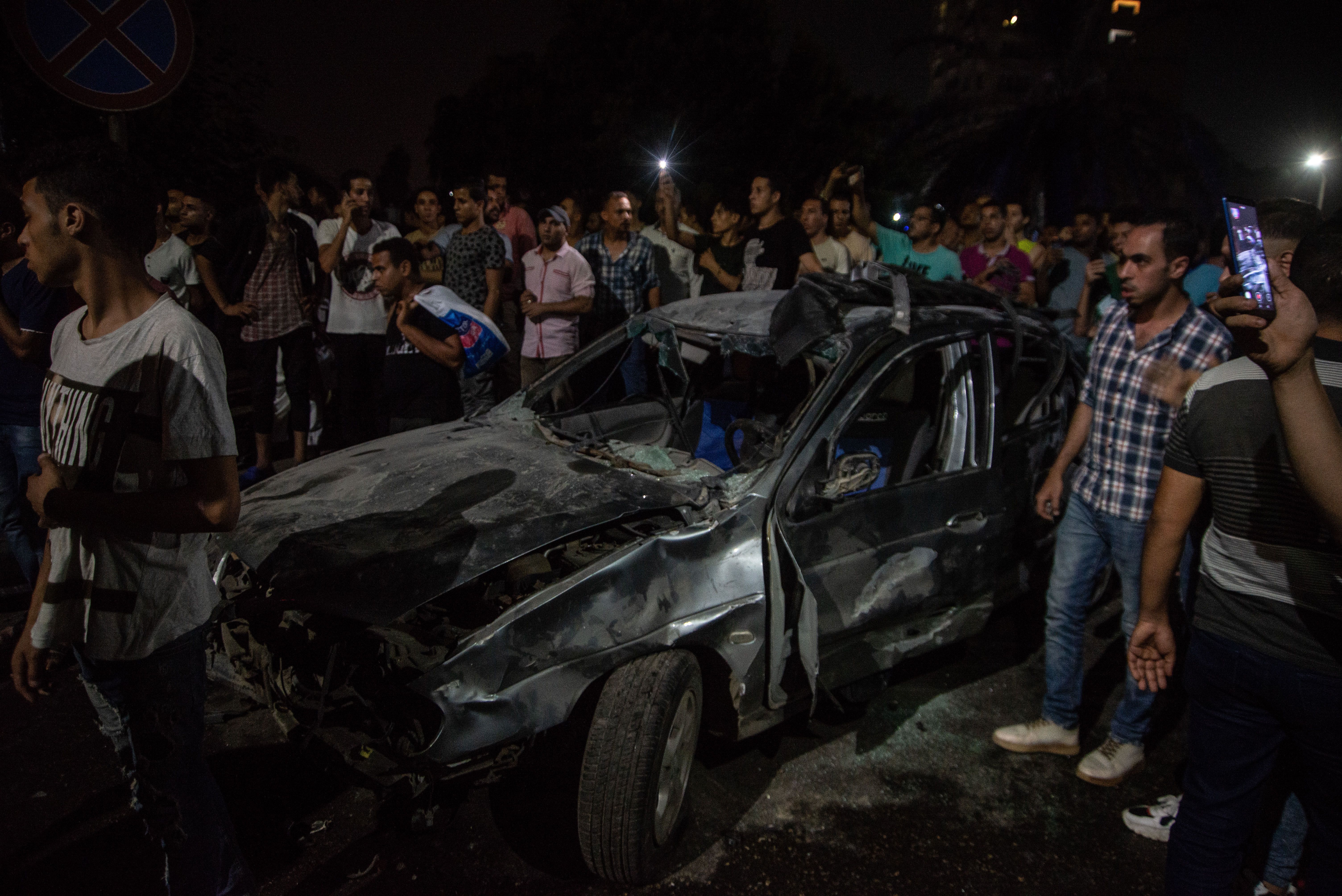
Was Hassm behind the car bomb attack outside the National Cancer Institute?
A look into militant group Hassm, accused in Sunday's attack, as well other possible culprits.
Car bomb outside Cairo hospital kills 20, security agencies instruct TV outlets on coverage
At least 20 people were killed and 47 wounded in a car bomb explosion in central Cairo.
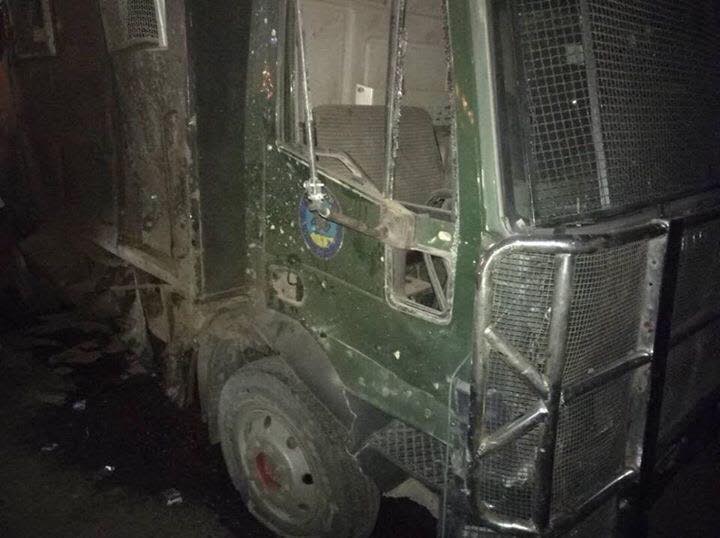
1 killed, 4 injured in Cairo explosion targeting CSF vehicle
1 police officer was killed and another officer and 3 CSF officers were injured in a roadside bombing in Maadi
Your support is the only way to ensure independent, progressive journalism survives.
You have a right to access accurate information, be stimulated by innovative and nuanced reporting, and be moved by compelling storytelling. Subscribe now to become part of the growing community of members who help us maintain our editorial independence.
Join us