
The superlative government of Mostafa Madbuly

Mostafa Madbuly, the not-so-new prime minister, has promised he will usher in unprecedented debt reduction measures, and has been tasked with overseeing a new Information Ministry that should reach “every single level of society.”
His time in office, the longest by any prime minister in decades, has seen Egypt’s administration transgress a series of historical economic red lines, including the floating of the Egyptian pound and the liberalization of fuel prices.
He has overseen a series of back-to-back International Monetary Fund programs, and the expansion of public debt to such a degree that debt service now consumes most of the government’s annual spending. He has also overseen Egypt’s transformation back to a net fuel importer.
In the weeks of rumors that preceded the Cabinet reshuffle announced Tuesday, it appeared that the chapter of superlative firsts overseen by Madbuly’s government might be coming to an end, and the country could see a new prime minister appointed in his stead.
But the ministerial changes that were ultimately finalized this morning solidified Madbuly’s leadership, and were, according to informed sources who spoke to Mada Masr, undergoing revisions until the eleventh hour, the latest of which was the sudden change of the defense minister on Wednesday morning. The move was seen as a way to circumvent parliamentary oversight of Cabinet changes as stipulated in the Constitution.
One judiciary source who spoke to Mada Masr on condition of anonymity described the move as a “major constitutional violation,” asserting that the defense minister is no different than other members of the executive branch.
Lawyer Issam Islamboly, on the other hand, while describing the move as “unusual” and “negative,” points to a possible interpretation of the Constitution that stipulates the approval of the Supreme Council of Armed Forces as a “special status” that allows an exception for minister of defense.
Now, with the new and updated Cabinet complete under his leadership, Madbuly is expected to venture even further into uncharted territory.
And while Madbuly has rushed to herald the coming period as a post-IMF, pro-private sector era, it is harder — perhaps intentionally so — for us to read the tangible policy steps that will characterize this era, with many of the key responsibilities and executive mandates now situated outside the Cabinet.
The announcement of the new government was delayed by three hours on Tuesday due to a late amendment to the letter sent from the presidency to Parliament.
Members of Parliament were prepared to enter the main hall at 1:00 pm, but at 2:00 pm, members of the Nation’s Future Party and the National Front Party received messages informing them of a two-hour delay, according to a source at the House General Secretariat.
According to the parliamentary source, the House received a new list at 3:00 pm with several additions.
These included the appointment of former head of the Planning and Budget Committee, Hussein Eissa, as deputy prime minister for economic affairs.
The amendment, which came at the direction of the head of the presidential office, Omar Marwan, also removed Kamel al-Wazir from his position as deputy prime minister and dismissed Mahmoud Fawzy from the Parliamentary Affairs and Political Communications Ministry, according to the same source and a second informed source. Fawzy was replaced as head of the ministry by assistant justice minister for legislative affairs, Hany Azer, and “political communications” was dropped from the ministry’s name altogether.
Fawzy’s new role has not been officially announced, though several news websites reported that he had been promoted to Chief of Staff of the Presidential Office, while several of his close associates in the media and government shared congratulatory Facebook posts — now mostly deleted — for the appointment.
Wazir’s influence and prominence in the government this time will therefore be significantly diminished, stripping his role in the Cabinet down to transportation minister.
Responsibility for the trade and industry portfolio, which had been assigned to Wazir in the 2024 reshuffle along with his deputy prime ministerial duties, has now been handed to Ahmed Rostom.
Health Minister Khaled Abdel Ghaffar, who previously served as both minister and deputy prime minister for human development, has also had his role diminished in the new shuffle.
Informed sources told Mada Masr in the weeks preceding the reshuffle that Wazir and Abdel Ghaffar were among the leading candidates for prime minister before Madbuly ultimately retained his position.
Madbuly also gains support from the inclusion of Randa al-Menshawy as housing minister. Menshawy previously served as his chief of staff and as head of the Investors' Disputes Settlement Center.
Beyond the steps that check some of the more prominent figures and consolidate Madbuly’s power as the most influential figure in the government, the most radical change is the elimination of the Public Enterprise Ministry.
The ministry was first launched in the 1990s as an umbrella for publicly owned industrial ventures — part of plans to facilitate privatization.
Its abolition by presidential decree on Tuesday was described by Ibrahim al-Issawy, consultant at the Institute for National Planning, as the beginning of a new approach to privatization and, potentially, its acceleration for state-owned companies, since the sovereign wealth fund will be better positioned to make such decisions than the government, which is bound by firmer strictures. He noted, however, that public companies ultimately represent a small percentage of state assets, with a large proportion managed by sovereign bodies.
Forty of the companies will be moved to the SWF, and another 20 will be offered on the Egyptian Exchange, the prime minister’s office said on Wednesday afternoon, reporting on a meeting held with the new deputy prime minister for economic affairs, and Hashem al-Sayed, assistant to the prime minister and CEO of the State-Owned Companies Unit.
A source directly involved in managing state assets told Mada Masr that “coordination between several entities whose specializations overlap with the management of these companies will be entrusted to Hussein Eissa, the new deputy prime minister for economic affairs,” adding that “his work will focus particularly on managing the relationship between the Cabinet-affiliated State Assets Management Unit — which has effectively replaced the committee for offering shares — and the sovereign fund."
It is unclear how the move will reflect in the government’s management of the long-standing demand from private sector and liberal international actors for Egypt to reduce the state’s footprint in the economy. Madbuly’s statement indicated only that the aim would be a “restructuring” of the companies.
But the Madbuly era has been marked, in the view of American University of Cairo Assistant Professor of Political Economy Amr Adly, by a prolific rhetorical response to the demand — namely from the IMF — to expand the role of the private sector in the economy.
Stalling on the execution of share sales in a specific state-owned companies since 2018, Madbuly’s government instead launched the State Ownership Policy Document, pledging to privatize not only specific companies, but full sectors of the economy with significant public ownership.
Adly believes that the State Ownership Policy Document, issued in its final form in December 2022, represents a particularly clear example of the discourse that has characterized Madbuly's premiership, embracing the principles of the free market and championing the private sector.
But for Adly, the essence of Madbuly’s role in privatization has gone no further than the discourse.
The “propaganda” around privatization, as he called it, “was produced extensively for the sole purpose of showcasing it to the IMF, in particular, as well as the World Bank."
Actually carrying out privatization, the researcher says, is a complex matter that the government is cautious about.
There are “constraints that the government cannot overcome,” he says, “political constraints tied to internal obligations within the state apparatus that cannot be easily circumvented."
Sources speaking to Mada Masr previously noted the government’s hesitance to part with key assets at depreciated rates over recent years as it allowed the Egyptian pound to depreciate dramatically against the dollar. The security implications of inviting foreign investors into key strategic areas has also slowed the closure of specific asset sales.
So far, in Adly’s view, Madbuly’s government has “diligently managed to circumvent commitments [to the IMF] related to privatization and reducing the state's role in the economy by transforming them into mere public rhetoric with virtually no practical impact.”
Whether the transfer of the companies to the SWF is intended to further delay privatization or facilitate more investment is unclear.
A number of other companies and state assets were previously transferred to the SWF, though MPs have raised concerns about the lack of action to optimize and invest in those assets.
A former ministry source said that the abolition of the public enterprise ministry has caused havoc in the agency’s offices, even though it amounts to little more than “a change in manager.”
Nevertheless, the step echoes a criticism that was voiced across the board at the Cabinet in the days leading up to the reshuffle. TV anchor Amr Adib put it most clearly.
“Cabinet responsibilities have been dismantled,” he said on Sunday, “and moved outside the government,” pushing the degree and direction of decision-making increasingly into the hands of extragovernmental agencies free of budgetary constraints and parliamentary oversight and, as a result, more difficult to monitor.
Instead of the Supply Ministry managing the procurement of strategic food commodities through its General Authority for Supply Commodities, the role is increasingly being delegated to the military-run Mostaqbal Misr agency. The same happened with the health ministry’s procurement authority, the Egyptian Authority for Unified Procurement, which was moved outside the ministry’s authority in 2019.
The same dynamic is set to hold sway in the Cabinet’s role in managing energy after the reshuffle.
Egypt’s domestic gas production has tanked since 2022, forcing it to depend increasingly on imported gas and mazut — an ecosystem in which the Petroleum Ministry has a much less prominent role.
According to the Gas Market Activities Regulation Law of 2017, private sector companies are now permitted to import and sell natural gas to the government, which they pipe from Israel or secure through liquefied natural gas shipments, either through long-term agreements or on the spot market.
A source close to the Cabinet noted that Karim Badawy was reappointed petroleum minster despite mishandling domestic production, since his ministry’s management of domestic energy has taken a backseat to growing imports.
Backed by Finance Minister Ahmed Kouchouk, one of Madbuly's main goals in his new term is to reduce budgetary debt to “unprecedented” levels.
The proposed method mirrors the same impulse to bypass the government by doctoring the books and transferring debt outside the general budget to special extragovernmental entities.
Madbuly himself has commented on the worsening debt crisis and sparked a wave of public debate when he promised to reduce the debt to its lowest level in decades at the end of 2025.
Debt service has burdened the general budget to unprecedented levels, with repayments and interest exceededing 96 percent of state revenues from July to November of last year.
“In my personal opinion, the [articulation] of these promises in this manner was aimed at raising his popularity at a time when he is likely worried about a purported cabinet reshuffle,” a parliamentary source told Mada Masr following Madbuly’s remarks.

أخبار ذات صلة
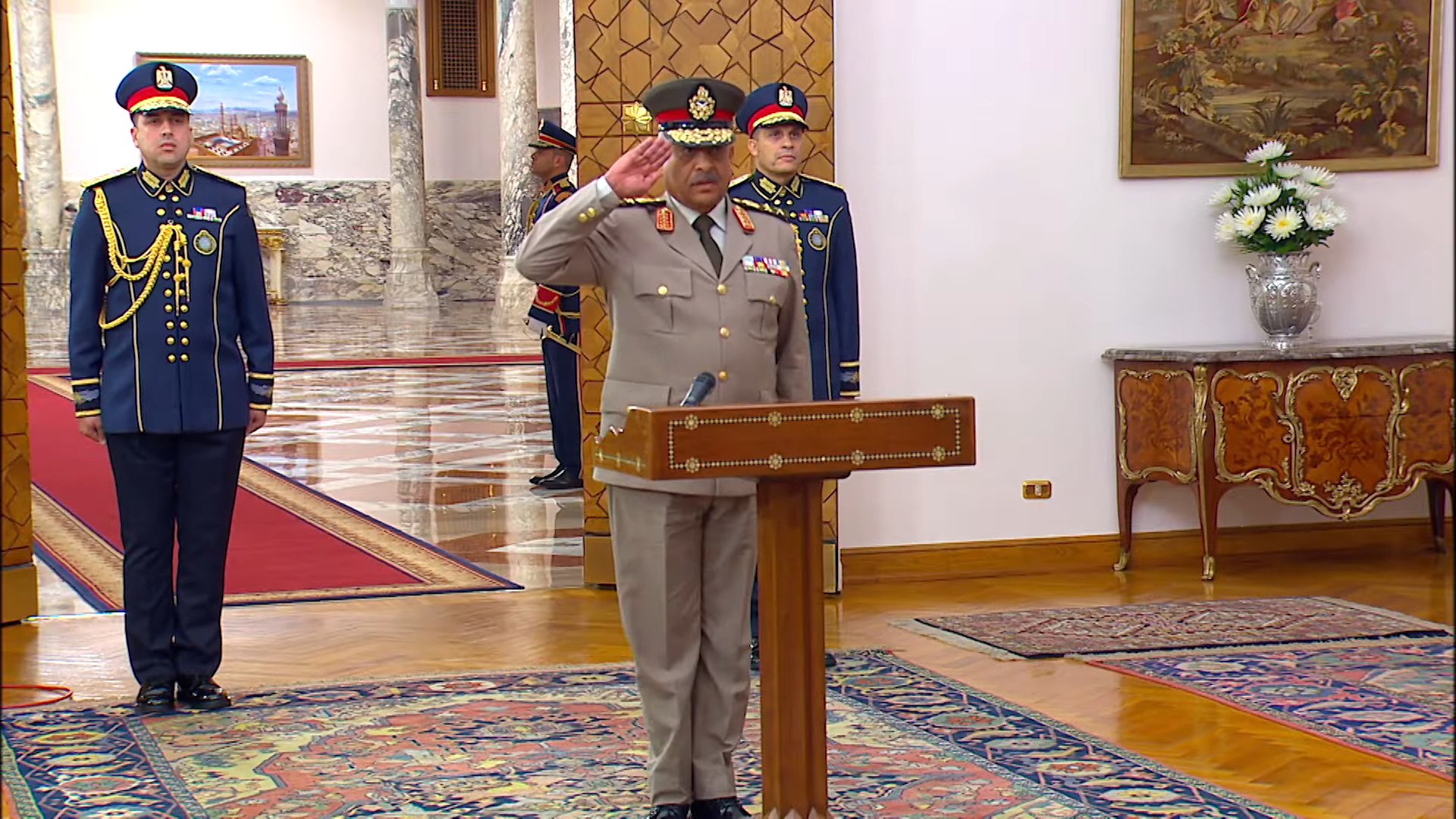
The ‘unexpected’ new defense minister
Among the new Cabinet members sworn in on Wednesday was former Suez Governor Major General Abdel Meguid Saqr, who took his oath…
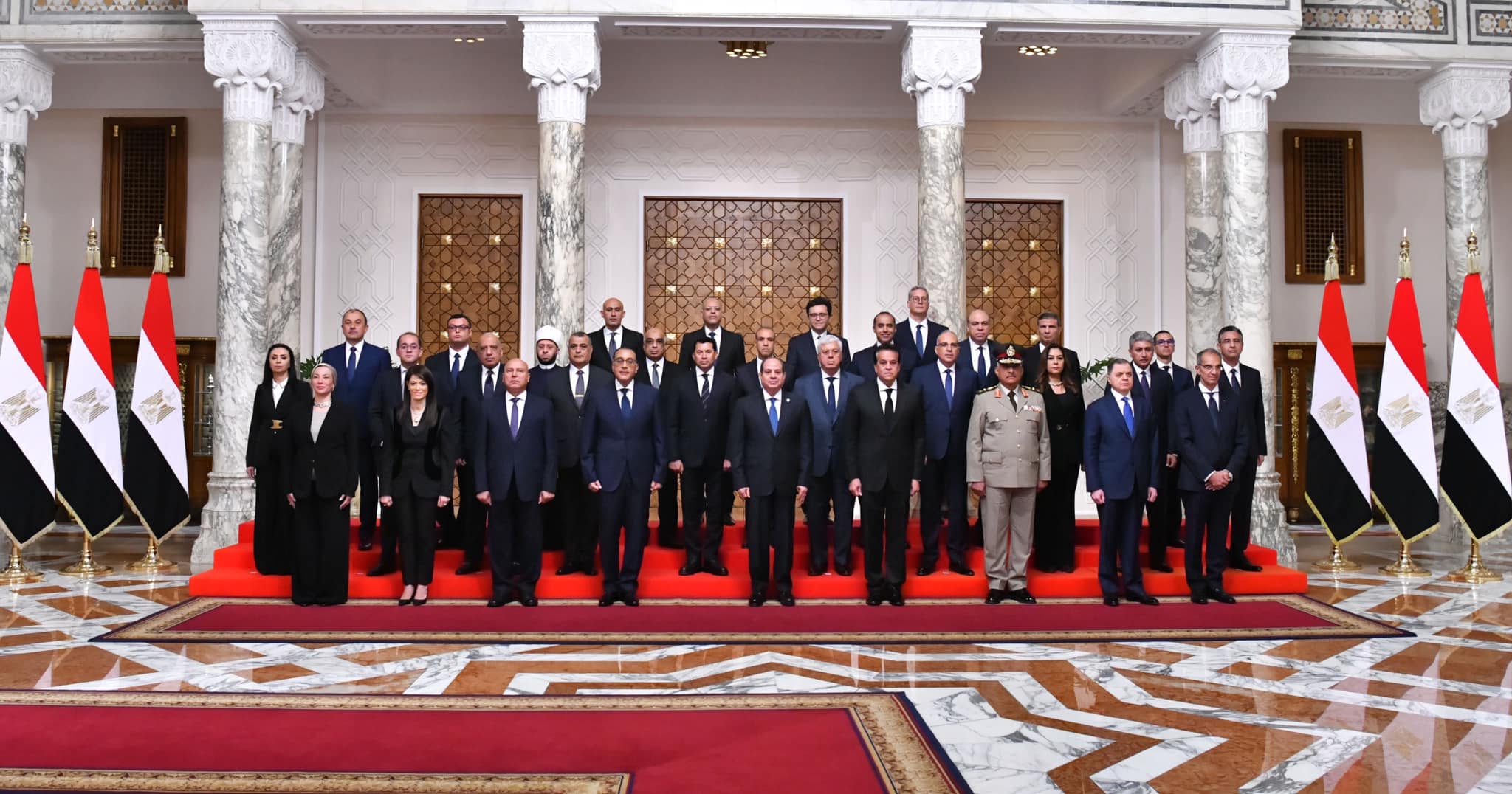
Who’s who in Madbuly’s new Cabinet?
A new government swore its oath of office on Wednesday before President Abdel Fattah al-Sisi. The new lineup, which includes fresh faces…
Sources on Cabinet reshuffle: Likely to affect supply, electricity, finance, foreign ministers
Mada Masr asked a number of politicians and public figures why a new government is being formed now.
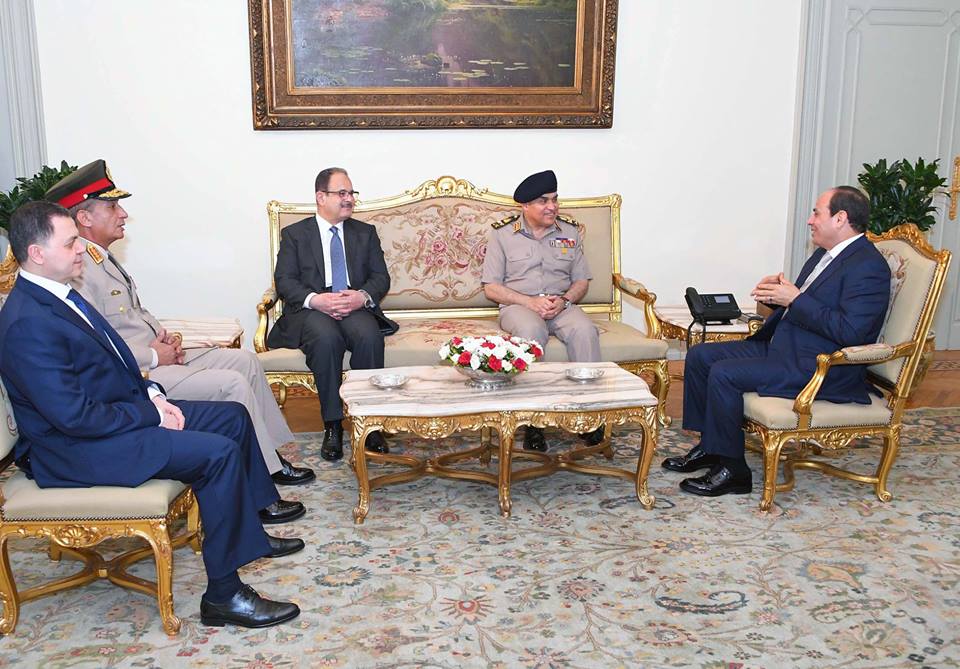
New defense and interior ministers sworn in, as Sisi forms his new Cabinet
New ministers of interior and defense were sworn in on Thursday June 14, the last day before Eid
Your support is the only way to ensure independent, progressive journalism survives.
You have a right to access accurate information, be stimulated by innovative and nuanced reporting, and be moved by compelling storytelling. Subscribe now to become part of the growing community of members who help us maintain our editorial independence.
Join us