
The Sunday macro-economy rundown: Oct 27
Arab support continues
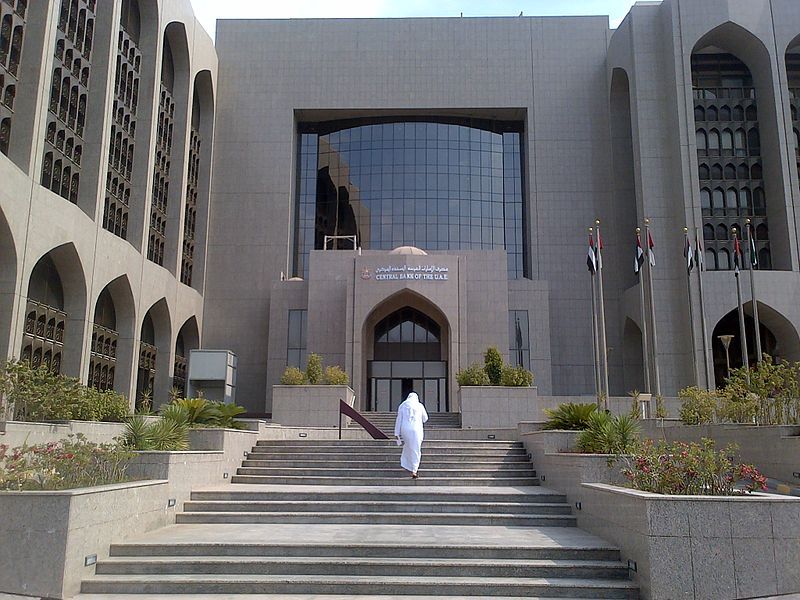
The United Arab Emirates signed an agreement with Egypt worth US$4.9 billion announced on October 27, pointing to the UAE’s commitment to support Egypt in overcoming its current challenges.
The deal will fund part of the country’s growth program with the objective of improving the living conditions and development of the Egyptian people, branching out into several sectors including food, healthcare and housing.
A grant of $1 billion, transferred to Egypt in July, and an additional allocation of $1 billion to provide Egypt with part of its fuel requirements.
$8.7 billion of the $12 billion received as a Gulf financial aid package, have been allocated to the state budget by interim President Adly Mansour. The finance minister said LE9.6 billion would be spent on subsidies, grants and wages, while LE20.1 billion would be allocated to government investments for fiscal year 2014.
Investments and investor climate
UAE investments topped the list of Arab investors in Egypt during the fourth quarter of fiscal year 2013 at $226 million, according to the Central Bank. Saudi investments, meanwhile, totaled $62 million, as the second largest Arab investor, followed by Bahraini’s at $42 million and Qataris at $8.8 million.
Total foreign direct investment dropped in the fiscal year 2013 by 25% to stand at $3 billion. Investment inflows stood at $9.6 billion – with the United Kingdom alone injecting a third of that amount – while outflows reached $6.6 billion.
Planning Minister Ashraf al-Arabi announced a conference to be held in December to discuss laws that help improve the investment climate and boost the economy. He also revealed that a long-term strategy is currently being drafted in collaboration with civil society, to address major developmental issues in Egypt. The Egypt 2020/2050 strategy will tackle important projects such as the development of the Sinai Peninsula and Upper Egypt, as well as the Suez Canal.
Minister of Communication Maged Othman added to local press that Arabi met with economic experts to discuss several scenarios for the future of Egypt, and the possibility of implementing short, medium and long-term plans. He stressed that the current administration does not function as an interim government, but rather one that lays out the foundation for the future.
International oil companies
Sherif Ismail, minister of petroleum, denied in a press statement on October 22 reports that international oil companies operating in Egypt would halt their production due to the government’s delay in repaying debts.
Egypt has been delaying payments to oil drilling companies as it struggles with dwindling currency reserves, rising food bills and dropping tourism revenues since the 2011 revolution. The debt problem is directly linked to the energy crisis that Egypt has seen, as IOCs were forced to export their share of crude oil directly to third parties rather than sell it to the Egyptian General Petroleum Corporation and risk further debt exposure.
Ismail said IOCs confirmed their commitment to the plans and programs of research, exploration and development of oil fields in Egypt. The Cabinet is expected to sign 21 new agreements with oil companies with a minimum investment of US$700 million in the coming year.
Economic snippets
- EGX30, the main stock market indicator, showed a steady rise over last week with a growth of 3.08% to stand at 6,171 by the end of Thursday’s trading session. Market capitalization increased by LE6 billion throughout the week, to reach LE399.2 billion. The index’s yield to date stands at 13.4%.
- Treasury bills (maturity of 91, 182, 273 and 364 days) and government bonds (maturity of 3, 5, 7 and 10 years) reaped LE183.2 billion during the first quarter of the fiscal year 2013. Treasury bills in foreign currency with a maturity of 364 days amounted to 5.16 billion euros during the same period.
- Egypt’s gross domestic debt rose by almost 24 percent in the fiscal year 2013, amounting to $218 billion, according to the Central Bank. The figure represents 87.5% of Gross Domestic Product for the same year. External debt stood at $43 billion, growing by 25% from the fiscal year 2012.
- Egypt’s total budget deficit reached LE240 billion in fiscal year 2013, representing 14% of GDP. Finance Minister, Ahmed Galal, said the government intends to bring government deficit down to 10% of GDP in fiscal year 2014.

Sherif Zaazaa
Sherif is a jack-of-all-trades. During any given week, his energies oscillate wildly between independent publishing, music and intensive research in the fields of economics, oil and gas, and Eastern philosophy…
أخبار ذات صلة
Iran war threatens fragile Egyptian economy, again
While people in Iran shelter from United States and Israeli strikes across the country, and Gulf nations absorb the shock of retaliatory…
Hot money inflows boost Egyptian pound against the dollar
The Egyptian pound has appreciated against the United States dollar over recent days, reaching its highest exchange value since the beginning of…
Market sources: Egyptian pound fluctuates after foreign investors pull at least $2 bn from Egypt’s debt market
Amid global market turbulence caused by United States President Donald Trump’s new tariff regime, foreign investors withdrew between US$2 billion and $2.25…
First ever transfer fees announced by state-owned Instapay
Transfers made through the app will incur a 0.1 percent fee, with a maximum cap of LE20 in fees per
Your support is the only way to ensure independent, progressive journalism survives.
You have a right to access accurate information, be stimulated by innovative and nuanced reporting, and be moved by compelling storytelling. Subscribe now to become part of the growing community of members who help us maintain our editorial independence.
Join us