
First ever transfer fees announced by state-owned Instapay
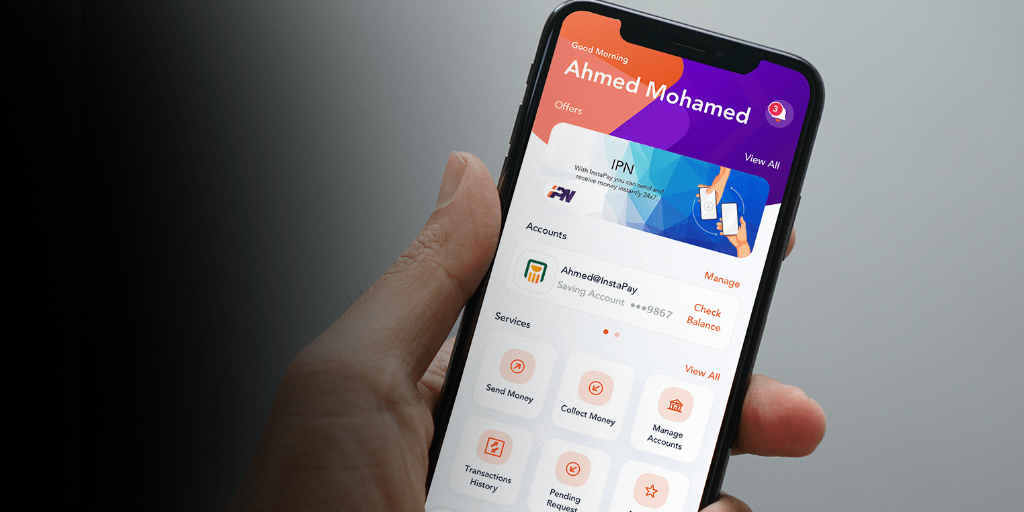
InstaPay, Egypt’s only instant payments app, will introduce transaction fees for the first time starting April 1, the company announced on Tuesday.
Transfers made through the app will incur a 0.1 percent fee, with a minimum fee of LE0.5 and a maximum of LE20. Users will also be charged LE0.5 per request for balance inquiries and account statements once they have used the ten free requests per month the company will continue to provide.
Launched in March 2022, InstaPay is Egypt’s first and only Instant Payments Network (IPS) service. For the past three years, it has operated free of charge.
In 2024, the platform recorded over 1.5 billion transactions worth a combined LE2.9 trillion, an almost 300 percent increase compared to the previous year.
InstaPay is owned by Egyptian Banks Company (EBC), a state-owned entity established in the mid-1990s to develop Egypt’s digital payments infrastructure. EBC has developed several services, including mobile wallet transfers and the Meeza payment card system which has supported the digitization of food subsidy and pension payments.
The introduction of fees is expected to move InstaPay toward profitability after years of investment during which the company offered its services for free, financial analyst Hesham Hamdy told Mada Masr.
Hamdy said the shift could also pave the way for a move toward the company’s privatization in the future, whether by stock market listing or to an investor. He estimated that Instapay could be worth up to US$1 billion.
Egypt’s government designed a state privatization program in 2018 in line with the International Monetary Fund’s recommended reforms, which included Egypt undertaking structural economic adjustments like minimizing the state’s footprint in the economy.
The fintech company eFinance, a state company that prevailed in the digital tax payments environment, took a similar trajectory to that which Hamdy pictures for Instapay.
eFinance, Egypt’s state-controlled digital payments firm, initially owned by a number of state or state-adjacent shareholders, undertook a public offering in 2021.
Considering potential routes forward, a source in the fintech industry said that one option is for Instapay to transition to a Software-as-a-Service model. This would allow banks to integrate InstaPay’s instant payment technology into their own applications for a fee, enabling real-time transactions to customers.
Currently, InstaPay remains the sole IPN service provider in Egypt. Most banks still rely on the Automated Clearing House (ACH) system for transfers via their mobile apps. Though a lower-cost alternative, ACH is slower and only operates during official banking hours.
Over the past three years, the CBE has doubled transfer limits on InstaPay, raising the cap to LE400,000 per month and LE120,000 per day. As transaction volumes continue to rise, so does the need for further investment to expand the app’s capacity, the fintech source noted. However, no official figures have been released on the total investment made in the platform to date.
أخبار ذات صلة

Infographic: What are the things you look for in a school?
What do parents from different income brackets across the country value in a school?

New sukuk regulations aim to grow Islamic finance in Egypt
"Egypt's history with Islamic finance dates back decades before Morsi and the Brotherhood, and plans to expand its scope locally are long overdue."

Nielsen: Consumer confidence up in Egypt
Egypt gained five points on global information firm Nielsen’s fourth quarter consumer confidence index, closing 2014 with a score of 90. Scores…

Sources: Despite EGX listings, govt unlikely to launch offerings in current economic conditions
The Cabinet announced on Tuesday evening that 10 state-owned companies had been temporarily listed on the Egyptian Exchange, one of several measures…
Your support is the only way to ensure independent, progressive journalism survives.
You have a right to access accurate information, be stimulated by innovative and nuanced reporting, and be moved by compelling storytelling. Subscribe now to become part of the growing community of members who help us maintain our editorial independence.
Join us