
Students strike at STEM boarding schools as teacher shortage, poor living conditions disrupt study
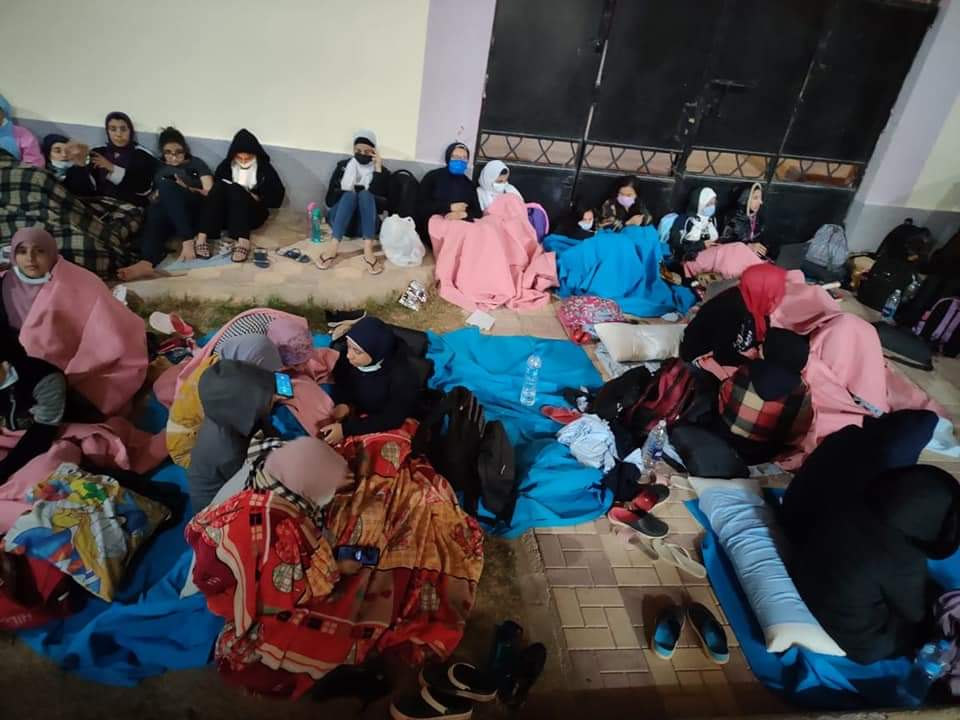
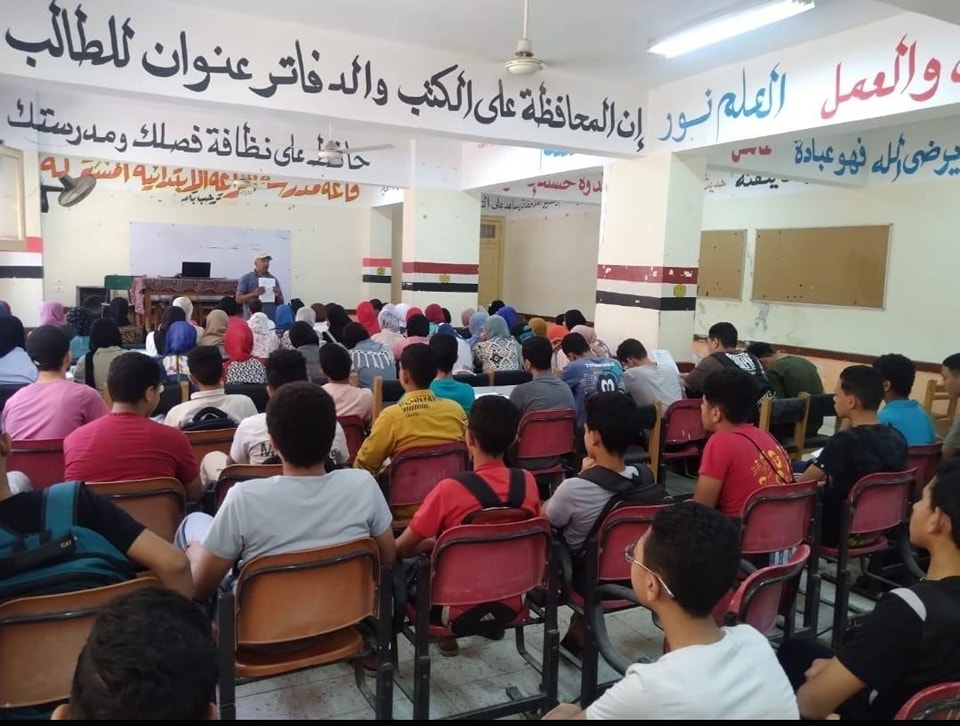
Almost a month after the academic year began on October 9, students at a science, technology, engineering and mathematics high school in Sohag for students classified as outstanding still have not begun their classes.
Yasmine, one of the students at the girls STEM school in Sohag, told Mada Masr that the students met with a delegation from the Education Ministry on Wednesday and agreed to suspend a sit-in that all 86 students have held for the past two days against mismanagement, teacher shortages and the poor living conditions that the students have endured since the term began.
Similar issues have cropped up at STEM schools in Fayoum and Minya, some of 19 selective schools across the country that offer advanced STEM curricula and superior facilities to students identified as “outstanding.” An initial five schools were launched with support from a USAID program starting in 2011, with the Education Ministry expanding the program in 2015.
Issues at the STEM schools mirror similar problems that have disrupted study across the country since October, with teacher, classroom and resource shortages, and confusion around timetables reported across the board.
When the school year started on October 9, said Yasmine, there were only three teachers for the entire school, while no school management staff were present on site. “Second-year students took the initiative,” said Yasmine, introducing first years to the school system and providing them with basic information on what the school was like and how to navigate it.
The students submitted several complaints to the school’s board of trustees as well as to the Education Ministry — but to no avail. Students decided to take action, refusing to attend the line-up at the beginning of the day.
The head of the school's board of trustees pledged to hire new teachers within two weeks, but “after the two-week deadline expired, he asked for two more weeks,” Yasmin said. “Finally, on Sunday, he told us that new teachers have signed their contracts and would begin on Monday. But they never showed up,” prompting the students to begin their sit-in. One of the few teachers present told them to stop their protest and go to class, warning them that this could be escalated to “state security,” said Yasmin.
Aside from the teacher shortage, the school also lacked appropriate living quarters. The Sohag school, located on the site of what was formerly an experimental school, was converted and opened this year. Old classrooms were turned into dormitories, with a few beds and an iron wardrobe allocated to each room, and a sheet used to divide the space allocated to each student. Only two restrooms, with six stalls apiece, were available to serve all 86 of the students.
On Wednesday, Yasmin told Mada Masr that a delegation from the Education Ministry including the head of the STEM schools unit came to Sohag to listen to the students' complaints. “They brought some teachers and a school principal,” said Yasmin, “and tomorrow we will attend class and find out how many teachers there are,” adding that the pupils had suspended their sit-in and returned to their rooms.
The mismanagement appears to be a nationwide issue, according to STEM school students in Minya and Fayoum who spoke to Mada Masr on condition of anonymity. One student in a Fayoum school, where 106 male students are housed on one floor of the school’s buildings, told Mada Masr that they have only had temporary teachers since the school year began who do not turn up on a regular basis and teach just one or two classes per week. “There is no internet and no laboratories,” the student said.
According to the Fayoum student, parents complained from the first week about the poor situation at the school. An official from the STEM schools unit visited the school and submitted a note, but nothing changed. When the Fayoum governor visited the school two weeks ago, the student said, students were out on a field trip to a water desalination plant and were unable to address their complaints to the governor.
The student said that he and some of his classmates organized a similar protest sit-in on Monday to that held at the Sohag girls’ school, raising banners demanding new teachers and complaining about mismanagement. Instead of answering their requests, the administration “frightened” them, the student said, and asked them to go to class.
Hassan Gabr, head of the Independent Teachers Syndicate, told Mada Masr that the issue at the STEM schools is symptomatic of the broader teacher shortage across Egypt’s education system.
Teachers are expected to work double shifts everyday, said Gabr, meaning as many as 18-24 classes per week. “They are assigned extra classes to fill-in and paid just LE10 per extra class.” Pointing to the new “volunteering” initiative that the Education Ministry launched this year, Gabr said that few applied and many of those that did haven’t showed up to teach the classes.
The initiative offers teachers who sign up a per-class fee up to LE20. With a maximum number of 24 available classes per week for 11 months per year at most, “so as not to burden the ministry’s budget,” the total possible wage through the new system would be LE1,920 per month, below the public sector minimum wage of LE2,000.
Around 250,000 more teachers are needed, according to Gabr, who said that given that many schools are also short on books and equipment, many are allowing students not to attend.
A 17-year government freeze on new permanent contracts for teachers in the public sector, combined with thousands of teachers retiring each year greater, has led to an ever-widening shortfall in teachers. Since September 2020, there has been a total ban on new hires across all government sectors in response to the economic fallout of the pandemic.
Though Mada Masr sought comment from Education Ministry spokesperson Mahmoud Hassouna about the situation in Sohag, he said he was not aware of it, adding only that the teacher shortage is a nationwide issue that the ministry is working to address.
Hassouna suggested Mada Masr speak with Reda Hegazy, a deputy minister and the head of the ministry's public education department, who did not respond to a request for comment.
أخبار ذات صلة
Victims’ lawyer: Military Prosecution to take over school assault investigation under ‘presidential directive’
“On presidential directives,” the Military Prosecution has taken over the ongoing investigation into a series of sexual assaults perpetrated against children at…
New Education Ministry hiring competition sidelines thousands of part-time teachers
Alongside Amin are thousands of per-class teachers who are still studying to receive their teaching
Govt amendments to education law approved as critics warn changes could worsen inequality
Critics have repeatedly flagged the amendments as a gateway to worsening existing inequalities in th
Income slashed for thousands of teachers after changes to high school curriculum
When the education minister announced that several subjects would become non-essential to school curriculums last month, Ali Abdou al-Sheikh, a teacher of…
Your support is the only way to ensure independent, progressive journalism survives.
You have a right to access accurate information, be stimulated by innovative and nuanced reporting, and be moved by compelling storytelling. Subscribe now to become part of the growing community of members who help us maintain our editorial independence.
Join us