
Sisi highlights Egypt’s role in regulating migration at Budapest conference
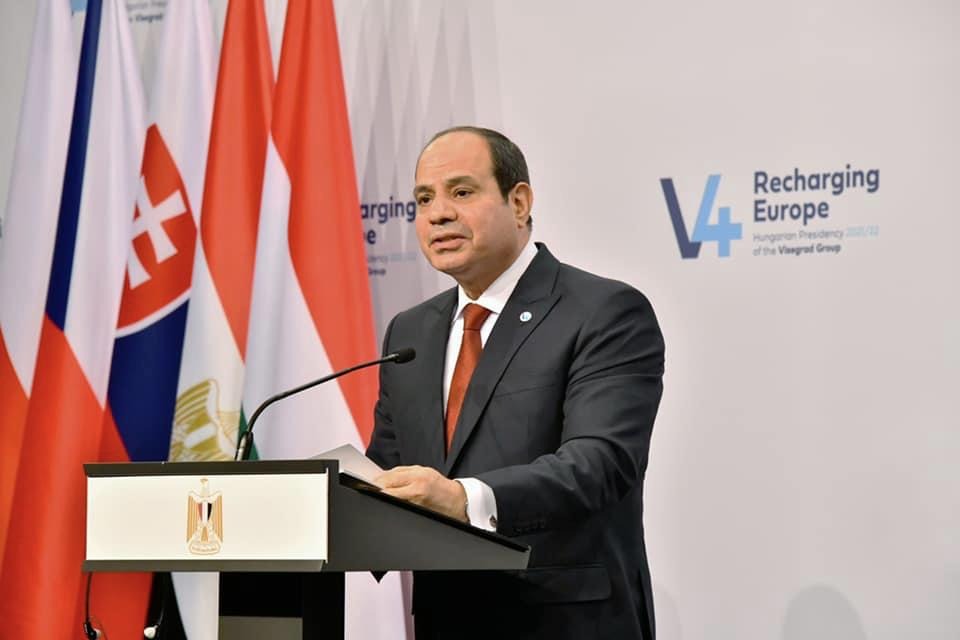
Egypt’s role in regulating migration, an issue currently high on the agenda of many of European Union member states, was the central thrust of speeches delivered by the Egyptian president and foreign minister during a well-publicized visit this week to Budapest for a summit between Egypt and the Visegrád Group, which includes Hungary, the Czech Republic, Poland and Slovakia.
A statement by the president’s office highlighted Egypt’s intention to develop its cooperation with the Visegrád Group, since it includes “friendly countries that share similar thoughts and priorities with Egypt.”
Egypt’s visit to Budapest comes just a week after all four of the Visegrad countries were among 12 EU member states that sent a joint letter to the EU Commission that called for the bloc’s border policy to be tightened, mentioning Afghanistan as a particular challenge, in addition to “illegal crossings” of the bloc’s land and sea borders more broadly.
In his speech, President Abdel Fattah al-Sisi emphasized that effectively confronting irregular migration requires addressing its roots, pointing to terrorism and the destabilization and economic deterioration resulting from conflicts in countries like Libya, Syria, Iraq and Yemen, and describing Egypt’s efforts to combat both terrorism and the irregular migration that stems from it as “more successful than others.”
He also repeated consistent talking points on Egypt’s role in regulating migration, stating that not a single migrant boat has left its shores since 2016, and that a total of 6 million migrants currently reside in the country, who he said have come to Egypt from Africa and from “the countries that have problems.”
Egypt’s registered refugee population is under 300,000, according to the United Nations Refugee Agency, though the total migrant population was estimated at 5 million in 2019, according to the International Organization for Migration.
Egypt’s Foreign Minister Sameh Shoukry, meanwhile, implied during a Monday night press conference in Budapest that the country requires additional funding to control migration, saying “I envisage the support Egypt gets [with regard to irregular migration] as very humble in comparison with the responsibility conferred upon it.”
Shoukry’s comment was followed by assurances regarding Egypt’s commitment to continue its efforts at improving conditions for migrants and addressing the economic conditions that prompt migration.
Egypt received millions of euros from the bloc funding for “migration management” in the wake of a major 2016 incident in which 200 refugees were killed after a boat carrying 400 people capsized off the northwestern city of Rashid. Egypt has consistently claimed that not a single boat carrying migrants has left Egyptian shores since then.
In 2021, Egypt received 6 million euros in humanitarian aid for migrants from EU agencies, while since 2017 at least 60 million euros has been granted to strengthen Egypt’s “migration management” capacity.
Egypt has also been involved in discussions with key players in Europe for some time with regards to its taking on a larger role in preventing migration from Africa.
However, a substantial number of Egyptian nationals have instead pursued the Central Mediterranean route, departing from the coasts of Libya and Tunisia toward Italy. In one incident in August, a boat bound for Italy carrying nearly 70 Egyptian migrants capsized, killing at least 18 people, after leaving from an area near the coastal city of Zawiya.
Irregular migration across the Central Mediterranean route has also leaped over the past year. According to a September release from FRONTEX, the European border agency, 30,800 irregular migrants have entered Europe via the route this year, a 96 percent increase from 2020. At least 1,178 migrants have died so far along the central route in 2021 alone, according to the IOM. FRONTEX recorded Egyptian nationals as among the top three nationalities entering the EU this year.
Libya, meanwhile, has received 455 million euros from the EU since 2015, largely channeled through UN agencies to Libya’s coast guards and toward efforts to reinforce its southern border and to improve conditions for migrants.
However, funds have been consistently diverted to networks of militiamen and traffickers who exploit migrants, according to a 2019 Associated Press investigation, while an AP report this week documented the torture, sexual violence and extortion at the hands of guards in detention centers in Libya.
“Migrants are detained for indefinite periods without an opportunity to have the legality of their detention reviewed, and the only practical means of escape is by paying large sums of money to the guards or engaging in forced labor or sexual favors inside or outside the detention,” a recent report by the UN stated.
While in Budapest, Sisi also conducted individual talks followed by expanded discussions with the Hungarian President János Áder, who praised the successful development process Egypt is undergoing under the leadership of President Abdel Fattah al-Sisi and pledged his country’s full support to Egypt’s development efforts.
Presidential spokesperson Bassam Rady said in a statement that the talks also covered various regional and international issues of mutual interest, especially ones related to developments in the Libyan crisis, the situation in Afghanistan and mutual efforts to combat the COVID-19 pandemic.

أخبار ذات صلة

‘Recycling’ the migration books: How Egypt manipulates smuggler arrests for EU money
“Just bear with it for a while, the European Union is causing trouble. You’ll be released”
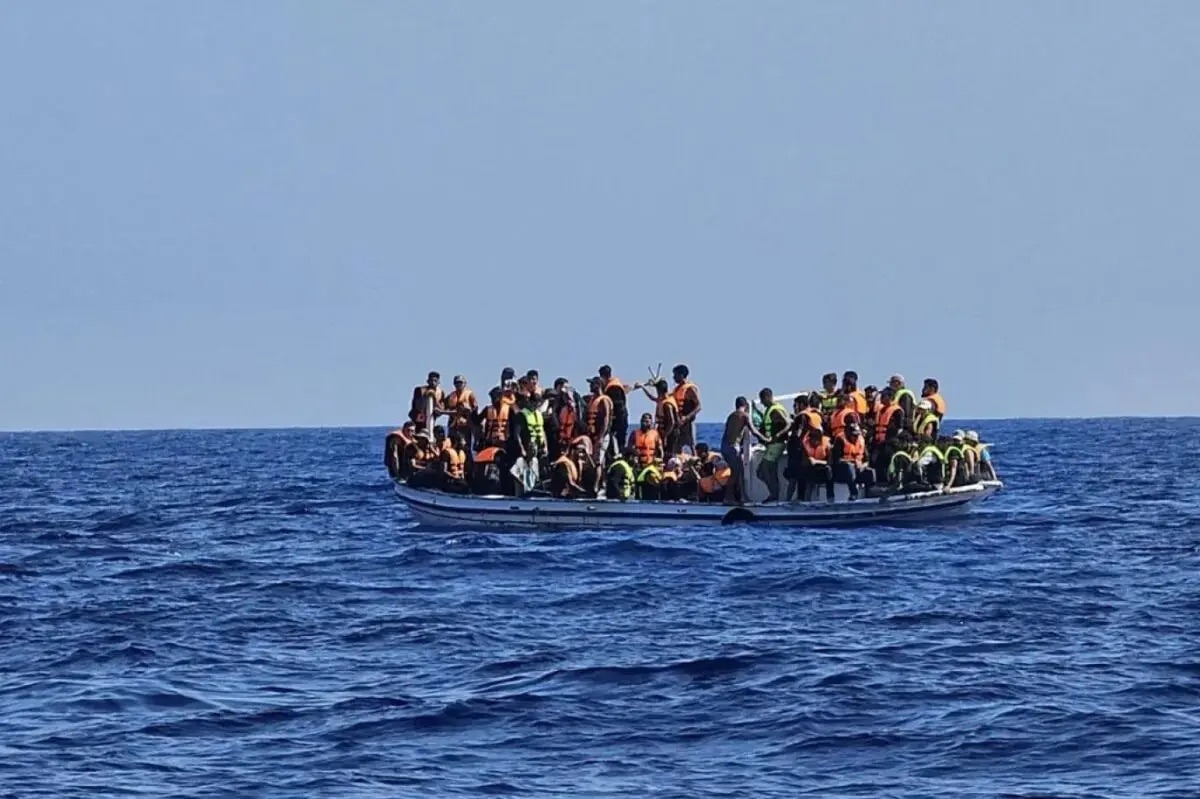
12 Egyptians missing after boat carrying undocumented migrants capsizes off Libyan coast
A boat carrying 13 passengers capsized at sea on Monday evening nearly 60 kilometers from Tobruk, a city on Libya’s eastern Mediterranean…
Egypt triples residency renewal fees for foreign nationals
The costs for renewing all kinds of residencies for foreign nationals staying in Egypt have more than tripled following a government decision…
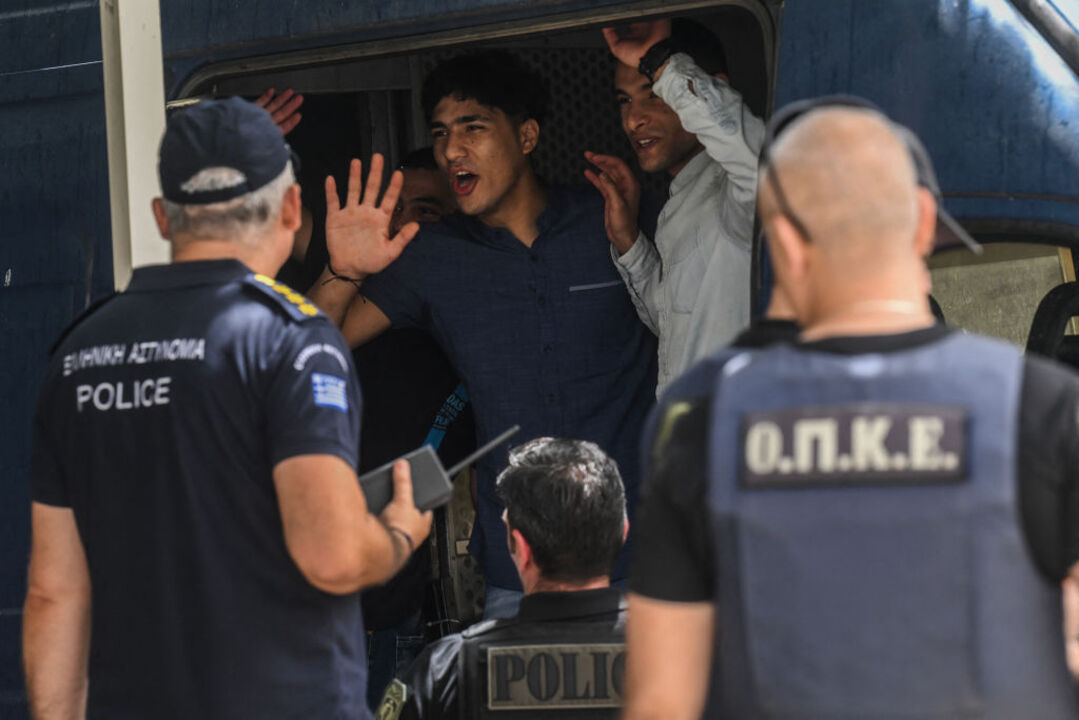
Nine Egyptians acquitted on illegal trafficking charges still facing detention in Greece
Nine Egyptian nationals who survived one of the deadliest shipwrecks ever to take place in the Mediterranean continue to be detained by…
Your support is the only way to ensure independent, progressive journalism survives.
You have a right to access accurate information, be stimulated by innovative and nuanced reporting, and be moved by compelling storytelling. Subscribe now to become part of the growing community of members who help us maintain our editorial independence.
Join us