
Egypt triples residency renewal fees for foreign nationals

The costs for renewing all kinds of residencies for foreign nationals staying in Egypt have more than tripled following a government decision that was implemented on September 21.
The new increases were posted inside the Passports and Immigration General Administration in Abbaseya, said lawyer Ahmed Maawad, who specializes in foreign national and asylum cases. Maawad told Mada Masr that the fee hikes cover permanent residencies, as well as temporary residencies, including tourism, education and work residencies.
A source working at the United Nations Refugee Agency (UNHCR) confirmed to Mada Masr that immigration authorities had tripled the residency fees for foreign nationals from around US$50 to around $150, and that the new increases do not apply to refugees and asylum seekers.
Government officials have repeatedly stated that Egypt is currently home to around nine million “guests,” its way of referring to foreign nationals from around 133 countries, of whom a majority are long-term residents in Egypt. Of these, only around 672,000 people from 62 countries are currently registered officially as refugees in Egypt with the UN.
Yet many foreign nationals came to Egypt to escape conflict or unrest in their home countries, despite not holding official refugee status.
Instead, they hold short-term residencies that they have to renew regularly. This means they are heavily impacted by the new increases, as several foreign nationals explained to Mada Masr.

Waleed Hashed, a Yemeni living in Cairo, explained to Mada Masr that he went to the office in Abbaseya in September to renew his tourist residency as he does every six months to find that the fee has increased from less than $40 to over $145. He posted a photo on his social media showing the new price.
Iman Rageh, the media spokesperson for the Yemeni community in Egypt, told Mada Masr that some members of the community were told by immigration office employees that residency renewal fees would be increased by the end of September.
The decision is made harder by the fact that residency fees must also be paid in US dollars, as Rageh explained. Prime Minister Mostafa Madbuly issued a decision in August 2023 that foreign nationals must acquire residencies after proving they paid the fees and any fines through a transfer of US dollars, or the equivalent in foreign currency, to Egyptian pounds from one of the approved banks or foreign exchange companies. It was the same decision that introduced a $1,000 settlement fine for undocumented foreign nationals.
The decision came as the government implemented multiple schemes to boost foreign currency liquidity in the economy, as Egypt struggled with an economic crisis precipitated by a shortage of foreign currency revenues.
Rageh explained that some members of the Yemeni community who were previously undocumented or whose residencies have expired were prompted to go to Abbaseya following a government order for all foreign nationals to “legalize their status” by June 30.
They were told they have to pay $25 per person — including children under 16 and people aged over 50, who were formerly exempted from renewal fees — for every three months they’ve overstayed the duration of their entry stamp. “Some families paid up to LE80-90,000 after June 30,” she said.
While the spokesperson said she respects Egypt’s decisions and laws and its economic situation that may have led to the fee increase, she highlighted how families of multiple children would suffer from the massive hike, especially if the previous age exemptions are really canceled, as members of the community usually receive tourism residencies that they need to renew every six months or, if they can register their children in Egyptian schools, education residencies to be renewed every year.
Yemenis who enter Egypt for the first time must pay a security approval fee that varies according to which country they enter from, explained Rageh, noting that the fee for Yemenis not entering from Yemen or certain countries like Saudi Arabia or the UAE has recently increased from $270 to $490.
Sudanese nationals, whose numbers in Egypt have increased significantly over the past year amid the war in Sudan, are exempted from the residency fee hike, though they still have to pay around $25 to renew their documents, according to the UNHCR source. A Sudanese teacher residing in Egypt confirmed to Mada Masr that Sudanese families staying on education residencies were able to complete the renewals by paying only a $25 fee.
Palestinians from Gaza who entered Egypt since the Israeli war on the strip began on October 7, which the Palestinian embassy in Cairo estimated in May to be about 100,000, will also not have to pay the fees. Although, in their case, it is because they do not hold residencies — an exception which commentators have interpreted as due to Egypt’s stance against the permanent displacement of Palestinians to Egypt.
One such case, Om Mohamed, who entered Egypt with her young daughter in February, explained that she needs to renew the entry stamp on her passport every 45 days for free, but once had to pay a $25 fine because she was over 10 days late to the renewal date. She also noted that the cost for renewing her passport in Egypt has increased recently from $120 to $165.
Palestinians residing in Egypt since 1948 who hold special refugee passports are also affected by the decision, Kamal al-Khatib, a leading member of the Palestinian community in North Sinai told Mada Masr.
These Palestinians hold either a long-term residency that lasts for 10 years, or temporary residencies that can last for one, three or five years depending on the situation.
Khatib said he was informed directly by the passports and immigration directorate in North Sinai of the new increases as well as the $100 fine for missing the renewal date. “The residency renewal fee for a year is now for $145, three years for $370, and five years for $600. It used to be $40, $60 and $80,” he said.
“The median for most families is five members. $600 for each, that’s $3000. That’s LE150,000.”
أخبار ذات صلة
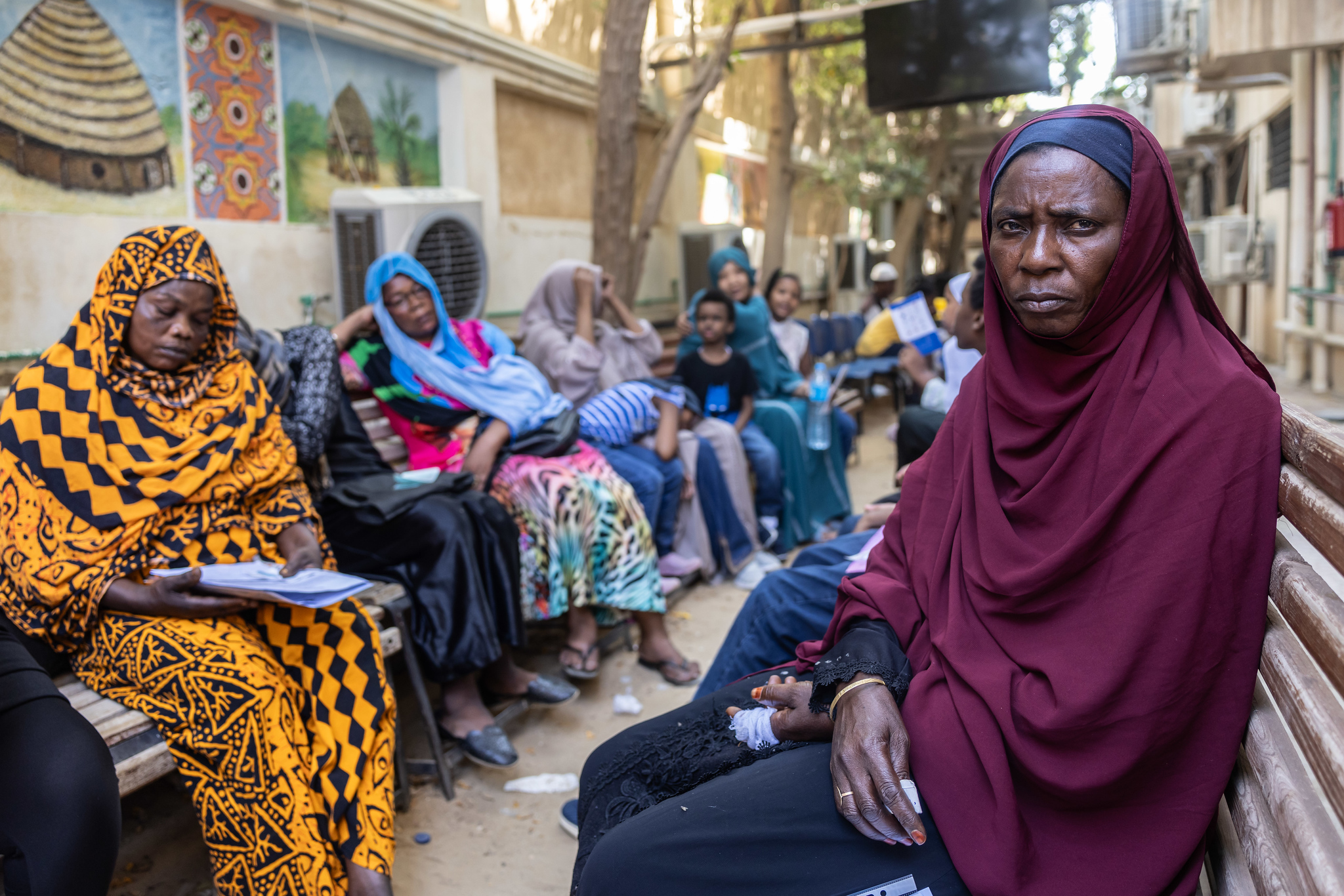
Govt says it’s revising expenditure on hosting ‘guests’ as anti-migration sentiment rises
Last week, government officials revising policy on migration into Egypt took stock of the number of “guests” that currently reside in the country and estimated their impact on annual state…

Times, SIS dispute events surrounding journalist’s expulsion from Egypt
The Times and the SIS have released a series of statements on the expulsion of Bel Trew from Egypt
US peace activist detained at airport
An American activist famous for her work with the anti-war advocacy group Code Pink tweeted Tuesday morning that she had been detained at Cairo…
US citizen found dead in Ismailia police station
A US citizen was found hanged in a police station cell in the Suez Canal city of Ismailia on Sunday, security sources told news wire AFP. He…
Your support is the only way to ensure independent, progressive journalism survives.
You have a right to access accurate information, be stimulated by innovative and nuanced reporting, and be moved by compelling storytelling. Subscribe now to become part of the growing community of members who help us maintain our editorial independence.
Join us