
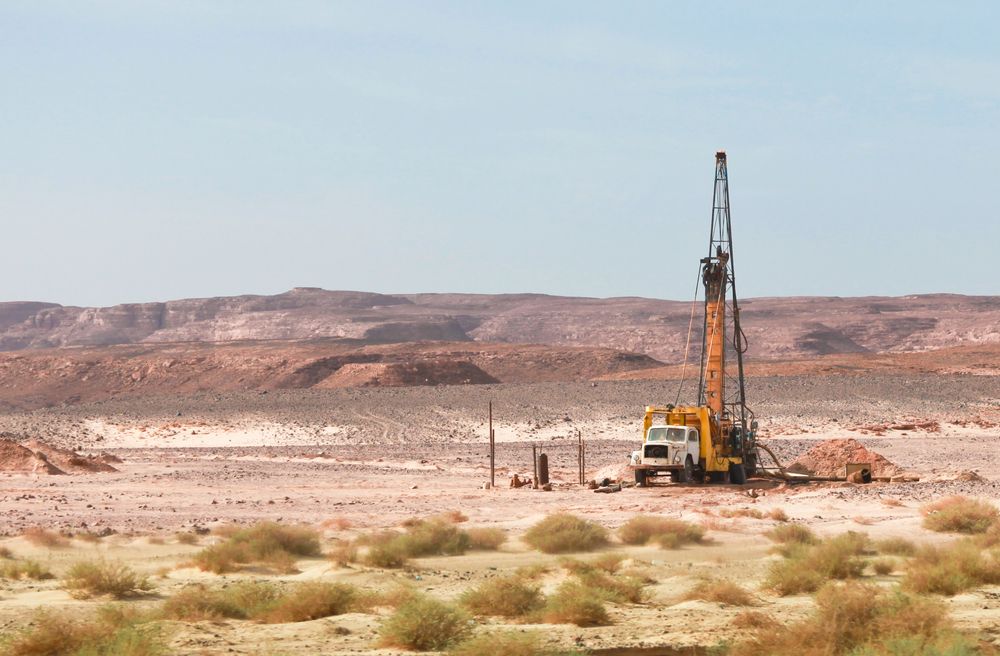
Shell Egypt and the Apache Corporation signed Egypt’s first contract for the production of shale gas in Egypt, the oil ministry announced on Wednesday.
The production contract follows years of exploration and feasibility testing by foreign oil companies interested in extracting Egypt's shale gas.
The project, in the Abuel Garadeek region of the Western Desert, involves drilling three horizontal wells with initial investments of US$30-US$40 million from Shell and Apache. Gas will be extracted using a technique known as hydraulic fracturing, or fracking, in which a high-pressure fluid is injected into a well to create cracks in deep rock formations and release natural gas inside.
Hydraulic fracturing has proven controversial in other countries due to what opponents characterize as health and environmental risks. The technique requires vast amounts of water—between 2 and 4 million gallons per well in the United States. The water is mixed with a variety of chemicals to help release gas, some of which are known to be harmful to mammals. Industry claims the additives are no more dangerous than food-grade chemicals, but keep their exact mixtures a trade secret.
If fracking fluids are handled improperly, they can lead to surface water contamination, or seep into ground water if they escape the rock formation being fractured. Protests have also been staged due to air pollution from methane gas, sulfur dioxide and other potentially dangerous emissions.
However, the technique allows gas to be extracted economically from reservoirs that are not easily accessible by conventional drilling techniques. The technique has fueled a gas and oil boom in North America, opening the way for the United States to push past Russia and Saudi Arabia as the world’s number one oil producer.
The United States energy administration estimates that Egypt has up to 100 trillion cubic feet of technically recoverable shale gas reserves. By contrast, the country is believed to have just 77 trillion cubic feet of conventional gas.
Egypt, whose economic recovery has been hampered by fuel shortages, is eager to tap into these reserves. Petroleum Minister Sherif Ismail noted that the deal signed today will “open up new horizons” for producing unconventional gas in the Western Desert region.
Egypt, which currently has around 663 cubic meters of water per capita, falls below the United Nations threshold for water poverty, which is set at 1,000 cubic meters per person.
Europe and North America have also seen protests over the use of public land for hydraulic fracturing, and concerns that the process is triggering an increase in earthquakes.
Egypt has also seen controversies around fracking. Environmentalists claim that fracking tests near Aswan were responsible for flooding in Faras, a charge that DanaGas, the operator of the well in question denied.
*This article has been updated after reader comments to reflect the controversy around fracking in Faras since 2009.

أخبار ذات صلة
Govt weighs higher fertilizer export quota to offset rising fuel costs amid Iran war
The government is holding consultations to increase the price of gas it supplies to fertilizer manufacturers — the single largest energy-consuming industry in…
How is the government preparing for the summer energy deficit?
Just before daily temperatures in Cairo peaked 30 °C in the middle of winter, the president met with the electricity and renewable…

Israel finally approves Egypt’s gas deal after nail-biting battle
In an unexpected move, Israeli Prime Minister Benjamin Netanyahu announced on Wednesday Israel’s final approval of a controversial gas export deal with Egypt, months after Israeli hesitation following the initial…
Egypt to boost fertilizer exports to offset planned slash to industrial energy subsidies
The government will raise natural gas prices for industrial use in Egypt in the coming weeks by around US$1-2 per million British…
Your support is the only way to ensure independent, progressive journalism survives.
You have a right to access accurate information, be stimulated by innovative and nuanced reporting, and be moved by compelling storytelling. Subscribe now to become part of the growing community of members who help us maintain our editorial independence.
Join us