
Egypt to boost fertilizer exports to offset planned slash to industrial energy subsidies
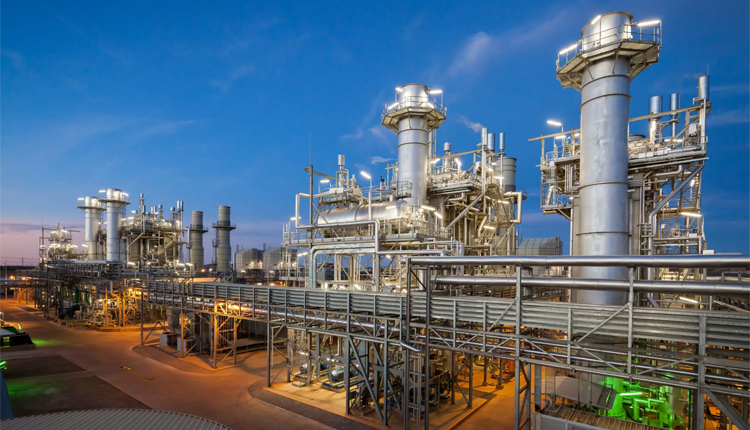
The government will raise natural gas prices for industrial use in Egypt in the coming weeks by around US$1-2 per million British thermal units, two informed sources told Mada Masr.
The hike comes as part of longstanding plans to cut government spending on energy subsidies.
A former Petroleum Ministry official and a government source in the public business sector said that talks were held on Sunday ahead of the hike with industry representatives to establish an agreement that would limit the decision’s fiscal impact on Egypt’s sizable heavy industrial sector, which includes energy intensive manufacturers of petrochemicals, fertilizers and metals.
To balance the impact of the increase, officials, headed by Deputy Prime Minister for Industrial Development Kamel al-Wazir, have agreed to lessen the export cap on fertilizer factories, the two sources said.
Fertilizer companies, previously limited to exporting 45 percent of their production, will now be allowed to export up to 55 percent of production, reducing the quota earmarked for mandatory government procurement.
Per the new agreement, the government will also raise its procurement price for fertilizers supplied to farmers from LE4,500 to LE6,000 per ton, and, according to the public business sector source, has pledged to maintain steady gas supplies to factories.
As Egypt’s energy balance has dropped into the red in recent years, industrial consumers have been the first to feel the pinch. Factories had to field several multi-day energy outages this year, prompting several companies to threaten to seek alternative fuel sources.
The most recent disruption came in June, when Egypt’s imports of Israeli gas were halted.
Increasing the export share and raising the government’s purchase price were longstanding demands of the fertilizer industry, a source in the Cabinet told Mada Masr.
Factories will be seeking to offset an additional cost of around $30 per ton of fertilizer resulting from a $1 rate hike, the Cabinet source said.
But the same source stressed that the hike was necessary given rising global prices. Egypt has had to substantially increase spending on natural gas in recent years, as domestic production of the fuel — the largest share of the national energy mix — plummeted in 2023, forcing the government to rush to secure emergency liquefied natural gas (LNG) imports.
Four sources in the fertilizer and petrochemicals sector told Mada Masr that the higher export share would help factories offset the added cost of more expensive gas, which most companies pay for in dollars.
Exceptions include the Misr Fertilizers Production Company (MOPCO) and Helwan Fertilizers Company, which pay half their gas bills in Egyptian pounds, according to the former Petroleum Ministry official.
The fertilizer and petrochemicals industry is the largest consumer of natural gas in Egypt, accounting for 16 percent of domestic consumption. Gas serves both as a raw material and fuel, making up around 70 percent of production costs in the sector — the highest sectoral share, far above steel and cement.
Khaled Abul Makarem, head of the Chemicals and Fertilizers Export Council, told Mada Masr that negotiations are underway with the government to allow companies to pay dues in local currency.
How will the move affect the domestic economy?
The slash to government energy subsidies and boost to fertilizer export quotas will have a knock-on impact reverberating throughout Egypt’s economy.
Before the new agreement, 55 percent of factories’ fertilizer output was reserved for state procurement. The entire stock of fertilizers from the procurement program was officially allocated to agricultural cooperatives to ensure they had access to a stable supply of fertilizers at a fixed price. This translates the government subsidy on natural gas into a fertilizer subsidy.
A former deputy agriculture minister told Mada Masr that any deal reducing the share of fertilizers for the domestic market would inevitably harm small farmers, running counter to the government’s goal of expanding crop cultivation.
Sherif Fayyad, professor of agricultural economics at the Desert Research Center, said the timing of the decision is particularly bad, as fertilizer supplies through cooperatives will drop at the same time as farmers are preparing for winter planting.
Others argued that the government procurement plan was surplus to net domestic demand. When farmers’ demand was low, the business sector source explained, the surplus from the procurement quota was redirected for sale on the local free market. A former board member of the state-owned Egyptian Petrochemicals Holding Company was also in favor of the move. They told Mada Masr that Egypt produces around seven million tons of fertilizer annually while domestic consumption is only three million tons. More of the surplus, they argued, should be exported to offset higher production costs resulting from the gas price hike.
A 50-kilogram sack of fertilizer could sell for LE1,250 on the black market, compared to the LE255 subsidized price supplied to cooperatives, according to an agricultural engineer and fertilizer sales agent in Monufiya.
Regardless of whether the net demand is met, however, chronic seasonal shortages take place and have been exacerbated by repeated government cuts to natural gas supplies for factories over the past two years. As a result, the black market has become a primary source for farmers.
Fayyad argued that the government could better balance the need for dollar revenues from exports with the domestic market’s needs by adjusting export quotas seasonally in line with local demand.
Instead, Fayyad said, the government has clearly prioritized exports over domestic supply, setting off a chain reaction: farmers will turn to the more expensive open market, driving up crop prices and feeding inflation — especially in food, the single most significant expense for low-income households.
A former Egyptian General Petroleum Authority official likewise criticized the export boost, arguing that it effectively amounts to exporting natural gas amid a national scarcity in the key fuel’s supply. The source called instead for fertilizer production to be capped at the level of local demand.
Egypt’s fertilizer exports have surged over the past three years, reaching their highest dollar returns in a decade in 2023, with $2.2 billion in revenues amid a spike in global prices, according to the Central Bank of Egypt’s trade data.
Over the same period, however, Egypt’s domestic gas output has plunged, forcing the country to ramp up imports, particularly of liquefied natural gas, which costs around $15 per million British thermal units, adding billions to government spending.
But the export surge comes with increased investor interest — a key facet of Egypt’s strategy to reduce its economic dependence on volatile liquidity from the debt.
Saudi Arabia’s Public Investment Fund and Abu Dhabi’s sovereign wealth fund have jointly acquired stakes totaling up to 50 percent in two of Egypt’s largest state-owned fertilizer producers, Abu Qir Fertilizers and Chemicals Industries Company and MOPCO. On Sunday, the Saudi fund announced plans for further investments in the sector, which one financial analyst in a financial investment firm said are likely to come in the form of new acquisitions.
According to a recent state privatization review seen by Mada Masr, the government plans to maintain or expand investment in the fertilizer sector while creating more room for private-sector participation.
أخبار ذات صلة

Energy subsidies down, export subsidies up in new budget draft
The government will be implementing sweeping cuts to spending on petroleum subsidies and prioritizing export spending in the upcoming fiscal year's budget,…
Govt weighs higher fertilizer export quota to offset rising fuel costs amid Iran war
The government is holding consultations to increase the price of gas it supplies to fertilizer manufacturers — the single largest energy-consuming industry in…
Govt raises fuel prices by LE2, natural gas for vehicles up 43%
The government raised fuel prices on Friday, increasing the cost of gasoline and diesel by LE2 per liter and natural gas for…
As energy import bills grow, govt plans natural gas price hike for industrial consumers
The government is moving forward with plans to hike natural gas prices for industrial consumers, according to a current government official, a…
Your support is the only way to ensure independent, progressive journalism survives.
You have a right to access accurate information, be stimulated by innovative and nuanced reporting, and be moved by compelling storytelling. Subscribe now to become part of the growing community of members who help us maintain our editorial independence.
Join us