
Sabbahi in TV interview: The Armed Forces are the people’s property
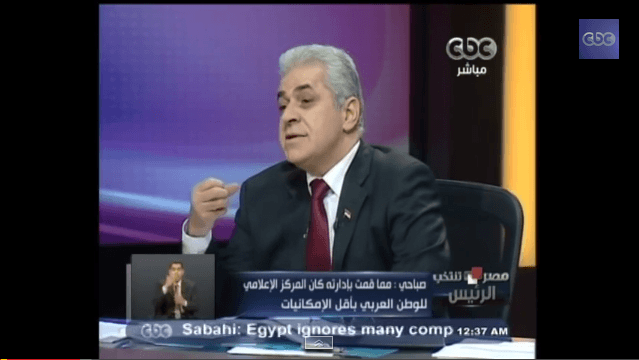
Two days after an interview with his opponent, presidential hopeful Hamdeen Sabbahi distinguished himself from Abdel Fattah al-Sisi by emphasizing that the military is not exempt from civilian scrutiny and promising to pardon those imprisoned under the Protest Law.
Unlike Sisi's pre-recorded two-part interview, Hamdeen opted for a one-part four-hour live interview conducted by presenters Magdy al-Gallad and Khairy Ramadan. Viewers were asked to tweet their questions using the hashtag “Ask Hamdeen.”
As the conversation revolved mainly around the role of the military, Sabbahi stated that he can produce democratic conditions that will ensure that the Armed Forces will have no reason to be involved in politics.
He added that the military is not above civilian monitoring and that its budget must be examined according to the constitution.
“The people are the leaders of this country and the military is an institution,” Sabbahi said. “The Armed Forces are the people's property.”
He criticized putting the military above the people who have died and been injured over the course of the past three years.
Sabbahi also explained that the military’s job is to protect the country, not to rule it, and that “people who drag the army into politics are trying to get its hands dirty in political fights.”
The presidential candidate deemed the contentious Protest Law unconstitutional, saying it must be amended according to the criticisms of it made by the National Council for Human Rights.
“I won’t wait for parliament in matters concerning freedoms, I will correct mistakes,” he said.
He also vowed to pardon all those imprisoned under the contentious law, saying there are “thousands of innocent people wrongly imprisoned under the Protest Law.”
He also criticized the security response to worker and student protests.
When asked if he’s worried that he will be accused of releasing people connected to terrorism, Sabbahi said that while ousted president Mohamed Morsi released people closely connected with terrorism, he will be releasing students.
Throughout the interview, Sabbahi distanced himself from the Brotherhood, especially in contrast with his opponent Sisi.
“I may have sat with Morsi and given him advice, but my rival saluted him at the time,” he said.
He recounted the time when he was prevented from appearing on television with Khairy Ramadan under Morsi’s tenure, prompting the anchor’s resignation on air.
Sabbahi added that former Defense Minister Sisi pledged allegiance to Morsi, while he himself opposed him. He also pointed out that protesters were killed during clashes at Ettehadiya in December 2012 and the Armed Forces did not intervene.
Like his opponent Sisi, however, Sabbahi said that there will be no Muslim Brotherhood presence, either as a group or as a party, if he is elected president.
“There is a war between me and the Brotherhood that I will win ideologically,” he said, rather than through a security response.
When asked about the violent dispersal of the pro-Brotherhood sit-ins last August, Sabbahi said that he was with their dispersal but that more victims fell than expected, criticizing the dispersal of the Rabea al-Adaweya camp specifically.
Moving on to his program, Sabbahi said that its pillars are social justice, democracy and independence.
He said that the war is the one against poverty and that he will end the era of an Egypt owned by the rich and powerful.
The candidate vowed to create five million opportunities for small and medium businesses in four years should he be elected president.
He also said he will work on restructuring the Interior Ministry so that priority is given to fighting crime, while highlighting that human rights must be respected within the Interior Ministry, through training its personnel.
Sabbahi lamented that police officers are the victims of the failures of successive governments, and that he wants the people to embrace the police and support them.
Should he lose the race to Sisi, Sabbahi said, he will not accept any position in government but will continue political opposition.

أخبار ذات صلة
Abdel Moneim Abouel Fotouh: A man apart
His political journey has been a winding one.
COVID-19 drive-thru testing rollout blurs lines between public, private sectors
The prime minister visited the company’s first drive-through site the day it opened, on June 15.
A presidential race, anyone?
Plans for Sisi’s campaign take shape as other political figures weigh up running in the 2018 presidential elections
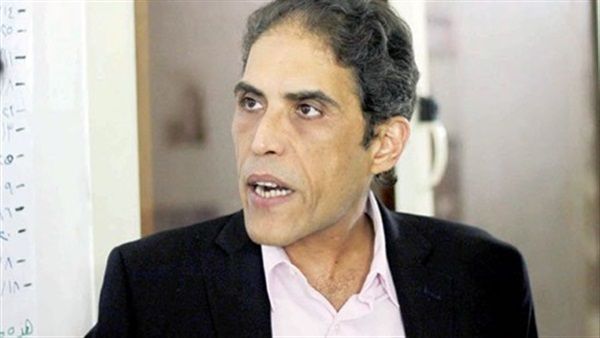
A disintegrating coalition: Rifts re-emerge after Dostour Party’s default leadership election
Rifts have re-emerged within the Dostour Party days after the default election of Khaled Dawoud as party president
Your support is the only way to ensure independent, progressive journalism survives.
You have a right to access accurate information, be stimulated by innovative and nuanced reporting, and be moved by compelling storytelling. Subscribe now to become part of the growing community of members who help us maintain our editorial independence.
Join us