
Report: The Sentry spotlights Ahmed Gadalla, architect of kleptocratic rule in eastern Libya
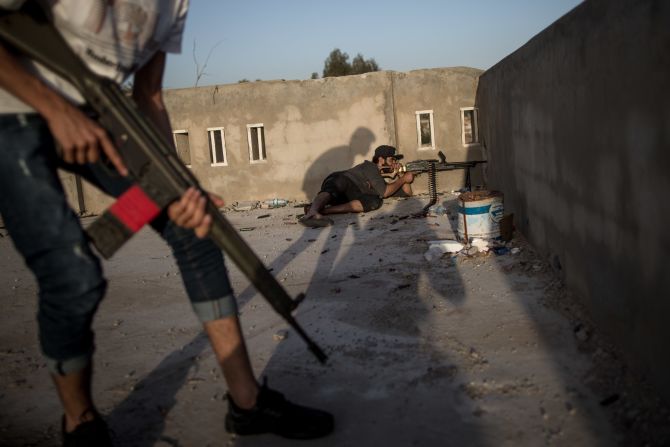
When Field Marshal Khalifa Haftar gave the signal for the offensive on the capital Tripoli on April 4, 2019, a silent apparatus was at work behind the rumbling of the advancing tanks. Operating it was an intricate network of financiers, businessmen and intermediaries calculating the cost of war. And at its center stood a figure unfamiliar to many beyond a narrow circle: Ahmed Gadalla.
An extensive investigation titled “‘Eastern Libya’s Money Man’: New Investigation Exposes the Haftar Family’s Top Fixer” published on Tuesday by The Sentry, an investigative and policy organization that seeks to disable multinational predatory networks that benefit from violent conflict, repression and kleptocracy, lays bare Gadalla’s pivotal role as the principal financial front for the Haftar family, particularly the field marshal’s son Saddam. Through a transnational network stretching from Benghazi to Dubai and Toronto, Gadalla turned Libyan state institutions into a cash machine — financing war, laundering money and circumventing the United Nations arms embargo on Libya to wage war on the nation’s capital and provide weapons to the Rapid Support Forces in the ongoing war in Sudan.
Engineering a revolving loan: How Libyans paid for a war waged against them
The Sentry’s probe reveals an elaborate financial scheme that diverted US$300 million of Libyan public funds to fund the 2019 offensive on Tripoli. The process was set in motion in 2018 through sweeping changes inside Libya’s sovereign financial institutions.
At the center was then-Central Bank of Libya Governor Sadiq al-Kabir, who overhauled the leadership of the Libyan Foreign Bank (LFB) — a wholly owned subsidiary of the central bank — in 2018, installing allies and clearing the path for decisions bypassing oversight.
This enabled the transfer of state-held foreign reserves into deposits at the Abu Dhabi-based Arab Bank for Investment and Foreign Trade, commonly known as Al-Masraf bank.
Al-Masraf is jointly owned by the LFB itself and the Emirates Investment Authority and chaired by Farhat Bengdara — an Emirati national and economic advisor to the Haftars promoted by Kabir to chair the bank in the months leading up to the Tripoli attack.
Kabir and Bengdara thus forged a grey zone of overlapping interests. Libyan sovereign funds were used as collateral, unlocking immediate loans for three Dubai-based front companies owned by Gadalla, totaling $300 million.
According to The Sentry, the funds were withdrawn in cash or funneled via intermediaries to cover wartime logistics, including payments to Russia’s Wagner Group for combat services.
The scheme hinged on Kabir’s strategy of political hedging against a potential victory in Tripoli, offering such facilities as leverage to secure his influence should the balance of military power shift.
This, the report said, is a case in point of how Libya’s east-west divide blurs in the face of transnational kleptocracy. Adept at nominal compliance and official banking regulations, this class transforms state financial institutions into logistical tools in the hands of warlords and money brokers like Gadalla.
The accounting breach became clear after the offensive collapsed in 2020. Gadalla’s companies did not repay the loans, and Al-Masraf closed the books for the 2020 accounts, announcing a net annual loss of $240 million, that Bengdara chalked up to “impairment charges” resulting from the COVID-19 epidemic.
In 2021, the LFB, as a major shareholder in the bank, sent a letter to Bengdara asking for clarification on the exceptional losses, given that the LFB faced the risk that Al-Masraf could enforce its claim on the guarantee of deposits posted in 2019 as collateral.
But instead of crystallizing the loss, Al-Masraf continued to mark the loans as non-performing rather than unrecoverable.
As of January 2025, the majority of the loans, backed by the Libyan state deposits, remain outstanding, leaving the Libyan people still on the line for the failed assault on their capital.
Benghazi’s clearing house: How Gadalla folded eastern Libya’s banks into his network
After 2020, Gadalla’s influence only expanded. Under the protection of Saddam Haftar, who has increasingly come to dominate the Libyan National Army, he effectively became the executive manager of eastern Libya’s economy. Today, he controls key sectors, including oil, cement, shipping and aviation.
His most consequential activity, however, lies in banking. Through the Bank of Commerce and Development, Wahda Bank and the National Commercial Bank, Gadalla runs a vast system of dubious letters of credit and money laundering.
He has played a key role in circulating Libyan dinars printed in Russia, estimated at 10 billion dinars. The counterfeit banknotes, imposed on the central bank itself, have contributed to the erosion of the dinar’s value and the destabilization of the country’s monetary system.
Breaching the UN embargo: Chinese combat drones disguised as wind turbines
Gadalla’s role also extended into the logistics of major transnational illicit arms deals. The Sentry details elaborate schemes to skirt international scrutiny using front companies and misleading cargo descriptions, some linked to supply chains feeding the war in Sudan, facilitated by Libya’s eastern command.
In 2023, Spanish and French authorities intercepted illicit arms shipments containing 44 drones, thermal cameras and military equipment worth 14 million euros intended for Saddam Haftar. Gadalla surfaced in the investigation as both financial intermediary and logistical coordinator in bypassing European controls.
In June 2024, Italian authorities at the Port of Gioia Tauro intercepted a shipment of large Chinese combat drones bound for Benghazi. One of Gadalla’s Dubai-registered companies paid for the sea transport of the cargo labelled “wind turbines,” in direct coordination with Saddam Haftar. An investigation by the Canadian authorities, weeks before, found that the shipments that left China for Benghazi in March and April 2024 were part of an arrangement that saw the National Oil Corporation, headed by Bengdara, sell Libya’s oil at deliberate discounts to a Chinese state-linked buyer in exchange for the procurement.
This, The Sentry states, created a de facto transfer of wealth from Libya to a Chinese state-linked buyer and facilitated an attempt to bypass the UN Security Council mandated arms embargo on Libya.
In July 2025, a Gadalla-owned container ship loaded about 350 containers of ammunition and about 200 large, military-use vehicles from the United Arab Emirates and made its way for Benghazi. The transfer, which was ultimately destined for Sudan’s Rapid Support Forces via eastern Libya, was intercepted at a Greek port. The search at the port revealed military equipment on board despite the manifest stating that the cargo contained cosmetics and electronics headed to the Netherlands. Nonetheless, Greek and Italian maritime officers released the ships without confiscating the thousands of tons of military-use hardware
High life atop the country’s ruins
While Libyans struggle under severe liquidity crises and collapsing public services, Gadalla’s lavish lifestyle stands as a testament to the scale of systemic plunder.
Gadalla carries a Saint Christopher and Nevis passport, flies on private jets and owns a real estate empire, including eight properties in the UAE and a $3.7 million condominium in Toronto.
The investigation argues that such displays of wealth — including a $500,000 Richard Mille watch — are the direct outcome of diverting state resources into private fortunes, protected by the power of arms and embedded in a system of kleptocratic rule born of power-sharing deals that divided Libya’s revenues and resources among a handful of hegemonic families across its east and west.
The Sentry calls for breaking this cycle of impunity through coordinated international action. It urges the United States, the European Union, the United Kingdom and Canada to impose immediate sanctions on Gadalla and his network of companies and to pursue asset freezes targeting his holdings in Dubai, Toronto, London and Malta.
The organization also calls for cleaning up financial institutions, including pressure to remove Bengdara from his position at Al-Masraf, to end conflicts of interest. It recommends that Libya’s public prosecutor move forward with the prosecution of Gadalla for his involvement in the squandering of the $300 million in state funds used to finance armed conflict.

أخبار ذات صلة

Saif al-Islam: The death of a myth
Saif al-Islam Qadhafi, from power’s pinnacle to Zintan’s mountains and the shadows of myth

Sudan Nashra: Burhan turns down meeting with Kenyan president, holds indirect Egypt-mediated talks with Haftar | RSF rejects Fasher humanitarian truce | Hemedti named Tasees chair | Kamel Idris appoints 3 new ministers
Over the past week, Transitional Sovereignty Council (TSC) Chair and Sudanese Armed Forces (SAF) Commander-in-Chief Abdel Fattah al-Burhan made two international visits…
Sudan Nashra: War spills into Sudan-Egypt-Libya border triangle | RSF shells Obeid following threats | Fasher, camps hit again | Surge in Cholera, mass graves in Khartoum
Since Wednesday, Sudan’s war has extended into the far northwest, spilling into the border triangle between Sudan, Egypt and Libya as the…
Analysts: Egypt aids obstructionist efforts of Libyan legislatures to stall UN-led political process
The political process to determine Libya’s future should be the “exclusive ownership” of Libyan official institutions, members of the country’s two legislative bodies declared Tuesday at the conclusion of two…
Your support is the only way to ensure independent, progressive journalism survives.
You have a right to access accurate information, be stimulated by innovative and nuanced reporting, and be moved by compelling storytelling. Subscribe now to become part of the growing community of members who help us maintain our editorial independence.
Join us