
Qatari purchase of state shares in Vodafone Egypt stumbles due to dispute over acquisition size, pricing
Months of negotiations between the government and the Qatar Investment Authority (QIA) over the latter’s acquisition of state-owned shares in Vodafone Egypt are stumbling over a dispute regarding the proportion of the company on the table and the shares’ pricing.
As severe dollar scarcity imperiled Egypt’s balance of payments last year, the government has undertaken to secure funding from partners in the Gulf, laying out bilateral plans with the United Arab Emirates and Saudi Arabia, as well as a later program with Qatar that was projected at around US$5 billion.
Yet prospective deals proved slow to materialize into sales, with Egypt reluctant to relinquish shares in companies with strategic value. At the same time, the Egyptian pound’s exchange value sank, giving rise to disputes over company valuation.
In November 2022, sources told Mada Masr that both Egypt and Qatar had agreed that Qatar would purchase only 25% of Vodafone Egypt from state mobile network operator Telecom Egypt; just over half of the government-held shares. However, Qatar proposed a rearticulation of the deal, pushing to obtain the full 45 percent of Vodafone Egypt held by Telecom, according to three sources who spoke to Mada Masr on condition of anonymity.
To move forward with the talks, Egypt is pushing to get a better share price, according to two of the sources who work at an Egyptian financial investment company. Qatari investors, however, want to close the deal based on an earlier valuation of the company, they said.
The Qatari investors want to buy the full amount of shares held by Telecom Egypt, which were originally valued at $1.9 billion out of the total $4 billion valuation of Vodafone Egypt, but Egypt is still seeking a higher pricing value for the shares. According to a source who is well-informed about the negotiations, the QIA has deposited $1 billion as an advance on the deal over the past year.
Yet value has shifted over the months of negotiations, with the Egyptian pound sinking 50 percent against the dollar over the course of a year and asset values likewise undergoing substantial change. While the prospect of snapping assets up cheap presented an attractive prospect to potential investors, it has also disrupted the implementation of planned deals.
The analysts at financial investment companies in Egypt told Mada Masr that negotiations are still ongoing.
Egypt has struggled to stabilize its economy in the wake of Russia’s invasion of Ukraine last year, as the global market turbulence that ensued propelled around $20 billion in foreign capital flight from Egypt’s economy. With high inflation increasing spending on a heavy import bill and a hefty debt repayment schedule looming, Egypt turned to global financing institutions and political partners in the Gulf for funds, some of whom extended or augmented deposits in the Egyptian Central Bank, while the IMF agreed to a $3 billion loan program over a two year period.
Yet Gulf countries have proved less willing than previously to provide cash deposits, opting instead for asset purchases and acquisitions in key strategic sectors. “The traditional ‘lenders’ have lost their appetite for coming to the rescue in the old way of providing aid or introducing reserves,” a government official told Mada Masr last year on condition of anonymity. “What they want to do now is buy strategic assets.”
As the prospect of selling swathes of strategic assets to foreign powers has stoked concerns in Egypt that sovereignty of the assets’ management could be compromised, some of the deals have proved difficult to conclude, including a sale to the Emirates of land belonging to Madinet Nasr for Housing and Development.
A political rapprochement with Qatar initially held promise for a belt of sales that were set to include shares in Eastern Company for tobacco manufacturing, Vodafone Egypt, the United Bank of Egypt, and others — though none of these deals have reached conclusion.
Writing by Salma Hindy.
أخبار ذات صلة
The flipside of Alam al-Roum: Semella farmers face eviction to make way for Qatari deal
“They’re going to be demolished anyway.” So said a security official to several residents of the Matrouh village of Semella last week,…
Residents confront demolition team in Matrouh village days after conclusion of Qatari development deal
A man was injured on Wednesday in Semella, Alam al-Roum as residents sought to prevent the forced demolition of a house in…
House approves tax exemptions for UAE sovereign fund
To pave the way for more Emirati investments and secure the capital return on those already made in Egypt, the House of…
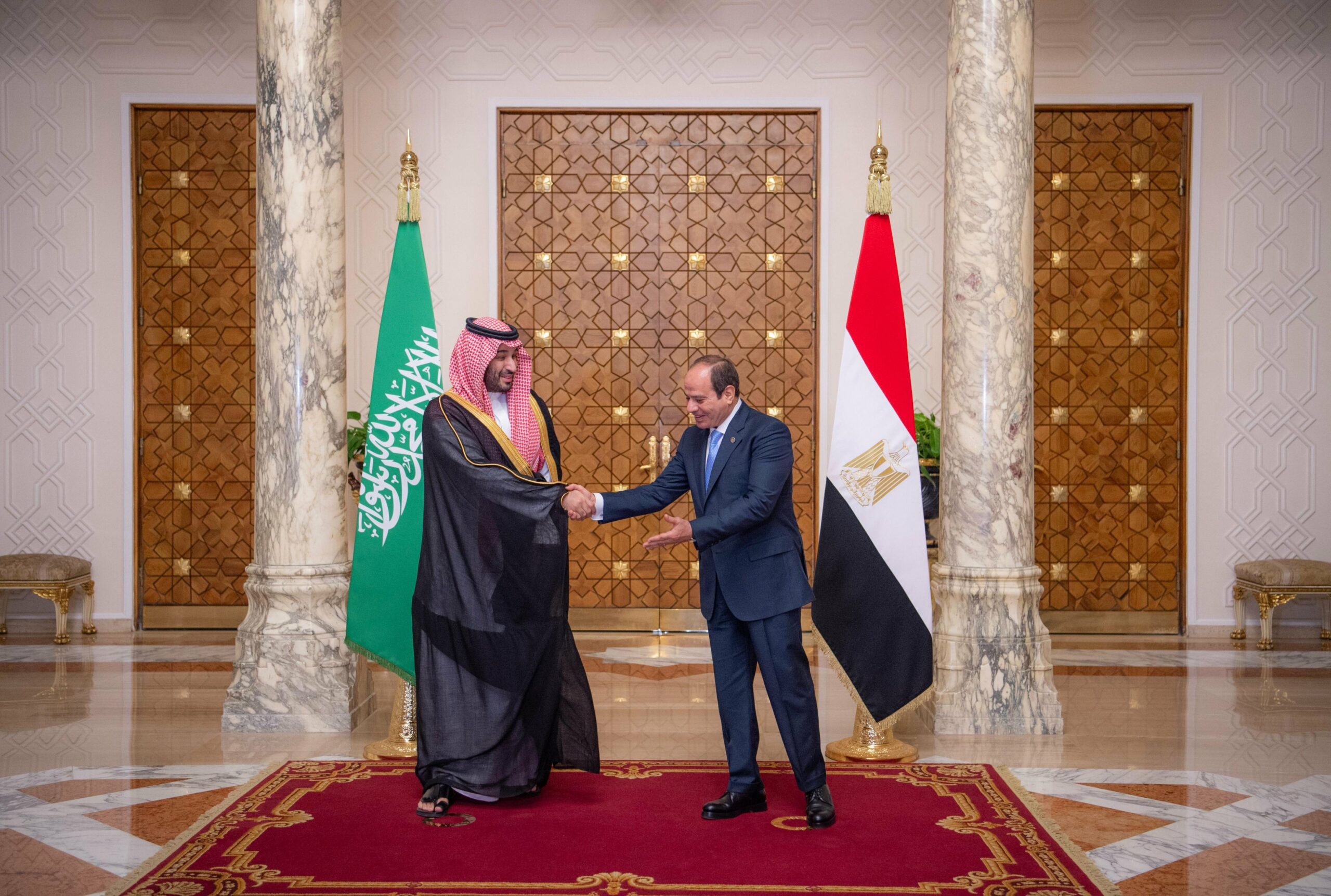
Saudi Arabia, Egypt finalize investment protection agreement
Egypt and Saudi Arabia announced on Tuesday the formation of a new cooperation council and the forging of an agreement to encourage…
Your support is the only way to ensure independent, progressive journalism survives.
You have a right to access accurate information, be stimulated by innovative and nuanced reporting, and be moved by compelling storytelling. Subscribe now to become part of the growing community of members who help us maintain our editorial independence.
Join us