
President tries to rein in Saudi-Egyptian media fight, while underlying tension over Red Sea, Tiran and Sanafir remains

In a searing article written in early February, the editor in chief of state-owned Al-Gomhurriya launched a “violent media attack” against Saudi Arabia in defense of the president and the “value, greatness, and loftiness of the great Egyptian army, its history, present, and future.”
However, the attack, with all its viciousness, was not long lasting. Soon after it was published, the article disappeared from Al-Gomhurriya’s website. Editor-in-Chief Abdel Razek Tawfiq issued an odd apology in which he referred to himself in the third person: “Al-Gomhurriya newspaper apologizes for the attributed article by the editor in chief, Abdel Razek Tawfiq, that offended our brothers.”
On Friday, President Abdel Fattah al-Sisi raised the issue at the opening of Silo Foods Industries’ second phase in Sadat City, expressing that Egyptians should only write in favor of improving and supporting relationships, not the other way around. Sisi emphasized the excellence of the country’s internal and external relationships.
According to sources informed of media affairs and Egyptian-Saudi relations, the Al-Gomhurriya article was retracted after direct instructions from high executive levels over dismay from the Saudi side.
While sources say that the Egyptian president’s office is intervening to rein in a simmering media fight between Saudi Arabia and Egypt, tensions between the two sides remain high. While Sisi’s office may succeed in tamping down criticism, it will still face the actual diplomatic conflict that sources outline as highlighted by Saudi Arabia’s refusal to accelerate the pace of asset purchases in crisis-stricken Egypt until the final transfer of sovereignty over the Tiran and Sanafir islands is completed, which has remained a sticking point due to Egypt’s Red Sea security concerns.
Tawfiq’s article has garnered significant attention in the past week, but it is only the latest manifestation of a quietly simmering media spat between two countries that first became visible last summer with a series of articles written by Emad Eddin Adib that were seen as Saudi criticisms of the Egyptian administration.
Adib wrote several articles over the summer that prompted stern rebukes from commentators close to the administration. In June, as the full extent of the economic crisis was still unfolding, Adib wrote an article in which he estimated that Egypt needed about US$25 billion from the Gulf to cover the knockdown effects from Russia’s invasion of Ukraine. The article was criticized by talk show host Mohamed al-Baz, who is close to the administration, as amplifying unjustified pessimism.
More provocative, however, was Adib’s article in August, titled 14 Reasons Behind the Fall of Ruling Regimes, in which he addressed several factors that can lead to the collapse of a political administration, highlighting the spread of corruption and circumvention of public priorities, internal confusion and bickering between governing bodies.
Adib’s article prompted a strong counterattack from pro-state figures. Talk show host Mahmoud Muslim used airtime on the satellite channel TeN TV, currently owned by the United Arab Emirates but chalked for sale in a reduced deal to Egypt to launch a new news channel, to express his sadness over the content of the article: “I’m sad, surprised, and I see that he’s out of context, since he knows the extent of President Abdel Fattah al-Sisi’s honor.”
Broadcaster Nashaat al-Dihy attacked Adib on his TV program, Bel Waraqa wel Alam (With Paper and Pen), saying that the columnist is attempting to spread frustration and dissuade President Abdel Fattah al-Sisi from running for a new presidential term.
A government source familiar with the context of Egyptian-Saudi relations told Mada Masr at the time that the articles had greatly angered the Egyptian administration. The source stated that Adib was not necessarily expressing the position of Saudi Crown Prince Mohammed bin Salman in his articles, but that of Turki al-Sheikh, a Saudi minister with close ties to the prince. Over the summer, Sheikh ended his physical and financial presence in Egypt against the backdrop of the crisis surrounding singer Amal Maher, after the state intervened to end the house arrest that Sheikh had imposed on her.
Adib backed away from suggestions that the article was about Egypt, which is gripped by a financial crisis of its own making due to a reliance on volatile investments and has seen internal tension rise, arguing instead that he was speaking in general.
More recently, as a direct precursor to Tawfiq’s article, two prominent Saudi commentators close to the royal court, Turki al-Hammad and Khalid al-Dakhil, posted tweets criticizing development failures since Egypt's 1952 revolution and the military’s dominant role in the economy.


In his response, in an article titled “The trees bearing fruit and the stones of the wicked and lowly,” Tawfiq directs his invective at unnamed “brothers” who have turned into enemies, referencing their “abuse” of and “lies” about the country, which stem from their “hatred of Egypt’s successes.”
Tawfiq leaves little room for doubt that he is addressing a Gulf state, as he argues that Egypt’s central importance for regional stability has been forgotten by “idiots blinded by money” and “the naked barefooted who only recently started wearing the most luxurious clothes.”
According to an Egyptian official, who spoke to Mada Masr on condition of anonymity, the object of Tawfiq’s attack was immediately clear to Saudi royal court members, with the Egyptian diplomatic mission in Riyadh conveying to officials in Cairo an atmosphere of intense discontent in the Saudi royal court.
According to the Egyptian official, Tawfiq’s article, however, was not born out of consensus among the various institutions that manage foreign policy in Egypt. In fact, the official says, the attacks on Saudi Arabia went public despite the desires of “some of the closest advisors to the president.”
It was one of those advisors who intervened to halt the escalation between the two sides, the source notes, adding that both sides are working to resolve their differences behind closed doors.
But the backdoor resolutions made their way into the public eye on Friday, when, during a speech, Sisi denied any tension between Egypt and Saudi Arabia, accusing Egyptian outlets and social media users of being malicious and causing trouble between Egypt and its friendly neighbor.
“If we have nothing good to say, we should remain silent,” Sisi said. “We also must not forget the support our brothers have given us.” He said that any issues Egypt might have with a brotherly country will be resolved and overcome since Egypt has a “good” relationship with everyone.
While Sisi’s words might have contained both countries’ media sparring, there is still much work to be done to overcome the issues that plague Saudi Arabian and Egyptian bilateral relations.
According to the same Egyptian government source, there are several points that have contributed to the increasing tension, including the failure to reach an Egyptian-Saudi agreement on many details related to the mechanisms behind the Red Sea Council, which was initially an Egypt-led initiative. Cairo, however, later "accepted" a secretariat when Saudi Arabia took over the initiative. Riyadh remains steadfastly against the idea that some of the council’s main organs and centers would be based in Egypt, according to the source, who adds that while Egypt understands that Saudi Arabia has interests in the Red Sea that cannot be overlooked, the Gulf country still must recognize the sea’s importance for Egypt and its military and strategic position in the region as well.
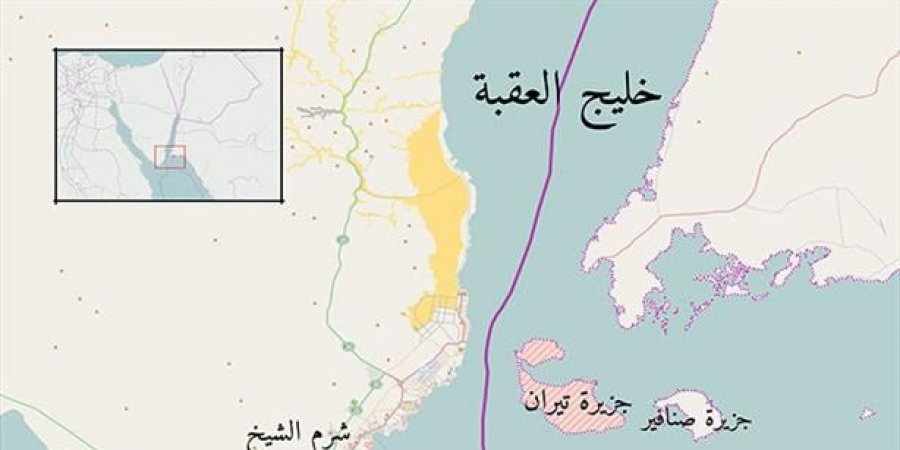
For Egypt, establishing a strong foothold in the fiercely competitive Red Sea also concerns the Tiran and Sanafir islands.
According to the source, the tension between both countries was part of what prevented the Tiran and Sanafir agreement from moving forward. Five years ago, Egypt announced that it was transferring sovereignty over the islands to Saudi Arabia in a moment of rapprochement between both countries’ executive authorities, signing the deal despite Egyptians’ overwhelming public rejection of the move. "It is not true that Egypt has backed down from the deal. This is a signed agreement, but there are remaining details that have not yet been finalized and are waiting to be resolved," the source said.
Other current and former official sources told Mada Masr that Egypt has not yet agreed with Saudi Arabia and Israel on the contents of letters that should be exchanged to complete the final transfer of sovereignty. The details of the security arrangements that should lead to the drafting of these letters are also yet to be agreed upon.
According to two government sources, the dispute over Tiran and Sanafir concerns surveillance cameras that Saudi Arabia wants to deploy on the islands in coordination with Israel. The range of these cameras exceeds Egypt’s permissible scope, according to Egyptian national security data, and exposes all of Sinai.
In 2016, Egypt agreed to transfer the two islands’ sovereignty to Saudi Arabia in hopes that it would solidify bilateral relations and bolster Saudi investment in the country. However, the deal sparked a massive wave of protest at home and a protracted legal contest. The protests took place on the same day as a national holiday commemorating Israel's withdrawal from Sinai in 1982. Activists denounced the move as "treasonous” on social media.
Concerned over the escalating fallout, Egypt tried to delay the agreement but faced significant pressure from Saudi Arabia that included threats to halt its petroleum aid, an attempt to prevent Egypt from receiving aid from other Gulf states, and the delay of the first installment of a US$12 billion loan from the International Monetary Fund.
In June 2016, the Court of Administrative Justice (CAJ) moved to nullify the maritime border agreement and surrender the islands’ sovereignty to Saudi Arabia. Afterward, the decisions made by the Court of Urgent Matters overturned two CAJ decisions made on September 29 and December 31. However, in January 2016, the State Council’s Supreme Administrative Court upheld the June ruling, declaring the deal a territorial concession, an act prohibited per Article 151 of the Constitution. On April 2, CAJ’s decision was overturned by a Court of Urgent Matters. On 14 June 2017, Parliament approved the Tiran and Sananfir agreement.
During Foreign Minister Sameh Shoukry’s visit to Riyadh last month, Saudi officials conditioned the acceleration of Saudi investments in Egypt on the setting up of their surveillance cameras as soon as possible.
While the UAE, Kuwait and Saudi Arabia have been the Egyptian state’s primary financial backers, they are currently shifting their rules of engagement. Gulf deposits significantly propped up the Egyptian central bank's foreign exchange reserves and the local currency's value in 2013, but Egypt has been witnessing a gradual decline in Gulf deposits in 2021.
As Egypt navigates a financial crisis of its own making, Gulf patrons are refusing to continue extending an infinite financial lifeline, instead opting to buy assets in Egypt.
As such, Egypt flagged 32 companies last week for private and public offerings. The companies dot several key sectors in Egypt from the energy sector to real estate and also include military-owned companies.
أخبار ذات صلة

Sudan Nashra: Idris in Cairo as part of Egyptian-Turkish-Saudi coordination to prop up Sudanese military, Egyptian official says | RSF seizes Musa Hilal stronghold, stoking tribal tensions | RSF attacks North Darfur border town, engages Chadian forces | Hemedti in Uganda as head of parallel govt
Subscribe to our Lens on Sudan newsletter here. A week of heavy clashes in North Darfur has strained the region’s tribal landscape,…
Sudan Nashra: Burhan invokes Jeddah Agreement to set new negotiation terms | Over 150 abducted in South Kordofan in RSF-SPLM (Hilu) forced recruitment campaign | RSF launches major attack on Babanusa | Joint opposition forces in South Sudan clash with govt troops
With regional allies now propping up his forces on the battlefield, Sudanese Armed Forces Commander-in-Chief and Transitional Sovereignty Council Chair Abdel Fattah…

The Quad War
After the fall of Fasher, Egypt turned to Turkey to find a way to deter the growing Emirati threat
Lawyers reignite fight against govt’s transfer of Tiran, Sanafir islands to Saudi Arabia
The appeal calls for the annulment of the 2017 presidential decree and argues that the transfer viol
Your support is the only way to ensure independent, progressive journalism survives.
You have a right to access accurate information, be stimulated by innovative and nuanced reporting, and be moved by compelling storytelling. Subscribe now to become part of the growing community of members who help us maintain our editorial independence.
Join us