
Nothing will deter us. We’ll carry on’: Israel kills journalist Hossam Shabat whose daily work documented aggression on Gaza
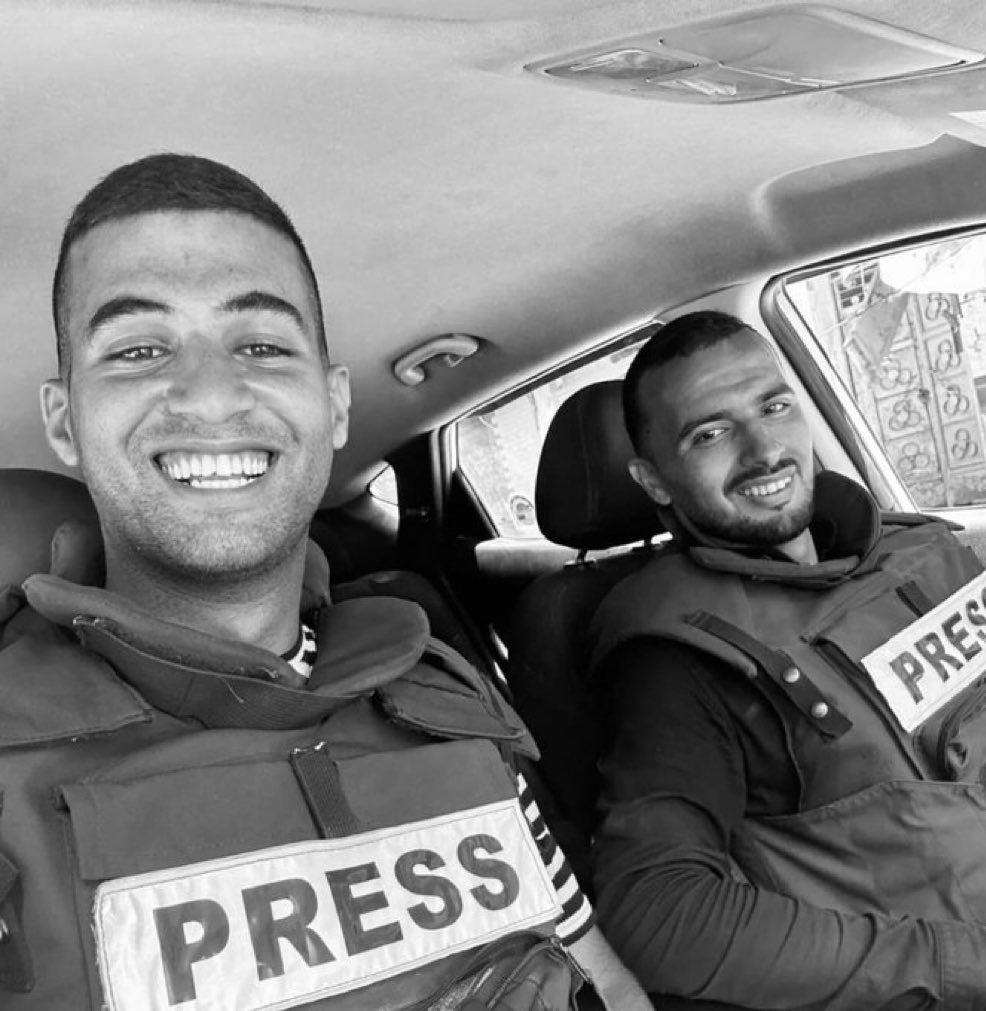
Journalist Hossam Shabat, who has worked for over 500 days to document Israel’s aggression on Palestinians in the Gaza Strip, was killed in a targeted Israeli airstrike on Monday afternoon.
Shabat and his journalistic work have become familiar to hundreds of thousands of people across the region and internationally through the daily updates he published on developments in besieged northern Gaza via his social media channels and with Al-Jazeera Mubasher since October 7, 2023.
Six months ago, the Israeli military leveled accusations of terrorism at Shabat and five of his colleagues in north Gaza who were covering a ground operation that saw Israel kill hundreds in the area. Israel has routinely accused journalists of “terrorist affiliation” to render them legitimate targets in its war on the strip. Over the last year and a half, Israel has killed at least 170 journalists, according to the Committee to Protect Journalists.
Shabat was at work to report on Israeli crimes when Israel targeted him on Monday, according to his colleague, Palestine Today reporter Ahmed al-Barsh, who described the scene to Mada Masr.
Barsh and Shabat were working to the east of the Indonesian Hospital in Beit Lahia, northeast Gaza, when Israel’s attack took place, he said.
Shabat had been conducting interviews with residents in the area and was standing next to his car. Barsh described stepping a few meters away to conduct his own interviews when he heard a large explosion.
"We turned toward the spot where Hossam had been standing and were shocked to see that Israeli aircraft struck his Jeep, right beside him," said the Palestine Today journalist.
Footage shared by other journalists at the scene on Monday showed Shabat injured on the ground, alongside several others killed in the airstrike.
He was rushed immediately to the Indonesian Hospital, Barsh said.
Shabat has become a fixture on screens across the region in the last two years, as he was among a group of young journalists committed to showing the violence of Israel’s war on the strip.
When Israel launched its ground invasion of northern Gaza in October 2024, razing vast areas of housing in the North Governorate to the ground and expelling hundreds of thousands from their homes, Shabat remained in the north to report on the attacks that targeted civilians, medics, refuge centers, humanitarian workers and the police.
The coverage earned him and five other colleagues working in northern Gaza the attention of the Israeli military, whose spokesperson described the reporters as “terrorists” in October, claiming to have found documents linking them to Hamas and Islamic Jihad. Al Jazeera and Hamas denied the allegations against the correspondents, as did Shabat.
In posts on X, Shabat described the statement as “a blatant and belligerent attempt” to transform journalists into “killable targets.” He said the accusations were “an assassination threat and an obvious attempt to preemptively justify our murder.”
In footage filmed by a fellow journalist at the time, Shabat is asked about how Israel’s accusations would impact his work. Smiling, he turns to the camera and says, “Nothing will deter us. I’ll carry on,” before driving away to resume field reporting.
After hundreds of thousands returned to north Gaza following the ceasefire established in January, including Shabat’s own mother who was separated from him by displacement, Shabat continued to report on the dangerous and dire living conditions amid the destruction wrought by Israel in Gaza City.
He documented a number of deaths caused by the collapse of buildings rendered structurally unsound in the wake of Israeli bombardment.
When Israel broke the ceasefire and resumed its aggression last week, Shabat once again picked up the microphone to present live reporting for Al Jazeera Mubasher from the strip’s north.
In posts on his social media channels in the hours leading up to his killing, Shabat called on the populations of other countries in the region, naming the Emirates, Saudi Arabia, Jordan and Egypt, asking where their support for Palestinians has gone, a refrain often repeated by residents of the strip over the course of the aggression that has killed over 50,000 Palestinians since 2023.
A few hours before he was killed, Shabat had also documented the killing of Palestine Today reporter Mohamed Mansour on his Instagram page. Mansour’s home in Khan Younis, south Gaza, was also targeted by an Israeli airstrike on Monday.
Mansour’s father told Mada Masr that he was in his apartment in Batn al-Samin in Khan Younis when it was targeted by at least one missile.
He was killed immediately and his wife sustained critical injuries. "My son's work was to convey the truth and report the daily violations. What happened was a deliberate targeting of Mohammed in order to kill the truth.”
In the span of one year, Israel has killed more journalists in its war on Gaza than in any other conflict documented by the CPJ. The committee has also reported the arrest of 34 journalists since the beginning of the war.
أخبار ذات صلة

CPJ: With 25 journalists detained, Egypt 3rd worst jailor of media workers globally
The group recorded 293 imprisoned reporters worldwide in 2021, its highest tally ever

Solafa and Hossam: Once inseparable, journalist couple languish in prison away from their son
Magdy and Sayyad had feared that this moment would come.
CPJ: Egypt 3rd worst jailer of journalists in the world in 2020 in record tally
Egypt ranks as the third worst jailer of journalists in the world in 2020, behind China and Turkey
Court finds police order to force activist to spend 12 hours a day in police station ‘abusive’ and ‘without justification’
The ruling lends weight to defense lawyers’ arguments in similar cases, the lawyer said.
Your support is the only way to ensure independent, progressive journalism survives.
You have a right to access accurate information, be stimulated by innovative and nuanced reporting, and be moved by compelling storytelling. Subscribe now to become part of the growing community of members who help us maintain our editorial independence.
Join us