
No increase in aid deliveries following UN resolution, still no ceasefire

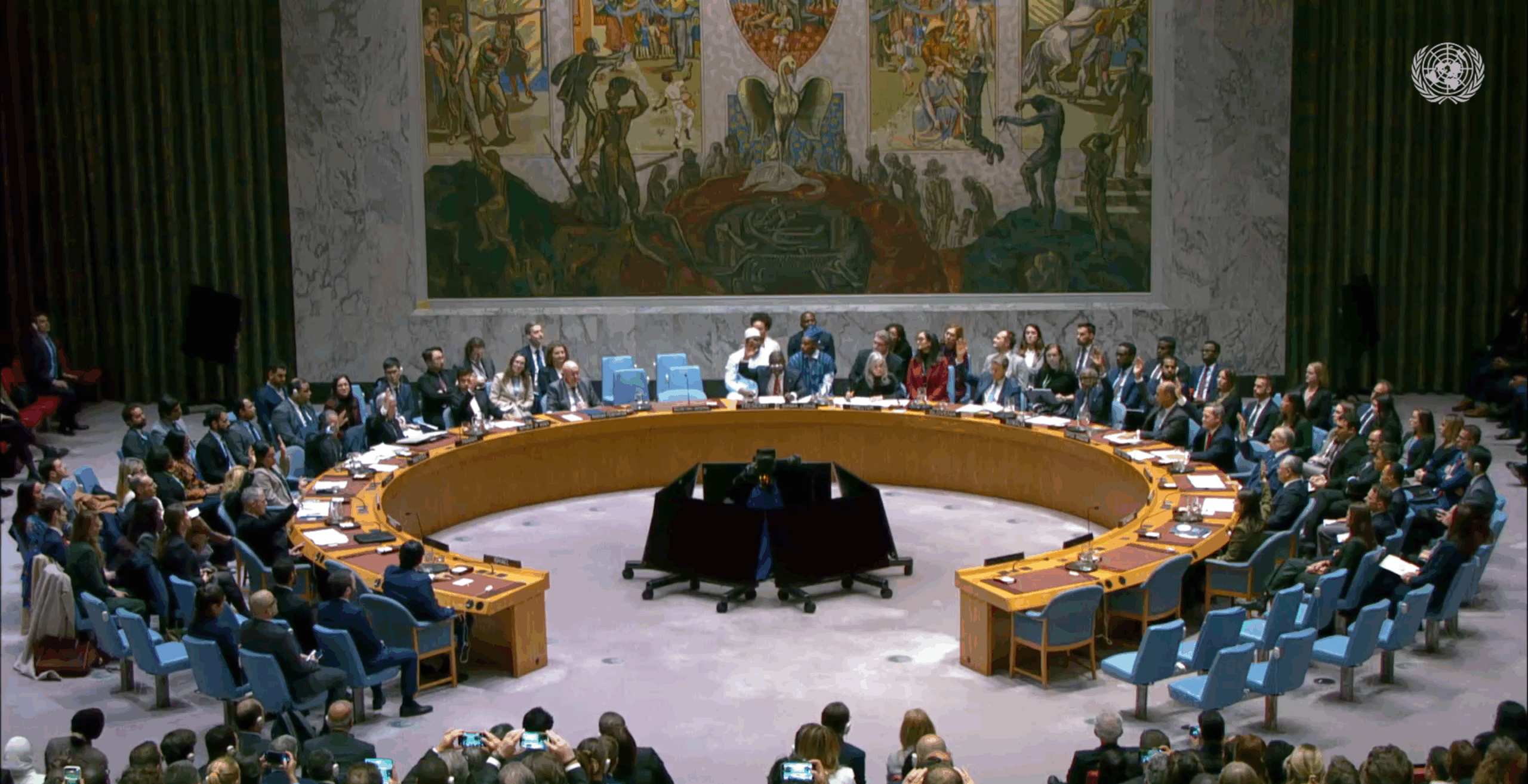
The United Nations Security Council approved a resolution on Friday demanding urgent steps to “allow, facilitate and enable” entry of much-needed humanitarian aid into the Gaza Strip.
But the effects of the Security Council resolution are yet to be seen, a source at the Egyptian Red Crescent Society told Mada Masr on Sunday.
How is aid delivered to Gaza?
Aid supplies that are crucial to the survival of more than a million Palestinians have trickled from Egypt into the Gaza Strip since the start of the Israeli aggression, with deliveries slow due to lengthy inspections by the Occupation authorities.
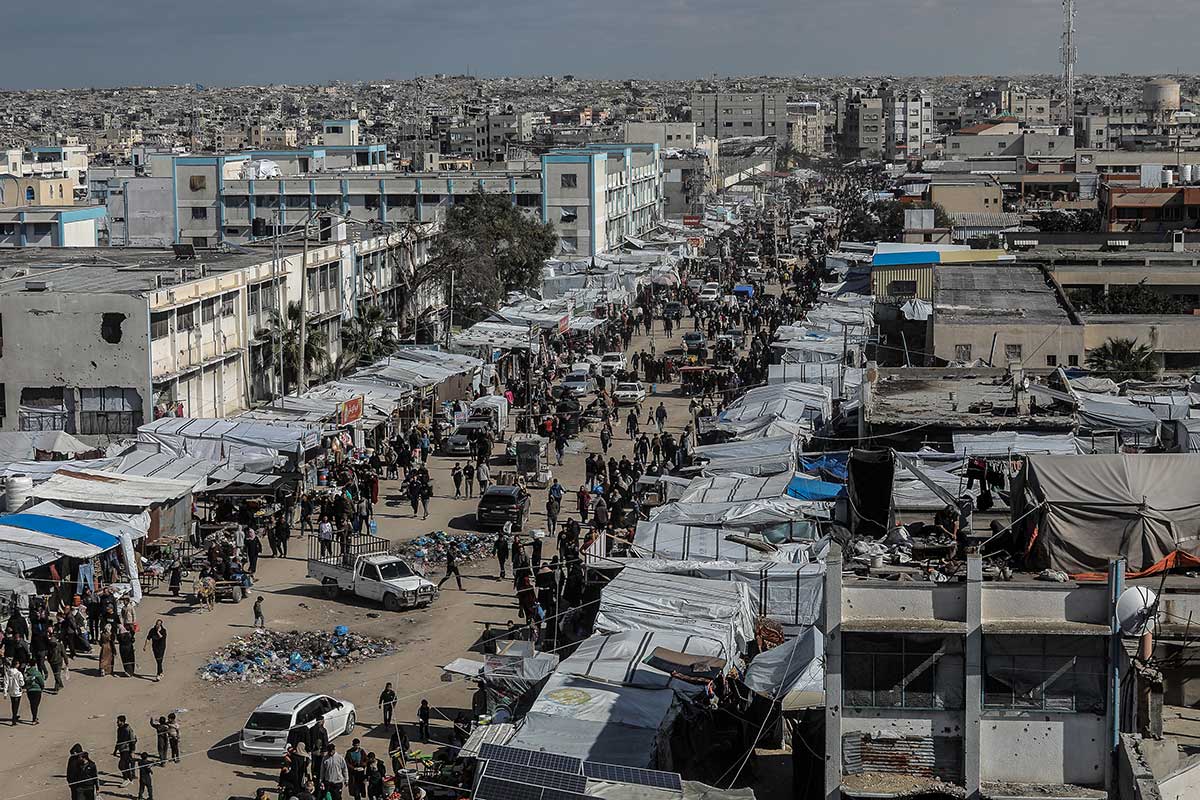
As the Occupation has pushed a majority of Gaza’s population out of their homes and toward the south of the strip, near the border with Egypt, it has become even more difficult for aid agencies to deliver and distribute humanitarian aid.
Shipments can currently reach Gaza via two routes. The first route is through the Egyptian Rafah border crossing, where the aid must be inspected by the Occupation at a checkpoint around 45 kilometers away, near the Awja-Nitzana border crossing. The aid then must be sent back to Rafah to enter Gaza.
Alternatively, goods can enter the strip via the Karem Abu Salem border crossing, also called the Kerem Shalom crossing by the Occupation. Seemingly under pressure from the United States, Occupation authorities permitted the use of the Karem Abu Salem border crossing over recent weeks. However, humanitarian agencies state this is not sufficient, according to a United Nations report. Once inside Gaza, distribution of aid can be complicated due to the state of the strip’s infrastructure, which has been devastated by months of Israeli airstrikes.
Occupation forces have also targeted the border crossings at Rafah and Karem Abu Salem. The Rafah crossing was bombed four times in October, at the start of the onslaught, when no aid supplies were allowed in. Israel targeted the area near the Rafah crossing once again with an airstrike on Thursday—just a day before the Security Council vote.
The Occupation also targeted the Karem Abu Salem crossing on Wednesday, killing three Palestinians, including the crossing's director Bassam Ghaben.
Under these conditions, the number of aid trucks entering Gaza daily remains far below the population’s needs. Only 69 trucks and five ambulances entered from Egyptian Rafah and 23 trucks through Karem Abu Salem on December 22.
Before October 7, 500 aid trucks, including fuel, would enter Gaza daily. During the short-lived seven day truce in late November, only 200 trucks were allowed in each day.
How will aid entry change after the UNSC resolution?
A source at the Egyptian Red Crescent (ERC) told Mada Masr that Friday’s resolution is yet to lead to any uptick in the number of aid trucks allowed in via the two crossings. The ERC workers have not received any new orders regarding the aid deliveries either, the source added.
The text of the resolution, drafted by the United Arab Emirates, stopped short of calling for a complete ceasefire after protracted throughout the week to produce a draft that would be approved by the US, which vetoed the last two Security Council resolutions that demanded a complete ceasefire. Many aid organizations have said a ceasefire is necessary if sufficient aid is to reach Palestinians in need.
The approved text called for “urgent steps to immediately allow safe, unhindered, and expanded humanitarian access and to create the conditions for a sustainable cessation of hostilities.”
Instead of opposing the resolution, The US abstained from voting which allowed it to pass with a final vote of 13-0.
Russia, the other council member to abstain from voting, favored the original call for a ceasefire, and accused the US of "forcing into the text an essential license for Israel to kill Palestinian civilians in Gaza” under the pretext of creating the conditions for a ceasefire.
Hamas dismissed the resolution in a statement published on Telegram, calling it an “an insufficient step” to relieve the devastation caused by the Occupation’s war on Gaza, “especially [because] it didn't include an international decision to stop the genocidal war by the terrorist occupation entity on our Palestinian people in Gaza.”
The statement also accused the Biden administration of working to dilute the resolution of its essence, calling it a “weak formula that allows the Zionist Occupation to continue its mission of destruction, killing and terrorism in Gaza.”
Conditions in the strip are worsening, with starvation and disease now added to the dangers faced by Gaza’s population, of whom over 20,000 have already been killed by Israeli airstrikes and ground operations since October 7.
أخبار ذات صلة

Hundreds of Gaza students demonstrate for right to study abroad
Hundreds of university students trapped in the besieged Gaza Strip gathered on Monday outside the Journalists Syndicate’s headquarters in western Gaza City…
Prices surge in Gaza redoubling food insecurity after Israel shuts borders citing attack on Iran
For the first week of Ramadan, Reem al-Masdar was cooking vegetables, salad and bread to prepare iftar and sohour meals for her…

The quiet power of Gaza’s One More Show
An intimate portrait of Gaza's only circus troupe and their resilience amid Israel's genocide
Executive power over Gaza taken from Palestinians, bestowed to Board of Peace in ‘disastrous’ UNSC resolution
The United States’ Board of Peace is to take over the Gaza Strip for at least two years, as per a resolution…
Your support is the only way to ensure independent, progressive journalism survives.
You have a right to access accurate information, be stimulated by innovative and nuanced reporting, and be moved by compelling storytelling. Subscribe now to become part of the growing community of members who help us maintain our editorial independence.
Join us