
National Salvation Front figures voting for Sisi
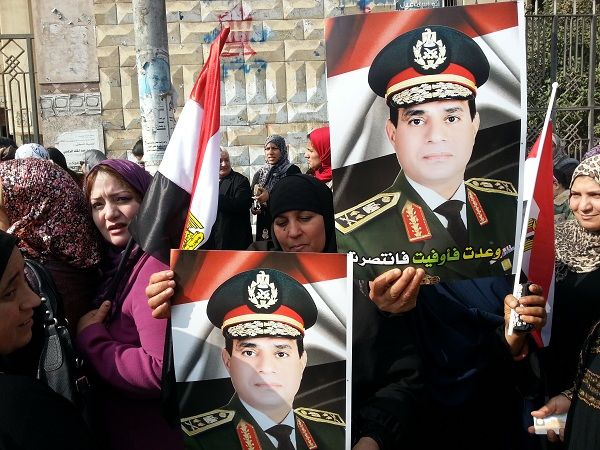
Two prominent members of the National Salvation Front (NSF) have announced their support for Field Marshal Abdel Fattah al-Sisi as the future president of Egypt.
Former presidential candidate and constitutional committee head Amr Moussa told the Lebanese Al-Safir newspaper that he believed that Sisi was “the right choice at this stage,” the privately-owned newspaper Al-Masry Al-Youm reported.
Rumors of Sisi’s candidacy have been puzzling the Egyptian public since January. After a meeting with the army chief in early February, Moussa told the state-owned newspaper Al-Ahram that the field marshal would announce his candidacy at the end of the month. However, no official statement has yet been released.
“The country is in chaos and we’re facing a lot of challenges. We want a president who understands the nature of the state, has already assumed leading positions, and has had remarkable positions in the past,” Moussa said, referring to Sisi’s role in removing former President Mohamed Morsi from power following mass protests demanding his ouster.
However, Moussa denied rumors surrounding his relations with Sisi’s presidential campaign.
“I’m not heading his campaign. The country is filled with false rumors, and I continue to assert that my role remains as ever; a citizen willing to serve his country,” he said.
Regarding the role of the NSF during the upcoming period, Moussa said that the front remained active and supported as a political alliance situated in the center of Egypt’s political spectrum.
Moussa claimed that the front would have presence in the upcoming elections, especially the parliamentary elections.
“You’ll soon hear about procedures, not just to ensure its continuation, but to strengthen and empower it,” Moussa added.
Another prominent NSF member — journalist, author, and Mubarak-era opposition figure Hamdi Qandeel — said in a televised interview on the privately owned satellite channel CBC that he would vote for Sisi in the upcoming presidential elections due to his popularity among Egyptians.
Egyptians view Sisi as a guarantee to state stability, Qandeel said, and a figure who would uphold the civil state.
During the interview, Qandeel also expressed admiration for the Nasserist Popular Current party founder and presidential candidate Hamdeen Sabbahi.
While a race between Sabbahi and Sisi would push Qandeel to vote for Sisi “to side with people’s will,” he said that an ideal situation would be “a combined effort of both candidates’ campaigns.”
“Egyptians want two opposing things at this moment: stability and fulfilling the goals of the revolution,” Qandeel added.
No revolution succeeds in three years, Qandeel continued, but he told CBC that he remained hopeful that the 2011 uprising would ultimately pay off.
Qandeel went on to lambast former NSF member and Mohamed ElBaradei’s withdrawal from the post-June 30 interim government, saying it was a mistake that caused a rift in former Prime Minister Hazem al-Beblawi’s Cabinet, and that he “betrayed the revolution.”
“ElBaradei is a man of intellect, but he is not qualified to take responsibility and carry its burdens,” he continued.
ElBaradei, a prominent opposition figure in the Egyptian political scene since 2010, had been appointed vice president for foreign affairs following the June 30 movement that led to Morsi's ouster. He submitted his resignation on August 2013 in protest against the violent crackdown on the Muslim Brotherhood’s Rabea al-Adaweya and Nahda Square sit-ins in Cairo. After his resignation, he reportedly moved to Austria to assume a teaching position.

أخبار ذات صلة
Abdel Moneim Abouel Fotouh: A man apart
His political journey has been a winding one.

COVID-19 drive-thru testing rollout blurs lines between public, private sectors
The prime minister visited the company’s first drive-through site the day it opened, on June 15.
A presidential race, anyone?
Plans for Sisi’s campaign take shape as other political figures weigh up running in the 2018 presidential elections
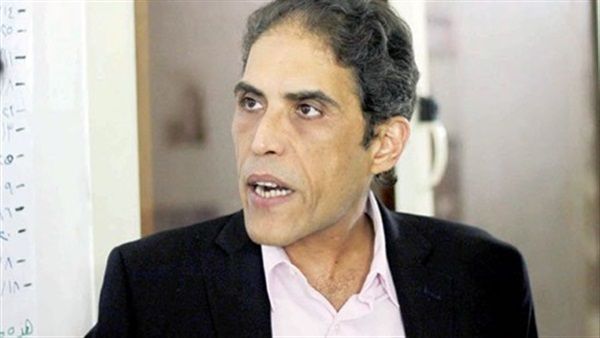
A disintegrating coalition: Rifts re-emerge after Dostour Party’s default leadership election
Rifts have re-emerged within the Dostour Party days after the default election of Khaled Dawoud as party president
Your support is the only way to ensure independent, progressive journalism survives.
You have a right to access accurate information, be stimulated by innovative and nuanced reporting, and be moved by compelling storytelling. Subscribe now to become part of the growing community of members who help us maintain our editorial independence.
Join us