
Ministry remains mum on promised changes to Protest Law
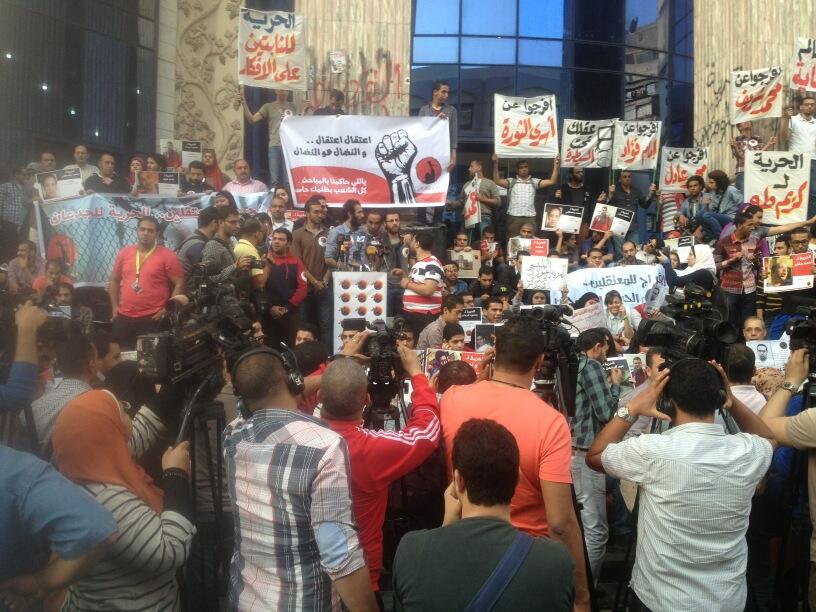
There is “no news” on the anticipated amendments to the contentious Protest Law, Transitional Justice Minister Ibrahim al-Heneidy told reporters on Monday.
At the request of the National Council for Human Rights (NCHR), the ministry had studied the law and presented its recommendations for amendments “a long time ago,” the privately owned newspaper Al-Masry Al-Youm quoted Heneidy as saying.
But “for now, there’s nothing new about the law,” he said.
Heneidy’s remarks refute promises from former ministry spokesperson Mahmoud Fawzy, who announced that the law was in the amendment process last September.
NCHR member Nasser Amin had also asserted that the amendments were forthcoming, and would allow for the release of all detainees arrested under the original law’s provisions.
The Protest Law has spurred heated debate since it was passed in November 2013, imposing new restrictions on the freedom of protest and assembly as it gave the police force wide powers to disperse demonstrations. Among its provisions, the law obliges protest organizers to obtain permission from the authorities at least 24 hours in advance of the event.
The law also imposed harsh prison sentences against violators. Hundreds, if not thousands, of activists and protesters have been arrested under the law, often for demonstrating against it.
Activist Sanaa Seif and 23 other defendants received three-year prison sentences — later dropped to two years — for violating the law. They were arrested while protesting in front of the Ettehadiya Presidential Palace against the imprisonment of activist Alaa Abd El Fattah and 24 others, who were also charged with breaking the Protest Law.
April 6 Youth Movement founders Ahmed Maher and Mohamed Adel, as well as activist Ahmed Douma, were all sentenced to three years in prison for violating the law. Last week, the Appeals Court rejected their appeal to drop the charges.
After the bill was signed into law, human rights groups, journalists and political parties launched the “We have had enough” campaign against its restrictive stipulations. In recent months, dozens of activists and detainees have declared hunger strikes until the law is revoked and all detainees arrested under it are freed.
The New York-based Human Rights Watch (HRW) said that the law violates international standards, and poses a direct threat to the right of peaceful protest and assembly.
“This new Egyptian government’s first major legislative act clearly shows that its goal is to sharply restrict peaceful assembly, and to let security shut down protests at will,” Joe Stork, HRW’s deputy Middle East director, wrote in the statement.
“This law will reverse the freedom to demonstrate that Egyptians seized in January 2011, and risks putting that freedom, which brought about momentous change, into reverse,” Stork argued.
Amnesty International also lambasted the law for giving security forces “free rein” to suppress dissent.
“Granting security forces complete discretion to ban protests or disperse them using excessive and lethal force is a serious setback for human rights in Egypt, and paves the way for further abuse,” said Hassiba Hadj Sahraoui, Amnesty’s Middle East and North Africa deputy director.
Several political activists have claimed the law is part of the state’s attempt to target political dissidents and crack down on the rights gained from the January 25 revolution, especially the right of peaceful protest.
Wiki Thawra — an initiative created by the Egyptian Center for Social and Economic Rights (ECSER) to document all those detained, arrested and killed since the January 25 uprising — reported that nearly 40,000 people have been detained since former President Mohamed Morsi was ousted on July 3, 2013. Of those arrested, 89 percent were detained on political grounds, and 4 percent on terrorism-related charges.

أخبار ذات صلة

Minister: Article 33 of anti-terror law aimed at social media, not press
Transitional Justice Minister Ibrahim al-Heneidy claimed that the highly controversial Article 33 of the new terrorism law was meant for “social media…

Court jails 78 minors for alleged links to Brotherhood
An Alexandria court has sentenced 78 minors, all aged between 13 and 17 years old, to jail for allegedly being affiliated to…
Minister defends Protest Law to US official
Transitional Justice Minister Ibrahim al-Heneidy defended Egypt’s controversial Protest Law in a meeting with a US official on Monday, claiming the law…
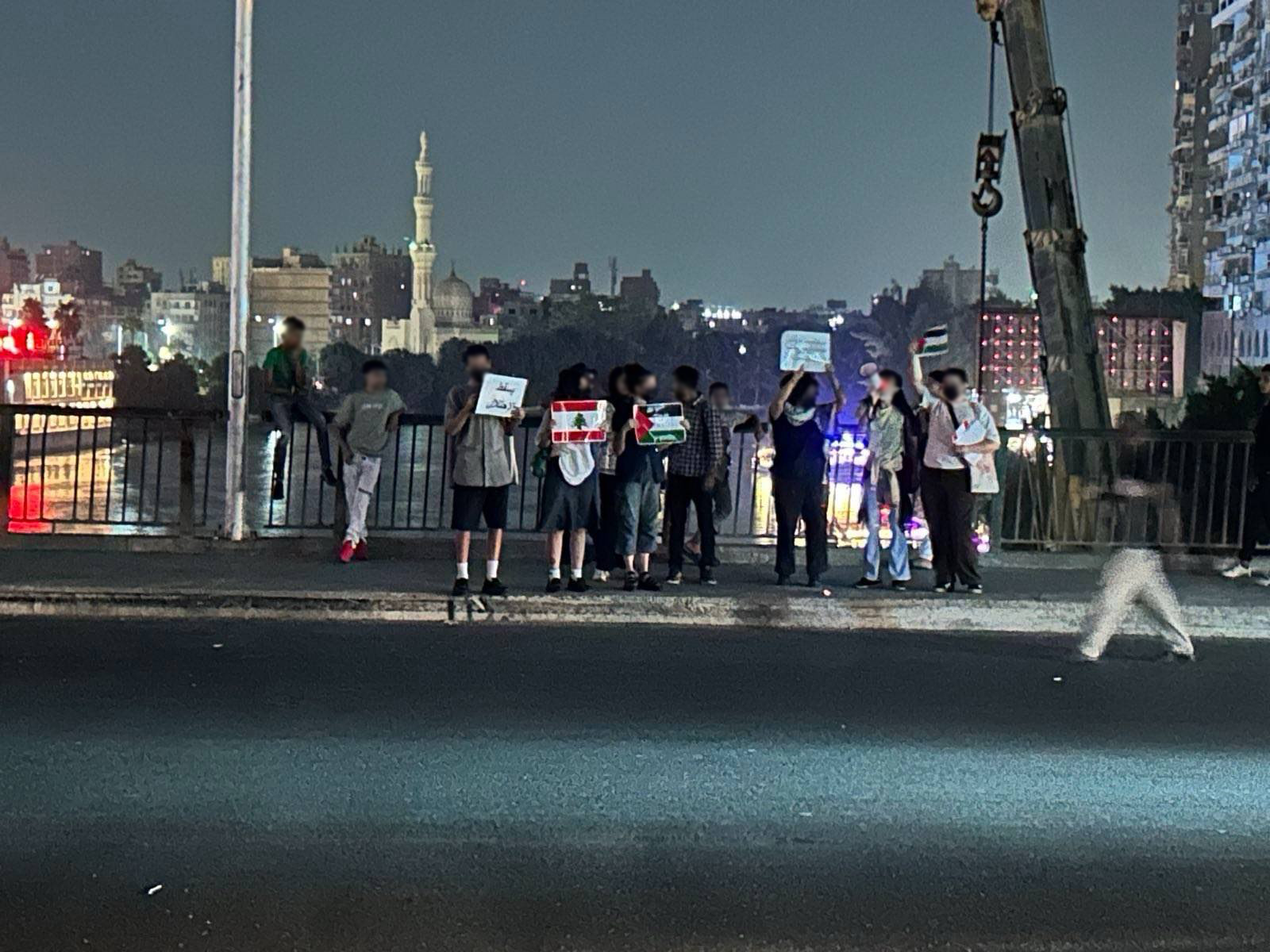
Four people arrested from Cairo demonstration for Palestine, Lebanon questioned on protest charges
Four people who were arrested earlier in the week from a demonstration are to spend another night in detention following questioning on…
Your support is the only way to ensure independent, progressive journalism survives.
You have a right to access accurate information, be stimulated by innovative and nuanced reporting, and be moved by compelling storytelling. Subscribe now to become part of the growing community of members who help us maintain our editorial independence.
Join us