
Military courts deliver strong punishments to alleged MB members for terrorist attacks

Egypt’s military courts handed long sentences to alleged Muslim Brotherhood members and others accused of involvement in terrorist attacks in Minya, Luxor and Sharqiya, the Reuters-affiliated Aswat Masriya reported.
On Thursday, Assiut Military Court handed six defendants life sentences and sentenced two others to seven years in prison for their alleged involvement in the “Karnak Temple bombing” in Luxor.
The case dates back to June, when several attackers attempted to enter the temple and became engaged in an exchange of fire with security forces, at which point one of them reportedly detonated explosives, killing himself. Another attacker was also killed and a third was injured. The court asserted the defendants are part of the Islamic State-affiliated Province of Sinai.
On Wednesday, Assiut Military Court also sentenced 108 alleged Muslim Brotherhood members to life in absentia, and handed 26 others 10 years in prison with hard labor for allegedly storming and burning Malawy police station in Minya, as well as killing nine people, including one police officer.
In Sharqiya, Zagazig Military Court sentenced six alleged Muslim Brotherhood members to 15 years in prison for “forming terrorist cells to destroy electricity towers” in the Delta governorate. Five of the defendants are students, according to Aswat Masriya.
The referral of civilians to military courts has been a regular practice since the ouster of former president Hosni Mubarak in 2011. The Armed Forces declared around 12,000 civilians were referred to military courts in 2011. In March 2015, the No to Military Trials campaign said the practice has been ongoing, with 3000 people tried in military courts in the first five months of Sisi's first year as president.
A law was passed by President Abdel Fattah al-Sisi in 2014 that expands the powers of the military judiciary, giving the Armed Forces greater control over state and public buildings and facilities. The presidency justified the law as a way of protecting citizens and guaranteeing their access to public services.
Article 204 of the Constitution stipulates that civilians should not stand trial before military courts except for crimes that constitute a direct assault on military institutions, military camps, military or border zones, military equipment, vehicles, weapons, ammunition, documents, military secrets, public finances or military factories, or crimes related to mandatory military service, or anything that constitutes a direct assault on military personnel because of their duties.
Member of the No to Military Trials campaign, Mahmoud Salmany, explained to Mada Masr that the recent court rulings could be linked to the 2014 law that expanded the powers of the military judiciary, specifically the cases in Minya.
“Everyone in Egypt is subject to military courts … If the residents of a village in Upper Egypt block the road in protest over water shortages, for example, they could face a military trial,” he explained, adding, “A group of Al-Azhar University students were referred to military trial for burning a gate inside their university before they were acquitted.”
Referrals to military trials have been linked to forced disappearances, a practice that rights advocates say is on the rise as a way of dealing with activists and dissidents. For example, three alleged members of the Khairat al-Shater Cell were found in military courts after they had been missing for a long time. Photojournalist Ismail Gomaa, student Ahmed Saber Labib and Mahmoud Abdel Aziz al-Mourshedy were accused of belonging to a terrorist group that aimed to hack the personal social media accounts of police and military personnel and government websites, allegedly financed by the jailed Muslim Brotherhood business tycoon Khairat al-Shater.
Salmany asserted that the decision of whether to refer defendants to civilian, military or state security courts is completely random, explaining, “Detainee Esraa al-Taweel was abducted along with her friends Omar Mohamed Ali and Sohaib Saad. While Taweel was referred to state security prosecution, both Ali and Saad face a military trial. We don’t know who is supposed to go where.”

أخبار ذات صلة

Brandishing the military trial stick: The govt’s price control bluff
Another wave of inflation is crashing in. On March 10, and for the third time in the course of a year, the government raised fuel prices again, justifying the decision…

8 men convicted by military court in deadly church bombings case executed on Monday
Several defendants told prosecutors that they were subjected to forced disappearances and torture
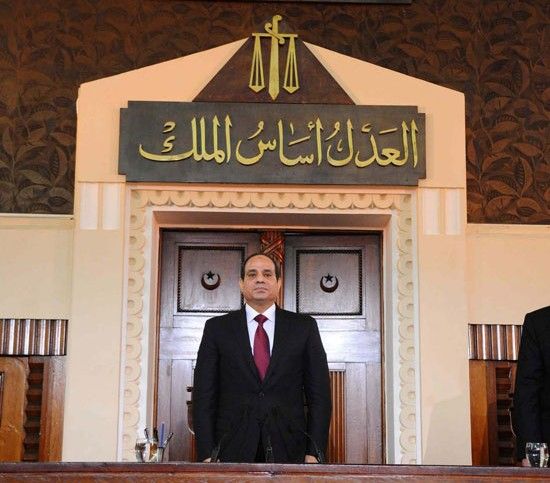
Normalizing the military judiciary: How the constitutional amendments bring the Armed Forces into Egypt’s judicial system
The laws bestow more authority on the Armed Forces, already the most powerful actor in the country
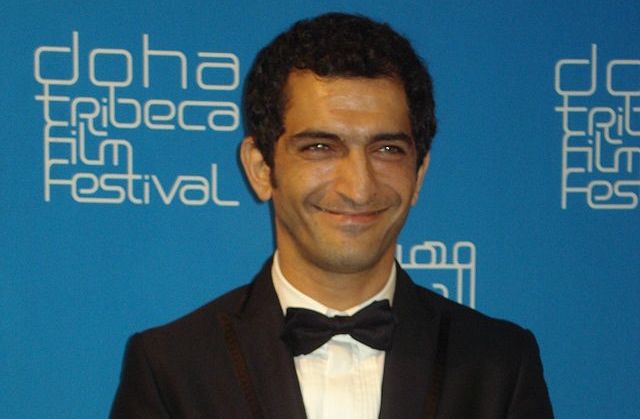
Egyptian actor Amr Waked speaks out against military court verdicts sentencing him to prison
Egyptian actor Amr Waked: “The world needs to know how Egypt is being run.”
Your support is the only way to ensure independent, progressive journalism survives.
You have a right to access accurate information, be stimulated by innovative and nuanced reporting, and be moved by compelling storytelling. Subscribe now to become part of the growing community of members who help us maintain our editorial independence.
Join us