
Investigation into fatal Sohag crash shifts blame from Transport Ministry

The results of an investigation conducted by the Public Prosecution into a March 26 railway crash in Sohag that left 20 people dead were made public on Sunday, suggesting that negligence and drug abuse on the part of railway employees were factors in the fatal incident.
Six employees of the National Railway Authority were arrested in late March in connection with the incident, though they are yet to be charged or referred to trial on the basis of the investigation.
Transport Minister Kamel al-Wazir publicly admitted in the wake of the crash that he had ordered the partial suspension of a crucial safety mechanism, the automatic train control (ATC), in certain areas of the national rail network in order to ensure trains ran on time, and that the ATC was in fact switched off by the drivers of the two trains that collided in Sohag. The driver of the second train also claimed he was unable to stop his vehicle after the emergency brake failed since the ATC was switched off as per verbal instructions from the National Railway Authority he had received via the Wardan Driver Training Institute.
However, the Public Prosecution on Sunday contradicted these claims and said the drivers of the two trains had received no such instructions.
According to the Public Prosecution’s 10-minute video detailing its investigation, the first train came to an unexpected halt at the Senussi intersection between the Maragha and Tahta stations in Sohag, where a second Cairo-bound train crashed into it from behind. The Public Prosecution said that the first train stopped as the result of an air pressure control valve being closed, noting that this did not appear to have been caused by someone pulling one of the emergency levers stationed in each of the train carriages, but without clarifying whether the valve was intentionally closed in some other way or whether it was the result of an engineering fault.
The description also contradicted a statement released immediately after the incident in which the National Railway Authority accused an “unknown party” of pulling a lever, bringing the first train to a sudden halt between the two stations.
The prosecution recorded testimonies from the drivers and assistant drivers of both trains and staff responsible for manning signal towers and for regional monitoring, noting a number of irregularities. According to the prosecution, the driver of the second train and his assistant failed to respond to yellow and red emergency lights on the track which should have alerted them to slow down and brake before the site of the collision, with the prosecution adding that it had run a simulation of the incident which showed that the second train would have had sufficient stopping distance had it responded to the lights. Both the driver and his assistant claimed that the lights on the track were green, giving them the go ahead to continue. The prosecution also noted that both the assistant driver and the driver gave different accounts of the incident, with both claiming to have been driving the train at the time of the collision.
According to the prosecution, the assistant driver of the first train and the guard in the Maragha control tower tested positive for drug use, while the head of the signal department in Assiut, which is responsible for monitoring train movement, was absent from his post at the time of the accident, leaving his two assistants in charge, who failed to alert the trains before the crash occurred. Railway authority staff are frequently drug tested.
The Sohag train crash, which left 20 people dead and around 200 injured, triggered public outrage. An initial death toll of more than 30 people was later adjusted downward by the Health Ministry. The total cost of the incident was put at LE25.8 million. Fatal train crashes are not infrequent in Egypt, with the most recent major incident taking place in February 2019 at Cairo’s Ramses Railway Station, leaving 20 people dead.
Before the investigations were complete, the Public Prosecution had issued arrest warrants on March 29 for the drivers of both trains, their assistants, a guard at the signal tower near the Maragha train station, and the head and two employees of the Assiut Central Control Station.
In another presser held the day after the accident, Wazir stated that the ministry has allocated around LE225 billion to develop the railway system, and that citizens “should have patience” until the process is complete. Although the ATC slows train speeds to 80 kilometers per hour, and would increase all trip times by 25 percent [if fully implemented across Egypt’s rail system], the minister said that he would not allow trains to operate without the ATC technology from now on, and that “delaying trains is the only way to escape accidents, and citizens must endure it.” Wazir also shot down the prospect of his resignation, saying, “if I resigned, I’d be a traitor,” the privately owned Al-Shorouk reported. Wazir’s predecessor, Hisham Arafat, resigned in 2019 following the Ramses crash.
A source from the National Railway Authority who spoke to Mada Masr on condition of anonymity at the time said that linking the incident to railway development is a way for the authorities to circumvent responsibility and lay the blame instead on junior employees. The source said the accident is the result of mismanagement that requires accountability for all those responsible, from the train driver all the way to the transport minister, the head of the National Railway Authority and his deputy.

أخبار ذات صلة
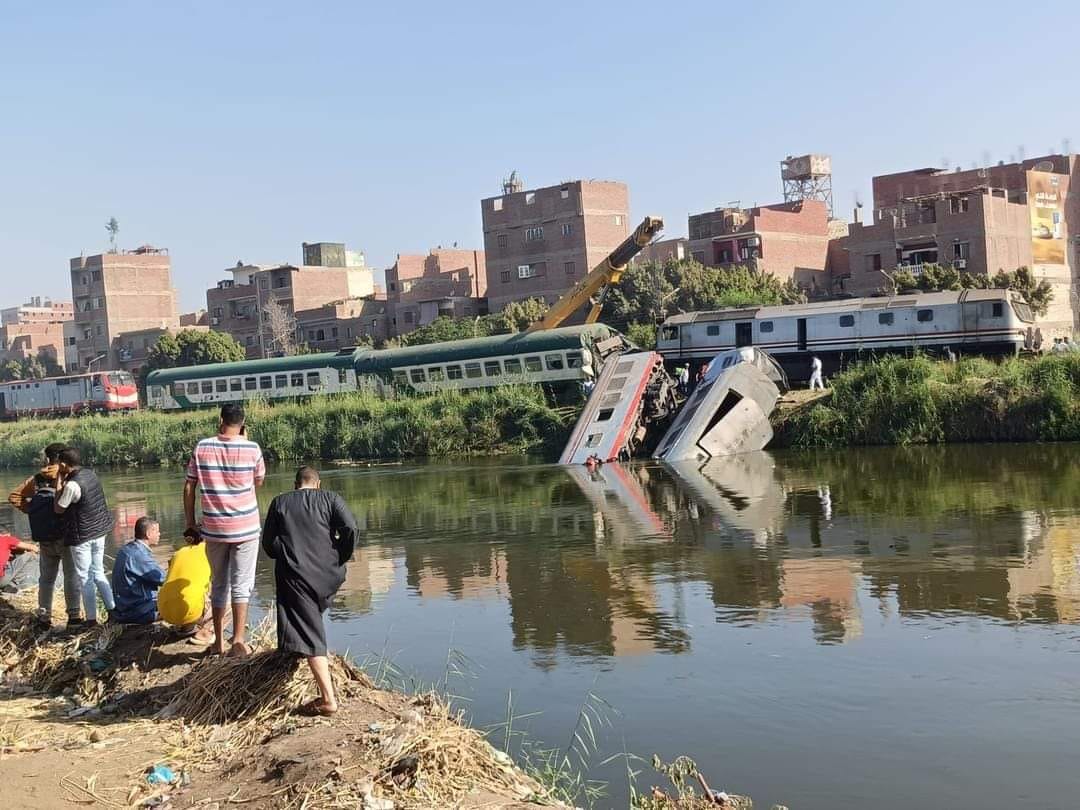
One person killed, 21 injured in yet another train collision in Minya
One person was killed and 21 were injured in a train collision in Minya on Sunday that led two train carriages to…
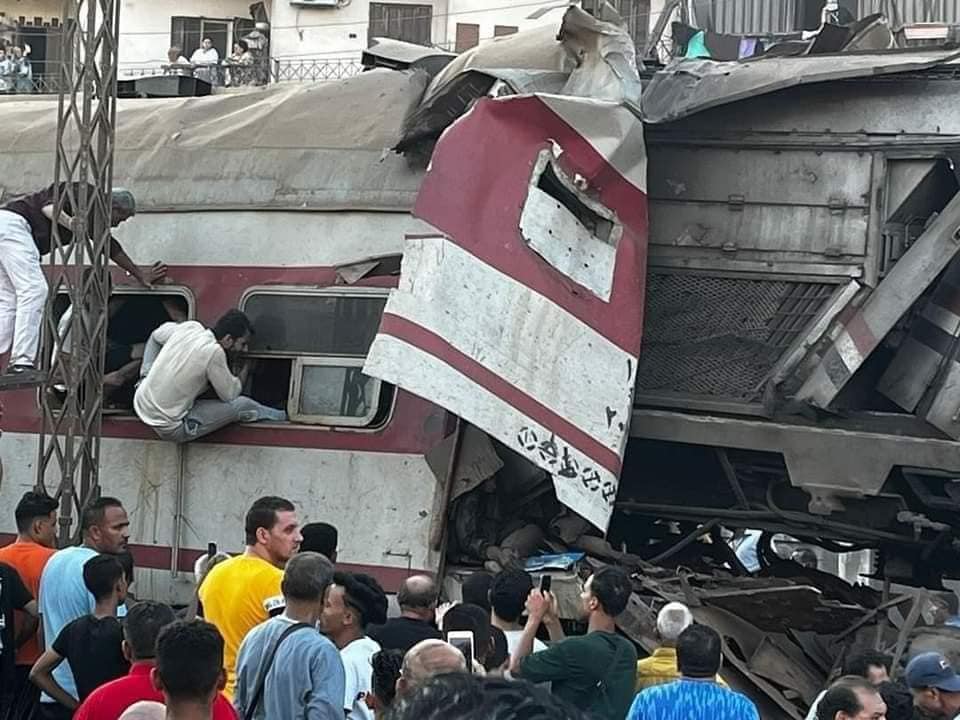
4 killed in Zagazig in another train collision
Four people were killed and over 49 were injured due to a train collision in Zagazig, Sharqiya on Saturday evening, according to…
23 railway workers detained after Toukh train accident as transport minister fends off mounting criticism
The railway authority head was reassigned as advisor to the transportation minister
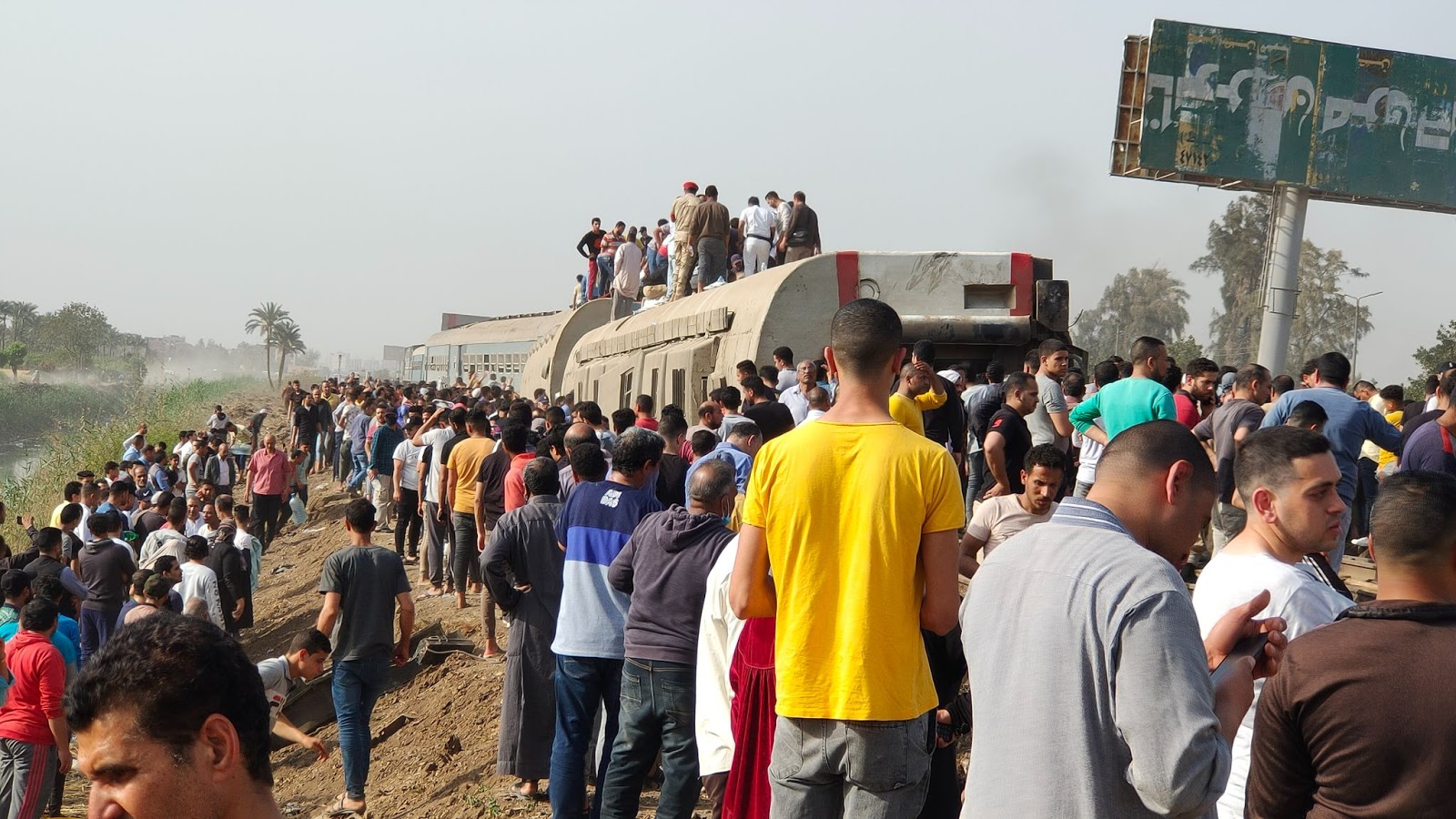
Another train derails in Toukh, Qalyubiya killing 11, injuring 97
At least 11 people were killed after a train derailed on Sunday afternoon near Toukh in Qalyubiya
Your support is the only way to ensure independent, progressive journalism survives.
You have a right to access accurate information, be stimulated by innovative and nuanced reporting, and be moved by compelling storytelling. Subscribe now to become part of the growing community of members who help us maintain our editorial independence.
Join us