
23 railway workers detained after Toukh train accident as transport minister fends off mounting criticism
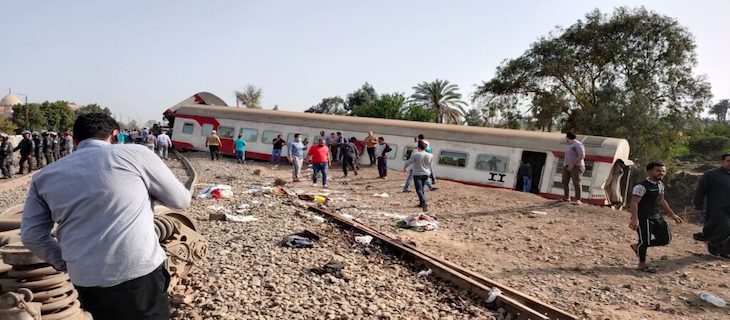
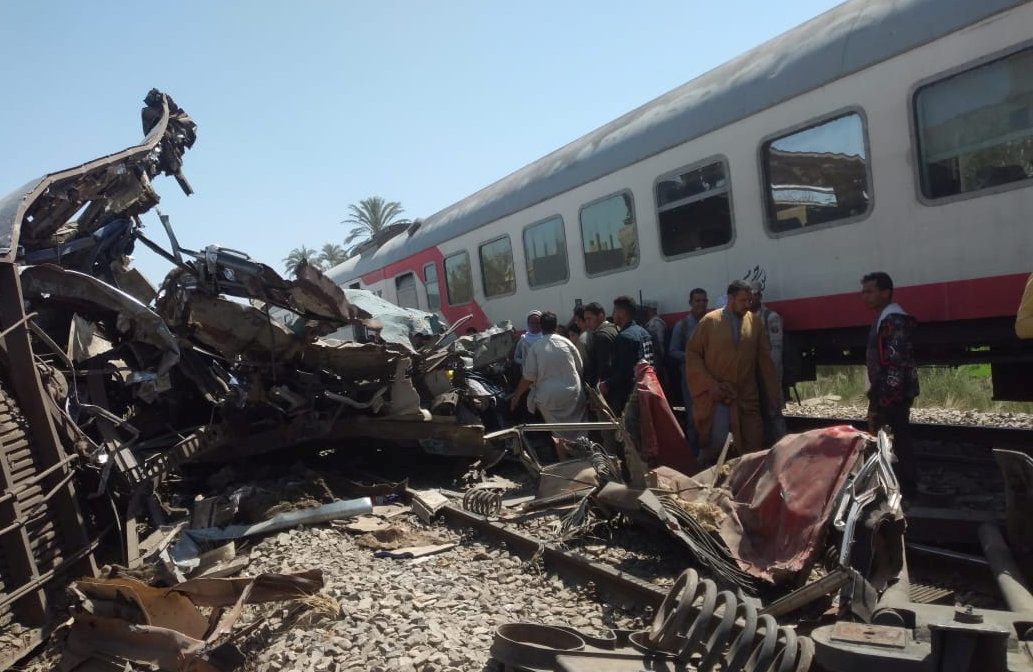
Twenty-three railway employees have been detained pending investigation into their involvement in the Toukh train crash earlier this week that has left at least 23 dead and 139 injured, according to updated figures in a Public Prosecution statement.
The detained workers include the train conductor and his assistant, as well as a number of technicians and mid-level managerial employees.
According to the Public Prosecution statement released on Tuesday, the detainees are facing charges of “unintentionally causing the death of 23 people and the injury of 139 people due to negligence,” and “their failure to observe relevant laws, regulations and duties pertaining to their job,” which led to the crash on Sunday. The charges also include failure to conduct scheduled maintenance and forgery of official documents.
The arrest of nearly two dozen railway employees over the third major train accident in less than a month comes as Transport Minister Lieutenant General Kamel al-Wazir is facing increasing scrutiny over his ministry’s failure to put an end to deadly train crashes.
Two members of the House of Representatives — Amal Salama and Fredy al-Bayady — called on Tuesday for Wazir to be summoned for parliamentary questioning over the repeated accidents.
Wazir also faced scrutiny during a spat earlier this week between TV presenter Lamis al-Hadidy and House Transportation Committee head MP Alaa Abed over whether or not Wazir should be held accountable following the deadly train crash in Toukh on Sunday. Hadidy criticized Wazir for his failure to appear before Parliament after the Sohag crash, while Abded pushed back, suggesting that train drivers and Egyptian Railway Authority officials are to blame for the accidents.
On Tuesday, Abed announced that Wazir had sent a request to the Transportation Committee to appear voluntarily before the House to discuss efforts to modernize the country’s railways, and to present the details surrounding the recent train crashes that together left around 30 people dead and several hundred injured — but only after investigations are complete.
MP Evelyn Matta Botrous proposed a structural overhaul of the railway authority that would strip the Transportation Ministry of its jurisdiction over the body and place it under private sector control.
Amid this public criticism, the Transportation Ministry announced a reshuffle in railway authority leadership on Tuesday, reassigning Ashraf Raslan, the former head of the authority, to an advisory role, and appointing Mostafa Aboul Makarem as his replacement. Other top management positions at companies under the authority were also included in the shuffle.
Raslan was summoned by the Public Prosecutor for interrogation after his dismissal from his position but was not detained or charged.
Though railway staff are often convicted for professional misconduct leading to accidents, structural flaws including the failure of key safety mechanisms have proven to be key in rendering the frequent train accidents fatal.
Train incidents are a frequent occurrence on Egypt’s railway network, which serves nearly 1.5 million people daily. According to CAPMAS, the government statistics agency, there were fewer train incidents in 2019 — 1,863 in total — than the previous year, but they were more deadly: 42.4 deaths per 100 injured in 2019, compared to 34.3 deaths in 2018.
During an interview on Amr Adib’s MBC Masr talk show Al-Hekaya in the wake of the March train collision in Sohag that left at least 20 dead, Wazir acknowledged that instructions the government gave to drivers to ensure trains ran on time were a factor in the fatal accident, admitting that he had ordered the partial suspension of an emergency safety system in the interest of meeting schedules.
“Delaying trains is the only way to escape accidents, and citizens must endure the delays,” Wazir told Adib, committing to reninstating at least a partial use of the emergency safety system to improve safety on the railway network following the deadly Sohag train collision.
Wazir also pledged a safer train system and more swift modernization but shot down the prospect of his resignation. “If I resigned, I’d be a traitor,” he said.
The minister told Amr Adib that the driver of one of the trains involved in the Sohag accident had turned off the automatic train control (ATC) mechanism, which allows control towers to automatically halt the train if something unusual happens.
Last November, a court handed down a prison sentence to a driver involved in a March 2020 crash that led to the injury of 13 passengers for operating the train with the ATC switched off.
Following the November ruling, many drivers started using the ATC system, causing major delays on the network, especially coming in and out of Cairo’s Ramses Station. Drivers cited in the press at the time attributed the slowdown to the ATC system, saying that malfunctions in the signaling devices along the railway lines caused trains to stop repeatedly when the ATC was switched on, so they had developed a practice of turning the safety device off to avoid major delays. Wazir stepped in at the time to resolve the delays.
Wazir acknowledged in the interview with Adib that he told conductors at the time that “there are some areas in which ATC will delay you, turn it off and proceed as slowly as possible.” In comments to Al-Borsa, the head of the railway workers syndicate hailed the instructions to selectively switch off the ATC as positive for workers, because the formal change in safety procedures allowed drivers to avoid “incurring responsibility.”
But after the Sohag crash, Wazir said he now believes consistent ATC use is the solution to avoiding future train accidents, with the delays being the price of safety.
“I will not tolerate further bloodshed. I will not work without ATC technology,” Wazir said he told President Abdel Fattah al-Sisi.
The two train drivers and six other railway employees were arrested in connection with the Sohag crash in late March but have yet to be formally charged. The Public Prosecution also contradicted Wazir’s acknowledgement of the instructions to switch off the ATC after the Sohag crash, saying the drivers of the two trains had received no such instructions.
Four accident-prevention measures are in place to ensure the safety of rail traffic: a manual device allows operating conductors to bring trains to halt within 24 seconds of sending a signal. If the event that the first device fails, the conductor can use what is known as the “dead man’s switch” to send another signal to the control tower, which can then intervene to halt the train within another 24 seconds. Third, the ATC system is in place to allow signaling towers to automatically halt the train if something unusual happens.
The fourth measure — deliberate train derailment — is considered a last resort. The signal tower official will disconnect the tracks, causing the train to be dislodged before it crashes.
However, pressure on trains and instructions to keep operations running consistently render commitment to safety standards difficult. One train driver has told Mada Masr that railway authority officials ignore flaws within the safety precautions in order to keep trains on schedule. “Half of the trains won’t move daily if all safety standards are met,” he said. Wazir, a former head of the Armed Forces Engineering Authority, was appointed after former Transport Minister Hisham Arafat was forced to resign in the wake of the 2019 Ramses incident. Wazir fired one of the heads of the Egyptian Railway Authority in turn and announced plans to carry out a major restoration of the national rail network.
A source from the railway authority who spoke to Mada Masr on condition of anonymity following the Ramses crash said that authorities’ move to link the incident to railway development is a way to circumvent responsibility and lay the blame instead on junior employees. The source said the accident is the result of mismanagement that requires accountability for all those responsible, from the train driver all the way to the transport minister, the head of the railway authority and his deputies.

أخبار ذات صلة
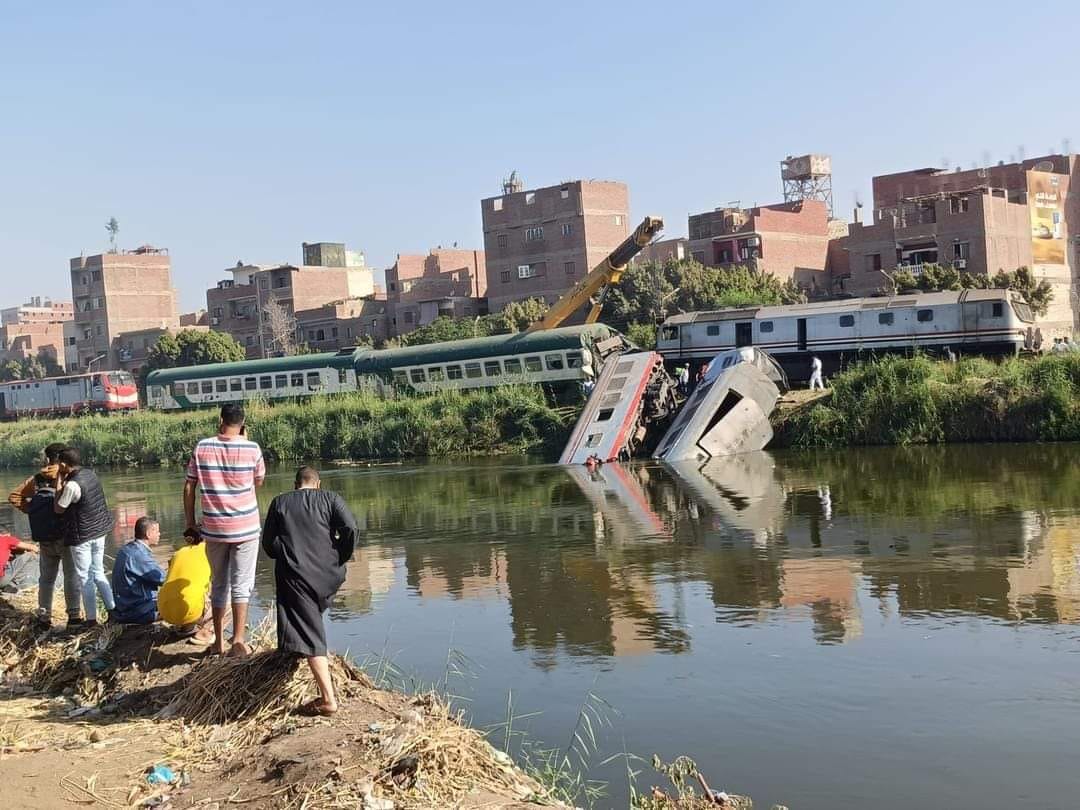
One person killed, 21 injured in yet another train collision in Minya
One person was killed and 21 were injured in a train collision in Minya on Sunday that led two train carriages to…
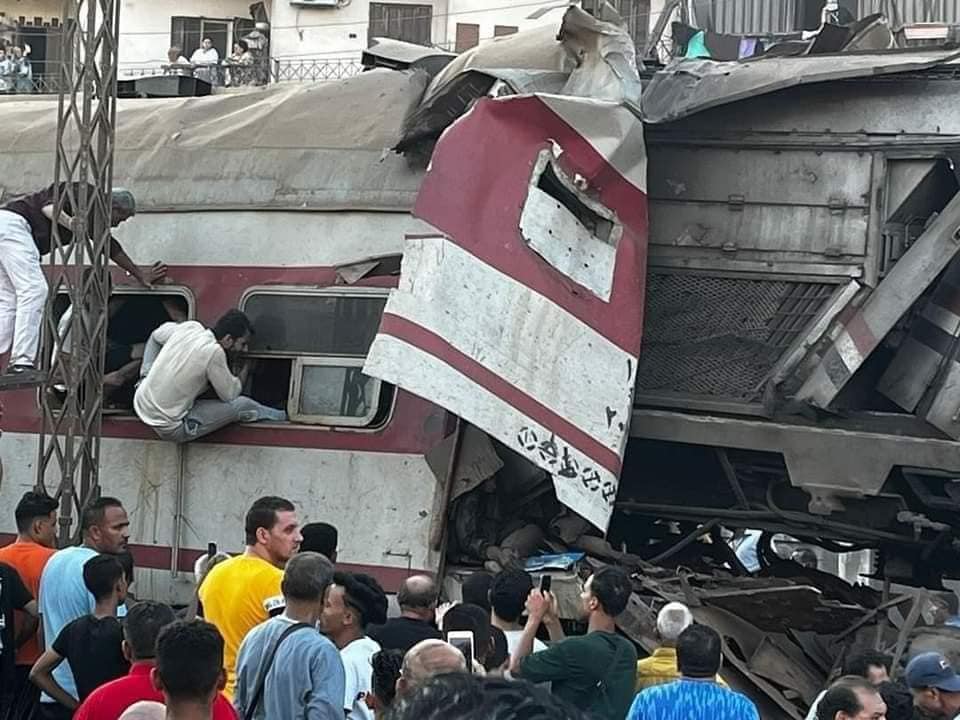
4 killed in Zagazig in another train collision
Four people were killed and over 49 were injured due to a train collision in Zagazig, Sharqiya on Saturday evening, according to…
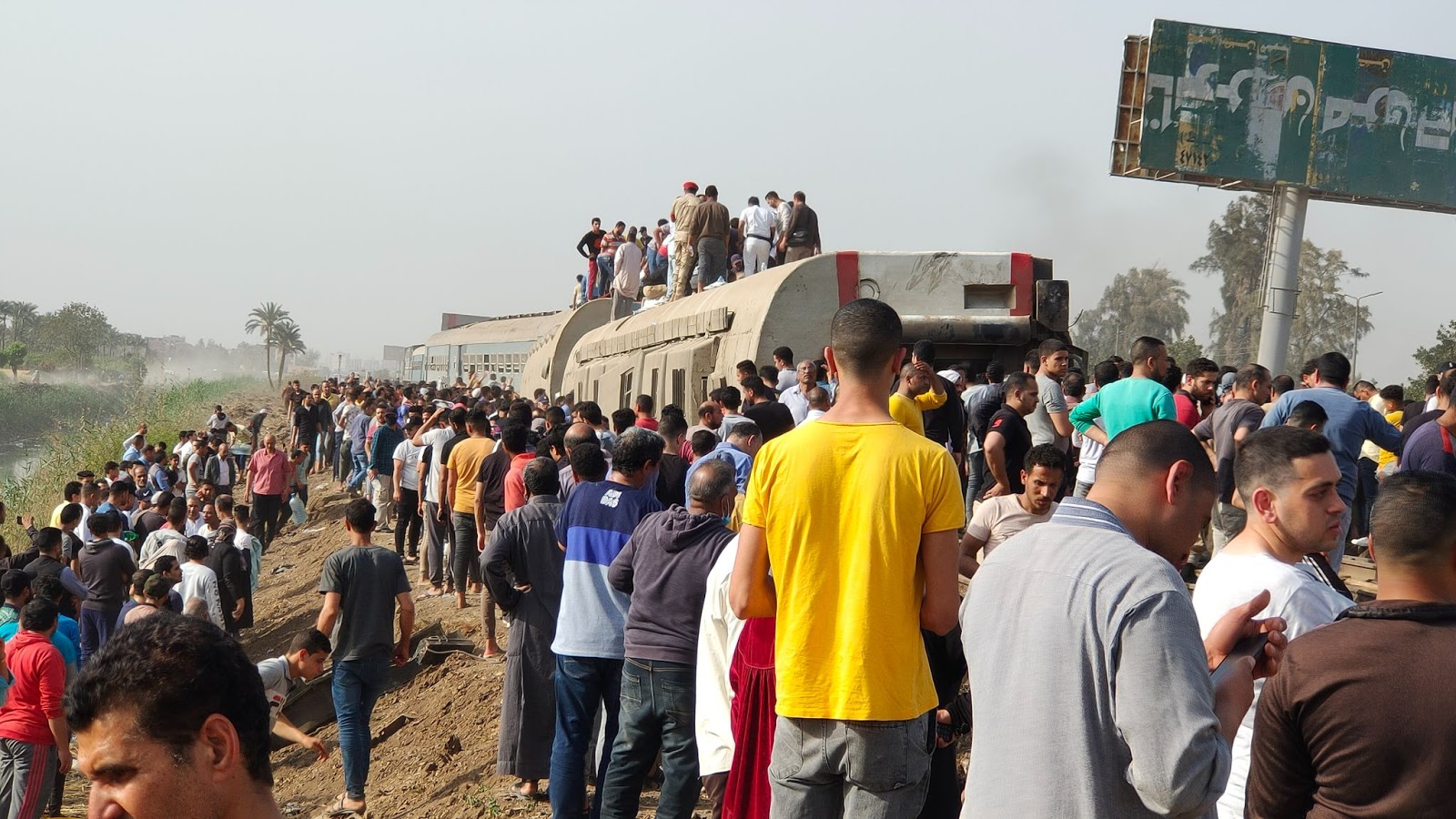
Another train derails in Toukh, Qalyubiya killing 11, injuring 97
At least 11 people were killed after a train derailed on Sunday afternoon near Toukh in Qalyubiya
Investigation into fatal Sohag crash shifts blame from Transport Ministry
The results of the investigation were made public on Sunday.
Your support is the only way to ensure independent, progressive journalism survives.
You have a right to access accurate information, be stimulated by innovative and nuanced reporting, and be moved by compelling storytelling. Subscribe now to become part of the growing community of members who help us maintain our editorial independence.
Join us