
Interior Ministry presents evidence of Rabea dispersal to June 30 fact-finding committee
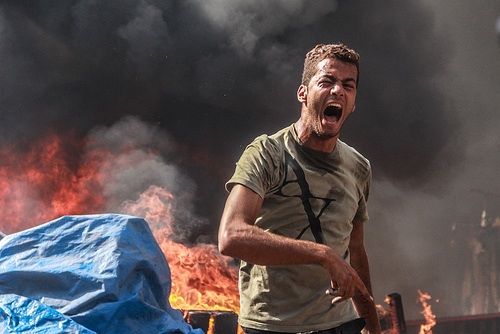
The Ministry of Interior has submitted the plan of the dispersal of the Rabea and Nahda Squares last year, along with documents, images and 50 CDs proving that the dispersals, which left hundreds of Muslim Brotherhood supporters dead, were conducted according to the law and international standards, head of June 30 fact-finding committee Fouad Abdel Moneim Riyad said in a press conference Thursday.
Riyad added that the reason for Interior Ministry's response is the latest report released by the New York-based Human Rights Watch (HRW) that lambasted the violence on the part of security forces, deeming the dispersals as “likely a crime against humanity."
“The Ministry of Interior previously declined to cooperate with the National Council for Human Rights (NCHR) when it was preparing its report on the dispersal process. Presenting this evidence is a very important development in the committee’s work and without it the committee would not have been able to continue working,” Riyad said in the presser, according to the official EgyNews website.
The committee said it also received from HRW all the evidence the organization used to prepare its report. The organization’s documents presented the narrative of the Muslim Brotherhood, and the Interior Ministry's latest evidence will give some balance to the committee’s work, Riyad explained.
A technical committee will look at the video evidence presented by the Interior Ministry to make sure it is not fabricated.
Riyad previously said that the HRW’s accusation that the committee lacked transparency was unfounded. The committee does not reveal the names of those who testify in order to protect them, he argued, not because it is obfuscating the truth.
Most Muslim Brotherhood members asked to present their testimonies declined out of fear of arrest, Riyad continued, which pushed the committee to remove their names from its final report.
Riyad also refuted HRW’s claims that the committee failed to get state institutions to cooperate with the investigation. Cooperation varied from one institution to the other, Riyad asserted, adding that it was not accurate to claim that there was no cooperation with state bodies.
As a result, Riyad said that the committee will visit members of the Muslim Brotherhood group in prisons to ask them about their testimonies on the violent events that took place before, during and after the dispersal of Rabea.
He added that the committee is keen on listening to all conflicting sides, and that if Brotherhood leaders “were assured that we have an honest will and are keen to listen to all, they will surely cooperate with us."
Riyad said that the committee hopes it can contact Brotherhood leaders who are fugitives abroad, but added that the committee does not have a large enough budget to accommodate traveling.
The committee head, who was appointed by former interim President Adly Mansour with the rest of the committee members, added that Brotherhood leaders declining to cooperate with committee members are “being unfair to themselves,” especially those that cooperate with other organizations.
Riyad promised that all Brotherhood members wishing to cooperate but fear arrest will be protected by the committee.
Committee spokesperson Amr Marwan also said in the presser that not all state institutions are cooperating with the committee, adding that the Ministry of Defense did not present any evidence regarding the Republican Guard massacre before the Rabea dispersal, as the ministry asked the committee to go back to the investigations undertaken by the public prosecution.

أخبار ذات صلة
Govt report on post-June 30 violence won’t be released to public
The fact-finding committee tasked with investigating post-June 30 violence is not entitled to release its findings to the public, said committee spokesperson…
President forms committee to investigate post-June 30 events
Interim President Adly Mansour issued a presidential decree to form an investigation committee to examine post-June 30 events, the official Egynews website…
Limited access to prisons still undermines national rights council’s efforts to protect detainees
The National Council for Human Rights published its annual report on Sunday, detailing the state’s work to guarantee Egyptians’ rights and its…
Egypt’s National Human Rights Council gets global rubber stamp, though its access to prisons remains limited
The National Council for Human Rights celebrated on Wednesday its achievement of first grade status from an international accreditation body. The classification…
Your support is the only way to ensure independent, progressive journalism survives.
You have a right to access accurate information, be stimulated by innovative and nuanced reporting, and be moved by compelling storytelling. Subscribe now to become part of the growing community of members who help us maintain our editorial independence.
Join us