
Importers: Late fees on shipments stuck in customs are too expensive for us to collect goods
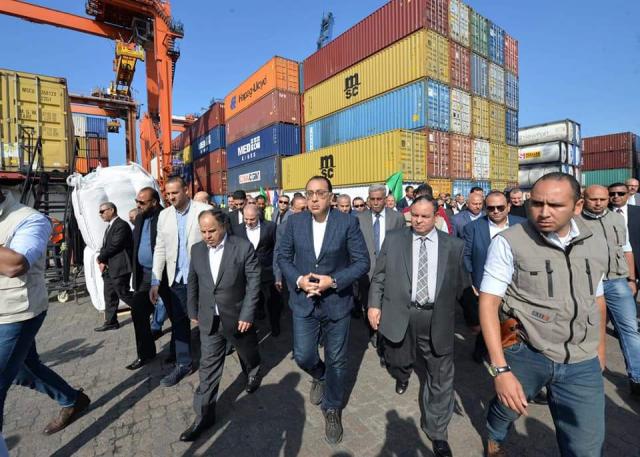
Around US$2.5 billion worth of imported goods were still stuck in the ports on Wednesday, a government official told the press, weeks after an influx of dollar liquidity into the country.
Five traders describing the situation to Mada Masr said that newly available liquidity has allowed them to ensure the import cost of the goods is paid. But now, they can’t afford to collect the shipments because of additional costs that have accrued while the shipments were stuck in customs for months.
At least US$20 billion worth of goods were in limbo at customs in January. Insufficient foreign currency liquidity in Egypt’s banks left traders unable to secure credit lines to pay the cost of shipments to suppliers.
Billions have flowed into Egypt’s economy since then, and some of the cash has been directed toward customs clearances.
Finance Deputy Minister Mona Nasser said on Wednesday that clearance procedures for US$20 billion worth of goods have been completed since January, of which US$17 billion have been collected.
But “traders are refusing to claim” over US$2.5 billion worth of goods in ports, Nasser claimed, saying that importers expect a further decline in the value of the buying rate of the dollar, which is making them hold off on selling the goods as they anticipate making higher value sales at a later point.
Prime Minister Mostafa Madbuly cited the same reason on Monday when he announced that US$1.7 billion worth of goods would be confiscated by customs authorities from traders who had refused so far to claim them.
However, according to several importers who spoke to Mada Masr, in order to claim their goods, they would have to pay accumulated fees, which at times could exceed the value of the shipment putting them at a significant loss.
One member of the Alexandria Chamber of Commerce Customs Brokers Division who spoke to Mada Masr on condition of anonymity said that to begin customs clearance procedures, importers must show documentation proving the shipment’s value has been transferred to the supplier abroad.
Once they’ve presented that documentation, “form 4,” they can then head to the port to settle fees, including fees for container space, security fees for container handling companies, port space, and penalties for delaying shipping companies. These are calculated on a per-day basis for the duration of the container's stay — from the moment it is unloaded from the ship until the goods exit customs.
But the traders expressed resentment about the late fees. "The government is the main cause of the crisis," the source said.
Importers fees are also payable in dollars or the equivalent in pounds at the new exchange rate, although the value of the pound against the dollar has dropped by over 60 percent since January. All of this adds to the burden, according to the source.
The source called on the government to address the fees crisis. Import transactions could be dated back to allow for fees to be collected according to the exchange rate before the flotation, they said, or companies could be required to reduce or reschedule fees.
Confiscating the goods, however, is likely to mean that they will remain stuck in customs going forward, while traders who imported them will be operating at a sharp loss.
The Egyptian Customs Authority can auction goods which it has confiscated. However, the source said that the auctions will price goods at a value that covers the cost of the shipment plus the fees accrued since. The auction price will therefore be very high and likely roll over multiple times before a sale is concluded.
Proceeds from the auction go back to pay customs fees first and foremost, before reimbursing the importer with any remaining funds.
أخبار ذات صلة
Egypt awaits US$ 1.2 bn payout after passing IMF’s 4th loan review
The International Monetary Fund (IMF) announced on Tuesday that Egypt passed its fourth review as part of its ongoing US$8 billion loan…

Drug prices set to increase
The EDA approved price increases after increased requests from pharmaceutical companies
Generosity knocked out of the box: How economic crisis has shrunk Ramadan food donations
Every year, millions of donated food boxes, known as "Ramadan cartons," are distributed across Egypt throughout the month, circulated from individuals to small charitable organizations to large entities, including government…
A day afloat
Egypt will be getting another US$5 billion in loans from the International Monetary Fund as an increase to the 2022 $3 billion loan, IMF representative in Egypt Ivanna Vladkova Hollar…
Your support is the only way to ensure independent, progressive journalism survives.
You have a right to access accurate information, be stimulated by innovative and nuanced reporting, and be moved by compelling storytelling. Subscribe now to become part of the growing community of members who help us maintain our editorial independence.
Join us