
Hamas, Israel agree to prisoner exchange over 4-day truce starting Thursday
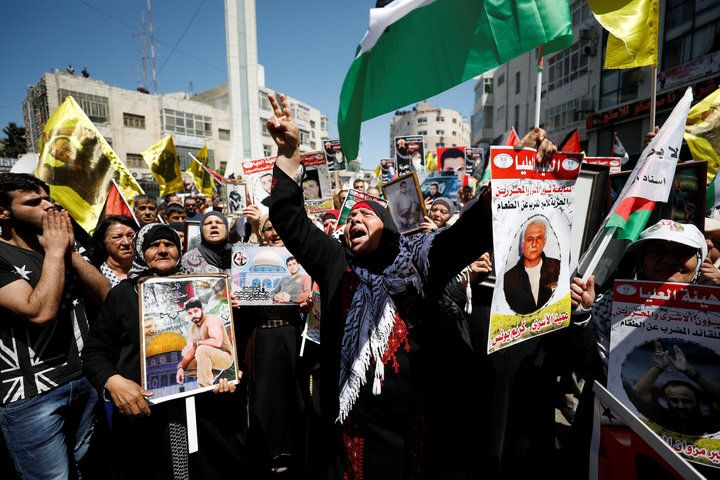
Hamas and Israel have finally agreed on a deal to exchange prisoners, set to take place during a four-day pause to the Occupation’s aggression on the Gaza Strip, the involved parties announced on Wednesday.
The deal — which follows lengthy negotiations mediated by Qatar, Egypt and the United States and comes after nearly seven weeks of relentless airstrikes on Gaza that have killed over 13,000 Palestinians — entails the release of 100 captives held in Gaza since October 7, in exchange for 300 Palestinians detained in Israeli prisons. The prisoner exchange will be conducted during the temporary truce.
The first phase of releases is set to take place over a four-day truce, during which the daily amount of humanitarian aid allowed into the Gaza Strip should significantly increase and include greater quantities of fuel, Hamas said.
The exchange process is not likely to begin before Thursday, as Occupation authorities are reportedly set to review potential legal appeals against the release of some of the 300 Palestinian detainees requested by Hamas, Israeli Occupation officials said.
According to Hamas, the four-day pause to hostilities will also entail a halt to the Occupation’s ground invasion and the aerial bombardment of southern Gaza, as well as granting safe passage to displaced Palestinians evacuating south through Salah Eddin road. Additionally, the deal will limit airstrikes on northern Gaza to six hours a day — from 10 am to 4 pm — and requires Occupation forces to refrain from assaulting or arresting Gazans for the duration of the truce.
The Occupation’s cabinet decision, for its part, said the deal will include the release of 300 Palestinians in total in exchange for 100 Israelis held in Gaza, with the four-day truce being the first phase of the deal.
In the first phase, 150 Palestinian women, children and prisoners under 19 will be released over the four days, in exchange for 50 Israeli women and children released in groups of at least 10 per day.
The second phase of prisoner exchange will start after the pause ends and will follow the same terms, with the truce being extended an additional day for every 10 Israeli captives released from Gaza, and the Red Cross being allowed to meet with those yet to be released, the Occupation said.
According to the Occupation, the pause could be extended for a maximum of 10 days from the end of the first phase, or up to 14 days in the best case scenario.
The Occupation has vowed to resume its operations, with the goal of eliminating Hamas, once the two phases of the deal are completed, according to Israeli media.
For its part, Hamas vowed in its statement that “our hands will remain on the trigger, and our victorious brigades will remain on the lookout to defend our people and defeat the Occupation and aggression.”
The Palestinian captives will be released after Hamas hands Israeli prisoners over to the Red Cross, which will transfer them to the Palestinian side of Rafah, where Qatari, Egyptian and US mediators will handle their transportation to Israel.
The Occupation government decision allowed 24 hours for appeals against the deal or the release of any of the 300 Palestinians listed in the deal before its Supreme Court. The Occupation’s War Cabinet, consisting of Netanyahu, Occupation Defense Minister Yoav Gallant and Minister Benny Gantz, will determine the identities of the Palestinians set for release and the timing of each phase. The decision also states that any of the 300 Palestinian prisoners denied release in this deal, will not be ransomed in any subsequent agreements.
The Occupation will also not release any Palestinian prisoners who have been convicted of killing Israelis, an Israeli official told Axios.
More than 7,000 Palestinian political detainees are held in Occupation prisons, including 200 children and 62 women, according to the Addameer Prisoner Support and Human Rights Association, which noted that 3,000 of them were arrested after October 7 from the West Bank and Jerusalem.
The initial list of Palestinian prisoners set for release, published by the Occupation’s Justice Ministry and reviewed by Mada Masr, does not contain any detainees from Gaza. It includes Palestinians from the West Bank and Jerusalem, and for the first time, Palestinian citizens from the Israeli territories occupied in 1948.
As per the deal, the truce will also allow the entry of more humanitarian aid trucks into the Gaza Strip. Qatar said 200 food and medicine trucks will enter the strip daily, however, an Israeli official told Axios that it will be 300 trucks. According to Hamas, fuel will be allowed to enter as part of the deal, and aid will reach areas across the whole strip.
Since the start of the Occupation’s “complete siege” over the Gaza Strip, the movement of aid entering the besieged enclave through the Rafah border crossing with Egypt has proceeded at a snail’s pace, with Egyptian officials repeatedly blaming Israeli officials for the obstruction.
The three mediators, Qatar, Egypt, and the US, all issued statements celebrating the deal and congratulating each other on their roles in reaching it.
The deal was welcomed by the international community, but drew divided opinions inside the Gaza Strip, according to journalists in the enclave who spoke to Mada Masr.
Some have welcomed the establishment of an initial pause to hostilities that might pave the way for a permanent ceasefire agreement, ending the bloodshed and destruction in the strip.
Others were disappointed that the truce will not begin until Thursday morning, which means the Occupation’s bombardment will continue until then. People were also disappointed that the deal won’t enable the 1.5 million displaced Palestinians who fled heavy bombardment in northern Gaza to return to their homes, while allowing Occupation forces to remain on Salah Eddin Road, where they had been stationed.
The checkpoint established by the Occupation continues to control the flow of Palestinians on the Salah Eddin Road, according to testimonies from displaced people who have spoken to Mada Masr.
Occupation forces allow movement in only one direction, from north to south, at specific times determined by them. They have divided the Gaza Strip in two and arrested hundreds of displaced people trying to pass through over recent days. They have also opened fire on displaced Palestinians who tried to cross the checkpoint outside the specified times.

أخبار ذات صلة

Hundreds of Gaza students demonstrate for right to study abroad
Hundreds of university students trapped in the besieged Gaza Strip gathered on Monday outside the Journalists Syndicate’s headquarters in western Gaza City…

In meeting with Board of Peace director-general, Hamas refuses UN disarmament plans until Israel commits to withdrawal
Hamas has refused to commit to the plans proposed by the United Nations for its disarmament, citing lack of advancement in Israel’s…

Israel agrees to limited reopening of Rafah border crossing — details pending
Israeli Prime Minister Benjamin Netanyahu’s office announced on Monday that it has agreed to a “limited reopening” of the Rafah border crossing…

Sisi touts ‘stabilization’ agenda at first Davos appearance in over 10 years
President Abdel Fattah al-Sisi advertised Egypt’s “stabilization” agenda in Davos on Wednesday, saying the country’s focus on steering away from regional conflicts…
Your support is the only way to ensure independent, progressive journalism survives.
You have a right to access accurate information, be stimulated by innovative and nuanced reporting, and be moved by compelling storytelling. Subscribe now to become part of the growing community of members who help us maintain our editorial independence.
Join us