
Hamas delivers response to Egypt, Qatar regarding framework for prisoner exchange, ceasefire deal
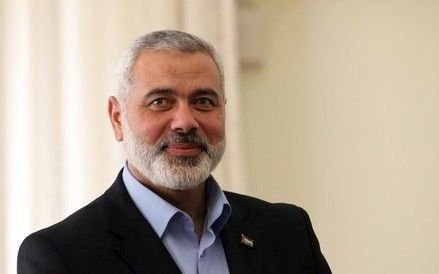
Hamas announced Tuesday evening that, following consultations with other resistance factions in the Gaza Strip, it had delivered its response to Egypt and Qatar regarding their proposed framework for a prisoner exchange and ceasefire agreement.
In a three-page document circulated in the press, Hamas outlined a three-stage deal to reach a ceasefire and an exchange of prisoners with Israel.
Hamas' response includes a demand for guarantees from Egypt, Qatar, Turkey, Russia, and the United Nations. It also demands that reconstruction operations in Gaza be primarily led by Egypt and Qatar and that the Israeli military withdraw from the strip.
Head of the Egyptian State Information Service Diaa Rashwan stated that Cairo will discuss the details of the proposed framework with the concerned parties to reach a final agreement on the ceasefire.
Speaking on condition of anonymity, a Hamas source told Mada Masr on Saturday that the group's response was delayed due to internal tensions, with some in the movement wishing not to lose the prisoners who they think represent their last leverage in the talks with Israel.
Qatari Foreign Minister Sheikh Mohammed bin Abdulrahman bin Jassim al-Thani described Hamas' response to the ceasefire proposal as a "positive" one during a press conference with United States Secretary of State Antony Blinken in Doha on Tuesday evening.
Blinken, who visited Cairo and Doha on Tuesday as part of a regional tour, stated that the US is reviewing Hamas' response and will discuss it with Israeli officials during his visit to Tel Aviv on Wednesday. He said that the US will employ all available tools to secure the release of the prisoners held by Hamas in Gaza.
Occupation forces said on Tuesday night that around 30 of the prisoners held by Hamas and other resistance factions in the strip have been killed since the beginning of Israel’s aggression on Gaza on October 7, leaving around 100 still believed to be alive in the strip.
Since October 7, the war has only paused for seven days during a temporary ceasefire agreed upon by Gaza’s resistance factions and Israel. As part of that ceasefire, Hamas released 80 Israeli prisoners and several Thai workers, in exchange for the release of 240 Palestinians from Israeli prisons.
Citing sources familiar with the talks, Reuters reported that the proposed ceasefire would last for at least 40 days. During this period, Hamas would release Israeli civilian prisoners as a first phase, followed by the release of military prisoners and bodies in a second phase, in exchange for Israel releasing Palestinian detainees from its prisons.
The latest round of negotiations commenced on December 28, with the most recent meeting taking place in Paris in late January, attended by security officials from Israel, the US, Qatar, and Egypt.
The talks attempted to reach a framework agreement that would settle the dispute over the initial ceasefire duration by reducing it to approximately 30 days, after Hamas had proposed a ceasefire for several months.
However, Hamas has since refused to proceed with the framework plans until an agreement is reached on the future conditions for a permanent ceasefire, according to six sources who spoke to Reuters, including Egyptian security sources. The sources confirmed attempts to convince Hamas to accept a one-month ceasefire followed by a permanent one, but stated that Hamas demanded guarantees for the implementation of the second phase of the agreement before agreeing to the initial ceasefire.

أخبار ذات صلة

Hundreds of Gaza students demonstrate for right to study abroad
Hundreds of university students trapped in the besieged Gaza Strip gathered on Monday outside the Journalists Syndicate’s headquarters in western Gaza City…

In meeting with Board of Peace director-general, Hamas refuses UN disarmament plans until Israel commits to withdrawal
Hamas has refused to commit to the plans proposed by the United Nations for its disarmament, citing lack of advancement in Israel’s…

Israel agrees to limited reopening of Rafah border crossing — details pending
Israeli Prime Minister Benjamin Netanyahu’s office announced on Monday that it has agreed to a “limited reopening” of the Rafah border crossing…

Sisi touts ‘stabilization’ agenda at first Davos appearance in over 10 years
President Abdel Fattah al-Sisi advertised Egypt’s “stabilization” agenda in Davos on Wednesday, saying the country’s focus on steering away from regional conflicts…
Your support is the only way to ensure independent, progressive journalism survives.
You have a right to access accurate information, be stimulated by innovative and nuanced reporting, and be moved by compelling storytelling. Subscribe now to become part of the growing community of members who help us maintain our editorial independence.
Join us