
From the campaigns: Sisi pulls a no-show in first TV ad
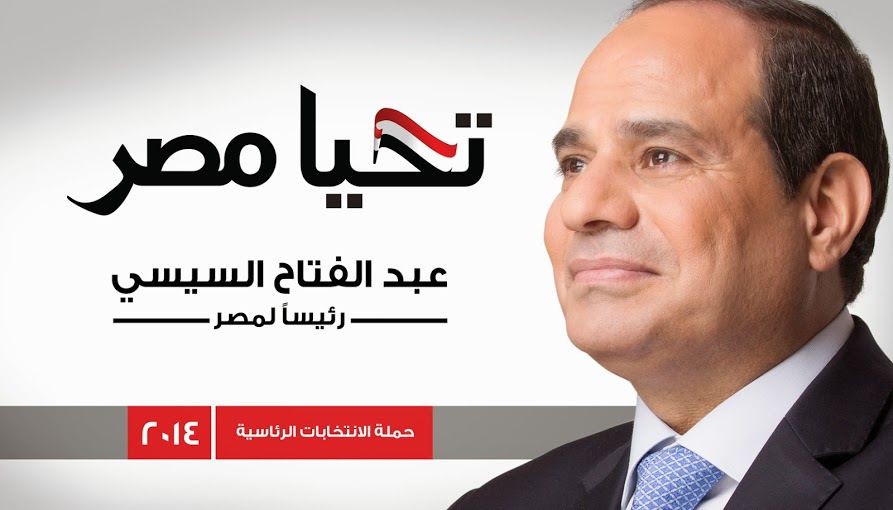
Field Marshal Abdel Fattah al-Sisi is conspicuously absent in what appears to be the first televised campaign ad for his presidential bid.
Instead, the ad features a former classmate, craftsmen in a bazaar where Sisi’s father used to work, and a group of ordinary people in idyllic settings across the country lauding the former defense minister.
Throughout, the director dutifully plays on every cliché about Egypt, the revolution, national unity and the presidential candidate as being one with the people.
The privately owned newspaper Al-Masry Al-Youm (AMAY) purportedly obtained a copy of the ad, which runs just under eight minutes and is set to the background music of “Kamel Meshwarak” (Complete Your Journey) by Emirati singer Hussain al-Jassmi. The entertainer serenaded Sisi with the tune at the 40th anniversary of the October 6 War last fall.
In the aftermath of former President Mohamed Morsi’s ouster, the United Arab Emirates, Saudi Arabia and Kuwait have been staunch supporters of the interim government and the military-backed transitional roadmap, giving Egypt billions of dollars in financial support.
The first few shots of the television spot show the sun rising in Egypt’s capital as people causally go about their day to day lives — shots of a fuul (baked beans) cart, tea being made at an ahwa (coffee shop), a shoe polisher going about his business, and a traffic policeman in Tahrir Square round out the picture.
A man reads a newspaper — a copy of AMAY makes a cameo appearance in the scene — in front of the famous Qasr al-Nil bronze lions as a group of young men joyfully jog along the bridge.
The camera pans across Tahrir Square and then follows three young men down the graffiti-plastered walls of Mohamed Mahmoud Street as they take turns saying, “We went down to the revolution, to end corruption, preserve state institutions, and this is what we want from the next president.”
It would seem like an opportune moment to cue Sisi, but he remains off camera for the entirety of the ad, a reflection of what is being described as his “no campaigning” campaign.
When Sisi made the long-anticipated announcement on March 26 that he was resigning from his post as defense minister to run for the presidency, he clearly stated, “I don’t have an electoral campaign program in the traditional sense.”
Over the past month, it has become clear that this strategy translates into allowing others to do the campaign work on Sisi’s behalf — perhaps to prove that a candidate with massive popular support need not worry much about being the front-man for his own electoral race.
The campaign ad capitalizes on this point, utilizing a not-so-subtle concept of getting Egyptians from all walks of life to endorse their preferred future president.
A barber identified simply as Am Saeed reiterates the popular notion that the country needs a leader like late President Gamal Abdel Nasser, a legacy which both Sisi and fellow contender Hamdeen Sabbahi claim as their own.
Sabbahi — the Nasserist founder of the Popular Current Party and third runner up in the 2012 presidential election — has not yet released a televised ad. Sabbahi has, however, snared the coveted yellow eagle — the national emblem at the heart of the Egyptian flag — as his electoral symbol, as he did in last year’s race.
In Sisi's ad, an Alexandria fisherman declares, “We want a leader that will bring us safely to shore,” after complaining about the lack of fish at sea and the accumulating debt of fishermen. He also claims that all of Alexandria will vote for Sisi because he is a “man who doesn’t sleep” while protecting Egypt and its borders.
Samir Mostafa, a friend and former classmate who is also a retired general, walks nostalgically into their old classroom and reminisces about Sisi as a child. He elaborates on one of Sisi’s many popular phrases that have shaped a certain discourse in post-June 30 Egypt: “Egypt is the mother of the world and will be as big as the world.”
When Sisi makes this declaration, “be assured that it comes from within him, from his emotions,” Mostafa stresses.
We move on to Haret al-Barkukia, where a resident of the Gamaleyya District talks about the simple building and family home where Sisi was raised.
“A president from a popular neighborhood” will feel the suffering of the poor people, the resident claims.
A second reference to Abdel Nasser is made as Hajj Hamada declares with pride that this neighborhood has been home to two presidents.
Mahmoud al-Batal, an arabesque craftsman, says he was taught his trade along with the field marshal by Sisi’s late father. It is a craft that requires patience, thought and focus, Batal says, and this training explains why Sisi’s “decisions are wise.”
Back in the classroom, Mostafa talks about some spiritual guidance Sisi once gave him. This interlude emphasizes the former army chief’s strong religious beliefs, a trait which, ironically, raised suspicions of a potential allegiance with the Muslim Brotherhood when Sisi served under Morsi’s administration. Since Morsi’s fall from power, however, Sisi has been depicted as a more moderately religious man.
A man from Aswan says that he is sure Sisi will make good on his promises, while a camel herder at the deserted site of the pyramids says he believes the former defense minister will help revitalize Egypt’s vital but ailing tourism sector.
“Sisi has brought us half security. If he leads the country, he will bring back full security,” the camel herder proclaims.
Former prosecutor Mohsen Attia says Sisi respects the separation of powers and legislation, and adds that he has unique traits reminiscent of Abdel Nasser.
Moving back to Upper Egypt, a Nubian resident says rhythmically in the local dialect, “I am Nubian. When I choose a president, I choose Sisi.”
The video’s ending may not have been the most reassuring shot, however. A man in dark shades appears, pointing to an ancient temple in Upper Egypt, emphatically telling the camera: “If this rock could speak, it would say, ‘Choose right! The secret word to tourism globally is security and stability’,” all things which Sisi will bring, according to the ad.
One woman appears at the end of the video, barely filling the female quota, after which the very long montage wraps up with some more shots of the Nile, Tahrir and the pyramids.

أخبار ذات صلة
Abdel Moneim Abouel Fotouh: A man apart
His political journey has been a winding one.
COVID-19 drive-thru testing rollout blurs lines between public, private sectors
The prime minister visited the company’s first drive-through site the day it opened, on June 15.
A presidential race, anyone?
Plans for Sisi’s campaign take shape as other political figures weigh up running in the 2018 presidential elections
A disintegrating coalition: Rifts re-emerge after Dostour Party’s default leadership election
Rifts have re-emerged within the Dostour Party days after the default election of Khaled Dawoud as party president
Your support is the only way to ensure independent, progressive journalism survives.
You have a right to access accurate information, be stimulated by innovative and nuanced reporting, and be moved by compelling storytelling. Subscribe now to become part of the growing community of members who help us maintain our editorial independence.
Join us